

Over one in three American LGBTQIA+ individuals report facing discrimination within healthcare settings, reminding us that mental health support must evolve to meet real needs. Finding affirming therapy matters because societal bias and misunderstanding can magnify stress and impact well-being. This guide reveals how LGBTQIA+ support therapy stands apart, focusing on safe spaces, client empowerment, and expert approaches that make a genuine difference for the American LGBTQIA+ community.
Explore LGBTQIA+ Support Therapy: Topics & Insights
- Defining LGBTQIA+ Support Therapy Approaches
- Types of Issues Addressed in Therapy
- Key Features of Affirming Care Models
- Therapist Training and Credentials Needed
- Privacy, Safety, and Inclusivity Standards
Key Takeaways
| Point | Details |
|---|---|
| LGBTQIA+ Support Therapy Focuses on Affirmation | This therapy emphasizes a validating, judgment-free atmosphere that encourages clients to explore their identities. |
| Diverse Therapeutic Modalities | Therapists utilize various approaches, including Narrative Therapy and Trauma-Informed Care, to address unique challenges faced by LGBTQIA+ individuals. |
| Importance of Qualified Professionals | Seek therapists with specific training in LGBTQIA+ mental health to ensure appropriate understanding and support. |
| Privacy and Safety are Essential | Confidentiality and a secure therapeutic environment are crucial for effective therapy within the LGBTQIA+ community. |
Defining LGBTQIA+ Support Therapy Approaches
LGBTQIA+ support therapy represents a specialized, compassionate approach to mental health care designed to address the unique psychological experiences of individuals within the LGBTQIA+ community. Unlike traditional therapeutic models that may pathologize sexual orientation or gender identity, affirmative therapy techniques center on creating a safe, validating environment where clients can explore their authentic selves without judgment.
At its core, LGBTQIA+ support therapy focuses on several critical principles. These include challenging heteronormative and cisgender assumptions, recognizing the complex intersectionality of sexual orientation and gender identity, and understanding the unique stressors that LGBTQIA+ individuals may experience. Therapists trained in this approach work collaboratively with clients to promote self-acceptance, resilience, and emotional well-being, moving beyond traditional therapeutic frameworks that historically viewed non-heterosexual and non-cisgender identities as inherently problematic.
The therapeutic approaches within LGBTQIA+ support therapy are diverse and adaptable. They may incorporate techniques from various modalities, including:- Narrative therapy to help clients reframe negative experiences- Cognitive behavioral strategies for managing minority stress- Trauma-informed care addressing potential discrimination-related experiences- Family systems therapy to improve interpersonal relationships and support networks
Here’s a summary of common LGBTQIA+ therapy modalities and their unique benefits:
| Therapy Modality | Primary Purpose | Unique Benefit |
|---|---|---|
| Narrative Therapy | Reframing personal stories | Helps clients reclaim self-identity |
| Cognitive-Behavioral | Managing minority stress | Builds practical coping skills |
| Trauma-Informed Care | Addressing discrimination | Enhances emotional safety |
| Family Systems Therapy | Improving relationships | Strengthens support networks |
Pro Tip for LGBTQIA+ Support Therapy: When seeking a therapist, prioritize professionals who demonstrate genuine understanding, use affirming language, and have specific training or certification in LGBTQIA+ mental health support.
Types of Issues Addressed in Therapy
LGBTQIA+ support therapy addresses a wide spectrum of complex emotional, psychological, and social challenges unique to the community. Types of therapy for LGBTQIA individuals recognize that these experiences extend far beyond sexual orientation or gender identity, encompassing deeply personal struggles with self-acceptance, societal discrimination, and intersectional mental health concerns.

Some primary issues addressed in LGBTQIA+ support therapy include identity exploration, where individuals work through understanding and embracing their authentic selves. This includes navigating gender transition, coming out processes, internalized homophobia or transphobia, and developing resilience against external stigma. Therapists provide crucial support during these vulnerable moments, helping clients build self-confidence and develop healthy coping mechanisms.
Additional critical areas of focus within LGBTQIA+ support therapy involve addressing:- Minority stress and its psychological impacts- Relationship dynamics and communication challenges- Family acceptance and potential rejection- Trauma from discrimination or hate-based experiences- Sexual health and intimate partner concerns- Anxiety and depression related to identity struggles- Navigating professional and social environments
Pro Tip for LGBTQIA+ Therapy Issues: Understand that healing is a personal journey – there’s no universal roadmap, and each individual’s therapeutic needs are unique and valid.
Key Features of Affirming Care Models
Affirming care models represent a revolutionary approach to mental health support that prioritizes respect, validation, and comprehensive understanding of LGBTQIA+ experiences. Key aspects of LGBTQIA+ affirming therapy focus on creating a therapeutic environment that celebrates diversity, challenges systemic biases, and empowers individuals to embrace their authentic selves without judgment or constraint.
The core principles of affirming care models extend far beyond simple tolerance, embedding deep respect for individual identity and lived experiences. These models fundamentally reject pathologizing approaches, instead recognizing sexual orientation and gender identity as natural variations of human experience. Therapists trained in these models actively work to create spaces that are linguistically inclusive, culturally competent, and emotionally safe, ensuring clients feel genuinely seen and understood.
Critical features of affirming care models include:- Using correct pronouns and chosen names- Avoiding heteronormative and cisgender assumptions- Recognizing intersectionality of identity- Addressing minority stress and systemic discrimination- Providing trauma-informed, client-centered approaches- Supporting identity exploration and self-acceptance- Developing resilience strategies against external prejudice- Acknowledging the unique challenges faced by different LGBTQIA+ subgroups
Pro Tip for Affirming Care: Always approach therapy as a collaborative journey, where the client’s lived experience and self-knowledge are considered the most valuable sources of insight.
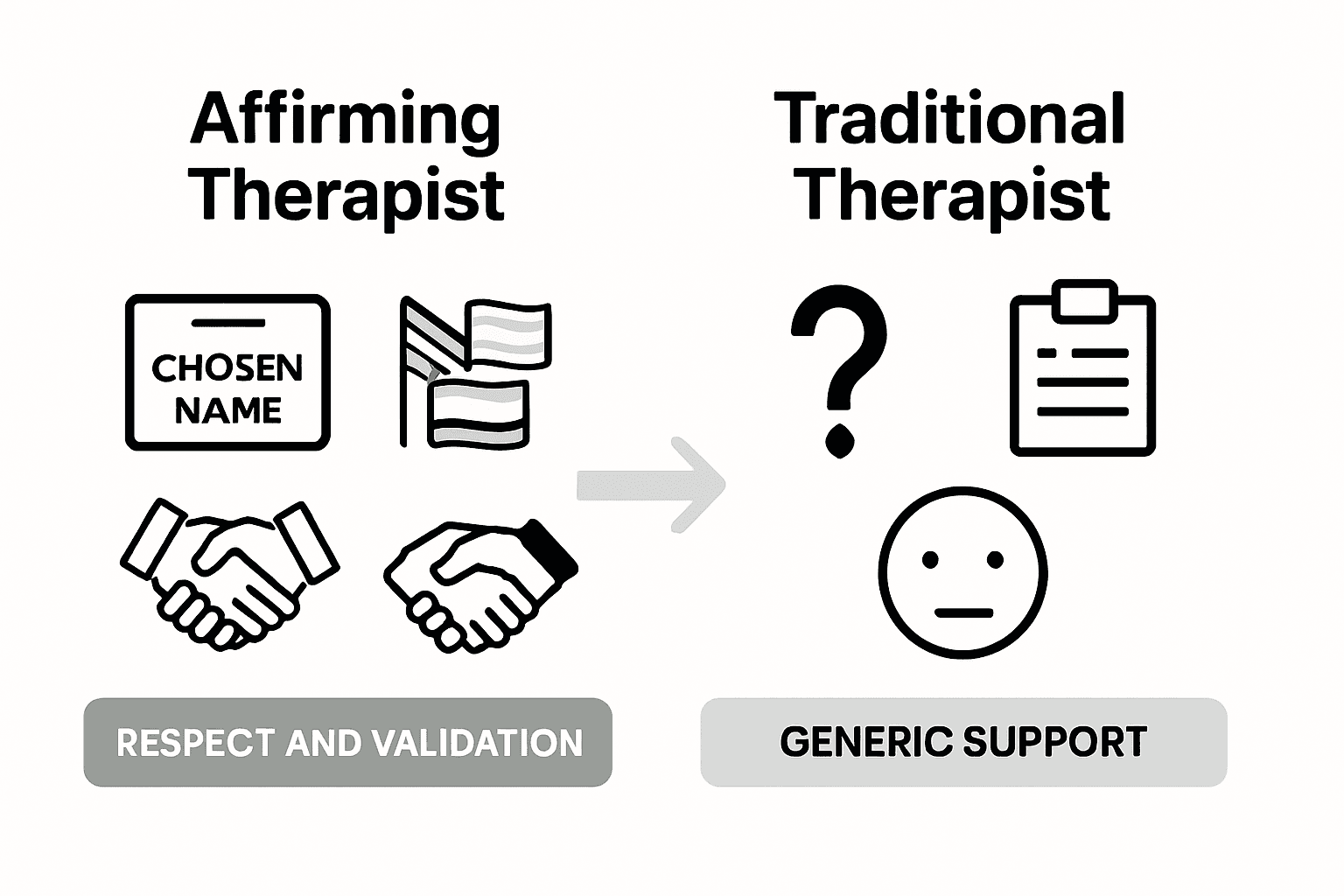
Compare the roles of affirming therapists vs. traditional therapists:
| Role Aspect | Affirming Therapist | Traditional Therapist |
|---|---|---|
| View of LGBTQIA+ Identities | Embraces as valid and natural | May lack specific understanding |
| Approach to Diversity | Celebrates lived experiences | Generalized, less nuanced care |
| Language Use | Uses inclusive, affirming terms | Standard clinical vocabulary |
| Support Provided | Empowers unique journeys | Follows conventional frameworks |
Therapist Training and Credentials Needed
Effective LGBTQIA+ support therapy requires a specialized and comprehensive approach to professional training that goes far beyond traditional clinical credentials. Understanding the role of therapists in providing affirming care involves recognizing the critical importance of advanced, targeted education and ongoing professional development focused on LGBTQIA+ mental health experiences.
The core competencies for LGBTQIA+ support therapists extend well beyond standard clinical psychology or counseling training. Therapists must demonstrate deep understanding of gender theory, sexual orientation diversity, intersectionality, and the unique psychological challenges faced by LGBTQIA+ individuals. This requires specialized coursework, advanced certifications, and continuous engagement with contemporary research in queer psychology, transgender health, and minority stress theories.
Key professional credentials and training requirements for LGBTQIA+ support therapists include:- Advanced degrees in clinical psychology or counseling- Specific certifications in LGBTQIA+ affirming therapy- Comprehensive understanding of gender identity spectrum- Training in trauma-informed care- Demonstrated cultural competency- Ongoing education in queer theoretical frameworks- Professional memberships in LGBTQIA+ mental health organizations- Experience working with diverse sexual and gender identities- Advanced communication skills for creating safe therapeutic environments
Pro Tip for Therapist Credentials: Always verify a therapist’s specific training in LGBTQIA+ support, as specialized knowledge matters more than generic clinical experience.
Privacy, Safety, and Inclusivity Standards
Privacy and safety are foundational elements in LGBTQIA+ support therapy, creating protective frameworks that ensure individuals can explore their identities without fear of judgment or exposure. Comprehensive psychotherapy treatment recognizes that marginalized communities require specialized approaches that prioritize confidentiality, emotional security, and respectful communication.
The core principles of privacy and safety in LGBTQIA+ support therapy extend beyond traditional clinical confidentiality. These standards involve creating holistic environments that protect clients’ personal information, gender identity, sexual orientation, and unique life experiences. Therapists must implement robust protocols that safeguard sensitive data, ensure anonymous communication channels, and provide multiple options for engagement that align with each individual’s comfort level and personal boundaries.
Key privacy, safety, and inclusivity standards include:- Strict confidentiality agreements protecting client identities- Multiple communication channel options (virtual, in-person, encrypted)- Comprehensive data protection protocols- Training in trauma-informed care approaches- Multilingual support services- Accessible facilities for individuals with disabilities- Gender-neutral intake forms and documentation- Anonymous consultation options- Flexible scheduling to accommodate diverse life circumstances- Transparent consent processes
Pro Tip for Privacy Protection: Always discuss confidentiality protocols during your initial consultation and feel empowered to ask specific questions about how your personal information will be protected.
Discover Compassionate LGBTQIA+ Affirming Therapy Tailored to You
Struggling with identity exploration or seeking support through minority stress and discrimination can feel isolating. This article highlights how LGBTQIA+ support therapy focuses on creating a safe and validating space where your authentic self is honored and your unique challenges are understood. At Dr. Stephen Oreski & Associates, we specialize in affirming care models that empower individuals with inclusive approaches, trauma-informed strategies, and culturally competent support designed to build resilience and self-acceptance.

Take the first step toward healing and connection with a therapist who truly comprehends LGBTQIA+ experiences. Explore our rich resources at the lgbtqia+ Archives – Dr. Stephen Oreski & Associates to learn more about personalized therapy options. Ready for compassionate care tailored just for you Visit bergencountytherapist.com today to schedule a free consultation and begin your journey toward lasting positive change.
Frequently Asked Questions
What is LGBTQIA+ support therapy?
LGBTQIA+ support therapy is a specialized approach to mental health care that focuses on the unique psychological experiences of individuals within the LGBTQIA+ community, promoting self-acceptance and emotional well-being in a safe and affirming environment.
How does affirmative therapy differ from traditional therapy?
Affirmative therapy prioritizes respect and validation of LGBTQIA+ identities, rejecting pathologizing views of sexual orientation and gender identity, while traditional therapy may not fully understand or celebrate these experiences, often applying generalized frameworks.
What kinds of issues can LGBTQIA+ therapy help with?
LGBTQIA+ therapy addresses a range of issues, including identity exploration, minority stress, relationship challenges, family acceptance, trauma from discrimination, and mental health concerns like anxiety and depression related to identity struggles.
What credentials should I look for in an LGBTQIA+ therapist?
When seeking an LGBTQIA+ therapist, look for professionals with advanced degrees in clinical psychology or counseling, specific certifications in LGBTQIA+ affirming therapy, and a comprehensive understanding of gender identity and sexual orientation diversity.
Recommended
- Affirmative Therapy for the LGBTQIA+ Community – Dr. Stephen Oreski & Associates
- What Is LGBTQIA+ Affirming Therapy? Complete Overview – Dr. Stephen Oreski & Associates
- Complete Guide to LGBTQIA+ Therapy Services – Dr. Stephen Oreski & Associates
- LGBTQIA+ Therapy: Finding Affirming Support Today – Dr. Stephen Oreski & Associates