

TL;DR:
- Recovery from narcissistic abuse involves structured therapy and self-care over years.
- Effective treatments include TF-CBT, MBT, and recovery journaling tailored to individual symptoms.
- Progress includes emotional regulation, clearer identity, and stronger boundaries despite setbacks.
Leaving a relationship with a narcissist often feels like waking up in a fog. You question your own memory, your worth, and whether things were really as bad as they felt. That confusion is not weakness. It is a predictable result of sustained emotional manipulation, and it responds well to structured, evidence-based care. This guide walks you through exactly what narcissistic abuse does to your mind, which therapies and tools have the strongest research support, and how to move through recovery step by step, even when the path gets messy.
Table of Contents
- Understanding narcissistic abuse and its impacts
- Essential tools and resources for recovery
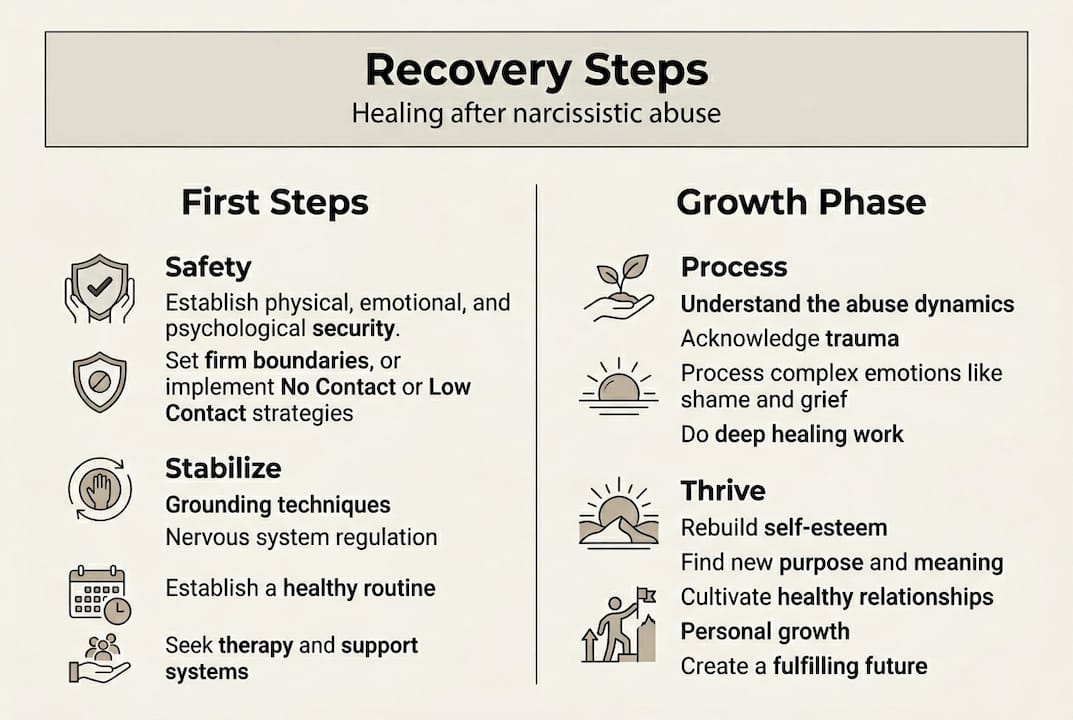
- Step-by-step recovery process
- Troubleshooting setbacks and maintaining progress
- A fresh perspective: What most recovery guides don’t tell you
- Ready for support? Next steps with our therapy experts
- Frequently asked questions
Key Takeaways
| Point | Details |
|---|---|
| Recovery is possible | Healing after narcissistic abuse is supported by research and effective strategies. |
| Step-by-step process | A structured approach with therapy and self-care leads to real progress for survivors. |
| Growth takes time | Meaningful improvement can take months or years, but every step forward matters. |
| Setbacks are normal | Expect emotional ups and downs; persistence and support ensure continued healing. |
Understanding narcissistic abuse and its impacts
Narcissistic abuse refers to the pattern of emotional, psychological, and sometimes physical harm inflicted by someone with narcissistic traits or a clinical diagnosis of Narcissistic Personality Disorder (NPD). NPD is a recognized mental health condition marked by an inflated sense of self-importance, a deep need for admiration, and a lack of empathy for others. Not every person who behaves narcissistically meets the clinical threshold, but the damage they cause can be just as real.
The tactics used in these relationships follow a recognizable cycle. First comes idealization, where the narcissist showers you with affection and attention, making you feel uniquely chosen. Then comes devaluation, where criticism, blame, and emotional withdrawal replace that warmth. Finally, there is often discard, followed by a return to idealization, pulling you back in. This cycle is sometimes called the abuse loop, and it is deliberately disorienting.
Gaslighting sits at the center of this dynamic. It is a form of manipulation where the abuser causes you to doubt your own perceptions, memory, and sanity. Over time, you stop trusting yourself. You apologize for things you did not do. You shrink to avoid conflict. These are not personality flaws. They are survival adaptations.
Survivors commonly experience:
- Anxiety and hypervigilance, constantly scanning for signs of danger
- Chronic self-doubt, second-guessing decisions and feelings
- PTSD symptoms, including flashbacks, nightmares, and emotional numbness
- Social isolation, often engineered by the narcissist to increase dependency
- Depression, tied to grief over the relationship and lost sense of self
A critical point worth naming: narcissistic behavior examples often look subtle from the outside, which makes survivors feel dismissed when they try to explain their experience. The harm is real even when it leaves no visible marks.
“The focus for survivors should be on their own healing. NPD treatment lacks large-scale RCTs, and meaningful change in abusers is rare. Your recovery does not depend on theirs.”
This is why therapy after narcissistic abuse centers on the survivor, not on fixing or waiting for the narcissist. The research on narcissistic abuse recovery consistently shows that survivors who engage in structured therapeutic work make meaningful, measurable gains.
Essential tools and resources for recovery
With a clearer picture of what you are healing from, the next step is knowing which tools actually work. Recovery is not one-size-fits-all, but several approaches have strong evidence behind them.
Evidence-backed therapies for survivors:
- Trauma-focused cognitive behavioral therapy (TF-CBT): Targets PTSD symptoms directly. It helps you process traumatic memories without being overwhelmed by them.
- Mentalization-based therapy (MBT): Builds your ability to understand your own and others’ mental states, which narcissistic abuse often erodes. TF-CBT aids PTSD; MBT improves emotional management, making both strong choices depending on your primary symptoms.
- Dialectical behavior therapy (DBT): Focuses on emotional regulation, distress tolerance, and interpersonal effectiveness. Especially useful if emotional swings feel unmanageable.
- Recovery journaling: A structured writing practice focused on positive self-reflection. Positive Recovery Journaling improved mood and self-view in a study of 81 adults, making it one of the most accessible self-help tools available.
| Intervention | Best for | Format |
|---|---|---|
| TF-CBT | PTSD, trauma processing | Individual therapy |
| MBT | Emotional confusion, identity loss | Individual or group |
| DBT | Emotional dysregulation | Group or individual |
| Recovery journaling | Mood, self-perception | Self-directed |
| Support groups | Isolation, validation | Group, in-person or online |
Beyond formal therapy, coping strategies for recovery like boundary-setting practice, mindfulness, and peer support groups play a meaningful supporting role. Boundaries are not just rules you set for others. They are signals to your own nervous system that you are safe now.

Pro Tip: If your main struggle is intrusive memories and nightmares, start with TF-CBT. If you feel emotionally numb or confused about who you are, MBT may be the better entry point. You do not have to choose just one over time. Many survivors benefit from combining approaches as they move through different phases.
Safety comes first. Before diving into deep trauma processing, make sure you are no longer in contact with the abuser or, if contact is unavoidable (such as co-parenting), that you have clear, structured limits in place. Emotional safety is the foundation everything else is built on. Explore narcissist recovery tips to build that foundation before moving to deeper work.
Step-by-step recovery process
Knowing what works is one thing. Knowing how to sequence it is another. Recovery from narcissistic abuse tends to move through recognizable phases, even if your timeline looks different from someone else’s.
- Establish no-contact or firm boundaries. This is the prerequisite for everything else. You cannot heal in an environment that continues to wound you. If full no-contact is not possible, define exactly what communication is necessary and stick to it.
- Stabilize your nervous system. Before processing trauma, focus on basic regulation: sleep, nutrition, physical movement, and grounding techniques. Your body holds the stress of the relationship, and it needs care before deeper emotional work begins.
- Begin structured therapy. Choose a modality matched to your symptoms (see the table above). Consistency matters more than the specific approach. Weekly sessions over months build the neurological and emotional scaffolding for change.
- Rebuild your identity. Narcissistic relationships often erase your sense of self. Reconnect with values, interests, and relationships that existed before or outside the abuse. This is not a luxury step. It is core to lasting recovery.
- Practice and integrate new patterns. Apply what you learn in therapy to real relationships. Set limits. Notice when old patterns resurface. Celebrate small wins.
| Phase | Focus | Typical timeline |
|---|---|---|
| Safety and stabilization | No-contact, basic self-care | Weeks 1 to 8 |
| Trauma processing | TF-CBT, MBT, journaling | Months 2 to 12 |
| Identity rebuilding | Values, relationships, goals | Months 6 to 18 |
| Integration | New patterns, maintenance | Year 1 onward |
Remission after 2.5 to 5 years of therapy is well-documented in case series, with large effect sizes. That sounds like a long time, but meaningful gains happen much sooner. Most people notice real shifts in anxiety and self-trust within the first six months of consistent work.
For a more detailed breakdown, the step-by-step healing framework and guidance on healing after narcissistic abuse offer practical support at each stage. The emotional healing workflow can also help you see how the phases connect.
Troubleshooting setbacks and maintaining progress
Recovery is not a straight line. Knowing that setbacks are normal does not make them less painful, but it does make them less derailing. Here is what commonly shows up and how to handle it.
Common setbacks and targeted responses:
- Triggers and flashbacks: A song, a phrase, or even a smell can pull you back into the emotional state of the relationship. When this happens, use grounding techniques: name five things you can see, slow your breathing, and remind yourself where you actually are right now.
- Self-doubt and guilt: Many survivors feel responsible for the abuse or wonder if they overreacted. This is a direct result of gaslighting. Write down specific incidents when doubt hits. Concrete facts cut through distorted thinking.
- Return of old patterns: You might find yourself drawn to similar relationship dynamics or minimizing red flags in new connections. This is not failure. It is your nervous system defaulting to what feels familiar. Bring it to therapy.
- Isolation: After leaving, loneliness can feel overwhelming. Survivor support and self-work are crucial precisely because the abuser often dismantled your support network. Rebuilding it intentionally is part of the work.
Pro Tip: Build what therapists call a “relapse prevention plan.” Identify your top three triggers, your go-to coping response for each, and one person you can call when things feel unmanageable. Having this written down before a crisis hits means you spend less energy figuring out what to do in the moment.
If you are navigating the raw early days, healing after a narcissist breakup addresses the specific grief that comes with leaving. And when you are ready to go deeper, the therapy benefits after narcissist resource explains exactly what consistent professional support adds to self-directed recovery.
A fresh perspective: What most recovery guides don’t tell you
Most recovery content promises a clean arc: you do the work, you heal, you move on. That framing is well-intentioned but it sets people up to feel like they are failing when the reality is messier.
Here is what we have seen repeatedly in clinical practice: the goal is not to erase the experience. It is to stop being controlled by it. Some scars stay. Some situations will always carry a faint echo of the old pain. That is not a sign that therapy failed or that you did not try hard enough.
What actually happens for many survivors is something more interesting than just “getting back to normal.” They develop a sharper sense of their own values. They become better at recognizing manipulation early. They build relationships with more intentionality than they ever had before. The trauma becomes part of a larger story rather than the whole story.
The therapy benefits for deep healing are not just symptom reduction. They include identity growth, relational clarity, and a kind of hard-won self-knowledge that is genuinely difficult to arrive at any other way. Your path does not need to match a standard timeline or look like anyone else’s recovery. Progress that is real but slow still counts.
Ready for support? Next steps with our therapy experts
If reading this guide has brought up feelings you are not sure how to handle alone, that is a signal worth paying attention to. Healing from narcissistic abuse is deeply personal work, and having a skilled therapist in your corner changes the pace and depth of recovery.

At Bergen County Therapist, we offer evidence-based care tailored to survivors of narcissistic relationships. Whether you are just beginning to name what happened or you are well into recovery and hitting a wall, our team can help you find the right approach. Explore the full range of psychotherapy options available, learn how to use mental health tracking to monitor your progress, or find targeted support if depression has become part of your experience. A free consultation is the first step, and there is no pressure to commit before you are ready.
Frequently asked questions
How long does recovery from narcissistic abuse usually take?
Recovery commonly takes months to years, with large improvements often seen within the first one to two years of consistent therapy. Case series show remission after 2.5 to 5 years of structured therapeutic work, though meaningful gains appear much sooner for most survivors.
What therapies are most effective for survivors of narcissistic abuse?
Trauma-focused cognitive behavioral therapy, mentalization-based therapy, and recovery journaling have strong evidence for supporting emotional healing. TF-CBT, MBT, and journaling each target different aspects of recovery, so the best choice depends on your specific symptoms.
Is it possible for a narcissist to change?
Change is rare and usually only possible in mild cases with highly motivated individuals. Narcissist change is rare, with low motivation and dropout being common, so survivors are best served by focusing on their own healing rather than waiting for the abuser to transform.
What are the early signs I’m making progress in my recovery?
Early signs include reduced emotional reactivity to triggers, clearer self-understanding, and the growing ability to set and hold healthy limits. Positive Recovery Journaling improved mood and self-view in 81 adults, suggesting that even small self-directed practices can produce measurable early gains.