

TL;DR:
- Anticipatory grief occurs before a loved one’s actual loss and involves emotional and physical symptoms.
- It commonly affects caregivers and family members facing terminal illness, dementia, or major life changes.
- Support, therapy, journaling, and meaningful memory-making can help manage anticipatory grief effectively.
Grief doesn’t wait for a loss to happen. Many people are surprised to find themselves mourning someone who is still alive, feeling waves of sadness, anger, or numbness long before a loved one passes. This is anticipatory grief, and it’s far more common than most people realize. If you’re caring for a terminally ill family member, watching a parent’s memory fade with dementia, or bracing for any expected loss, this guide explains what anticipatory grief means, what it feels like, why it happens, and what you can do to cope.
Table of Contents
- What is anticipatory grief?
- What are the emotional and physical signs?
- Why does anticipatory grief happen? (Brain science and family dynamics)
- How to cope with anticipatory grief (practical strategies)
- A therapist’s perspective: What many miss about anticipatory grief
- Find support for anticipatory grief today
- Frequently asked questions
Key Takeaways
| Point | Details |
|---|---|
| Anticipatory grief defined | Anticipatory grief is emotional distress that occurs before an expected loss. |
| Common signs | It often includes sadness, anxiety, and physical symptoms like fatigue or trouble sleeping. |
| Why it happens | It helps the brain and emotions prepare for a significant upcoming change. |
| Coping strategies | Support groups, therapy, and self-care practices make a positive difference. |
| Professional help benefits | Seeking therapy early reduces risk of complicated grief after loss. |
What is anticipatory grief?
Anticipatory grief is the emotional, psychological, and sometimes physical process of grieving a loss before it actually occurs. Unlike the grief most people picture, which begins after a death or separation, anticipatory grief starts when the loss feels inevitable but hasn’t happened yet. It’s not a sign of weakness, and it doesn’t mean you’re giving up on the person you love.
This type of grief is especially common in specific situations. You might recognize it in your own life if you’re dealing with any of the following:
- Caring for a loved one with a terminal illness such as cancer or heart failure
- Watching a parent or spouse decline due to Alzheimer’s disease or another form of dementia
- Supporting a child or partner through a serious chronic illness
- Facing the expected death of a beloved pet
- Preparing for any major, irreversible life change tied to loss
One important distinction: anticipatory grief is often confused with depression or anxiety, but it is a distinct emotional process. Understanding this difference matters because the support and treatment that helps most will vary depending on what you’re actually experiencing. Misidentifying anticipatory grief as clinical depression, for example, can lead to the wrong kind of help or no help at all.
Here’s a quick comparison to make the difference clearer:
| Feature | Anticipatory grief | Post-loss grief |
|---|---|---|
| Timing | Before the loss occurs | After the loss occurs |
| Primary trigger | Expected or impending loss | Actual death or separation |
| Common emotions | Sadness, fear, guilt, anger | Sadness, shock, numbness, longing |
| Physical symptoms | Fatigue, sleep disruption, appetite changes | Similar, often more acute initially |
| Duration | Can last months or years | Varies widely by person |
| Unique challenge | Grief alongside ongoing caregiving | Grief without the person present |
Understanding where you fall on this spectrum helps you find the right kind of support. Exploring grief therapy options early, rather than waiting until after a loss, can make a meaningful difference in your emotional resilience.
What are the emotional and physical signs?
Anticipatory grief shows up differently for everyone, but there are recognizable patterns. Knowing these signs can help you name what you’re going through, which is often the first step toward feeling less alone in it.
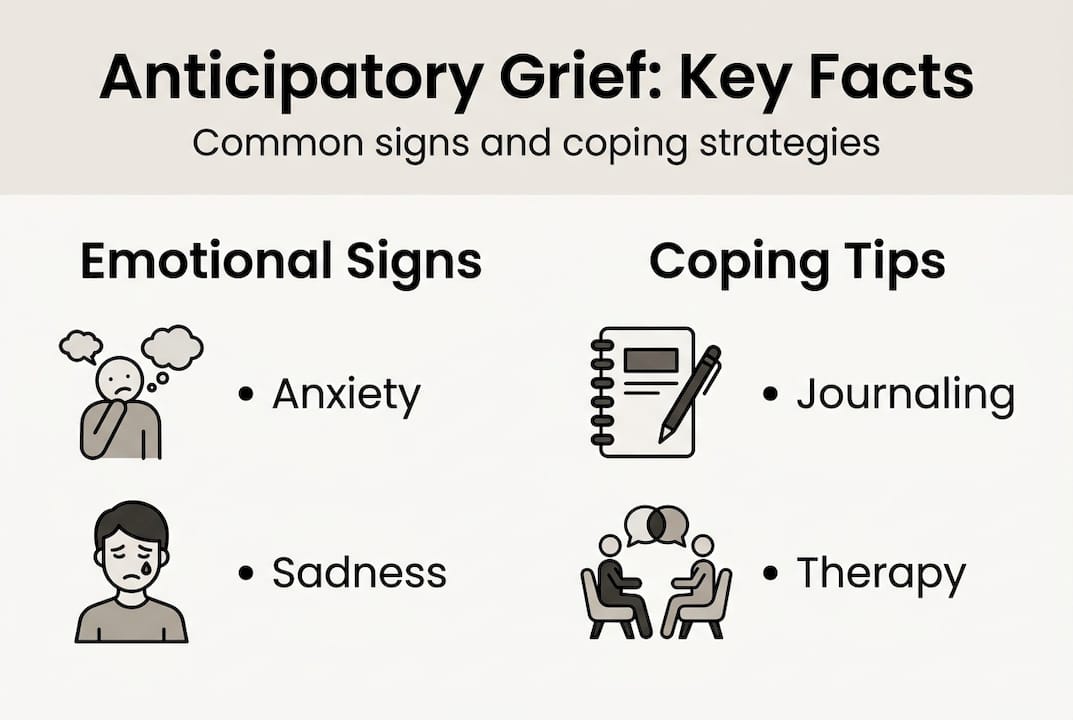
Emotional signs you may notice:
- Persistent sadness or crying spells, even during moments of normalcy
- Anxiety about the future and what life will look like after the loss
- Guilt for feeling grief while the person is still alive
- Anger, sometimes directed at the situation, medical staff, or even the person who is ill
- Emotional numbness or feeling disconnected from daily life
- Preoccupation with death or the dying process
- Longing for things to go back to how they were
Physical signs that often accompany anticipatory grief:
- Trouble falling or staying asleep
- Changes in appetite, either eating too much or too little
- Chronic fatigue even without physical exertion
- Headaches, stomach issues, or a general sense of physical heaviness
- Weakened immune response, getting sick more often
Research confirms that anticipatory grief can present as sadness, anxiety, irritability, or even physical symptoms, and is often misdiagnosed. This is why it’s so important to pay attention to the full picture, not just your emotional state.

One key difference from post-loss grief: anticipatory grief often coexists with hope. You may swing between accepting the inevitable and desperately hoping for a different outcome. That tension is exhausting and entirely normal.
Studies also show a meaningful connection between anticipatory grief and pre-loss depression risk, which means the emotional toll during this period is real and measurable, not something to push through alone.
Pro Tip: If your symptoms are significantly disrupting your sleep, work, or relationships for more than two weeks, it’s worth reaching out to a professional. Learning about grief management strategies or connecting with grief support groups can provide relief much sooner than most people expect.
Why does anticipatory grief happen? (Brain science and family dynamics)
Knowing the signs, you might still wonder why your mind starts grieving before any loss has occurred. The answer lies in how the brain handles uncertainty and change.
The brain is wired to protect you from emotional shock. When it registers that a significant loss is coming, it begins a process of emotional preparation. This is anticipatory grief doing its job. It’s not a malfunction. It’s your nervous system trying to soften the blow of what’s ahead.
Anticipatory grief isn’t about letting go too soon. It’s your mind and heart beginning to adapt to a reality that hasn’t fully arrived yet. For some people, this process is actually more intense than the grief that follows the loss itself.
This is especially true in cases of dementia. When a parent with Alzheimer’s is still physically present but the person you knew is fading, you’re experiencing what researchers call ambiguous loss. You’re grieving someone who is both here and gone at the same time. That kind of grief has no clear endpoint, which makes it particularly hard to process.
For caregivers and families, anticipatory grief carries some unique pressures:
- Caregivers often suppress their own grief to stay strong for the person who is ill
- Family members may grieve at different rates, causing tension and misunderstanding
- Children in the family may not have language for what they’re feeling
- The ongoing nature of caregiving can make it hard to separate grief from burnout
- Guilt about grieving while the person is still alive is extremely common
Some research notes that anticipatory grief and pre-loss depression are closely linked, and that once pre-loss depression is accounted for, anticipatory grief doesn’t always independently predict post-loss outcomes. This suggests that treating depression and emotional distress during the anticipatory phase is critical, not something to defer. Family grief therapy can be especially valuable when multiple family members are navigating these dynamics at once.
How to cope with anticipatory grief (practical strategies)
There’s no shortcut through anticipatory grief, but there are proven ways to move through it with more support and less suffering. Research shows that support groups, therapy, mindfulness, journaling, and planning help reduce the risk of complicated grief later on.
Here are six strategies that work:
- Acknowledge your emotions. Name what you’re feeling without judgment. Saying “I am grieving” out loud, even to yourself, reduces the internal pressure that builds when emotions go unacknowledged.
- Seek social support. Talk to a trusted friend, family member, or counselor. Isolation makes anticipatory grief heavier. You don’t have to explain everything; just being with someone helps.
- Journal regularly. Writing about your feelings, fears, and memories creates an outlet and can reveal patterns in your emotional experience that are hard to see otherwise.
- Practice mindfulness. Staying present, even briefly, interrupts the spiral of future-focused fear. Simple breathing exercises or short meditation sessions can reset your nervous system.
- Create meaningful memories. If the person is still with you, use this time intentionally. Record stories, revisit favorite places, say the things that matter. These memories become anchors after loss.
- Plan practical affairs. Handling logistics, such as legal documents, finances, or care arrangements, reduces anxiety and gives you a sense of agency during a time that can feel out of control.
Pro Tip: Journaling doesn’t need to be elaborate. Even five minutes a day writing freely about what you’re feeling can lower stress hormones and improve emotional clarity over time. Pairing journaling with a grief support group gives you both private reflection and communal connection.
Here’s a quick overview of coping approaches:
| Approach | Type | Best for |
|---|---|---|
| Individual therapy | Professional | Deep emotional processing |
| Support groups | Group/social | Reducing isolation, shared experience |
| Journaling | Self-care | Daily emotional release |
| Mindfulness | Self-care | Anxiety and present-moment grounding |
| Family therapy | Professional | Navigating shared grief dynamics |
| Memory-making | Personal | Connection and meaning before loss |
If symptoms feel overwhelming or persistent, grief therapy techniques rooted in evidence-based practice can offer structured, personalized relief.
A therapist’s perspective: What many miss about anticipatory grief
Most people who come to therapy during this phase believe they’re doing something wrong. They think grieving now means they’ve already given up, or that they’re betraying the person they love. That belief causes more suffering than the grief itself.
Here’s what we see consistently in clinical work: suppressing anticipatory grief doesn’t protect you. It delays and compounds the pain. The people who allow themselves to grieve before a loss, with support, tend to move through post-loss grief with more resilience and less risk of complicated grief.
Sometimes anticipatory grief is more intense than what follows the actual loss. That’s not a sign something is wrong with you. It’s a sign that you love deeply and that your emotional system is working hard.
Validation matters enormously here. When someone in your life or a therapist simply says, “What you’re feeling makes complete sense,” it can break through weeks of shame and isolation. Opening up about anticipatory grief, whether to a friend, a group, or a therapist, is often the single most effective thing you can do. Learning more about coping after loss can also help you prepare for what comes next without fear.
Find support for anticipatory grief today
You don’t have to wait until after a loss to get support. Anticipatory grief is a real, recognized emotional experience, and professional help is available right now, before things get harder.

At Bergen County Therapist, we offer a range of services designed to meet you where you are. Whether you’re looking for individual therapy options to process your emotions privately, want to start psychotherapy with a compassionate, experienced clinician, or need support for depression that has developed alongside your grief, our team is here. Reaching out early isn’t a sign of weakness. It’s one of the most effective things you can do for yourself and for the people who depend on you.
Frequently asked questions
Is anticipatory grief normal?
Yes, anticipatory grief is a common and valid emotional response when facing an expected loss. Anticipatory grief is common among caregivers and families, and experiencing it does not mean you are giving up on your loved one.
How is anticipatory grief different from regular grief?
Anticipatory grief happens before a loss occurs, while regular grief follows the actual death or separation. Both share overlapping emotions, but anticipatory grief occurs before loss and often includes the added complexity of ongoing caregiving and uncertain timelines.
What are the best ways to cope with anticipatory grief?
Effective strategies include seeking professional support, journaling, mindfulness, creating meaningful memories, and practical planning. Research confirms that support groups, therapy, and self-care methods lower the risk of complex grief developing after the loss.
Can anticipatory grief lead to depression?
There is a documented link between anticipatory grief and both pre-loss and post-loss depression. However, research shows that anticipatory grief and depression are related but distinct, and that anticipatory grief does not always independently predict post-loss depression once pre-loss depression is accounted for.