

- Coping skills are practical, evidence-backed methods individuals use to manage stress, anxiety, and emotional challenges. Tailoring a combination of techniques, such as deep breathing, journaling, and outdoor activity, enhances their effectiveness depending on specific triggers and situations. Practicing these skills regularly during low-stress moments builds automatic responses for times of acute emotional or physical distress.
Coping skills are defined as practical, evidence-backed methods people use to manage stress, anxiety, and emotional challenges in daily life. The CDC recommends a personalized mix of techniques including deep breathing, journaling, spending time outdoors, and practicing gratitude. Research confirms that no single technique works best for everyone. The most effective approach combines several methods tailored to your specific triggers, personality, and situation. Whether you are a teenager navigating school pressure or an adult managing work stress, the examples below give you a practical starting point.
1. Examples of healthy coping skills: the top 10 list
The ten techniques below represent the most widely recommended and research-supported coping skills across all age groups. Each one targets either the stressor itself or the emotional response it creates.
2. Deep breathing
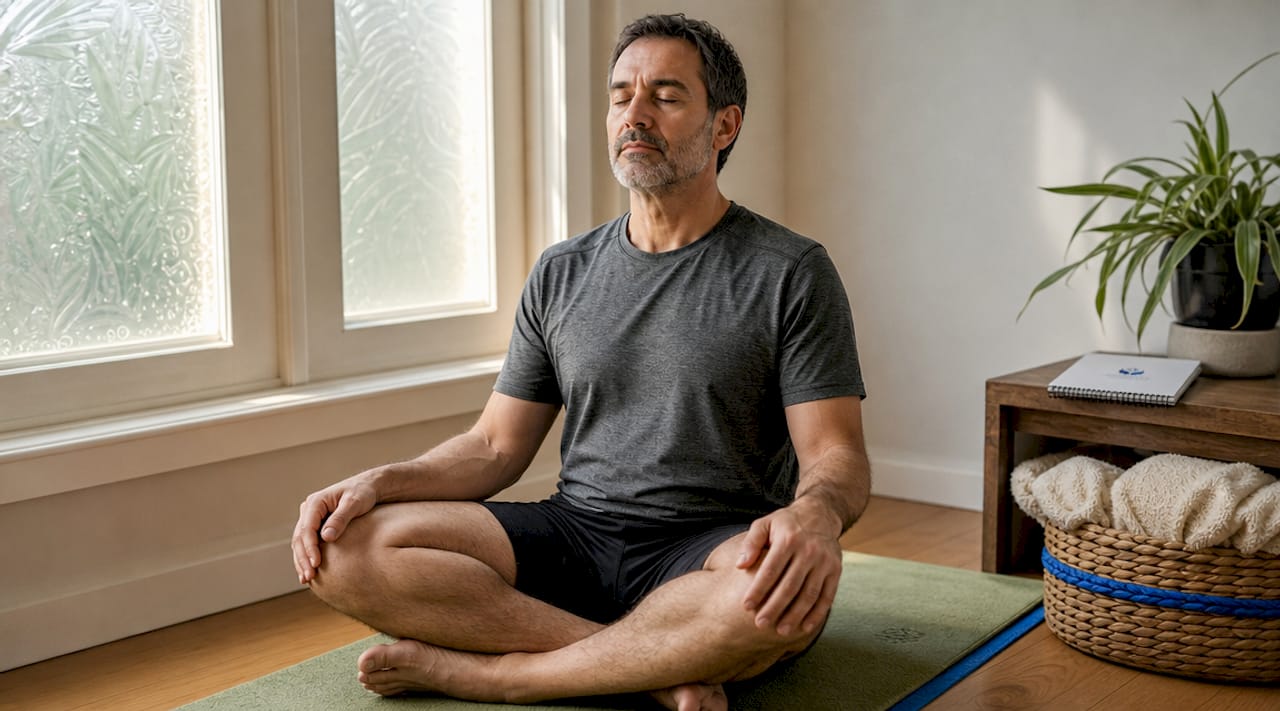
Deep breathing activates the parasympathetic nervous system, slowing your heart rate and reducing the physical symptoms of stress within minutes. The box breathing method, used by Navy SEALs and therapists alike, follows a 4-4-4-4 pattern: inhale for four counts, hold for four, exhale for four, hold for four. Three to five cycles are enough to interrupt a stress response. You can practice this anywhere, at your desk, in your car, or before a difficult conversation.
3. The 5-4-3-2-1 grounding technique
The 5-4-3-2-1 grounding technique helps manage spikes in anxiety by directing attention to five things you can see, four you can touch, three you can hear, two you can smell, and one you can taste. This sensory focus breaks the cycle of anxious thought by pulling attention outward and into the present moment. It requires no equipment and no preparation. Bergencountytherapist therapists frequently teach this as a first-line tool for panic and acute anxiety.
4. Progressive muscle relaxation
Progressive muscle relaxation (PMR) involves tensing and then releasing each muscle group from your feet to your face, one at a time. The contrast between tension and release teaches your body to recognize and release physical stress. A full PMR session takes about 15 minutes, though abbreviated versions targeting the shoulders, jaw, and hands work well during a short break. Regular practice reduces baseline muscle tension over time.
5. Physical activity and mindful walking
Exercise reduces stress-induced vascular inflammation and improves stress resilience in both animal models and humans. This means physical activity does not just improve your mood. It changes your body’s physiological response to stress. The CDC recommends 20 to 30 minutes of daily movement, noting that every increment helps build resilience. Mindful walking, where you pay deliberate attention to each step and your surroundings, doubles as both exercise and a grounding practice.
6. Journaling
Journaling externalizes internal stress by converting vague, looping thoughts into concrete written language. This process, sometimes called expressive writing, has been studied extensively and consistently shows reductions in anxiety and improvements in emotional clarity. You do not need a structured format. Writing three sentences about what is bothering you and why is enough to create distance from the emotion. Bergencountytherapist recommends pairing journaling with a consistent time of day, such as right before bed, to build the habit.
7. Gratitude practice
Gratitude practice trains attention toward positive experiences, which counteracts the brain’s natural negativity bias. Writing down three specific things you are grateful for each day, not generic items but concrete moments, produces measurable shifts in mood over two to four weeks of consistent practice. The specificity matters. “I’m grateful my coworker covered my meeting” works better than “I’m grateful for my job.” This technique is particularly effective as a coping skill for anxiety because it interrupts rumination.
8. Spending time outdoors
Time in natural environments lowers cortisol levels and reduces self-reported stress. Even a 20-minute walk in a park produces measurable reductions in stress hormones compared to the same walk in an urban setting. The CDC lists outdoor time as a recommended healthy coping strategy alongside breathing and journaling. For people who cannot access green spaces easily, sitting near a window with natural light or tending to houseplants produces similar, if smaller, benefits.
9. Social connection and talking to trusted people
Talking to a trusted friend, family member, or therapist is one of the most effective coping strategies for emotional distress. Social support buffers the physiological impact of stress by reducing cortisol and activating oxytocin. The keyword is trusted. Venting to someone who amplifies your anxiety makes things worse, not better. Identifying two or three people you can contact during difficult moments and telling them their role in advance makes this skill far more accessible when you actually need it.
Pro Tip: Combine at least two coping skills from this list. Research shows that mixing techniques, such as pairing deep breathing with journaling, produces better stress management outcomes than relying on a single method.
10. Goal-setting and problem-focused planning
Goal-setting addresses the stressor directly rather than managing the emotional response to it. This approach, classified as problem-focused coping in the Lazarus and Folkman model, works best when the stressor is within your control. Breaking a large problem into three specific next steps reduces overwhelm and creates a sense of agency. For example, financial stress responds well to a written budget and a single action item, while grief does not. Matching the strategy to the situation is what makes this skill effective.
How to choose the right coping skill for the situation
The Lazarus and Folkman framework divides coping strategies into two categories: problem-focused coping, which targets the stressor itself, and emotion-focused coping, which manages the feelings the stressor produces. The choice between them depends on one question: is this situation within my control?
When the stressor is controllable, problem-focused skills like planning, goal-setting, and time management produce the best results. When the stressor is outside your control, such as a health diagnosis or a loss, emotion-focused skills like grounding, breathing, and social support are more appropriate. Mismatching the strategy to the situation is a common source of frustration. Trying to plan your way out of grief, or breathe your way out of a deadline, both miss the point.
- Use problem-focused coping for: work deadlines, financial decisions, relationship conflicts with a clear resolution path
- Use emotion-focused coping for: grief, chronic illness, situations where the outcome is already fixed
- Use both together for: major life transitions, caregiving stress, long-term anxiety
Pro Tip: Pre-plan your coping strategies during a calm moment. Deciding in advance which skill you will use for specific triggers means you do not have to make decisions when your stress response is already activated.
Quick techniques for acute anxiety and emotional spikes
When anxiety spikes suddenly, practitioners advise using low-cognitive-load skills first. This means grounding and breathing before journaling or problem-solving. High anxiety reduces working memory, so complex strategies simply do not work until the nervous system has calmed down.
The sequence that works: start with the 5-4-3-2-1 grounding technique to interrupt the anxiety spiral, then move to box breathing to slow your heart rate, then use PMR if physical tension is high. Cold water on your wrists or face acts as a sensory interruption that quickly shifts the nervous system. Humming or singing also activates the vagus nerve, producing a calming effect within 60 to 90 seconds. These are not permanent solutions. They are tools to bring you back to a regulated state where you can then apply longer-term stress management strategies.
Building a coping routine for long-term resilience
Small, consistent coping habits build resilience more effectively than occasional intensive efforts. The Make Better Choices 2 study found that behavioral interventions targeting diet and physical activity produced statistically significant improvements in both sleep duration and stress levels. This confirms that lifestyle-level changes, not just in-the-moment techniques, are a core part of effective coping.
A practical daily routine combines physical movement, one reflective practice like journaling or gratitude, and at least one social interaction. Consistency matters more than duration. Ten minutes of daily journaling outperform a two-hour session once a month. The CDC’s self-care guidance emphasizes incremental steps, noting that small daily actions compound into meaningful resilience to stress over time.
| Routine element | Benefit |
|---|---|
| 20-30 min daily movement | Reduces vascular inflammation and stress hormones |
| Journaling or gratitude writing | Improves emotional clarity and interrupts rumination |
| Social connection | Lowers cortisol and activates oxytocin |
| Time outdoors | Reduces self-reported stress and cortisol levels |
| Pre-planned coping responses | Reduces decision fatigue during high-stress moments |
Key takeaways
Effective coping requires a personalized mix of problem-focused and emotion-focused skills practiced consistently before a crisis hits.
| Point | Details |
|---|---|
| Match skill to stressor | Use problem-focused coping for controllable stressors and emotion-focused for fixed ones. |
| Start low-effort during acute anxiety | Use grounding and breathing first before attempting journaling or planning. |
| Build a daily routine | Small consistent habits like movement and gratitude compound into long-term resilience. |
| Combine multiple techniques | Mixing two or more coping skills produces better outcomes than relying on one. |
| Pre-plan your responses | Decide which skills to use for specific triggers during calm moments, not during crises. |
Why I think most people approach coping skills backwards
Most people reach for coping skills only when they are already overwhelmed. That is the worst possible time to try something new. When your stress response is fully activated, your prefrontal cortex, the part of the brain responsible for decision-making and learning, goes offline. Trying to journal or plan your way out of a panic attack at that point is like trying to read a map while driving in a blizzard.
What I have seen work, both in my own practice and in the research, is rehearsal. Practice box breathing on a Tuesday afternoon when nothing is wrong. Write in your journal when you are mildly annoyed, not devastated. Run through the 5-4-3-2-1 technique when you are slightly stressed, not spiraling. This builds the neural pathway so the skill is automatic when you actually need it.
The other mistake I see constantly is overloading. People read an article like this one and try to implement all ten skills at once. They burn out in a week and conclude that coping skills do not work. Pick two. Practice them for three weeks. Then add a third. A small, practiced toolbox beats a large, theoretical one every time. And if you find that self-directed practice is not enough, that is not a failure. It is information. That is exactly when working with a therapist becomes the most efficient path forward.
— Stephen
Ready to build your personal coping toolkit?
Reading about coping skills is a solid first step. Applying them consistently, especially under real stress, is where most people benefit from support. At Bergencountytherapist, Dr. Stephen Oreski and his team help individuals of all ages identify which coping strategies fit their specific triggers and build a plan they can actually use.
If you want to start tracking how your current coping efforts are affecting your mood and stress levels, the mental health tracking guide on the Bergencountytherapist website is a practical next step. For those dealing with anxiety specifically, anxiety therapy services at the practice are available both in-person in Bergen County and online. A free consultation takes 15 minutes and costs nothing to find out whether professional support makes sense for you.
FAQ
What are coping skills?
Coping skills are practical techniques used to manage stress, anxiety, and difficult emotions. They include both problem-focused methods, such as planning, and emotion-focused methods, such as deep breathing or grounding.
What are the most effective coping strategies for anxiety?
The 5-4-3-2-1 grounding technique and box breathing are the most effective first-response tools for acute anxiety because they require low cognitive effort and work quickly to calm the nervous system.
How do I develop coping skills that stick?
Practice coping skills during low-stress moments so they become automatic. The CDC recommends building small daily habits rather than relying on intensive but infrequent efforts.
What coping skills work best for teens?
Grounding techniques, physical activity, and social connection are particularly effective coping skills for teens because they are low-barrier, social, and do not require extended focus or planning.
When should I see a therapist instead of using self-help coping skills?
If self-directed coping skills are not reducing your distress after consistent practice, or if stress is interfering with daily functioning, professional support is the appropriate next step rather than trying more techniques on your own.