
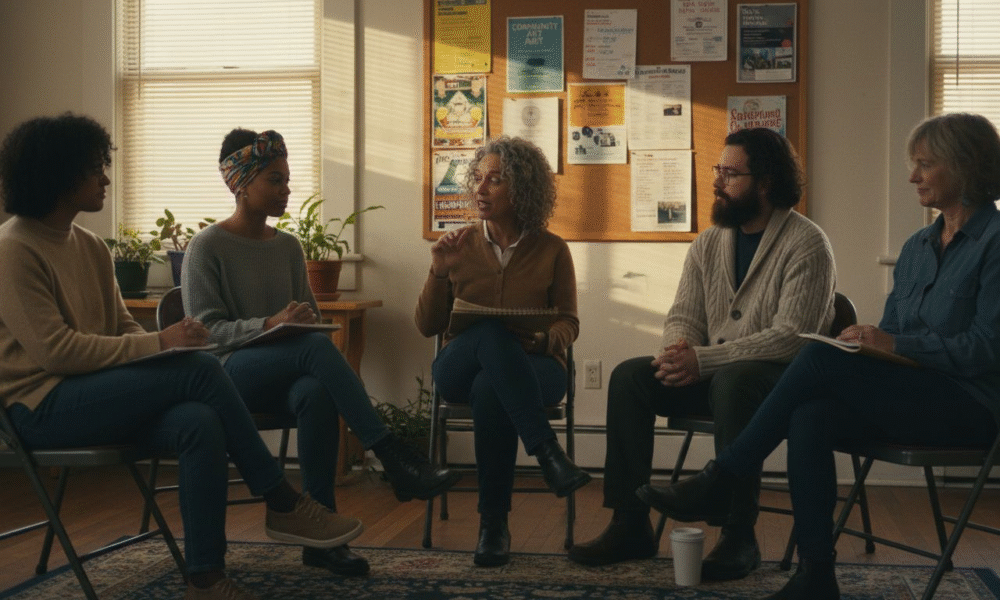
Most American adults searching for real emotional growth know that finding genuine support can feel isolating. Studies reveal that nearly one in five American adults faces a mental health challenge every year. Group counseling offers Bergen County residents a way to connect with others who truly understand their struggles. By building supportive relationships in a safe setting, you can discover new perspectives, break through loneliness, and start feeling stronger day by day.
Table of Contents
- 1. Build Supportive Connections With Peers
- 2. Gain Diverse Perspectives On Challenges
- 3. Improve Social And Communication Skills
- 4. Develop Healthy Coping Strategies
- 5. Boost Self-Esteem And Confidence
- 6. Reduce Feelings Of Isolation
- 7. Practice Positive Change In A Safe Setting
Navigate the 7 Essential Benefits of Group Counseling
| Takeaway | Explanation |
|---|---|
| 1. Build supportive peer connections. | Forming strong relationships in group counseling fosters emotional healing and personal transformation through shared understanding and support. |
| 2. Gain diverse perspectives on challenges. | Engaging with peers allows you to view your struggles through different lenses, enhancing your problem-solving abilities and flexibility. |
| 3. Improve social and communication skills. | Group discussions provide a safe space to practice and refine your communication, leading to stronger interpersonal connections. |
| 4. Develop effective coping strategies. | Sharing personal experiences helps you learn and adapt various coping mechanisms for emotional regulation from peers. |
| 5. Boost self-esteem and confidence. | Receiving emotional validation from group members can shift your self-perception, fostering resilience and a positive self-image. |
1. Build Supportive Connections with Peers
In group counseling, building supportive connections with peers is more than just socializing. It is a powerful pathway to personal transformation and emotional healing. When you share experiences with others facing similar challenges, you create a profound network of understanding and mutual support.
Peer support groups offer a unique environment where individuals can break through isolation and develop meaningful relationships. Research shows that these connections help reduce feelings of loneliness while simultaneously boosting emotional resilience. By actively listening and sharing your experiences, you create a collaborative space of empathy and genuine connection.
Participating in group counseling means entering a structured environment designed to encourage open communication and trust. Skilled facilitators guide participants toward building strong interpersonal bonds, which become foundational for emotional recovery. You are not just attending a meeting. You are joining a community committed to mutual growth and understanding.
These peer connections provide more than emotional support. They offer practical problem solving strategies, different perspectives on personal challenges, and a sense of belonging. Imagine having a supportive network of individuals who truly understand your journey, who can offer insights and encouragement without judgment.
Pro tip:When joining a group counseling session, approach interactions with genuine curiosity and openness, listening as much as you share to maximize your personal growth and connection potential.
2. Gain Diverse Perspectives on Challenges
Group counseling offers an extraordinary opportunity to view your personal challenges through multiple lenses. When you engage with peers who have experienced similar struggles, you unlock a powerful learning environment that transcends individual limitations and provides rich, nuanced insights into problem solving.
Each person in a group counseling setting brings a unique background and set of experiences. These diverse perspectives create a dynamic learning ecosystem where you can discover alternative approaches to handling emotional and psychological challenges. By listening to others, you expand your understanding beyond your own immediate perception and develop more flexible thinking patterns.
Psychological Amplification happens when group members share their strategies and coping mechanisms. Imagine hearing ten different approaches to managing anxiety or overcoming personal obstacles. This collective wisdom becomes a treasure trove of potential solutions that you might never have considered independently.
Through active participation, you learn to challenge your existing thought patterns. Group members gently challenge each other assumptions helping you recognize blind spots in your thinking. This process of collective reflection encourages personal growth and helps you develop more adaptive and resilient mental frameworks.
Pro tip:During group discussions, practice active listening by focusing on understanding others’ perspectives without immediately judging or comparing them to your own experiences.
3. Improve Social and Communication Skills
Group counseling serves as a powerful training ground for developing advanced social and communication skills. Unlike traditional learning environments, these sessions provide a safe space to practice authentic interpersonal interactions while receiving real time feedback and support.
In group settings, participants learn to articulate complex emotions with clarity and listen actively to others. Nonverbal communication becomes as important as verbal expression. You gain opportunities to observe how different communication styles impact group dynamics and personal connections.
Strengthening Relationships: The Power of Social Connection involves more than just talking. It requires understanding nuanced communication techniques. Participants practice expressing themselves honestly while simultaneously developing empathy and emotional intelligence.
The group environment encourages members to challenge unhelpful communication patterns. Facilitators provide constructive feedback that helps individuals recognize their communication blind spots. You learn to communicate more effectively by observing how others respond to different approaches and receiving guided insights from professionals.
Skillful communication is about creating genuine connections. Group counseling teaches you to balance vulnerability with appropriate boundaries, read social cues more accurately, and respond to others with greater emotional awareness.
Pro tip:Practice active listening by focusing completely on the speaker without planning your response, and then reflect back what you heard to ensure genuine understanding.
4. Develop Healthy Coping Strategies
Group counseling provides a dynamic environment for learning and practicing effective coping strategies that transform how you navigate life’s challenges. Unlike individual therapy, the group setting offers multiple perspectives and real time feedback for developing resilient mental approaches.
Emotional Regulation becomes a collaborative learning experience in group counseling. Participants share personal strategies for managing stress, anxiety, and emotional turbulence. You learn not just from professional guidance but from peers who have successfully navigated similar psychological landscapes.
Coping with Stress involves understanding your unique emotional triggers and developing personalized techniques for maintaining mental equilibrium. Group therapy creates a supportive laboratory where you can experiment with new coping mechanisms, receive immediate feedback, and refine your approach.
The collective wisdom of group members provides a rich tapestry of coping techniques. Some participants might share mindfulness practices, while others discuss cognitive reframing or stress reduction techniques. This diversity helps you build a comprehensive toolkit for emotional resilience.
Professional facilitators guide these learning experiences, helping participants transform theoretical knowledge into practical skills. You learn to recognize unhealthy patterns, challenge negative thought cycles, and develop more adaptive responses to life stressors.
Pro tip:Practice vulnerability by sharing your coping challenges in the group, and remain open to receiving constructive feedback and alternative perspectives from fellow participants.
5. Boost Self-Esteem and Confidence
Group counseling transforms how you perceive yourself by creating a supportive environment where personal vulnerabilities become sources of strength. The collective experience of sharing and being heard provides a powerful antidote to self doubt and negative self perception.
In these therapeutic settings, Emotional Validation becomes a cornerstone of building self confidence. When group members listen without judgment and offer compassionate responses, you begin to recognize your inherent worth beyond your struggles.
Self-Esteem and Mental Health involves understanding that your experiences are not defined by your challenges. Group therapy helps you reframe personal narratives from ones of limitation to stories of resilience and potential.
The group dynamic offers unique opportunities to challenge negative self talk. As you hear others share similar struggles and witness their courage, you start to recognize similar strength within yourself. This process of collective healing dismantles isolation and reinforces personal value.
Professional facilitators guide participants in developing constructive self talk and challenging destructive belief systems. Through structured activities and shared experiences, you learn to replace critical inner voices with compassionate self understanding.
Pro tip:Practice sharing one vulnerable experience in group therapy each session, focusing on your emotional growth rather than perceived weaknesses.
6. Reduce Feelings of Isolation
Isolation can be a silent destroyer of mental wellness, creating emotional barriers that disconnect you from meaningful human experiences. Group counseling serves as a powerful antidote to this pervasive challenge by creating a structured environment of genuine connection and shared understanding.
Collective Healing transforms individual struggles into a communal journey of recovery. When you realize that your personal challenges are not unique, the weight of isolation begins to lift. The group becomes a mirror reflecting shared human experiences rather than individual pain.
Tips for Coping with Social Isolation emphasize the importance of creating authentic connections. Group therapy provides a safe space where vulnerability is not a weakness but a strength. Participants learn that sharing personal stories does not diminish their worth but actually creates powerful bonds of empathy.
The psychological impact of feeling understood cannot be overstated. In group settings, you witness others navigating similar emotional landscapes, which dramatically reduces feelings of loneliness. Each shared story becomes a bridge connecting individual experiences, helping you recognize that your struggles are part of a broader human narrative.
Professional facilitators guide these interactions, ensuring that the group remains a supportive and constructive environment. They help participants develop communication skills that extend beyond the therapy room, enabling more meaningful connections in all areas of life.
Pro tip:Commit to speaking at least once during each group session, even if it is just a brief reflection, to actively combat feelings of isolation and practice meaningful connection.
7. Practice Positive Change in a Safe Setting
Group counseling provides a unique environment where personal transformation can occur with minimal risk and maximum support. It is a carefully crafted space designed to help you explore new behaviors, challenge existing patterns, and grow with the gentle guidance of professional facilitators and supportive peers.
Psychological Experimentation becomes safe and structured in group therapy. You can test new communication strategies, emotional responses, and interpersonal approaches while receiving immediate feedback and compassionate understanding from others who are also on their personal growth journeys.
Examples of Affirming Therapy for Growth highlight how therapeutic settings create opportunities for incremental personal development. The group becomes a living laboratory where you can practice vulnerability, learn from collective experiences, and build confidence in a nurturing atmosphere.
Professional facilitators design these environments to balance safety with meaningful challenge. They create ground rules that protect participants emotional well being while simultaneously encouraging authentic exploration. This delicate balance allows you to step outside your comfort zone without feeling exposed or overwhelmed.
The collective wisdom of the group provides multiple perspectives on personal challenges. You witness different approaches to similar problems, learn from others resilience, and gain insights that might take years to discover through individual reflection.
Pro tip:Approach each group session with curiosity and openness, viewing it as an opportunity to experiment with new ways of thinking and interacting without fear of judgment.
Below is a comprehensive table summarizing the essential benefits, strategies, and outcomes of participating in group counseling as detailed in the article.
| Aspect | Description | Key Benefits |
|---|---|---|
| Establishing Peer Connections | Build meaningful relationships with others facing similar challenges through shared experiences and mutual support. | Reduced feelings of loneliness, increased emotional resilience, and a sense of belonging. |
| Gaining Diverse Perspectives | Learn from the varied experiences and strategies of group members, offering alternative views on personal challenges. | Enhanced problem-solving skills and development of flexible thinking patterns. |
| Enhancing Communication Skills | Practice articulating emotions and navigating social interactions in a safe and supportive space. | Improved interpersonal effectiveness and emotional intelligence. |
| Developing Coping Mechanisms | Explore and experiment with effective strategies for managing stress and emotional challenges. | Acquisition of practical tools for emotional resilience and mental health maintenance. |
| Building Self-Esteem | Share and validate experiences within the group, fostering positive self-perception. | Strengthened self-confidence and reframed personal narratives toward resilience. |
| Alleviating Isolation | Participate in a communal setting that transforms individual struggles into shared recovery efforts. | Greater connection with others and understanding of shared human experiences. |
| Encouraging Personal Growth | Test new behaviors and challenge existing patterns with guidance and group feedback. | Safe environment for exploring transformation and cultivating self-improvement. |
This table encapsulates the multifaceted advantages and transformative potential of group counseling settings.
Experience the Transformative Power of Group Counseling for Personal Growth
Feeling isolated or stuck in negative thought patterns can hold you back from reaching your full potential. The article highlights how group counseling builds supportive peer connections, offers diverse perspectives, and helps develop healthy coping strategies. These are key steps to overcoming emotional barriers and boosting self-esteem through a collaborative and compassionate environment.
If you are ready to embrace positive change in a safe, understanding setting, explore our tailored group counseling options at Group Therapy for Healing and Growth – Dr. Stephen Oreski & Associates.
Take the next step toward lasting personal growth and emotional resilience by scheduling your free consultation today at https://bergencountytherapist.com.
Join a caring community guided by experienced professionals who can help turn challenges into opportunities. Learn more about how group settings foster healing by visiting our Group Therapy Archives – Dr. Stephen Oreski & Associates and start your journey now.
Frequently Asked Questions
What are the main benefits of group counseling for personal growth?
Group counseling offers support, diverse perspectives, improved communication skills, healthy coping strategies, increased self-esteem, reduced feelings of isolation, and a safe space for practicing positive change. To fully experience these benefits, consider participating in a group session at least once a week for a few months.
How does group counseling help improve social skills?
Group counseling provides a safe environment to practice social and communication skills with real-time feedback from peers. Actively participate in discussions and focus on articulating thoughts clearly to enhance these skills over time.
Can group counseling help me feel less isolated?
Yes, group counseling significantly reduces feelings of isolation by connecting you with individuals who share similar experiences. Engage in regular sharing during sessions to strengthen your sense of belonging within the group.
How can I develop coping strategies through group counseling?
In group counseling, you learn effective coping strategies by sharing personal experiences and gathering insights from others. Attend each session prepared to discuss your challenges and explore at least one new coping technique to implement in your daily life.
What should I expect in terms of emotional validation from group counseling?
Group counseling provides emotional validation as participants listen without judgment and offer supportive responses. Be open and willing to share your feelings to experience validation and recognition of your worth from the group.
How can I maximize my personal growth in group counseling?
To maximize personal growth in group counseling, approach each session with curiosity and a willingness to experiment with new perspectives. Set personal goals at the beginning of each session to track your progress and celebrate small achievements.