

Most American adults will face anxiety or depression at some point, yet less than half ever seek professional help. In Bergen County, many people want practical strategies that truly lead to change, not just advice. Cognitive Behavioral Therapy offers tested techniques for reshaping negative thought patterns and building resilience, helping you break free from the stress cycle and start real personal growth.
Complete CBT Guide: Definitions, Types, Techniques, Benefits & More
- Defining Cognitive Behavioral Therapy, Myths And Facts
- Types Of CBT And When Each Is Used
- How CBT Works: The Process And Techniques
- Benefits And Real-World Applications For Anxiety And Depression
- Risks, Limitations, And Costs To Consider
Key Takeaways
| Point | Details |
|---|---|
| Cognitive Behavioral Therapy (CBT) | CBT is a structured, goal-oriented approach that helps individuals recognize and challenge negative thought patterns to improve mental health. |
| Types of CBT | Various types of CBT, such as Cognitive Therapy and Dialectical Behavior Therapy, target specific mental health challenges with customized interventions. |
| Real-World Benefits | CBT effectively reduces symptoms of anxiety and depression, providing individuals with practical skills for long-term emotional resilience. |
| Considerations and Limitations | CBT may not work for everyone and requires a significant financial and time commitment, alongside active participation and practice. |
Defining Cognitive Behavioral Therapy, Myths and Facts
Cognitive Behavioral Therapy (CBT) represents a powerful, evidence-based approach to mental health treatment that focuses on understanding and transforming the intricate relationship between our thoughts, emotions, and behaviors. Unlike traditional talk therapies, CBT is a structured, goal-oriented method designed to help individuals identify and challenge negative thought patterns that contribute to psychological distress. Cognitive Behavioral Therapy (CBT): A Complete Guide provides a comprehensive overview of this transformative therapeutic approach.
At its core, CBT operates on a fundamental principle: our thoughts significantly influence our emotional experiences and behavioral responses. When individuals develop cognitive distortions – habitual patterns of irrational or unhelpful thinking – they often experience increased anxiety, depression, and emotional suffering. CBT teaches people to recognize these distortions, challenge their validity, and replace them with more balanced, realistic perspectives. This process involves systematic techniques that help clients develop healthier cognitive frameworks and more adaptive behavioral strategies.
Contrary to popular misconceptions, CBT is not about positive thinking or simply suppressing negative emotions. Instead, it is a collaborative, skill-based approach that empowers individuals to become active participants in their mental health journey. Some common myths about CBT include believing it is a quick fix or only useful for specific mental health conditions. In reality, CBT is a nuanced, scientifically validated therapeutic method applicable to a wide range of psychological challenges, from managing chronic stress to treating more complex mental health disorders. Research consistently demonstrates its effectiveness across various contexts, making it a recommended first-line treatment by mental health professionals worldwide.
Pro tip:Start tracking your thoughts in a journal to identify recurring negative patterns and practice challenging them using CBT techniques learned from a professional therapist.
Types of CBT and When Each is Used
Cognitive Behavioral Therapy (CBT) is not a one-size-fits-all approach, but rather a flexible therapeutic framework with multiple specialized types designed to address specific psychological challenges. Understanding CBT: What It Is & How It Works highlights the nuanced nature of these therapeutic approaches. The most prominent types include Cognitive Therapy, Dialectical Behavior Therapy (DBT), Exposure Therapy, and Rational Emotive Behavior Therapy, each targeting distinct mental health conditions with unique intervention strategies.
Each CBT variant offers targeted interventions for specific psychological challenges. Cognitive Therapy focuses on identifying and restructuring negative thought patterns, making it particularly effective for depression and anxiety disorders. Dialectical Behavior Therapy, originally developed for treating borderline personality disorder, helps individuals manage intense emotions and improve interpersonal relationships through skills like emotional regulation and mindfulness. Exposure Therapy proves especially beneficial for individuals struggling with phobias, post-traumatic stress disorder (PTSD), and obsessive-compulsive disorder (OCD) by gradually and safely introducing clients to anxiety-provoking stimuli, helping them develop healthier coping mechanisms.

The selection of a specific CBT type depends on multiple factors, including the individual’s diagnosis, symptom severity, personal history, and treatment goals. Rational Emotive Behavior Therapy, for instance, emphasizes challenging irrational beliefs and developing more constructive thought patterns, making it useful for addressing self-defeating thoughts and emotional distress. Therapists often customize treatment plans by combining different CBT approaches or integrating them with other therapeutic modalities to provide comprehensive, personalized mental health support.
Here’s a quick comparison of four prominent CBT types and their primary uses:
| CBT Type | Main Focus | Common Applications |
|---|---|---|
| Cognitive Therapy | Changing negative thought patterns | Depression, Anxiety Disorders |
| Dialectical Behavior Therapy | Emotional regulation, mindfulness | Borderline Personality Disorder |
| Exposure Therapy | Gradual confrontation of fears | Phobias, PTSD, OCD |
| Rational Emotive Behavior Therapy | Challenging irrational beliefs | Self-defeating thoughts, Distress |
Pro tip:When seeking CBT, discuss the specific type of therapy that might best address your unique psychological needs and be open to exploring different approaches with your mental health professional.
How CBT Works: The Process and Techniques
Cognitive Behavioral Therapy operates through a structured, collaborative approach that empowers individuals to understand and transform their thought patterns and behavioral responses. How Cognitive Behavioral Therapy Can Transform Your Life illustrates the dynamic nature of this therapeutic process. The core mechanism involves cognitive restructuring, a technique that helps clients identify, challenge, and ultimately modify negative or distorted thinking patterns that contribute to emotional distress and maladaptive behaviors.
The CBT process typically unfolds through a series of systematic techniques designed to promote self-awareness and skill development. Initially, therapists work with clients to map out their cognitive distortions – recurring thought patterns that create unnecessary emotional suffering. These may include catastrophizing, black-and-white thinking, overgeneralization, or personalization. Through guided discovery and Socratic questioning, clients learn to examine the evidence supporting their beliefs, challenge irrational thoughts, and develop more balanced, realistic perspectives. Techniques like behavioral activation, exposure therapy, and problem-solving skills training help individuals gradually replace unhelpful thought patterns with more constructive approaches to managing stress and emotional challenges.
Practical skill implementation is a crucial component of CBT, distinguishing it from traditional talk therapies. Clients are actively encouraged to practice techniques learned during sessions through structured homework assignments that reinforce new cognitive and behavioral strategies. These might include thought records, where individuals document and analyze their thought patterns, relaxation techniques to manage anxiety, or gradual exposure exercises for confronting fears. The therapeutic relationship remains collaborative, with therapists acting as guides who help clients develop self-monitoring skills, set realistic goals, and build the psychological tools necessary for long-term emotional resilience.
Pro tip:Keep a daily thought journal to track recurring negative thinking patterns and practice challenging them objectively, just as you would in a CBT session.
Benefits and Real-World Applications for Anxiety and Depression
Cognitive Behavioral Therapy offers a transformative approach to managing anxiety and depression, providing individuals with practical tools to understand and reshape their mental health challenges. Types of Therapy for Anxiety: What Works and Why explores the nuanced ways CBT addresses complex psychological conditions. By targeting the intricate relationship between thought patterns, emotions, and behaviors, CBT empowers individuals to break free from the cyclical nature of anxiety and depressive symptoms, offering a structured path toward psychological resilience and emotional well-being.
For individuals struggling with anxiety, CBT provides targeted interventions that help dismantle the underlying cognitive mechanisms driving excessive worry and fear. The therapy teaches clients to identify catastrophic thinking, challenge irrational beliefs, and develop more balanced perspectives. Techniques like exposure therapy gradually help individuals confront and desensitize themselves to anxiety-producing situations, while cognitive restructuring enables them to reframe negative thought patterns. Depression treatment through CBT similarly focuses on interrupting negative self-talk, addressing low motivation, and rebuilding adaptive behavioral patterns that counteract persistent feelings of hopelessness and emotional numbness.
The real-world applications of CBT extend beyond symptom management, offering comprehensive strategies for long-term mental health improvement. Clients learn transferable skills such as emotional regulation, stress management, and cognitive reframing that can be applied across various life domains. Research consistently demonstrates CBT’s effectiveness in not only reducing symptoms of anxiety and depression but also preventing relapse, improving interpersonal relationships, and enhancing overall quality of life. Unlike traditional talk therapies, CBT provides concrete, actionable techniques that clients can independently implement, making it a powerful tool for sustainable psychological growth and emotional resilience.
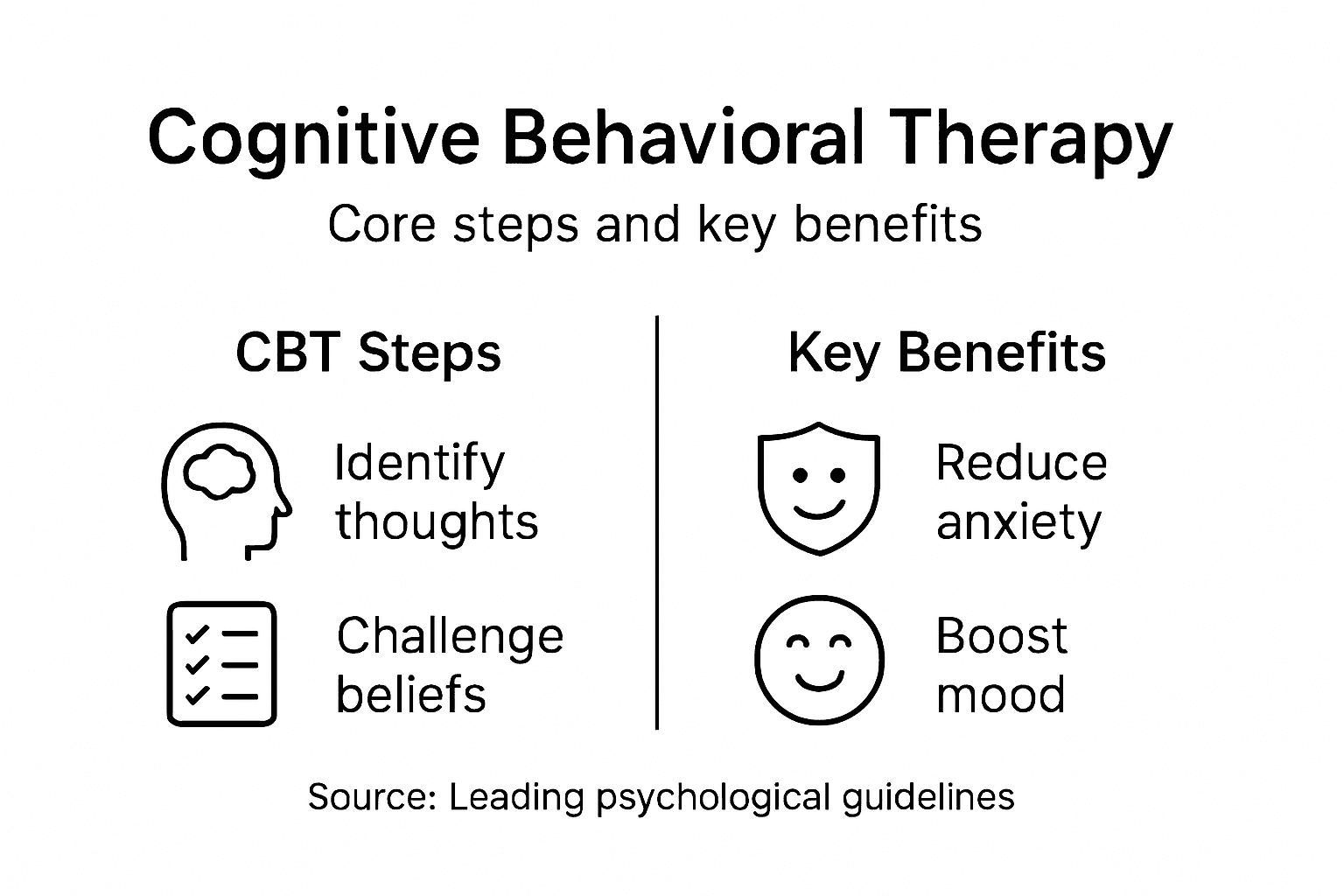
Below is a summary of key benefits and practical applications of CBT for anxiety and depression:
| Benefit | Example Application | Long-Term Impact |
|---|---|---|
| Reduces excessive worry | Anxiety management techniques | Improved stress resilience |
| Interrupts negative self-talk | Behavioral activation in depression | Decreased relapse rates |
| Teaches coping skills | Exposure exercises for phobias | Better emotional regulation |
| Enhances quality of life | Strengthening relationships | Greater daily functioning |
Pro tip:Practice daily mindfulness and thought challenging exercises to reinforce the cognitive skills you learn in CBT therapy.
Risks, Limitations, and Costs to Consider
Cognitive Behavioral Therapy, while highly effective, is not a universal solution for all mental health challenges. Depression Therapy: Everything You Need to Know highlights the nuanced nature of therapeutic interventions. Variability in treatment response means that CBT may not work equally well for everyone, with some individuals experiencing more limited benefits depending on their specific psychological condition, personal circumstances, and underlying mental health complexities.
Financial and time considerations represent significant practical limitations of CBT. The therapy typically requires a substantial commitment, often involving weekly sessions spanning 12 to 16 weeks, which can translate to considerable out-of-pocket expenses for individuals without comprehensive insurance coverage. Homework requirements add another layer of complexity, demanding active participation and self-discipline that not all clients find manageable. Some patients might struggle with consistent implementation of therapeutic techniques, potentially reducing the overall effectiveness of the treatment approach.
Critical limitations exist in CBT’s approach to addressing psychological challenges. The therapy’s primary focus on current thought patterns and behaviors means it may sometimes overlook deeper underlying issues such as childhood trauma, systemic psychological influences, or complex emotional dynamics. While CBT provides powerful tools for symptom management, it may not delve as deeply into root causes as some alternative therapeutic modalities. Additionally, research indicates modest variability in treatment effectiveness across different populations, with potential gaps in applicability for diverse cultural contexts and specific mental health conditions.
Pro tip:Discuss potential insurance coverage and sliding scale payment options with your therapist to manage the financial aspects of CBT treatment.
Take Control of Your Thoughts and Emotions with Expert CBT Support
Struggling with persistent negative thought patterns or overwhelming emotions can feel isolating and exhausting. Cognitive Behavioral Therapy (CBT) offers a proven way to identify and transform the cognitive distortions that feed anxiety and depression. If you are ready to understand how your thoughts influence your feelings and behavior and want to build practical coping skills, expert guidance is key. Explore in-depth insights with Cognitive Behavioral Therapy (CBT) Insights from Experts – Dr. Stephen Oreski & Associates to learn how CBT can empower your mental health journey.
Start your transformation today by connecting with compassionate professionals who tailor therapeutic approaches to your unique needs. At Bergen County Therapist, Dr. Stephen Oreski and his team offer personalized treatment plans addressing anxiety, depression, and more through proven CBT strategies. Discover additional tools and balanced approaches by visiting Dialectical Behavioral Therapy (DBT) Archives – Dr. Stephen Oreski & Associates. Don’t wait for change. Take the first step toward lasting mental well-being now by scheduling a free consultation through our easy-to-navigate website bergencountytherapist.com. Your path to mental clarity and emotional strength begins today.
Frequently Asked Questions
What is Cognitive Behavioral Therapy (CBT)?
Cognitive Behavioral Therapy (CBT) is an evidence-based approach that focuses on understanding and transforming the relationship between thoughts, emotions, and behaviors. It involves identifying and challenging negative thought patterns to alleviate psychological distress.
How does CBT work in practice?
CBT works through a structured process that includes cognitive restructuring techniques. Clients learn to identify cognitive distortions, challenge irrational thoughts, and develop healthier perspectives. Homework assignments reinforce the skills learned in therapy sessions, promoting self-awareness and skill development.
What types of mental health issues can CBT help with?
CBT is effective for a wide range of mental health conditions, including anxiety disorders, depression, phobias, PTSD, and OCD. It is a flexible approach that can be customized based on individual needs and treatment goals.
Are there any limitations to Cognitive Behavioral Therapy?
While CBT is highly effective for many, it may not work for everyone. Limitations include a potential focus on current thoughts and behaviors without addressing deeper issues, as well as time and financial commitments required for therapy sessions.
Recommended
- How Cognitive Behavioral Therapy Can Transform Your Life – Dr. Stephen Oreski & Associates
- Cognitive Behavioral Therapy (CBT): A Complete Guide – Dr. Stephen Oreski & Associates
- Understanding the Basics of Cognitive Behavioral Therapy – Dr. Stephen Oreski & Associates
- Understanding CBT: What It Is & How It Works – Dr. Stephen Oreski & Associates