

Most American adults in Bergen County report that grief can feel like an unmovable weight, especially after losing someone close. When sorrow interrupts daily life, the search for relief becomes both urgent and personal. This guide highlights proven therapeutic techniques that skilled mental health professionals use to help individuals cope, heal, and gradually regain stability throughout their grief journey.
5-Step Grief Therapy Roadmap for Ongoing Healing
- Step 1: Assess Readiness For Grief Therapy Sessions
- Step 2: Select Personalized Grief Therapy Techniques
- Step 3: Apply Coping Strategies In Daily Life
- Step 4: Track Progress And Emotional Responses
- Step 5: Adjust Approaches For Ongoing Healing
Quick Summary
| Key Insight | Explanation |
|---|---|
| 1. Assess Your Readiness | Evaluate your emotional state to determine if you are ready for grief therapy. Identify if you can discuss painful experiences. |
| 2. Choose Personalized Techniques | Select grief therapy methods tailored to your specific emotional needs and experiences for effective healing. |
| 3. Implement Daily Coping Strategies | Develop and apply coping mechanisms such as routines and mindfulness to manage grief in daily life. |
| 4. Track Emotional Progress | Use tools like journals or check-ins to monitor your emotional changes and progress in therapy effectively. |
| 5. Adapt Healing Approaches | Regularly reassess and adjust your therapy techniques to meet changing emotional needs throughout your healing journey. |
Step 1: Assess readiness for grief therapy sessions
Assessing your readiness for grief therapy is a critical first step toward healing and emotional recovery. This process involves understanding your current emotional state and determining whether you are prepared to engage in therapeutic work that will help you process your loss.
To evaluate your readiness, mental health professionals use several key indicators. These include examining your current emotional stability, ability to discuss painful experiences, and willingness to explore complex feelings. Grief therapy screening requires honest self reflection about your capacity to engage in potentially challenging emotional work. You might consider asking yourself questions like: Am I experiencing overwhelming emotions that interfere with daily functioning? Do I feel stuck in my grief process? Am I open to exploring my feelings with professional guidance?
Typically, grief therapy readiness involves several psychological markers. These include having some basic emotional regulation skills, being able to discuss your loss without becoming completely overwhelmed, and having a support system that can complement your therapeutic journey. A professional grief counselor can help you navigate this assessment process and determine the most appropriate therapeutic approach for your specific situation.
Pro tip:Keep a journal of your emotional experiences leading up to your therapy consultation to help your therapist better understand your grief journey.
Step 2: Select personalized grief therapy techniques
Selecting personalized grief therapy techniques is about finding the right approach that resonates with your unique emotional landscape and healing journey. This critical step involves understanding the various therapeutic methods available and matching them to your individual needs, experiences, and emotional processing style.
Mental health professionals recommend exploring multiple grief therapy options that can be tailored to your specific circumstances. Contemporary research supports a flexible approach that might include cognitive behavioral therapy, mindfulness interventions, narrative therapy, and exposure techniques. The goal is to create a therapeutic strategy that helps you process your loss without overwhelming your emotional capacity. Some individuals might benefit from art therapy, while others find more comfort in talk based approaches that allow structured emotional exploration.
Your chosen technique should align with your personal comfort level, cultural background, and specific grief experience. Factors like your support system, previous mental health experiences, and current emotional resilience play significant roles in determining the most effective therapeutic approach. A skilled grief counselor can help you navigate these choices, ensuring that the selected techniques provide meaningful support and create a pathway toward healing.
Here is a comparison of popular grief therapy techniques and their core focus:
| Therapy Technique | Primary Focus | Typical Benefits | Best For |
|---|---|---|---|
| Cognitive Behavioral | Changing negative thought patterns | Reduces distress, builds coping | Rational thinkers |
| Mindfulness-Based | Present moment awareness | Calms anxiety, promotes acceptance | Stress-prone individuals |
| Narrative Therapy | Storytelling and meaning-making | Builds purpose, reframes loss | Creative communicators |
| Art Therapy | Expressive, creative activities | Releases emotions, fosters healing | Visually expressive persons |
Pro tip:During your initial consultation, ask potential therapists about their experience with different grief therapy techniques and their approach to personalization.
Step 3: Apply coping strategies in daily life
Applying coping strategies in daily life is about creating a sustainable emotional framework that supports your healing process after experiencing loss. This step focuses on developing practical approaches that help you manage grief while maintaining your overall functioning and emotional well being.

Mental health professionals recommend developing a multifaceted approach to managing emotional challenges that integrates different coping mechanisms. These strategies might include establishing consistent daily routines, practicing mindfulness techniques, maintaining social connections, and creating structured emotional processing time. Some effective techniques involve journaling your experiences, engaging in regular physical exercise, setting realistic expectations for your emotional recovery, and developing healthy communication strategies with your support network.
Your personal coping strategy should be flexible and responsive to your changing emotional needs. This means recognizing that some days will be more challenging than others and having multiple tools available to support your mental health. Consider incorporating stress reduction techniques like deep breathing, meditation, or gentle physical activities that help regulate your nervous system. Creating a supportive environment that allows emotional expression while also providing structure can significantly enhance your ability to navigate grief in your everyday life.
Pro tip:Create a personal emotional wellness toolkit with 3 5 specific coping strategies you can quickly access when feeling overwhelmed.
Step 4: Track progress and emotional responses
Tracking your progress and emotional responses is a critical component of your grief therapy journey that helps you understand your healing process and recognize meaningful developments in your emotional landscape. This step involves creating a systematic approach to monitoring your psychological and emotional changes over time.
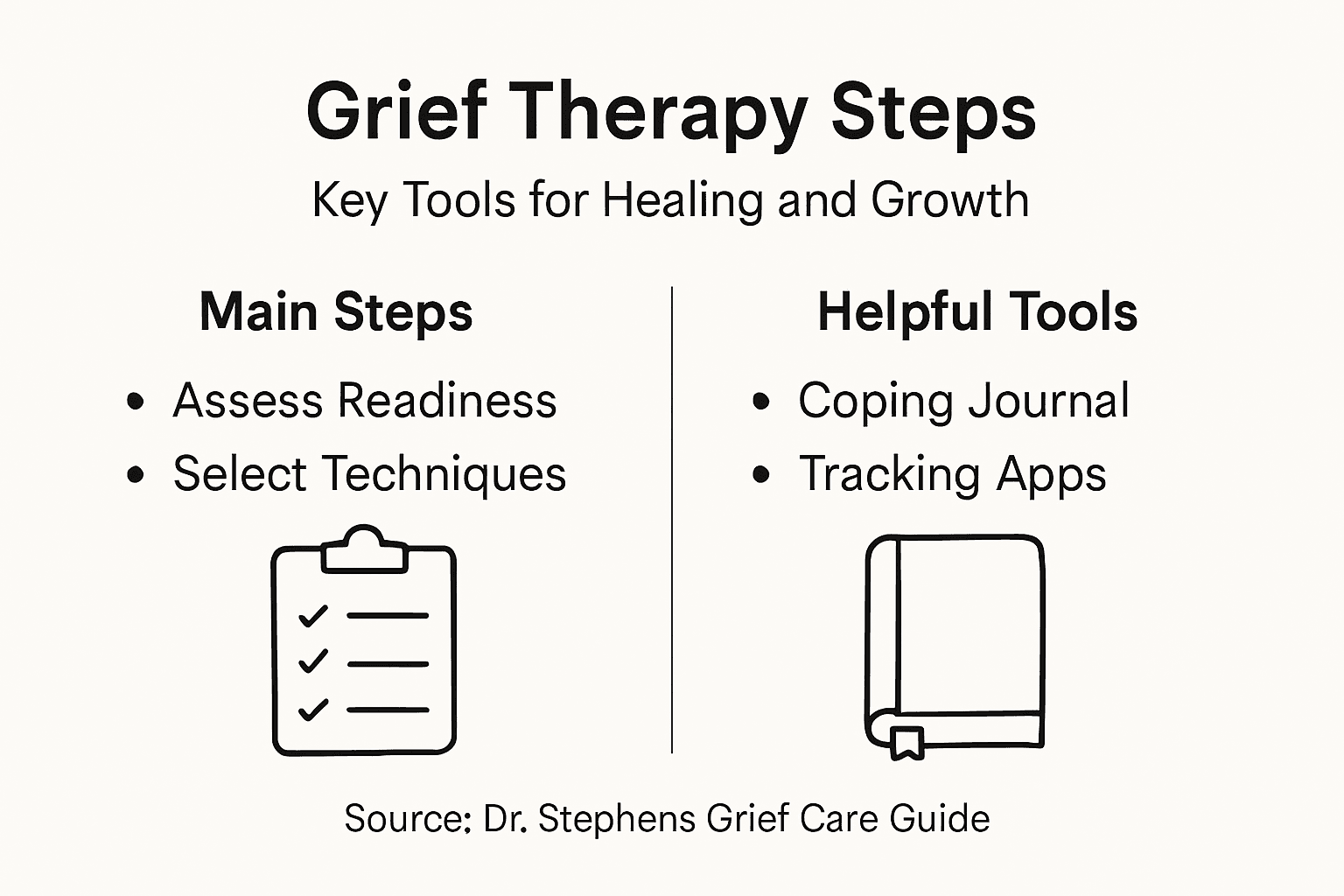
Mental health experts recommend using structured methods to track your mental health progression. These might include maintaining a detailed emotional journal, participating in regular check ins with your therapist, and using standardized assessment tools that measure grief intensity and emotional recovery. Some practical strategies involve recording your daily emotional states, noting triggers that cause significant distress, documenting moments of unexpected healing, and observing how your grief responses evolve over weeks and months.
Your tracking approach should remain flexible and compassionate toward yourself. Recognize that emotional healing is not linear and that progress can look different for everyone. Some days you might feel significant improvement while other periods might feel more challenging. The goal is not to judge your emotional state but to gain insights into your unique grief journey. Consistent self reflection combined with professional guidance can help you develop a nuanced understanding of your emotional healing process and identify strategies that support your recovery.
Below is a summary of useful tools for tracking progress in grief therapy:
| Tracking Tool | How It Works | Helps With | Suitable For |
|---|---|---|---|
| Emotional Journal | Record daily feelings and events | Pattern recognition | Writers and reflectors |
| Digital Mood Apps | Log moods via smartphone | Quick self-assessment | Tech-savvy individuals |
| Regular Therapist Check-In | Scheduled review sessions | Feedback and motivation | Ongoing therapy clients |
| Grief Assessment Forms | Fill structured questionnaires | Monitoring improvement | Analytical personalities |
Pro tip:Create a simple emotion tracking system using a color coded journal or digital app that allows you to quickly capture your daily emotional temperature without requiring extensive writing.
Step 5: Adjust approaches for ongoing healing
Adjusting your grief therapy approaches for ongoing healing is a dynamic process that requires flexibility, self awareness, and willingness to modify your emotional recovery strategies as you progress through different stages of grief. This step focuses on developing adaptive techniques that respond to your changing emotional needs and support continuous personal growth.
Mental health professionals recommend exploring trauma therapy approaches that can help you navigate evolving emotional landscapes. This might involve periodically reassessing your current therapeutic methods with your counselor, identifying which strategies are most effective, and being open to trying new interventions. Some adaptive techniques include modifying your coping mechanisms, integrating different therapeutic modalities, and learning to recognize when your current approach needs refinement.
Your healing journey is uniquely personal and nonlinear. What works effectively during one phase of grief might need adjustment in another. This means staying attentive to your emotional responses, maintaining open communication with your therapist, and being compassionate with yourself as you experiment with different healing approaches. The goal is not to achieve a perfect linear progression but to develop resilience and emotional flexibility that allows you to process your loss authentically and meaningfully.
Pro tip:Schedule quarterly self reflection sessions to honestly evaluate your current grief therapy approach and discuss potential adjustments with your mental health professional.
Discover Personalized Support for Your Grief Journey Today
Navigating grief can feel overwhelming when you face intense emotions and uncertainty about healing techniques. This guide showed how crucial it is to assess your readiness, select personalized grief therapy methods, apply practical coping strategies, track your emotional progress, and adapt your healing approach as needed. If you are searching for empathetic, tailored support to address these challenges and move toward recovery, you do not have to do this alone.

Explore compassionate options with a skilled team ready to meet you where you are. Visit our Grief Archives – Dr. Stephen Oreski & Associates for insights and real-life guidance specific to your healing process. Begin your personalized treatment plan by scheduling a free consultation on our main site https://bergencountytherapist.com. Remember that ongoing support and flexible grief therapy techniques are keys to lasting change. Reach out today and take your first step toward emotional well-being.
Frequently Asked Questions
What are the signs that I am ready for grief therapy?
To determine your readiness for grief therapy, assess your emotional stability, willingness to discuss painful experiences, and ability to explore complex feelings. Reflect on whether overwhelming emotions interfere with your daily life or if you feel stuck in your grief process.
How do I choose the right grief therapy technique for me?
Choosing the right grief therapy technique involves exploring various options and aligning them with your personal comfort level and emotional needs. Consider discussing different methods like cognitive behavioral therapy or art therapy with a professional to find what resonates best with your healing journey.
What coping strategies can I apply in my daily life during grief?
Effective coping strategies include establishing daily routines, practicing mindfulness, and engaging in physical activities. Create a personal emotional wellness toolkit with 3-5 specific techniques to access quickly when feelings of overwhelm arise.
How can I track my progress during grief therapy?
Tracking your progress can be done by maintaining an emotional journal or using a digital mood app to log daily feelings and identify patterns. Regularly note any emotional changes or triggers to gain insights into your healing journey.
When should I consider adjusting my grief therapy approaches?
You should consider adjusting your grief therapy approaches when you notice that your current methods are no longer effective or aligned with your emotional needs. Schedule periodic self-reflection sessions to evaluate your experience and discuss possible adjustments with your therapist.
What if I don’t feel any progress after starting grief therapy?
It’s not uncommon to experience days of challenge during grief therapy, as healing is often nonlinear. Communicate openly with your therapist about your concerns and explore whether adjustments to your techniques or approach may better support your emotional recovery.