

Every parent knows the worry of searching for support that truly understands their family’s unique needs, especially in a diverse community like Bergen County. Finding a therapist who aligns with your values and lived experience can feel overwhelming. Starting with identifying your therapy needs and preferences lays the groundwork for real connection and lasting change, giving you a personalized path toward mental health you can trust.
Quick Navigation: Steps to Book Your Online Therapy Appointment
- Step 1: Identify Your Therapy Needs And Preferences
- Step 2: Explore Therapist Profiles And Specialties
- Step 3: Schedule A Free Consultation Online
- Step 4: Book Your Therapy Appointment
- Step 5: Confirm Your Appointment Details
Quick Summary
| Key Point | Explanation |
|---|---|
| 1. Identify therapy needs clearly | Understand your reasons for seeking therapy and the type of support you require for effective treatment. |
| 2. Research therapist profiles | Examine therapist specialties, communication styles, and approaches to find a suitable match for your needs. |
| 3. Schedule a free consultation | Use the consultation to assess fit and gather information, ensuring comfort before committing to ongoing sessions. |
| 4. Book consistent therapy times | Select a regular appointment schedule that aligns with your routine to promote commitment and progress. |
| 5. Confirm appointment details | Verify all booking details and any required forms to avoid confusion and ensure a smooth first session. |
Step 1: Identify your therapy needs and preferences
Before you search for a therapist or click the booking button, get clear on what you actually need. This step shapes everything that comes next, and skipping it often leads people to book with someone who isn’t the right fit. Start by asking yourself what brought you to consider therapy in the first place. Are you dealing with anxiety that keeps you up at night? Family conflict that’s affecting your relationships? Grief from a recent loss? Identity exploration around your sexuality or gender? Perhaps you’re a parent looking for support for your child or teen. Your answer matters because it directs you toward the right type of treatment and the right therapist.
Next, think about your practical preferences and what environment helps you open up. Would you rather meet in person where you can sit across from someone, or would online sessions feel more comfortable and accessible? How often do you think you need to meet? Some people benefit from weekly appointments, while others prefer biweekly sessions as they build their routine. Consider the time of day that works best for you, whether you prefer morning appointments before work, evening slots after the kids are in bed, or weekend options. Also reflect on therapist traits that matter to you. Do you want someone who specializes in LGBTQIA issues if you’re exploring your identity? Do you need a therapist who understands the specific challenges Bergen County residents face? Would you prefer a male, female, or non-binary therapist? Research consistently shows that when you identify these preferences upfront, you’re far more likely to stay committed to therapy and actually see results. Taking time now to get specific about your needs, your treatment goals, and what kind of therapeutic environment helps you feel safe dramatically reduces the chance you’ll book with someone and then cancel after one session.
Here is a comparison of common therapy session formats to help you align your preferences:
| Format Type | Typical Benefits | Possible Drawbacks |
|---|---|---|
| In-person | Personal connection | Requires travel time |
| Online/Virtual | Greater accessibility | Tech issues possible |
| Phone Sessions | Flexible location | Less visual feedback |
| Group Therapy | Shared experiences | Less individual focus |
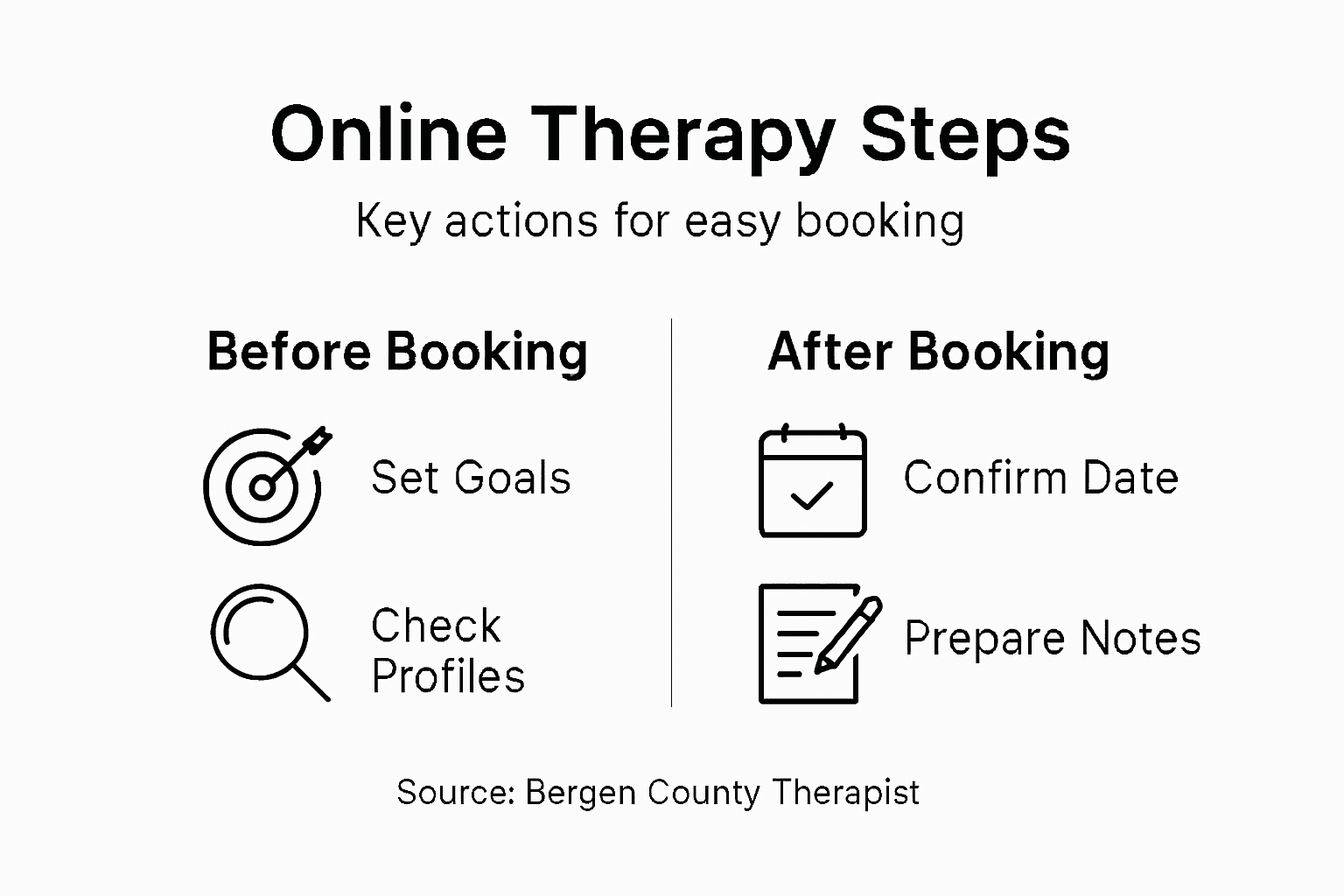
Pro tip:Write down three to five specific goals you want to accomplish through therapy before you start booking, then keep that list handy when you’re reviewing therapist profiles and scheduling your first appointment.
Step 2: Explore therapist profiles and specialties
Now that you know what you need, it’s time to look at who can actually help you. Therapist profiles tell you far more than just their name and credentials. When you’re scrolling through available therapists, pay close attention to their listed specialties and treatment focus areas. A therapist who specializes in trauma work might use completely different techniques than one who focuses on couples therapy or teen anxiety. Professional psychology recognizes specific specialties like clinical psychology, counseling psychology, and various psychotherapy modalities, and understanding these distinctions helps you find someone whose expertise actually matches what you’re seeking. If you identified LGBTQIA issues as part of your needs in step one, look for therapists who explicitly state experience with gender identity exploration or sexual orientation questions. If you’re a parent seeking support for your child, find therapists who specialize in child or adolescent work rather than general adult practitioners.

Read beyond just the specialty labels and dive into their actual profile descriptions. Most therapist profiles include information about their therapeutic approach, the populations they work with, and sometimes details about their personal background or philosophy. You’re looking for genuine alignment with your stated goals and values. Does this therapist mention working with parents on family dynamics? Do they describe experience with anxiety disorders? Are they trained in specific evidence-based approaches that appeal to you? Pay attention to the tone as well. A profile that feels warm and approachable might resonate differently than one that reads very clinical. If you found that certain therapeutic modalities matter to you, look for therapists who mention those specific approaches. Check whether they offer the format you preferred, whether that’s in-person appointments at their office or online sessions. Most platforms show availability right on their profile, so you can see if their schedule actually matches what you need before you book.
This summary highlights factors to evaluate when reviewing therapist profiles:
| Evaluation Factor | Why It Matters | What to Look For |
|---|---|---|
| Specialty Match | Ensures relevant expertise | Experience with your issue |
| Communication Style | Affects comfort and rapport | Warm, direct, supportive |
| Scheduling Fit | Supports attendance | Sessions at convenient times |
| Treatment Approach | Influences therapy outcomes | Use of evidence-based methods |
Pro tip:Don’t book with the first therapist who seems qualified. Spend 10 minutes comparing at least two or three profiles to notice how their descriptions, specialties, and available times stack up against your preferences.
Step 3: Schedule a free consultation online
You’ve identified what you need and found a therapist whose profile resonates with you. Now comes the moment where you actually take action and book that consultation. Most therapists offer a free initial consultation, which gives you a chance to talk with them before committing to ongoing sessions. This is your opportunity to ask questions, gauge whether you feel comfortable with this person, and see if they actually understand what you’re looking for. The consultation typically lasts 15 to 30 minutes and happens over the phone, video call, or sometimes in person. Think of it as a mutual interview where both you and the therapist are assessing fit.
Locating the scheduling option is usually straightforward on a therapist’s profile or the practice website. You’ll typically see a button that says “Schedule a consultation” or “Book an appointment.” Click that button, and you’ll be taken to a booking system where you can see available time slots. Select the date and time that works best for your schedule, keeping in mind what you said about your preferences in step one. If you preferred online therapy options, confirm that the appointment is being scheduled as a virtual session. You’ll usually be asked to provide basic information like your name, email, phone number, and sometimes a brief description of what brings you to therapy. Be honest but concise in this section. After you submit your information, you’ll get a confirmation email with details about how to access your consultation, whether that’s a Zoom link, a phone number to call, or an address for an in-person meeting. Many practices also send you a questionnaire to fill out before your first session so the therapist can review your background information ahead of time.
Pro tip:Schedule your free consultation for a time when you won’t feel rushed or stressed, and have a quiet space available where you can talk openly without interruptions.
Step 4: Book your therapy appointment
The consultation went well, and you feel confident about moving forward with this therapist. Now it’s time to actually book your ongoing therapy appointments. This is where you commit to regular sessions and establish the routine that will support your mental health goals. The booking process at this stage is similar to scheduling the consultation, but you’re now selecting recurring appointments rather than just one initial meeting. Most therapists’ systems allow you to view their online calendars and directly select appointments that fit your schedule, emphasizing both accessibility and convenience. You can typically choose which days and times work best for you, whether that’s Tuesday evenings, Saturday mornings, or whatever rhythm fits your life.
When you access the booking system to schedule your regular therapy appointments, you’ll usually have options for session frequency. Many people start with weekly appointments, which allows consistent momentum and gives you regular time to process what’s happening in your life. Others prefer biweekly sessions, especially if they’re working through specific issues with a clear action plan. Think back to what you decided in step one about how often you wanted to meet, and be realistic about what you can commit to. Canceling and rescheduling constantly can disrupt your progress, so choose a frequency you can actually maintain. You’ll also confirm whether your appointments are in person at the office or online. If you’re selecting online therapy sessions, you’ll receive information about how to access the video call platform before each appointment. After you complete your booking, you’ll typically get a confirmation email with your appointment schedule, any forms you need to complete before your first session, and payment or insurance information if applicable. Some practices send calendar invitations you can add to your phone or computer so you don’t accidentally double-book yourself.
Pro tip:Book your therapy appointments for the same time and day each week, which trains your brain to expect that time for self-care and makes it harder to flake on yourself when life gets busy.
Step 5: Confirm your appointment details
You’ve booked your appointments, but before your first session actually happens, take a moment to verify that everything is correct. A confirmation email should have arrived in your inbox with all the essential details about your upcoming appointment. This step might seem obvious, but it’s surprisingly easy to miss a detail that could cause confusion on the day of your appointment. Review the confirmation carefully to make sure the date, time, and location or video call information all match what you intended to book. If you’re meeting in person, confirm the office address and whether there’s parking information you need to know. If it’s an online session, check that you have the correct video call link and test your internet connection ahead of time so you’re not scrambling five minutes before your appointment starts.
Beyond the basic logistics, look for any additional details the therapist or practice included in their confirmation. Many practices send preparatory instructions, information about what to bring, or guidance about how to access their office building. Some therapists ask you to fill out intake forms or questionnaires before your first appointment, which helps them understand your background and what you want to focus on. Read through any attachments or linked documents and complete them if requested. Pay attention to cancellation and rescheduling policies as well. Most practices are flexible about moving appointments, but they may ask for notice if you need to cancel. Understanding these policies upfront means you won’t accidentally get charged for a missed appointment or face unexpected fees. If anything in the confirmation seems unclear or if you notice an error in the details, reach out to the practice immediately. Don’t wait until the day of your appointment to discover a problem.
Pro tip:Add your therapy appointment to your phone’s calendar with a reminder set for 24 hours before, and save the therapist’s phone number in your contacts in case you need to reach them about rescheduling.
Take the First Step Toward Personalized Therapy with Ease
Booking your therapy appointments online can feel overwhelming when you are uncertain about your needs or how to find the right therapist. This guide highlights the challenges of matching your specific goals and preferences with a qualified professional who understands your situation. From deciding between in-person or virtual sessions to exploring therapist specialties and scheduling free consultations online, each step is crucial for building a trusting therapeutic relationship that supports lasting change.
If you are looking for expert guidance and a seamless booking experience in Bergen County, Dr. Stephen Oreski and Associates offer personalized mental health services tailored to your unique needs. Whether you want individual support or are interested in Group Therapy for Healing and Growth, their team prioritizes your comfort and accessibility to help you stay committed and see real results.

Ready to start your journey with confidence? Visit https://bergencountytherapist.com to schedule a free consultation today.
Take advantage of easy online booking options designed to fit your schedule and preferences.
Don’t wait for the perfect moment—your mental wellness deserves attention now.
Frequently Asked Questions
How do I identify my therapy needs before booking an appointment?
Before booking an appointment, take time to consider what issues are prompting your interest in therapy, such as anxiety, family conflict, or grief. Make a list of your top three to five specific goals for therapy to guide your search for the right therapist.
What should I look for in a therapist’s profile when booking online?
When reviewing therapist profiles, check their listed specialties and treatment approaches to ensure they match your needs. Compare at least two or three profiles to see which therapist’s style and experience resonate with you.
How can I schedule a free consultation with a therapist online?
Most therapists provide a button on their profiles that allows you to schedule a free consultation. Click the ‘Schedule a consultation’ button and select a date and time that fits your schedule, then provide any required information to confirm your booking.
What should I do if I need to cancel or reschedule my therapy appointment?
If you need to cancel or reschedule, reach out to the therapist’s office as soon as possible to avoid any cancellation fees. Familiarize yourself with their cancellation policy, which will typically outline how much notice is required.
How can I confirm my therapy appointment details?
After booking your appointment, check your confirmation email for the date, time, and location or video link. Verify these details, and test any technology you’ll be using before your session to ensure a smooth experience.