

TL;DR:
- Effective communication with parents requires emotional regulation, patience, and understanding generational differences.
- Building trust involves open-ended questions, “we” language, and consistent daily habits that foster connection over time.
Effective communication with parents is defined as open, respectful, and empathetic dialogue that builds trust and strengthens emotional bonds over time. Knowing how to communicate with parents goes beyond choosing the right words. It requires emotional regulation, patience, and a willingness to understand a perspective shaped by a different generation. Research from Bergencountytherapist and psychological studies confirm that positive parenting principles, combining warmth with firm boundaries, predict long-term emotional wellbeing for both parents and children.
What are the essential tools for communicating effectively with parents?
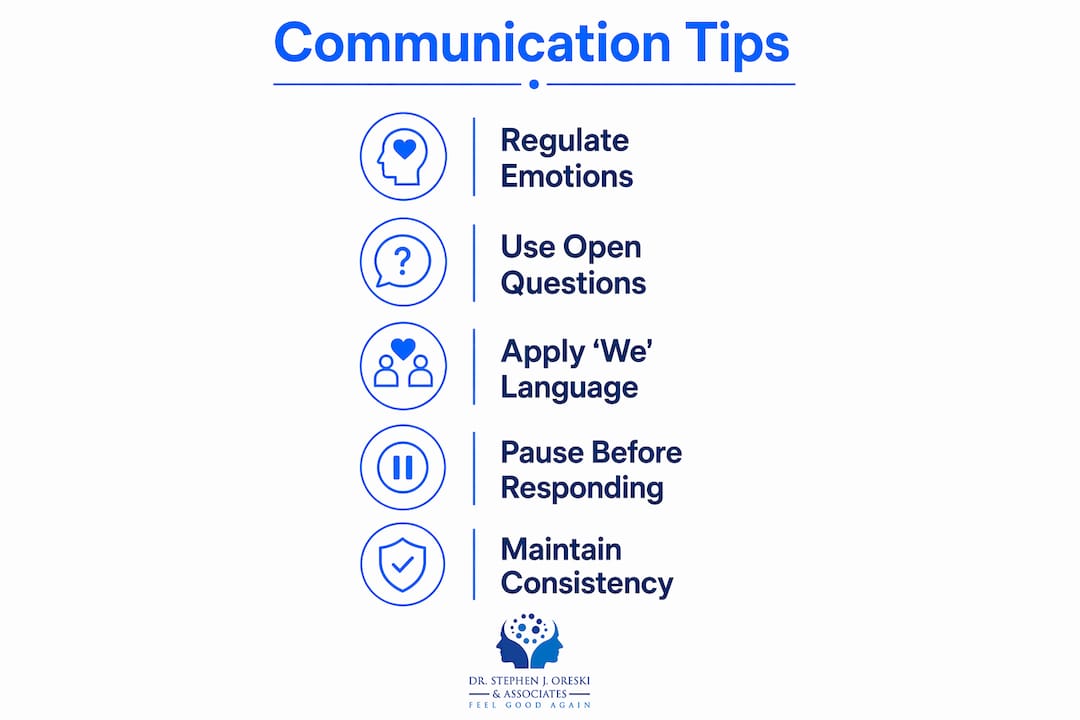
Effective family communication starts with emotional regulation, not with the right script. When you manage your own reactions first, you create space for genuine listening. Emotional self-regulation is the single most important prerequisite for productive dialogue with a parent.
Parent emotional regulation is critical because managing personal shame and anger allows better attunement and listening. That means before any difficult conversation, grounding yourself with slow breathing or calm self-talk is not optional. It is the foundation.
Language choice matters just as much as tone. Using “we” language rather than “you” language reduces defensiveness and promotes a sense of partnership. Saying “We’ve been struggling to connect lately” lands very differently than “You never listen to me.”
Generational preferences also shape how conversations land. Older adults often prefer verbal or face-to-face interaction, while younger people default to texting. Adapting your communication channel to your parent’s preference signals respect before you say a single word.
| Mindset or tool | Why it matters |
|---|---|
| Emotional regulation | Prevents reactive responses that shut down dialogue |
| “We” language | Reduces defensiveness and builds shared ownership |
| Presence and patience | Signals that the conversation is worth your full attention |
| Channel awareness | Matching your parent’s preferred format improves reception |
| Reduced “fix-it” mode | Listening without solving keeps the conversation open |
Pro Tip: Before a hard conversation, take three slow breaths and remind yourself: your goal is connection, not winning.
How can you approach conversations to foster openness?

The way you open a conversation determines whether it stays open. Open-ended questions consistently outperform closed ones because they invite reflection instead of a one-word answer. Asking “What’s been on your mind lately?” creates far more dialogue than “Are you okay?”
Sharing your own experiences is equally powerful. When you model vulnerability, parents and children alike feel safer opening up in return. Saying “I remember feeling lost at your age” signals that you are not judging, you are relating.
Resisting the urge to fix problems immediately is one of the hardest skills to build. Parents often jump into solution mode, which signals that the other person’s feelings are less important than the outcome. Listening with curiosity, without an agenda, keeps the conversation alive.
Conversation starters and response strategies that work:
- “What’s been the best and hardest part of your week?”
- “I’ve been thinking about something. Can we talk when you have a few minutes?”
- “I hear you. Tell me more about that.”
- “I felt that way once too. Here’s what happened for me.”
- “What would feel most helpful to you right now?”
- “I want to understand your side better. Walk me through it.”
Avoiding common pitfalls matters as much as using good techniques. Interrupting, finishing sentences, or jumping to judgment all signal that you are waiting to talk rather than listening to understand. Slow down. Let silence do some of the work.
Pro Tip: After your parent finishes speaking, wait two full seconds before responding. That pause communicates that you actually heard them.
What are effective strategies for difficult topics and conflicts?
Difficult conversations require a different level of preparation. Staying calm and grounded is not passive. It is an active choice that protects the relationship when emotions run high. Recognizing and naming shame during hard conversations reduces its power and prevents defensive reactions from taking over.
Casual, ongoing dialogue is more effective for sensitive topics than forcing a single formal conversation. Progressive communication allows both sides to process feelings gradually rather than demanding immediate resolution. Think of it as a series of small conversations, not one big confrontation.
A step-by-step approach to conflict communication:
- Pause first. Take a breath before responding to anything that triggers a strong reaction.
- Name the feeling, not the blame. Say “I felt hurt” instead of “You made me feel hurt.”
- Acknowledge their perspective. Repeat back what you heard before sharing your own view.
- Use “we” framing. Reframe the issue as a shared challenge, not a personal attack.
- Hold limits with warmth. You can say no or set a boundary without coldness or anger.
- Agree on a next step. End with something concrete, even if it is just agreeing to talk again.
| Reactive behavior | Effective alternative |
|---|---|
| Interrupting to correct | Waiting, then asking a clarifying question |
| Defending immediately | Acknowledging feelings before explaining your view |
| Escalating with volume | Lowering your voice and slowing your pace |
| Shutting down | Naming that you need a short break, then returning |
| Blaming with “you always” | Describing a specific situation with “I noticed” |
How do daily habits support long-term improvement in family communication?
Consistent small actions build stronger communication than occasional big conversations. A structured communication program run over just five weeks showed statistically significant improvements in family communication quality. That result points to one clear truth: regularity matters more than intensity.
Consistent family routines and warm boundaries contribute to emotional regulation and fewer behavioral problems over time. Shared activities, even brief ones, create low-pressure opportunities to practice connection. You do not need a deep conversation every time. Sometimes a walk or a shared meal is enough.
Daily and weekly habits that reinforce healthy communication:
- Schedule a brief weekly check-in, even 10 minutes over coffee or a phone call.
- Share one thing from your day, and invite your parent to do the same.
- Engage in a shared activity: cooking, watching a show, or a short walk.
- Send a text or voice note just to say you are thinking of them.
- When a hard topic comes up, note it and return to it calmly rather than avoiding it.
- Celebrate small moments of connection. Acknowledge when a conversation went well.
Knowing when to seek professional support is part of good communication practice, not a sign of failure. When patterns feel stuck or conversations repeatedly escalate, family therapy offers a structured, safe space to rebuild dialogue with professional guidance.
Key Takeaways
Effective communication with parents improves when you combine emotional regulation, open-ended questions, “we” language, and consistent daily habits that build trust over time.
| Point | Details |
|---|---|
| Regulate emotions first | Calm self-talk before conversations prevents defensive reactions and keeps dialogue open. |
| Use “we” language | Framing issues as shared concerns reduces blame and builds partnership. |
| Ask open-ended questions | Questions that invite reflection keep conversations going longer and deeper. |
| Address conflict progressively | Small, ongoing conversations work better than one forced “big talk.” |
| Build daily habits | Regular check-ins and shared activities sustain communication gains over time. |
What I’ve learned after years of working with families
Most people come to me thinking their communication problem is about what they say. It almost never is. The real issue is what they do in the two seconds before they speak.
I have worked with parents and adult children who genuinely love each other but cannot get through a single conversation without it unraveling. The pattern is almost always the same: one person feels unheard, reacts defensively, and the other person shuts down. Nobody wins. The relationship quietly erodes.
What actually changes things is not a new script. It is learning to sit with discomfort long enough to hear the other person out. Curiosity is the skill most people underestimate. When you approach your parent with genuine interest rather than a prepared argument, the entire dynamic shifts.
The families I see make the most progress are not the ones who talk the most. They are the ones who have learned to listen without flinching. That takes practice, and sometimes it takes support. There is no shame in that.
— Stephen
Support for families who want to communicate better
When conversations with parents feel stuck, professional support can make a real difference. At Bergencountytherapist, Dr. Stephen Oreski and his team work with individuals and families to rebuild communication patterns that actually hold.

Whether you prefer in-person sessions or the flexibility of online therapy for families, the practice offers personalized care designed around your specific situation. A free consultation is available to help you find the right fit. Reaching out is the first concrete step toward conversations that feel safe, honest, and worth having.
FAQ
What is the most effective way to start a hard conversation with a parent?
Open with a low-pressure request, such as “Can we talk when you have a few minutes?” This signals respect for their time and reduces the chance of an immediate defensive reaction.
How do I express my feelings to my parents without starting a fight?
Use “I felt” statements instead of “you made me” statements. Describing your own experience rather than assigning blame keeps the conversation from escalating.
Why does communication with parents feel so difficult?
Generational differences in communication style, unresolved emotional patterns, and differing expectations all create friction. Emotional regulation on both sides is the most reliable way to reduce that friction.
How often should I check in with my parents to maintain a strong relationship?
A brief weekly check-in, even 10 minutes, builds more trust over time than infrequent long conversations. Consistency signals that the relationship is a priority.
When should I consider therapy to improve family communication?
Seek professional support when conversations repeatedly escalate, when important topics stay avoided for months, or when the relationship feels stuck despite genuine effort. Family therapy provides structured tools that go beyond what self-help strategies can offer.
Recommended
- Tips for Parents: Talking to Your Teen About Mental Health – Dr. Stephen Oreski & Associates
- Improve Family Communication: Step-by-Step Counseling Guide by Dr Stephen Oreski & Associates.
- Better family communication: 7 expert-backed tips
- Tips to Help Bond with Your Teen – Dr. Stephen Oreski & Associates