

TL;DR:
- Trauma recovery involves setbacks and progress, requiring patience, support, and tailored therapy. Evidence-based treatments like CPT, PE, and TF-CBT are most effective for healing from PTSD and C-PTSD. Connecting with trauma-informed therapists and building a support network are vital steps toward lasting recovery.
Trauma recovery can feel like waking up in a maze every single day. The flashbacks, the exhaustion, the hypervigilance, and the constant question of “Why can’t I just move on?” form an exhausting cycle that makes it hard to know where to begin. The good news is that healing is genuinely possible with the right strategies and professional support. Evidence-based therapies like cognitive processing therapy, prolonged exposure, and trauma-focused cognitive behavioral therapy give people real, measurable paths forward. This guide walks you through everything you need to start, sustain, and strengthen your recovery, with a focus on resources right here in Bergen County.
Table of Contents
- Understanding trauma recovery: What you need to know before you start
- Essential trauma recovery therapies and approaches
- Step-by-step: How to start your trauma recovery journey
- Building support and resilience throughout recovery
- What most guides get wrong about trauma recovery
- Get support as you begin your recovery journey in Bergen County
- Frequently asked questions
Key Takeaways
| Point | Details |
|---|---|
| Tailor your recovery approach | Recovery works best when you match strategies to your unique symptoms and needs. |
| Evidence-backed therapies lead | CPT, PE, and TF-CBT have the strongest results for PTSD, especially when guided by a professional. |
| Local support is available | Clinicians and directories in Bergen County help you find the right therapist for your situation. |
| Progress takes time | Setbacks are normal; steady effort and small steps still move you forward. |
Understanding trauma recovery: What you need to know before you start
Trauma recovery is not a straight line. Many people expect that if they commit to healing, symptoms will fade predictably week by week. That almost never happens. Recovery involves periods of real progress followed by setbacks that can feel devastating if you don’t anticipate them. Understanding this reality from the start protects you from discouragement and helps you stay in the process.
One of the most important distinctions to understand early on is the difference between PTSD (post-traumatic stress disorder) and complex PTSD (C-PTSD). PTSD typically develops after a single traumatic event or a clearly defined period of threat. C-PTSD usually results from prolonged or repeated trauma, such as childhood abuse, domestic violence, or ongoing neglect. The symptoms of C-PTSD often include deep difficulties with self-worth, emotional regulation, and interpersonal trust, going well beyond the intrusive memories and hyperarousal associated with standard PTSD.
C-PTSD symptoms and therapies differ meaningfully from standard PTSD, and treatment needs to reflect those differences. Clinical guidelines confirm that recommendations change significantly based on whether you’re dealing with PTSD versus C-PTSD, especially when co-occurring issues like dissociation, depression, or borderline personality disorder are part of the picture. Tailored interventions, including dissociation-targeting techniques, become essential in those cases.
Common misconceptions about trauma recovery include:
- Recovery means forgetting what happened
- Feeling better means you’re “fixed”
- Trauma only affects people with severe experiences
- You should be able to handle it on your own
- Therapy works the same way for everyone
“Recovery isn’t about erasing the past. It’s about changing your relationship to it so that it no longer controls your present.”
Setbacks during recovery are not failures. They are part of the process. Knowing this ahead of time makes them much easier to navigate with support.
Essential trauma recovery therapies and approaches
Once you appreciate the landscape of trauma recovery, the next step is understanding which therapy options have the strongest proof they truly work.
The three gold-standard treatments for adult PTSD are cognitive processing therapy (CPT), prolonged exposure (PE), and trauma-focused cognitive behavioral therapy (TF-CBT). These therapies have the most rigorous research behind them, and understanding what trauma therapy is at a practical level helps you have more informed conversations with a clinician.
| Therapy | How it works | Best suited for |
|---|---|---|
| CPT | Challenges unhelpful beliefs formed after trauma | PTSD, especially guilt and self-blame |
| PE | Gradual, controlled exposure to trauma memories | Single-incident trauma, avoidance patterns |
| TF-CBT | Combines trauma processing with coping skills | Adults with strong avoidance or anxiety |
| EMDR | Uses eye movements to reprocess traumatic memory | Both single and complex trauma |
| Mindfulness-based | Builds present-moment awareness to reduce reactivity | As a complement to trauma-focused work |
CBT for trauma has a particularly strong track record because it directly targets the distorted thinking patterns that trauma creates. For people managing multiple symptoms at once, a pragmatic recovery approach combines structured professional support with coping skills for distress and trauma-informed therapy, layering tools rather than relying on just one.
EMDR (eye movement desensitization and reprocessing) often surprises people because it sounds unusual, but decades of research support its effectiveness, particularly for processing traumatic memories that feel “stuck.” Body-focused approaches like somatic experiencing are also growing in evidence, especially when trauma is stored physically, as chronic tension, pain, or a constant sense of threat in the body.
Choosing the right approach depends on:
- Your specific trauma type and history
- Whether co-occurring conditions are present
- Where you are in your recovery process
- Your comfort with the method
You can explore examples of trauma therapy to see how these approaches play out in real clinical settings before committing to one path.
Pro Tip: Ask any potential therapist directly about their training in the specific modality they recommend. A good trauma therapist will welcome that conversation and explain how they will adjust the approach to fit your situation.
Step-by-step: How to start your trauma recovery journey
With the most effective tools identified, here’s how to actually begin your path to healing, from first realization to connecting with local experts.
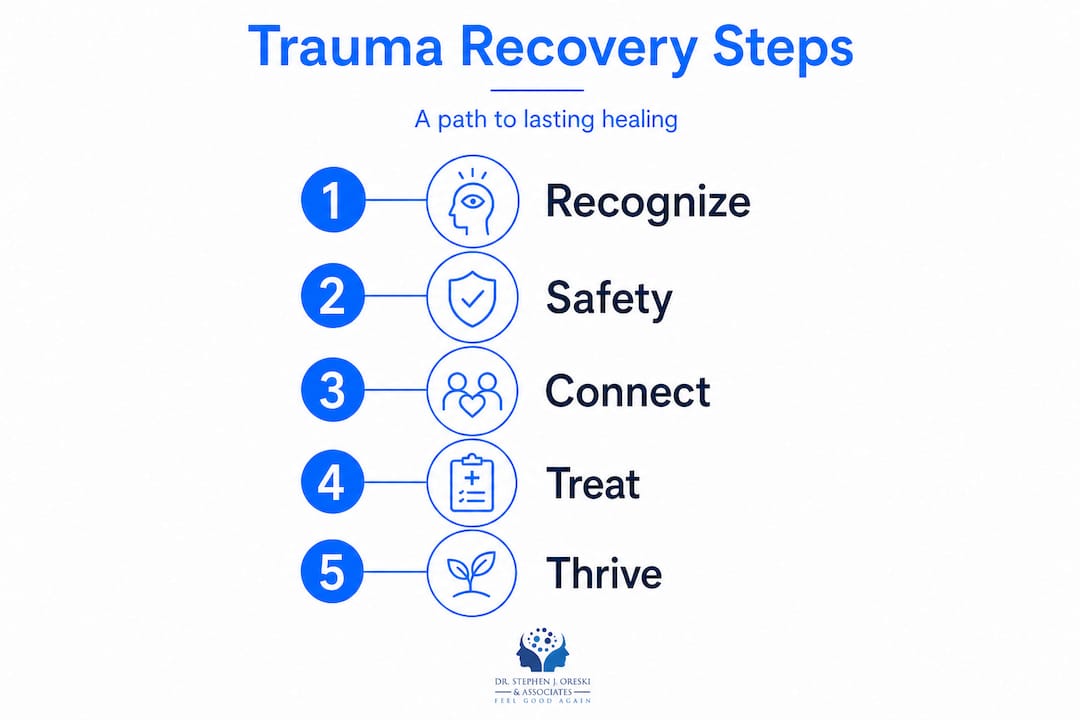
- Recognize your symptoms. Intrusive memories, emotional numbness, sleep problems, and avoidance are common trauma signals. Naming what’s happening takes power away from it.
- Reach out if you’re in crisis. If you’re in immediate distress, call or text 988, the Suicide and Crisis Lifeline. SAMHSA’s PTSD resources also connect you to treatment locators and helplines.
- Set realistic, small goals. Recovery is built one achievable step at a time. Starting with one session per week is enough.
- Search for a trauma-specialized therapist. Directories like Zencare Bergen County let you filter by specialty, including trauma and adult focus, making it easier to find someone who fits your exact needs.
- Explore local PTSD options. Bergen County has dedicated resources for local PTSD therapy, including both in-person and online options.
- Understand what to expect. Read through a PTSD treatment guide to get familiar with how structured care typically unfolds.
- Track your progress. Knowing the stages of PTSD recovery helps you recognize when you’re moving forward, even when it doesn’t feel that way.
| Step | Action | Timing |
|---|---|---|
| Recognize symptoms | Journal or use a symptom checklist | This week |
| Safety planning | Identify crisis contacts and support | Before starting therapy |
| Find a therapist | Use directories or referrals | Within 1 to 2 weeks |
| First appointment | Initial assessment with clinician | Week 2 to 4 |
| Engage in therapy | Attend regular sessions | Ongoing |
Pro Tip: Don’t wait until you feel “ready” to start. Trauma keeps many people in a holding pattern, waiting for a perfect moment that never arrives. One email or one phone call to a therapist is a real step forward.
Building support and resilience throughout recovery
Taking the first steps is just the beginning. Creating a resilient foundation and support system fuels sustained recovery and helps prevent setbacks from becoming full relapses.
One of the most underestimated parts of healing is the people around you. Trusted friends, family members, or peers who understand your experience can provide stability between therapy sessions. You don’t need a large network. One or two consistent, supportive people can make a significant difference.
Trauma-informed care, the framework used by quality clinicians and programs, is built on five core principles. SAMHSA outlines these as safety, trust, collaboration, empowerment and voice, and a commitment to avoiding retraumatization. When you work with a provider who genuinely applies these principles, sessions feel safer and progress tends to happen faster.
Community-level support also matters. Group therapy for trauma offers something individual therapy alone cannot: the experience of being understood by others who have lived through similar pain. Bergen County has local group options, and many programs now offer virtual formats that expand access.
Key building blocks for resilience include:
- Regular physical movement, even short walks
- Consistent sleep routine, even when it’s difficult
- Boundaries with people or situations that feel unsafe
- Moments of calm or joy built into each week
- Honesty with your therapist when things feel worse
Pro Tip: Schedule a weekly check-in, even a five-minute text exchange, with someone in your support network. This simple habit creates accountability and reduces isolation between therapy appointments.
What most guides get wrong about trauma recovery
Most articles about trauma recovery present healing as a predictable sequence: choose a therapy, do the work, feel better. The reality is messier and more interesting than that.
The truth is that many people cycle through multiple approaches before finding what clicks. Evidence reviews note that the certainty of evidence drops in complex presentations, meaning the “best” therapy on paper may not be the best therapy for your specific combination of symptoms, history, and current life stressors. This is why therapist-client collaboration is not a soft concept. It’s clinically essential.
The myth of the “quick fix” is particularly damaging. Some people enter therapy expecting six sessions to resolve decades of pain, then feel like failures when that doesn’t happen. Pacing matters deeply. A skilled trauma therapist will move at the speed your nervous system can actually tolerate, not the speed that looks good on a brochure. Regular progress checks and honest conversations about what’s working let both you and your clinician adapt the plan.
Understanding the types of psychotherapy available also helps you advocate for yourself when a particular approach isn’t fitting. Recovery is yours. The therapeutic relationship is a collaboration, not a prescription you passively receive.
The most durable recoveries we see come from people who stay curious about their own process, communicate openly with their therapist, and resist the urge to compare their timeline to anyone else’s.
Get support as you begin your recovery journey in Bergen County
You’ve absorbed a lot of information in this guide. The next step doesn’t have to feel complicated.

At Bergen County Therapist, Dr. Stephen Oreski and his team specialize in trauma-informed care tailored to your specific history, symptoms, and goals. Whether you’re dealing with PTSD, C-PTSD, or the lasting effects of a difficult life experience, the practice offers individualized treatment plans and a compassionate approach that meets you exactly where you are. If you’re ready to take action, begin therapy in Bergen County with a free consultation, or use our therapist selection checklist to find the right fit before you even make that first call. Healing is possible, and local, personalized support is available right now.
Frequently asked questions
What if I feel stuck or overwhelmed during trauma recovery?
Feeling stuck is a common and valid part of recovery, not a sign you’re failing. SAMHSA’s treatment resources can help you locate additional support, and letting your therapist know you feel stalled opens the door to adjusting your approach.
Can I recover from trauma without therapy?
Support networks and self-care provide real comfort, but structured trauma therapies like CPT and PE produce significantly stronger and more lasting outcomes than self-help alone.
How do I know which trauma therapy is right for me?
The best fit depends on your symptom profile, trauma history, and any co-occurring conditions. Clinical guidelines support working with a trauma-informed clinician who can assess your full picture before recommending a specific modality.
What local resources can I use to find a trauma therapist in Bergen County?
Zencare’s Bergen County directory allows you to filter therapists by specialty, including trauma focus and adult clientele, making it straightforward to find someone who fits your needs.