

- Effective relationship conflict resolution depends on emotional regulation, including pre-agreed time-outs to calm the flood. Using repair attempts, “I” statements, and active listening early in disagreements helps de-escalate issues and foster understanding. Establishing specific, timed agreements and seeking professional support can prevent recurring conflicts and build healthier communication habits.
Relationship conflict resolution is the skillful management and repair of disputes between partners using tools like repair attempts, active listening, and structured time-outs to restore connection. The goal is not to eliminate disagreement but to stay emotionally regulated and respectful while working toward mutual understanding. Couples who master this process use specific communication techniques, including “I” statements and validation, to lower defensiveness and shift from adversarial positions to collaborative problem-solving. This guide gives you a practical, therapist-informed framework to handle conflict in marriage or any romantic relationship with greater confidence.
How to resolve relationship conflict with emotional regulation
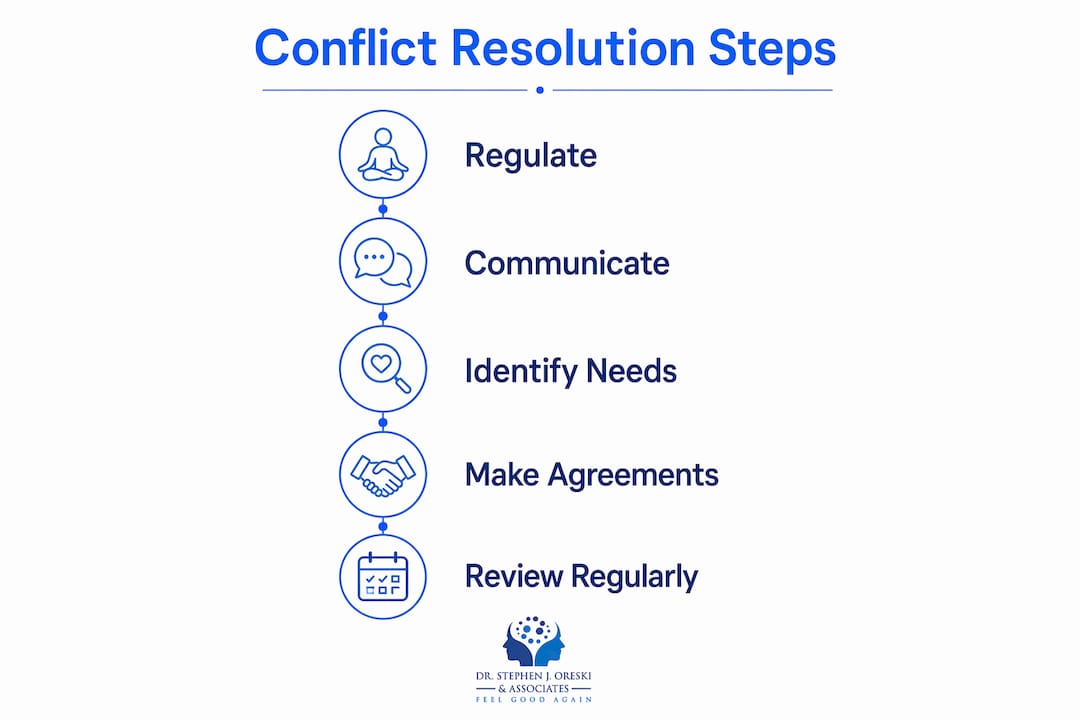
Emotional flooding is the single biggest obstacle to productive conflict. Flooding occurs when your heart rate and stress hormones spike to the point where rational thinking shuts down. At that stage, no communication tool works because your brain is in survival mode, not problem-solving mode.
The most effective response to flooding is a structured time-out of 20 to 30 minutes, agreed upon before any conflict starts. Pre-agreement is the critical variable. A time-out called mid-argument without prior agreement reads as stonewalling or rejection, which escalates rather than calms the situation.
During the break, the goal is genuine physiological calming, not replaying the argument in your head. Effective self-soothing practices include:
- Slow diaphragmatic breathing (four counts in, six counts out)
- A short walk without reviewing the fight mentally
- Light physical activity like stretching or a brief workout
- Listening to music that genuinely relaxes you
Stonewalling requires a calming break of at least 20 minutes for the body to return to baseline. Anything shorter and you re-enter the conversation still flooded, which restarts the cycle.
Pro Tip: Learn your personal flooding signals before the next argument. A racing heart, clenched jaw, or tunnel vision are early indicators. Calling a time-out at the first sign is far more effective than waiting until you are already yelling.
What communication tools actually de-escalate conflict?
Repair attempts are the most underused conflict tool in most relationships. A repair attempt is any word, gesture, or action that interrupts a negative spiral before it becomes full escalation. According to Gottman research, repair attempts work best when initiated at the first sign of negativity, not after the argument has peaked.
Effective repair attempts include:
- Saying “I need a moment to think” rather than going silent
- Using light humor to break tension (only when it feels safe)
- Physical touch, like a hand on the arm if your partner is receptive
- Directly naming the dynamic: “I feel like we’re going in circles.”
- Asking to slow down: “Can we back up and start over?”
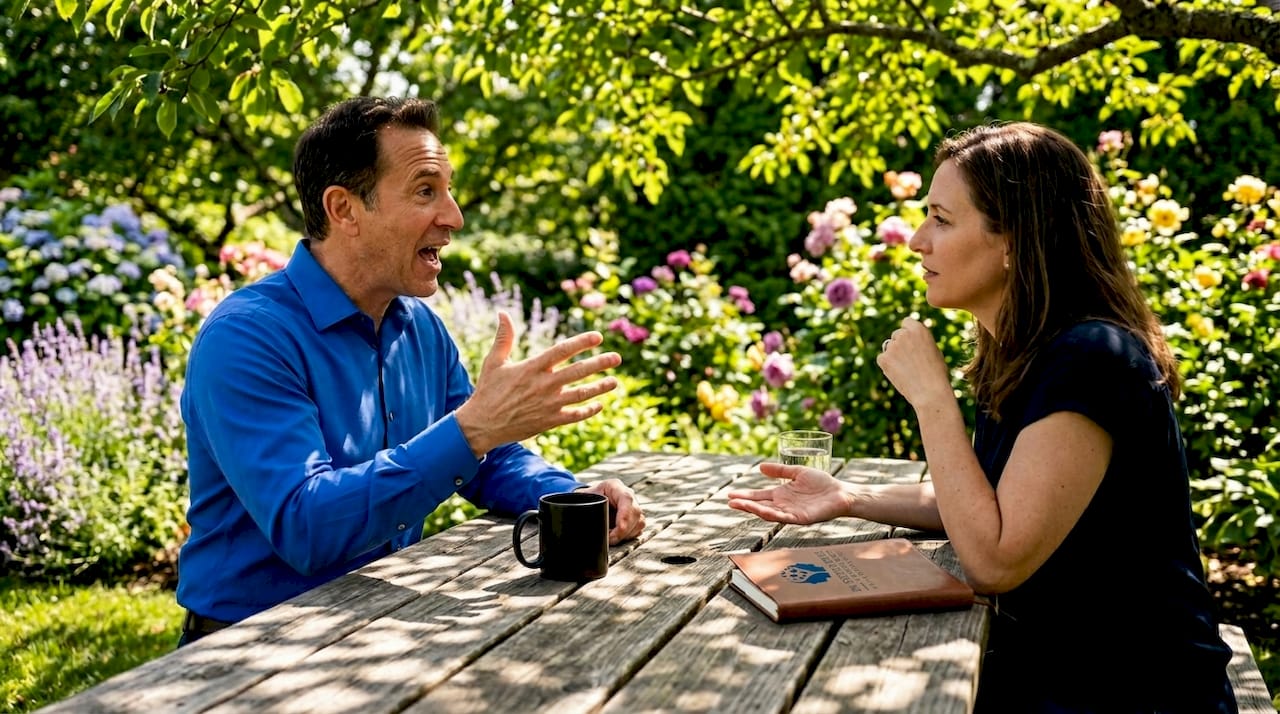
“I” statements work alongside repair attempts to reduce blame. The structure recommended by National University’s conflict research follows a clear sequence: open with care, describe the specific behavior, express your feeling, make a concrete request, and ask for agreement. Using “I feel” statements replaces accusatory language with personal experience, which lowers your partner’s defensiveness immediately.
Active listening completes the communication triangle. This means reflecting back what your partner said before responding, not to agree, but to confirm you understood. A simple “What I’m hearing is…” before your response signals that you are genuinely processing their words rather than preparing your rebuttal.
Pro Tip: Practice repair attempts and “I” statements during low-stakes conversations, not just during conflict. Couples who use these tools regularly outside of arguments find them far easier to access when emotions run high.
How do you identify the real needs behind the argument?
Most recurring fights are not about the surface topic. The dishes, the schedule, and the in-laws are rarely the actual issue. Beneath those triggers sit unmet needs: security, appreciation, autonomy, connection, or respect. Active listening helps partners identify those deeper needs by using curiosity rather than assumption.
Gottman research distinguishes between perpetual problems and solvable issues. Perpetual problems are rooted in personality differences and values. They do not get resolved; they get managed with dialogue and compromise. Solvable issues have practical solutions once the emotional charge is addressed. Knowing which type you are dealing with changes your entire approach.
To shift from adversarial to collaborative, work through these steps in order:
- Pause the content argument and ask: “What do you need most right now in this situation?”
- Reflect the answer back without judgment before responding.
- Ask a follow-up: “What are you most afraid will happen if this doesn’t change?”
- Share your own underlying need using the same format.
- Reframe the problem jointly: “So we both need X. How can we get there together?”
This sequence, drawn from rapport-building principles at Harvard’s Program on Negotiation, treats relational conflict as a shared problem rather than a competition. The shift from “you vs. me” to “us vs. the problem” is where real resolution begins.
What steps create agreements that prevent conflict from recurring?
Good intentions do not prevent repeat fights. Specific, timed, and revisitable agreements do. Vague resolutions like “we’ll communicate better” collapse within days because they offer no measurable behavior to track.
Specific agreements with timing and follow-through plans reduce recurring conflict far more reliably than general promises. A daily 10-minute check-in with phones put away and one structured question about each other’s emotional state is a concrete example that couples can actually implement.
Here is how vague versus specific agreements compare in practice:
| Vague agreement | Specific agreement |
|---|---|
| “We’ll talk more” | “10-minute check-in every evening at 8 p.m., phones away” |
| “I’ll be less critical” | “I will pause before responding and ask one question first” |
| “We’ll fight less” | “We will call a time-out if either of us raises their voice” |
| “We’ll be more affectionate” | “One non-sexual physical connection daily, initiated by either partner” |
Review agreements every two weeks. What worked? What needs adjustment? Celebrating small wins, like a week without a blow-up argument, reinforces the new pattern and builds motivation to continue.
Common pitfalls when trying to resolve conflict with your partner
Even couples with good intentions fall into predictable traps. Recognizing these patterns early prevents them from becoming permanent habits.
- Ignoring repair attempts. When one partner reaches out to de-escalate and the other dismisses it, the reaching partner stops trying. This erodes trust faster than the original conflict.
- Using breaks as avoidance. A time-out that becomes a two-day silence is not calming. It is stonewalling. Pre-agreed protocols with a firm return time prevent this from happening.
- Skipping validation. Validation reduces defensiveness and creates the psychological safety needed for honest dialogue. Skipping it to get to solutions faster almost always backfires.
- Winning instead of connecting. Couples who prioritize being right over being understood repeat the same fights indefinitely.
Pro Tip: Map your conflict cycle once when you are both calm. Write down the trigger, each person’s reaction, and the outcome. Seeing the pattern on paper makes it far easier to interpret it in the moment.
Key takeaways
Resolving relationship conflict requires emotional regulation first, then communication tools, then specific agreements. Without all three, good intentions produce the same arguments on repeat.
| Point | Details |
|---|---|
| Regulate before you communicate | Take a pre-agreed 20 to 30-minute break at the first sign of flooding before re-engaging. |
| Use repair attempts early | Initiate a repair attempt at the first negative turn, not after escalation has peaked. |
| Identify underlying needs | Ask curiosity-based questions to find the real need beneath the surface argument. |
| Make specific agreements | Replace vague promises with timed, measurable commitments and review them every two weeks. |
| Avoid the validation gap | Validate your partner’s experience before moving to problem-solving to reduce defensiveness. |
What I’ve learned about conflict that most couples resist hearing
After years of working with couples at Dr Stephen Oreski & Associates, Bergencountytherapist) the pattern I see most often is not a lack of love. It is a lack of tools applied at the right moment. Most people know they should “communicate better.” Very few know what that means when their heart is pounding, and they feel attacked.
The couples who make the most progress are the ones who stop trying to resolve conflict in the heat of the moment and start building habits during calm periods. They practice repair attempts over dinner. They do check-ins on ordinary Tuesday nights. They treat conflict management as a skill, not a crisis response.
The hardest mindset shift is moving from wanting to win to wanting to reconnect. That shift does not happen automatically. It requires deliberate practice and, often, a structured space to learn it. I have seen couples who fought the same fight for 15 years break the cycle within weeks once they had a concrete framework and someone to guide them through it. The tools in this article work. The question is whether you will use them consistently, not just when things get bad.
— Dr Stephen Oreski LCSW
How professional support can accelerate your progress
Learning these tools on your own is a strong start. Applying them under pressure, in real arguments, with real emotional stakes, is where most couples need support. At Bergencountytherapist, Dr. Stephen Oreski and his team work with couples and individuals to build exactly the skills covered in this article, from emotional regulation and repair attempts to creating agreements that actually hold.
Whether you prefer in-person sessions in Bergen County or the flexibility of online couples therapy, the practice offers personalized treatment plans built around your specific conflict patterns. If you are ready to move from repeating the same fights to building a different dynamic, explore your psychotherapy options and schedule a free consultation to get started.
FAQ
What is the first step to resolve conflict with your partner?
The first step is emotional regulation, not communication. Take a pre-agreed time-out of at least 20 minutes to allow physiological calming before attempting any productive dialogue.
How do repair attempts work in a relationship?
A repair attempt is any action or phrase that interrupts a negative spiral early. Repair attempts work best when used at the first sign of tension, before escalation peaks.
How do you handle conflict in a marriage long-term?
Long-term conflict management in marriage requires consistent habits: regular check-ins, specific agreements reviewed every two weeks, and ongoing practice of “I” statements and active listening outside of arguments.
What is the difference between a perpetual problem and a solvable issue?
Perpetual problems stem from core differences in personality or values and require ongoing dialogue rather than a one-time fix. Solvable issues have practical solutions once the emotional charge is addressed first.
When should couples consider therapy for conflict resolution?
Couples should consider couples therapy when the same conflicts repeat without resolution, when emotional flooding is frequent, or when communication has broken down to the point where productive conversation feels impossible.