

TL;DR:
- Setting relationship goals helps couples build deeper connection and improve communication through shared intentions. Effective goals focus on emotional safety and shared needs, with clear roles and manageable numbers. Regular reflection, communication, and maintaining trust support sustained progress and stronger relationships.
Setting relationship goals is the practice of creating shared intentions that guide a couple toward deeper connection, better communication, and lasting satisfaction. Research confirms that relational hope and goal pursuit increase constructive conflict behavior, commitment, and overall relationship well-being. A longitudinal study of 164 couples found measurable gains in relationship progress over just three months. That means goal setting is not a soft idea. It is a clinically supported practice with real outcomes.
How to set relationship goals that are meaningful
Effective relationship goals focus on shared values and emotional safety, not on fixing your partner. The most common mistake couples make is framing goals around what the other person should change. That approach breeds resentment, not progress.
Strong relationship goals share three qualities:
- They reflect both partners’ needs. Goals built on one person’s agenda collapse quickly. Start by asking what each of you wants more of, not less of.
- They include defined roles. Couples who articulate shared goals and assign clear responsibilities report higher marital satisfaction than those who set goals without role clarity. Knowing who does what removes ambiguity and prevents blame.
- They frame needs, not demands. Naming emotional needs instead of prescribing solutions turns goal conversations into collaborative invitations. “I need more quality time with you” lands differently than “You need to be home by 7 PM.”
Practical relationship goal examples include creating a weekly check-in ritual, agreeing on how to handle financial decisions together, or committing to one date night per month. These are concrete, measurable, and emotionally grounded.
Pro Tip: Limit yourself to 1–3 active goals at a time. Prioritizing a few high-impact goals prevents burnout and increases the chance of real, sustained progress.

How do you create and communicate goals with your partner?
Creating relationship goals works best as a two-stage process: individual reflection first, then a shared conversation. Skipping the first stage leads to one partner dominating the discussion.
- Reflect alone. Before any joint conversation, write down your personal aspirations and what you want the relationship to feel like in six months. Consider questions like: What do I need more of emotionally? Where do I feel disconnected?
- Choose the right moment. Discussing goals during peaceful moments builds better understanding and reduces conflict. Avoid raising big topics during arguments, right before bed, or when either partner is stressed.
- Align on core values first. Before setting specific goals, confirm that you share a basic vision. Do you both want more adventure, more stability, more family time? Values alignment makes specific goals feel natural rather than forced.
- Negotiate and adjust. One partner’s goal may conflict with the other’s. Treat this as information, not a problem. Use communication skills for couples to find a version of the goal that works for both of you.
- Define what success looks like. Vague goals fail. “We want to communicate better” is not a goal. “We will have a 20-minute phone-free conversation every Sunday evening” is.
Pro Tip: If the conversation stalls, shift from the goal itself to the feeling behind it. Ask your partner: “What would it mean to you if we achieved this?” That question reopens connection when logic hits a wall.
What tools and habits support achieving relationship goals?
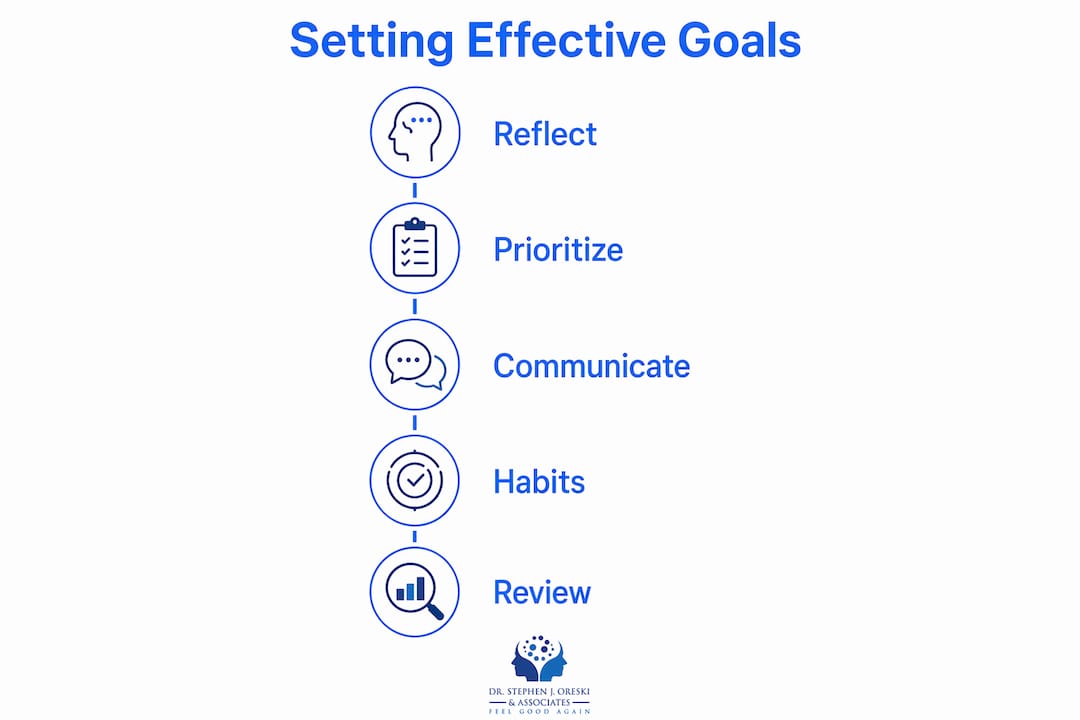
Progress on relationship goals depends on consistent habits, not one-time conversations. The structure you build around your goals matters as much as the goals themselves.
| Approach | Best for | Limitation |
|---|---|---|
| Weekly verbal check-ins | Staying emotionally connected | Requires both partners to show up consistently |
| Written shared goal list | Clarity and accountability | Can feel transactional if not paired with warmth |
| Monthly review conversations | Adjusting goals as life changes | Less frequent, so small issues can build up |
| Casual daily rituals | Maintaining connection without pressure | Less structured, harder to track progress |
Beyond structure, these habits make the biggest difference:
- Celebrate small wins. Acknowledging progress, even minor steps, reinforces motivation and signals that effort is noticed.
- Stay flexible. Life changes. A goal set in january may need revision by april. Rigid plans that ignore real circumstances cause frustration, not growth.
- Practice constructive conflict resolution. Goal pursuit will surface disagreements. How you handle those moments determines whether goals bring you closer or create distance.
- Check your own role. People tend to underestimate their obstruction of a partner’s goal pursuit, which directly lowers relationship satisfaction. Honest self-reflection is not optional.
What are common challenges when setting relationship goals?
Most couples hit predictable obstacles. Knowing them in advance makes them easier to manage.
- Confusing demands with needs. Demands create defensiveness. Needs invite collaboration. The difference is in how you frame the conversation, not just what you say.
- Setting too many goals at once. Vague objectives and overloaded plans lead to burnout and disappointment. Three focused goals outperform ten scattered ones every time.
- Timing conversations poorly. Raising goal discussions during conflict or high stress guarantees a bad outcome. Wait for calm.
- Underestimating your partner’s effort. Partners often miss how much the other person is already contributing toward shared goals. That blind spot creates resentment on both sides.
- Abandoning stalled goals. When progress stops, curiosity works better than criticism. Ask: “What got in the way?” rather than “Why didn’t you follow through?”
Reframing a stalled goal as an invitation to understand each other more deeply changes the entire dynamic. The goal is not the point. The conversation about the goal is where the real relationship work happens.
Resources like Jim Hoover’s How to Stay in Love offer practical frameworks for couples who want to sustain connection through exactly these kinds of challenges.
Key Takeaways
Effective relationship goal setting requires shared values, role clarity, emotional safety, and consistent habits, not perfection or a rigid checklist.
| Point | Details |
|---|---|
| Frame goals around needs | Replace demands with emotional needs to invite collaboration, not defensiveness. |
| Assign clear roles | Couples with defined responsibilities report higher satisfaction than those with goals alone. |
| Limit active goals | Focus on 1–3 goals at a time to prevent burnout and sustain real progress. |
| Time conversations well | Discuss goals during calm, distraction-free moments to build genuine shared understanding. |
| Stay accountable | Regularly check your own role in your partner’s goal pursuit to avoid blind spots that lower satisfaction. |
What I’ve learned about relationship goals after years in the therapy room
Most couples arrive thinking they need better goals. What they actually need is a better relationship with the process of setting them. I have seen well-intentioned couples write out detailed goal lists that read like quarterly business reviews. Within weeks, the list sits forgotten on a shelf and both partners feel like they failed.
The research on relational hope points to something I have observed clinically for years. It is not the goal itself that strengthens a relationship. It is the shared belief that the relationship can grow. That belief, what researchers call relational hope, is the engine. The goals are just the steering wheel.
Emotional safety is the foundation of all of this. When partners feel safe enough to be honest about what they need, goal setting becomes natural. When they do not feel safe, even the best-structured goal conversation turns into a negotiation or a fight. My advice is always to work on the safety first. The goals will follow.
Finally, I caution against treating goal setting like a business checklist. Relationships are not projects to be managed. They are living connections that need warmth, flexibility, and compassion to grow. Keep the process human.
— Stephen
Relationship counseling at Bergencountytherapist
Setting goals together is a skill, and like any skill, it develops faster with the right guidance. At Bergencountytherapist, Dr. Stephen Oreski and his team work with couples to clarify what they truly want from their relationship and build the communication habits to get there.

Relationship counseling at Bergencountytherapist addresses the exact challenges covered here: framing needs constructively, resolving conflict without losing connection, and building goals that actually stick. Whether you prefer in-person sessions in Bergen County or the flexibility of online couples therapy, the practice offers a free consultation to help you find the right fit. The next step is a conversation, not a commitment.
FAQ
What is the best way to start setting relationship goals?
Start with individual reflection before any joint conversation. Each partner should identify their personal needs and aspirations, then bring those to a calm, distraction-free discussion.
How many relationship goals should a couple set at once?
Focus on 1–3 goals at a time. Research shows that prioritizing a small number of high-impact goals prevents burnout and increases the likelihood of sustained progress.
How often should couples review their relationship goals?
Weekly check-ins work well for emotional connection, while monthly conversations are better for adjusting goals as circumstances change. Both serve different purposes and work best together.
What if one partner is not interested in setting goals?
Reframe the conversation away from “goal setting” and toward what each person wants to feel more of in the relationship. Resistance often softens when the focus shifts from structure to emotional connection.
Can couples therapy help with setting relationship goals?
Yes. A therapist helps couples identify underlying needs, improve communication, and build the emotional safety that makes goal setting productive rather than contentious.