

TL;DR:
- Love bombing involves excessive early affection aimed at manipulating and gaining control over someone. It often signals emotional abuse, with behaviors that push boundaries and foster dependency swiftly. Recognizing warning signs and setting boundaries can protect your emotional health from potential harm.
That rush of feeling completely adored by someone new can feel like a dream come true. But when attention, gifts, and declarations of love arrive faster than you can process them, it may be less about genuine connection and more about control. Love bombing is a pattern of behavior that psychologists increasingly recognize as a form of emotional manipulation, and understanding it could protect your mental health and your future relationships.
Table of Contents
- What is love bombing?
- How love bombing works: Manipulation vs. genuine affection
- The psychology of love bombing: Who does it and why?
- Warning signs and benchmarks for self-protection
- What to do if you suspect love bombing
- Conventional wisdom vs. reality: Rethinking early relationship intensity
- Find professional support to protect your emotional health
- Frequently asked questions
Key Takeaways
| Point | Details |
|---|---|
| Love bombing defined | It means overwhelming someone with affection and attention to gain influence or control early in a relationship. |
| Watch for manipulation | Rapid escalation, pressure to reciprocate, and disrespect for boundaries are warning signs of love bombing. |
| Linked to psychological traits | Research links love bombing to narcissism and insecure attachment, but anyone can experience it. |
| Prioritize self-protection | Setting boundaries and seeking help are key steps if you suspect manipulative affection. |
What is love bombing?
Love bombing is not just enthusiasm or excitement at the start of a new relationship. It is something more calculated and more concerning. Love bombing is typically defined as showering someone with excessive affection, attention, and adoration early in a relationship, often with the goal of manipulating the recipient and gaining control.
What separates love bombing from ordinary romantic enthusiasm is intent and intensity. A person who is genuinely excited about you will still respect your pace, your comfort level, and your need for space. A love bomber, by contrast, pushes past those natural limits. The attention feels relentless rather than warm.
Common love bombing behaviors include:
- Declaring intense love or a unique “soul connection” within days or weeks
- Sending constant texts, calls, or messages that create pressure to respond
- Giving over-the-top gifts that feel disproportionate to how long you’ve known each other
- Insisting on seeing you every day or becoming upset when you need personal time
- Rushing conversations about moving in together, engagement, or your shared future
- Framing all this intensity as proof of how “special” you are to them
“The critical distinction is this: genuine excitement invites you in and respects your pace. Love bombing does not give you room to breathe, reflect, or set terms.”
Early intensity may feel flattering, but it can also be a toxic relationship warning sign worth paying attention to. Trust the discomfort if something feels too fast, too much, or too focused on pulling you into dependency rather than building real trust over time.
How love bombing works: Manipulation vs. genuine affection
Now that the basics are clear, it’s vital to understand how love bombing operates beneath the surface. The goal of love bombing is not to make you feel loved. It is to create an emotional debt and a sense of obligation that the love bomber can leverage later. When someone floods you with attention, gifts, and intensity, your brain responds with feelings of warmth and reciprocity. That natural human response becomes the tool of manipulation.
In abusive dynamics, love bombing is linked to coercive control: it leverages a strong emotional bond to manipulate, pressure, or scare someone into doing what the controller wants. Once you feel bonded and invested, the love bomber can pull back that affection as a punishment or use your attachment as leverage for compliance.
Here’s how manipulative behaviors compare to genuine ones:
| Behavior | Manipulative (love bombing) | Genuine affection |
|---|---|---|
| Pace of commitment | Pushes rapid exclusivity | Develops naturally over time |
| Gift-giving | Excessive, creates obligation | Thoughtful, no strings attached |
| Reaction to “slow down” | Guilt-trips or dismisses you | Respects your request |
| Communication | Constant, pressure-filled | Consistent but balanced |
| Emotional tone | Creates anxiety and dependency | Creates safety and calm |
| Boundaries | Frequently pushed or ignored | Respected and honored |
The emotional dynamics that love bombing creates are worth naming clearly. Recipients often feel a mix of flattery and vague unease. They may feel guilty for not “appreciating” the attention. Over time, this creates emotional dependency and makes it harder to recognize or respond to signs of an abusive relationship.
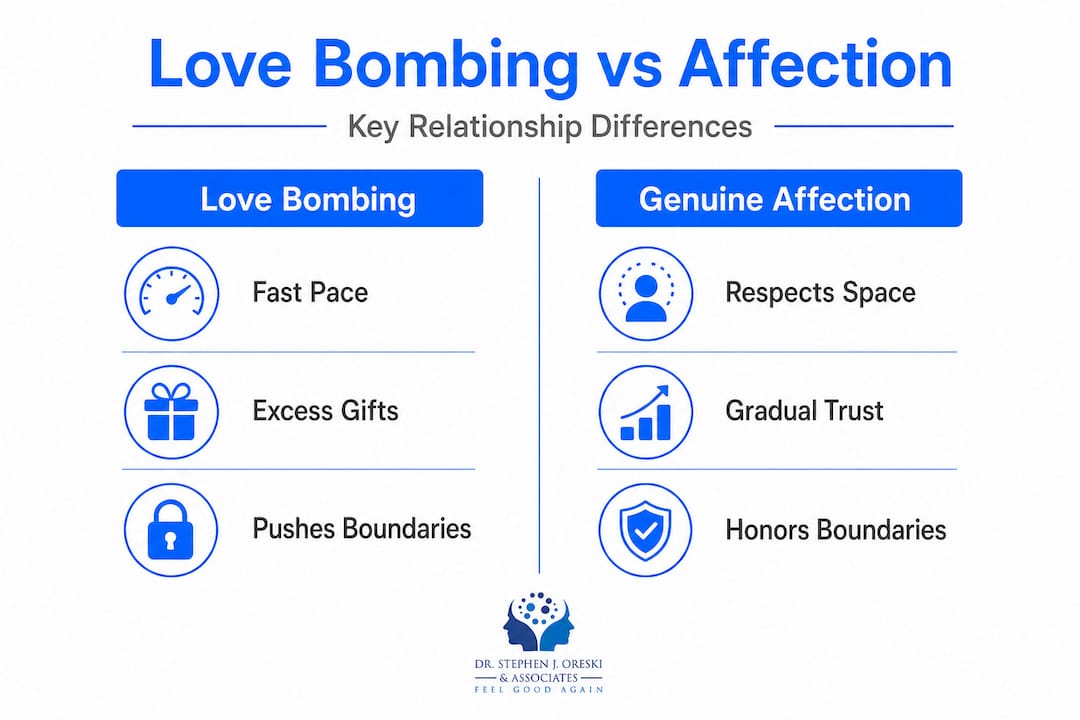
Pro Tip: Pay close attention to how someone responds the first time you express discomfort, ask to slow down, or set any kind of limit. Genuine affection makes room for that conversation. Love bombing dismisses it, reframes it, or punishes you emotionally for having it.
The psychology of love bombing: Who does it and why?
Understanding the motivations behind love bombing can help you recognize it before it becomes harmful. Research suggests specific psychological patterns show up more frequently in people who love bomb, though it is important to note these are associations, not certainties.
Love bombing behaviors show associations with narcissistic traits and insecure attachment styles, based on empirical study of romantic relationships. People with narcissistic tendencies may use love bombing to quickly secure admiration and control. Those with anxious or avoidant attachment styles may use it to prevent abandonment or to avoid genuine emotional vulnerability.
| Trait | Love bombing context | Healthy relationship context |
|---|---|---|
| Self-esteem | Often fragile, needs external validation | More stable, less dependent on partner’s reactions |
| Attachment | Anxious, avoidant, or fearful | Secure, comfortable with closeness and space |
| Empathy | Tends to be limited or instrumental | Genuine, responsive to partner’s needs |
| Emotional regulation | Difficulty managing fear of rejection | Better able to tolerate uncertainty |
Common motivations behind love bombing behaviors include:
- Fear of abandonment that drives rapid bonding attempts
- A need for admiration and control rooted in narcissistic traits
- Anxiety about intimacy that creates push-pull relationship cycles
- A history of unstable attachments that drives overcompensation early on
- A deliberate strategy to create dependency before the relationship is tested
It is worth repeating: not everyone who comes on strong is a love bomber, and most people who love bomb are not doing so with calculated evil intent. But the impact on the recipient is real regardless of the motivation.
Warning signs and benchmarks for self-protection
With context and research in hand, here are the most practical steps for recognizing and responding to love bombing. The following numbered checklist can help you evaluate what you are experiencing:
- Pace feels overwhelming. The relationship is moving faster than feels comfortable, and slowing down is not welcomed.
- Guilt when you say no. Declining an invitation, a gift, or a request produces guilt-tripping or emotional withdrawal from the other person.
- Discomfort with your independence. They express jealousy, upset, or pressure when you spend time with friends or family.
- Unrealistic declarations early on. Statements like “I’ve never felt this way” or “you’re my soulmate” arrive within the first few weeks.
- Your boundaries are tested. You notice small but consistent pushes past the limits you’ve expressed.
- You feel indebted. The volume of attention and gifts creates a sense that you owe them something.
- Your instincts feel uneasy. Something feels “off” even when the surface behavior looks romantic.
A practical self-check benchmark is to look for attempts to create obligation or dependence through escalating gifts or attention very early, especially paired with pressure to reciprocate or accept rapid commitment, particularly when you try to set boundaries or slow the pace.
Pro Tip: If someone reacts to your request for a slower pace with anger, manipulation, or accusations that you “don’t care,” that reaction is a more significant warning sign than anything they said or gave you during the love bombing itself. Healthy partners handle disappointment without punishing you for having needs.
If warning signs appear, relationship counseling support is a valuable resource to help you process what you’re experiencing with a professional.
What to do if you suspect love bombing
Recognizing the problem is the first step. Here’s how to respond if you or someone you care about may be affected.
- Set clear, firm boundaries. Name what you need and observe the reaction carefully. A healthy partner adjusts. A love bomber escalates or guilt-trips.
- Seek an outside perspective. Talk to a trusted friend, family member, or therapist. Love bombing can distort your sense of what is normal or acceptable in a relationship.
- Evaluate patterns, not just moments. Look at behavior over time. One intense gesture may be enthusiasm. A consistent pattern of pressure, boundary violations, and emotional manipulation tells a different story.
- Document concerning behaviors. Keep a simple record of incidents that feel off, especially if there is physical, financial, or emotional pressure involved.
- Know when to involve professionals. If love bombing is combined with monitoring, controlling behavior, or fear, treat it seriously.
If love bombing is coupled with controlling behaviors, treat it as potentially abusive rather than flattering. The eSafety Commissioner specifically warns it can make it hard to maintain boundaries and may be used to manipulate you later in the relationship. Resources like family therapy for abuse or exploring communication strategies in recovery can support healing and healthy boundary-setting.
Conventional wisdom vs. reality: Rethinking early relationship intensity
Our culture has a complicated relationship with romantic intensity. Movies, songs, and social media celebrate whirlwind romance and “love at first sight” as the ideal. This makes it genuinely hard to question intense early affection without feeling like you are being paranoid or dismissing something good.
But here is the harder truth: real emotional connection rarely requires urgency. Genuine love does not need to lock you in before you have had time to think clearly. When someone creates pressure to commit, to feel a certain way, or to ignore your hesitation, that urgency often serves their needs rather than yours.
At our practice in Bergen County, we see clients who describe feeling “swept away” early in relationships that later became controlling or painful. Looking back, many of them recall a nagging discomfort they dismissed because the attention felt so good. That discomfort was information.
The most underrated relationship skill is the ability to slow down when something feels too intense. It is not about being guarded or cold. It is about giving genuine connection the time and space to prove itself. Referring back to toxic relationship warning signs is not pessimism. It is self-respect.
Being swept off your feet can feel like romance. But if you cannot find your footing, that is worth paying attention to.
Find professional support to protect your emotional health
If anything in this article resonates with your current experience or past relationships, please know that support is available and seeking it is a sign of strength.

At Bergen County Therapist, Dr. Stephen Oreski and our team offer personalized, compassionate therapy for individuals and couples navigating confusing or painful relationship dynamics. Whether you are trying to make sense of what you experienced, rebuild confidence, or develop healthier patterns going forward, we can help. Explore couples therapy options, individual therapy for healing, or learn more about our psychotherapy approaches. A free consultation is available to help connect you with the right therapist for your needs.
Frequently asked questions
How can I tell the difference between love bombing and genuine affection?
Genuine affection develops gradually and respects your boundaries and comfort level; love bombing involves excessive affection that feels rushed, overwhelming, and tends to ignore your requests to slow down.
Is love bombing always a sign of abuse?
Love bombing often signals emotional manipulation, but it becomes abusive when paired with coercive or controlling behaviors. In abusive dynamics, love bombing is linked to coercive control patterns that develop over time.
What should I do if I think I’m being love bombed?
Set clear boundaries and observe how the other person responds, then seek a trusted outside perspective. If the behavior is coupled with controlling tactics, reach out to a counselor or therapist for support.
Who is most likely to use love bombing tactics?
People with narcissistic traits or insecure attachment styles may be more prone, though anyone can engage in these behaviors. Research shows love bombing associations with narcissism and insecure attachment are well-documented but not exclusive to any one type of person.