

- Process groups focus on real-time interactions to promote personal growth and relational insight.
- Evidence shows they are as effective as individual therapy for various mental health conditions.
- Success depends on participant readiness, skilled facilitation, and commitment to engaging through discomfort.
Not all group therapy is the same. Many people assume that sitting in a group and sharing feelings is the whole story, but process groups operate on an entirely different level. Instead of following a set curriculum or agenda, they use the live interactions happening right in the room as the primary tool for change. Research consistently shows this approach produces meaningful, lasting results for people working on relationships, self-awareness, and emotional patterns. If you’ve been curious about whether a process group could support your personal growth journey in Bergen County, this guide covers what you need to know.
Table of Contents
- What are process groups?
- How process groups work: Inside the session
- Who benefits—and when process groups are not a fit
- Evidence, outcomes, and expert perspectives on process groups
- Why process groups work—and the key truth most people miss
- Take the next step: Explore options in Bergen County
- Frequently asked questions
Key Takeaways
| Point | Details |
|---|---|
| Process groups defined | They are a type of group therapy focused on real-time interactions and emotional growth between members. |
| Unique mechanics | Sessions stress present-moment sharing, reflection, and feedback instead of set topics or advice. |
| Who benefits | People seeking deeper self-awareness and interpersonal change often benefit most from process groups. |
| Proven results | Research supports process-group efficacy for issues like depression and anxiety, with outcomes as strong as individual therapy. |
What are process groups?
A process group, also called an interpersonal process group, is a form of group psychotherapy that puts real-time relationships front and center. Rather than following a workbook or listening to an expert lecture, members interact with each other naturally and then reflect on what those interactions reveal about their inner lives.
According to AGPA practice guidelines, process groups involve 6-15 participants with one or two trained therapists, meeting in an intentionally unstructured setting where the focus stays on here-and-now interactions. That word “unstructured” surprises many people. There’s no set topic for the day. What happens between members becomes the material.
This is what separates process groups from other common formats:
| Group type | Focus | Structure |
|---|---|---|
| Process group | Real-time relational dynamics | Unstructured, present-focused |
| Support group | Shared coping around a common issue | Loosely structured |
| Psychoeducational group | Teaching skills or information | Highly structured |
| Skills training group | Practicing specific techniques | Structured, curriculum-based |
People who join process groups are typically dealing with relationship struggles, low self-awareness, recurring interpersonal conflicts, or a vague sense that something keeps going wrong in their connections with others. Therapists often recommend this format when someone’s core challenges show up in how they relate to people, not just in isolated symptoms.
Who typically participates:
- Adults seeking insight into relationship patterns
- People who feel stuck despite individual therapy
- Those exploring group therapy for anxiety or social confidence
- Individuals wanting to learn more about the benefits of group therapy
How process groups work: Inside the session
Knowing the definition is one thing. Understanding what actually happens in the room is another.
A typical session opens with members checking in briefly. After that, there’s no prescribed agenda. Someone might bring up a feeling they noticed when another member spoke last week. Someone else might push back. A silence might fall. The therapist watches, facilitates, and occasionally names what’s happening beneath the surface.
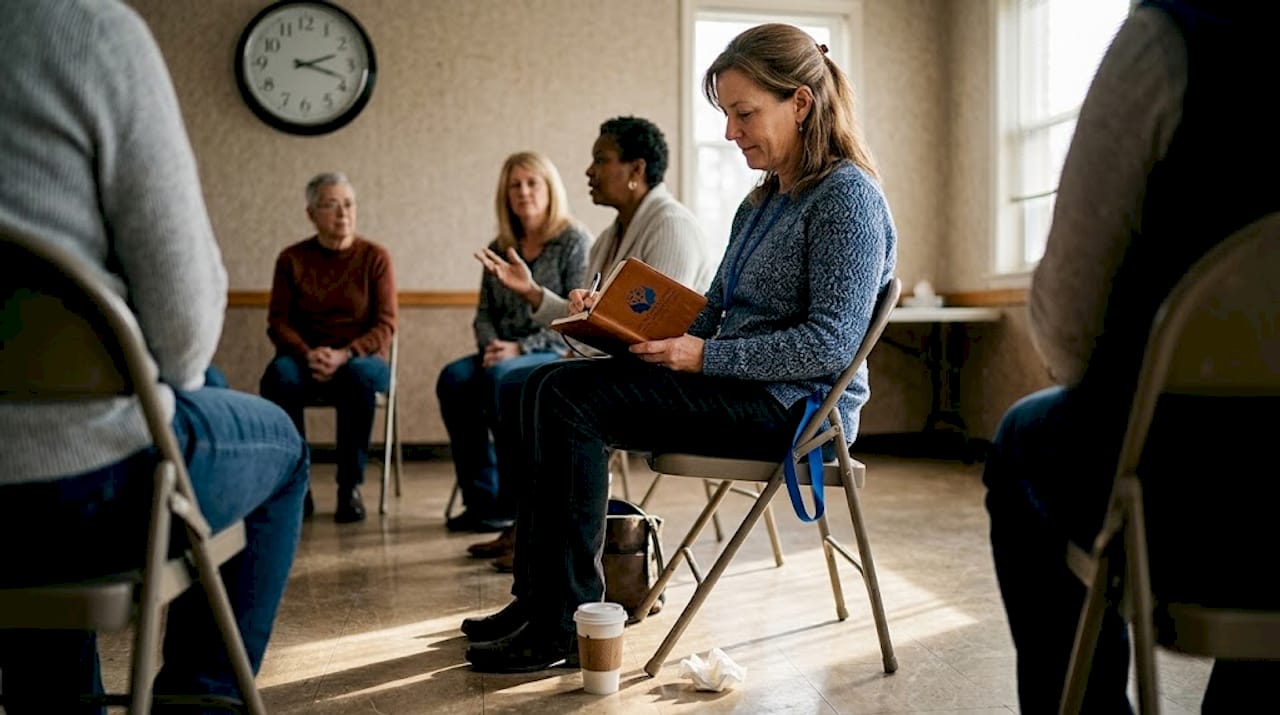
The mechanics of process groups center on observing group interactions, recognizing defensive patterns, and active but minimally directive facilitation. The therapist’s job is not to solve problems or direct conversation. It’s to keep the space safe and help members translate their actions and reactions into words they can examine.
Core techniques used in process group sessions:
- Clarifying the difference between feelings and thoughts
- Giving honest, respectful feedback to other members
- Receiving feedback without deflecting or shutting down
- Recognizing patterns in how you engage with others
- Sitting with discomfort rather than rushing to fix it
Therapists deliberately minimize their own direction over time to strengthen the group’s ability to function independently. That shift itself becomes a learning experience for members who may rely heavily on authority figures.
For practical group therapy tips for growth, one of the most useful things you can do before your first session is reflect on what you genuinely want to change in your relationships. Walking in with that awareness helps you engage more meaningfully from the start.
Pro Tip: Write down two or three specific relationship patterns you’d like to understand better before your first session. Having a clear personal focus helps you notice relevant moments as they happen in real time.
Who benefits—and when process groups are not a fit
Process groups are powerful, but they are not the right fit for everyone, and that matters.
People who tend to excel in this format are those who are curious about themselves, willing to hear honest feedback, and ready to practice new ways of relating in a safe setting. If your goal is to improve communication, build self-awareness, or break out of patterns that keep showing up in group therapy for family dynamics, process groups offer exactly that kind of real-world practice.
For younger people exploring identity and social belonging, group therapy for teens in a process-oriented format can build skills that carry into adult relationships.
Who benefits most:
- Adults working on interpersonal patterns
- People with stable mental health looking for deeper insight
- Those who want honest, supportive feedback from peers
- Individuals ready to tolerate some emotional discomfort
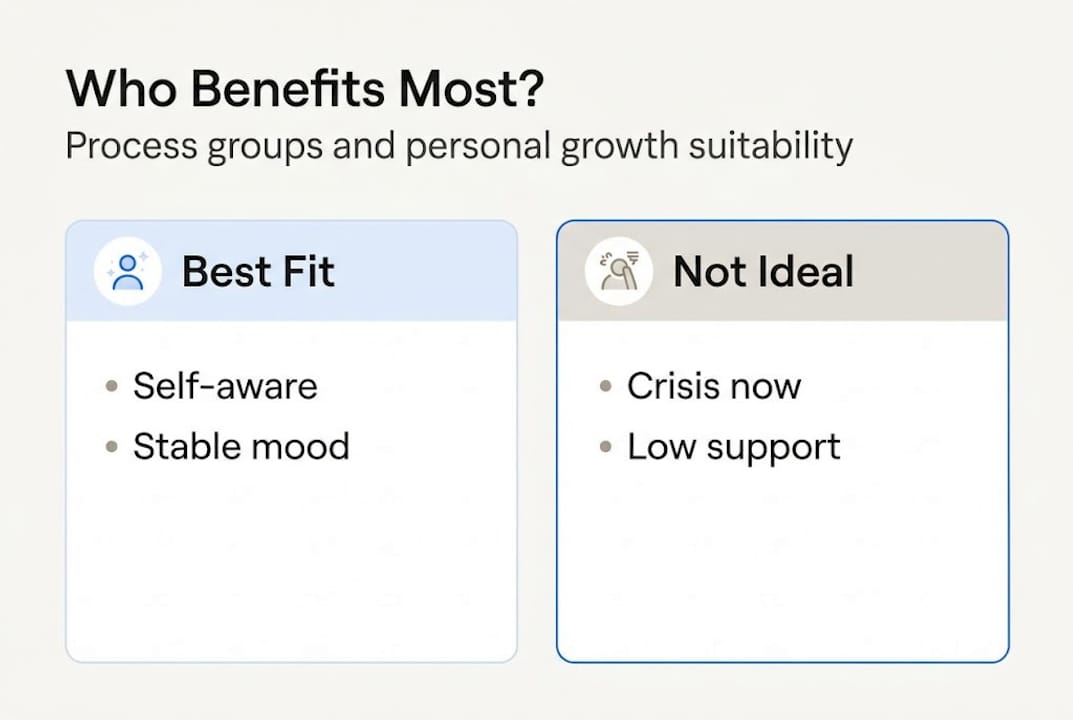
| Ideal candidate | Should wait or seek alternatives |
|---|---|
| Stable mental health baseline | Active psychiatric crisis |
| Willing to hear feedback | Severe difficulty with boundaries |
| Motivated for relational change | Unable to tolerate group interaction |
| Has completed intake and orientation | Needs immediate symptom stabilization |
As AGPA guidelines note, process groups are not suitable for those in acute crisis, with low ego strength, or unable to tolerate emotional interaction. Careful screening and pre-group preparation are essential steps.
Pro Tip: Ask any prospective therapist how they screen members and whether they offer a pre-group orientation session. The quality of that preparation often predicts how safe and effective the group will feel.
Evidence, outcomes, and expert perspectives on process groups
Skepticism about group therapy is understandable. Sharing personal struggles with strangers sounds risky. But the evidence is strong and worth knowing.
Meta-analyses show that group therapy, including process groups, is as effective as individual therapy for depression, anxiety, and PTSD, with sustained gains over time. Effect sizes are notable: depression scores around g=0.73 and PTSD reaching g=1.18. These are meaningful numbers by clinical standards.
“Group psychotherapy produces robust effects comparable to individual therapy across a range of diagnoses, with evidence supporting long-term maintenance of gains.” — Effectiveness of Psychotherapy: Synthesis of a Meta-Analysis
Both the American Group Psychotherapy Association (AGPA) and the American Psychological Association (APA) recognize group therapy as an evidence-based treatment. For a deeper look at what the research shows, evidence for group therapy from a clinical standpoint can help you weigh your options.
What experts consistently emphasize:
- Therapist training and group leadership skills matter enormously
- Clear confidentiality agreements protect trust within the group
- Attention to anxiety and performance dynamics inside the group improves outcomes
- Member readiness and proper screening predict success more than most other factors
As AGPA expert consensus confirms, training, ethical boundaries, and explicit attention to group power dynamics are essential for positive outcomes. Results do vary, which is why readiness and fit matter so much before you join.
Why process groups work—and the key truth most people miss
Here’s what we see again and again in practice: people walk into a process group expecting guidance, advice, or a structured path to self-improvement. They leave surprised that none of those things arrived, and even more surprised that they changed anyway.
The real transformation in process groups doesn’t come from talking about your patterns. It comes from living them out in the room and catching yourself in the act. That moment when you notice yourself going quiet when someone challenges you, or over-explaining to keep the peace, is more valuable than a hundred sessions of discussing those habits in the abstract.
Discomfort in a group is not a warning sign. It is often the signal that meaningful work is happening. Staying engaged during the tough moments, rather than pulling back, is where the most growth lives. As we point out in our overview of the benefits of group counseling, relational change requires relational practice, and process groups provide exactly that environment.
Pro Tip: The most progress happens when you stay engaged during tough moments in group, rather than withdrawing or deflecting. Lean in, even when it’s uncomfortable.
Take the next step: Explore options in Bergen County
If process groups sound like something worth exploring, you don’t need to figure it all out alone.
At Bergen County Therapist, our team offers guidance on individual counseling vs group therapy to help you find the right path for your goals. You can review available group therapy sessions in Paramus or explore our resources on choosing the right type of therapy before making any commitment. A free consultation with our team is a low-pressure first step toward lasting change.
Frequently asked questions
How do process groups differ from support groups?
Process groups focus on real-time relational dynamics and emotional patterns as they emerge between members, while support groups provide shared coping around a common issue or diagnosis.
Can process groups help with anxiety or depression?
Meta-analyses confirm that process groups are effective for depression and anxiety, delivering results comparable to individual therapy with lasting benefits over time.
What if I feel uncomfortable sharing in a group?
It’s completely normal to feel uneasy at first. Therapists prioritize psychological safety and allow members to participate at their own pace as trust builds.
Are process groups confidential?
Group members and therapists agree to confidentiality guidelines at the outset, and ethical confidentiality rules govern the group, though standard legal and ethical limits apply.
Recommended
- 7 Group Therapy Tips for Growth: Dr Stephen Oreski & Associates.
- 7 Benefits of Group Counseling for Personal Growth | Dr Stephen Oreski & Associates.
- Individual Therapy Explained: Support and Growth with Dr Stephen Oreski & Associates.
- Group Grief Counseling: Find Healing and Support with Dr Stephen Oreski & Associates.
- Facilitate group learning games for fun and stronger bonds – The World Game