

TL;DR:
- Persistent behavioral and emotional issues lasting more than two to four weeks may indicate the need for therapy.
- Preparation involves consulting pediatricians, gathering behavioral notes, and understanding therapy approaches.
- Effective therapy requires finding a qualified, approach-specific therapist with active parental involvement.
You notice your child crying more than usual, refusing school, or snapping at siblings over small things. You wonder if it’s a phase or something that needs real attention. That uncertainty is one of the hardest parts of parenting. The good news is that professional child therapy offers a clear, structured path forward, and you don’t have to figure it out alone. This guide walks you through every stage, from spotting the warning signs to choosing the right therapist and tracking real progress, so you can feel confident taking that first step toward helping your child thrive.
Table of Contents
- Understanding when your child needs therapy
- Preparing for the first step: What parents need before starting
- Finding and choosing the right child therapist
- What to expect: The therapy process, milestones, and progress
- Why every family’s therapy journey looks different (and why that’s a strength)
- Connect with expert child therapists in Bergen County
- Frequently asked questions
Key Takeaways
| Point | Details |
|---|---|
| Early signs matter | Noticing changes in your child’s emotions or behaviors is the best reason to explore professional therapy. |
| Preparation is key | Gather observations and questions before meeting a therapist for the most productive start. |
| Choose evidence-based methods | CBT, play therapy, and PCIT are proven approaches—ensure your therapist is trained in them. |
| Patience brings progress | Child therapy usually takes several months, but small positive changes build over time. |
Understanding when your child needs therapy
Most parents second-guess themselves before seeking help. They ask, “Is this normal?” or “Am I overreacting?” The truth is that some behaviors are part of healthy development, but others signal that a child is struggling in ways that won’t resolve on their own.
Here are common signs that suggest your child may benefit from professional support:
- Persistent mood swings that last weeks, not days
- Withdrawal from friends, family, or activities they used to enjoy
- Increased aggression at home or school
- Unexplained physical complaints like stomachaches or headaches
- A noticeable drop in grades or refusal to attend school
- Excessive worry or fear that interferes with daily routines
- Sleep disturbances or changes in appetite
The key word is persistent. One bad week doesn’t mean therapy is needed. But when these patterns last more than two to four weeks and affect your child’s daily functioning, it’s time to act.
Early intervention matters enormously. Children whose emotional and behavioral challenges are addressed early are far less likely to develop more complex issues in adolescence. Research confirms this: child therapy effectiveness shows a moderate overall effect size of 0.46 post-treatment, with anxiety showing the strongest results at 0.61 and play therapy reaching 0.80. These aren’t small numbers. They represent real children making meaningful progress.
“The question isn’t whether your child is struggling enough to deserve help. The question is whether they’re struggling in a way that therapy can address. Almost always, the answer is yes.”
If you’re unsure where to start, child therapy in Bergen County offers a range of evidence-based services tailored to different ages and concerns. You can also explore CDC child therapy resources for a broader overview of what professional support looks like for children.
Preparing for the first step: What parents need before starting
Now that you know when to seek help, it’s essential to lay the right groundwork before the first appointment. Walking in prepared makes the entire process smoother for you, your child, and the therapist.
Here’s what to gather and do before your first contact:
- Talk to your child’s pediatrician for an initial assessment and referral. Starting with a pediatrician is one of the most recommended first steps for Bergen County families.
- Write down specific behaviors you’ve observed, including dates, triggers, and how long each episode lasted.
- Collect teacher or school counselor feedback, since children often behave differently in academic settings.
- Review your insurance coverage to understand what mental health services are included and whether you need a referral.
- Ask about evidence-based approaches such as Cognitive Behavioral Therapy (CBT), Parent-Child Interaction Therapy (PCIT), Play Therapy, and Trauma-Focused CBT (TF-CBT).
Here’s a quick comparison of what to bring versus what to expect at a first appointment:
| What you bring | What the therapist provides |
|---|---|
| Behavioral observations and notes | Initial assessment and intake questions |
| School or teacher reports | Explanation of their approach and methods |
| Insurance information | Estimated treatment timeline |
| Your child’s medical history | A safe space for your child to open up |
Pro Tip: Write down three to five questions before your first call with a therapist. Ask about their experience with your child’s specific concerns, how they involve parents in sessions, and how they measure progress. A good therapist will welcome these questions.
For a structured way to evaluate your options, use this therapist checklist designed specifically for Bergen County families. You can also find broader guidance from APA child therapy resources on what to look for in a qualified provider. Exploring therapy options for children can help you understand what’s available locally before you make your first call.
Finding and choosing the right child therapist
With preparations in order, the next challenge is finding a local therapist who’s a true fit for your family. This step feels overwhelming for many parents, but a clear process makes it manageable.
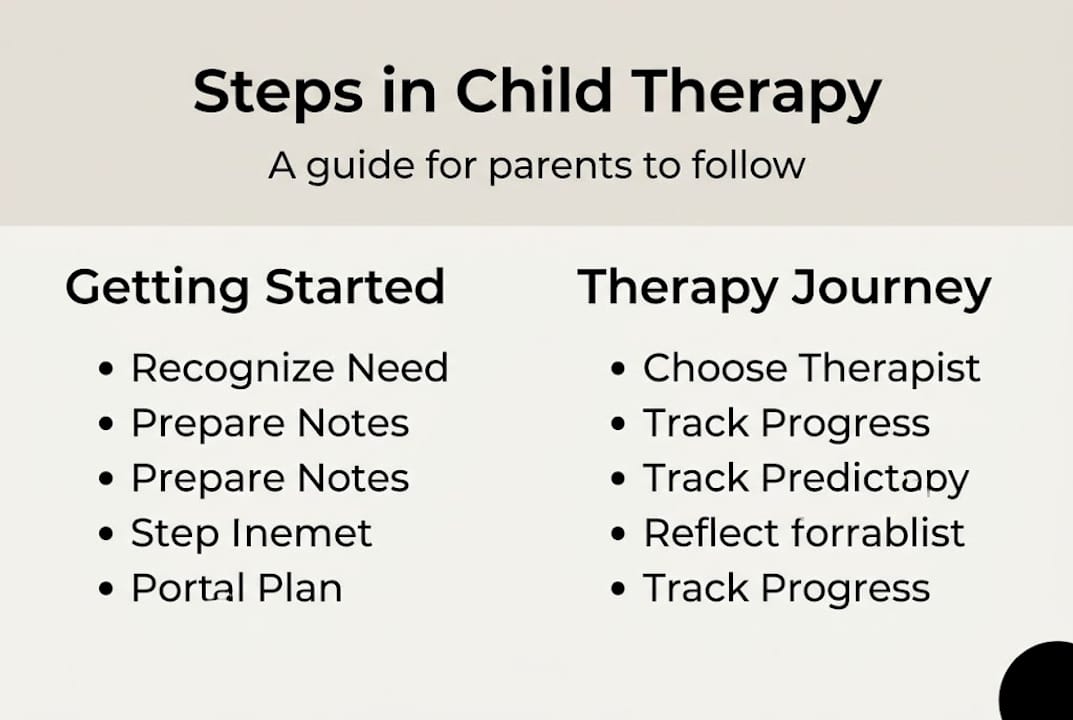
Follow these steps to find a qualified child therapist:
- Ask your pediatrician for a direct referral to a licensed child therapist.
- Search Psychology Today’s therapist directory and filter by location, age group, and specialty.
- Check the American Academy of Child and Adolescent Psychiatry (AACAP) for credentialed professionals.
- Verify licenses through your state’s licensing board to confirm credentials are current.
- Schedule a brief phone consultation before committing to a full session.
Not all therapy approaches work equally well for every concern. Here’s a practical comparison:
| Therapy approach | Best suited for | Age range |
|---|---|---|
| CBT (Cognitive Behavioral Therapy) | Anxiety, depression, OCD | 7 and older |
| Play Therapy | Emotional expression, trauma | 3 to 12 years |
| TF-CBT (Trauma-Focused CBT) | Trauma, PTSD | 3 to 18 years |
| PCIT (Parent-Child Interaction Therapy) | Disruptive behavior | 2 to 7 years |
| Behavior Therapy with Parent Training | ADHD, aggression | 4 and older |
Evidence-based methodologies like CBT, Play Therapy, TF-CBT, and PCIT each target different needs, which is why matching the approach to your child’s specific challenge matters so much.
Red flags to watch for include therapists who can’t explain their methods clearly, don’t involve parents at all, or promise fast results without an assessment. Credentials to look for include Licensed Professional Counselor (LPC), Licensed Clinical Social Worker (LCSW), or a psychologist with child specialization.
Pro Tip: Don’t settle after one consultation. It’s completely appropriate to speak with two or three therapists before choosing. The fit between your child and their therapist is one of the strongest predictors of success.
For families dealing with older children, teen therapy resources address the unique challenges of adolescence. You can also browse top child therapy services and local child therapy options to compare what’s available near you.
What to expect: The therapy process, milestones, and progress
Once you’ve chosen a provider, understanding the therapy journey itself is crucial for reducing anxiety and setting realistic expectations. Many parents feel nervous about what happens inside a therapy room, and that’s completely normal.
Here’s how a typical course of child therapy unfolds:
- Session 1 to 3 (Assessment and rapport building): The therapist gets to know your child, gathers background information, and establishes trust. Don’t expect dramatic changes yet.
- Sessions 4 to 8 (Active intervention): The therapist introduces specific techniques based on the chosen approach. Your child begins practicing new skills.
- Sessions 9 to 12 (Consolidation): Progress becomes more visible. Your child applies skills in real-life situations at home and school.
- Sessions 12 to 18 (Maintenance and closure): For structured models like TF-CBT, 12 to 18 sessions is the empirically supported range. The focus shifts to sustaining gains and preventing relapse.
Important: Progress often looks different depending on who’s observing. You might notice improvements at home before teachers do, or vice versa. This is normal and reflects how children compartmentalize their environments.
Milestones worth tracking include fewer emotional outbursts, improved sleep, willingness to talk about feelings, better peer relationships, and rising grades. Ask your child’s therapist for a simple tracking method so you can monitor changes between sessions.
Research on therapy outcome benchmarks shows that effects often persist well beyond the final session, especially when parents stay actively involved throughout. The child therapy process at a quality practice will include regular check-ins with parents to ensure everyone is aligned on goals.
Why every family’s therapy journey looks different (and why that’s a strength)
Here’s something most therapy guides won’t tell you: the families who expect a single, predictable path often get frustrated fastest. The truth is that no two children or families will experience therapy in exactly the same way, and that’s actually a feature, not a flaw.
Behavioral therapies like CBT consistently show strong results across different reporters, but informant discrepancies between parent and teacher observations are common, and effects vary depending on the child’s specific profile. A method that transforms one child’s anxiety in eight sessions may take longer for another child with similar symptoms but a different family dynamic.
What speeds up progress in almost every case is parent engagement. When parents attend check-ins, practice techniques at home, and give honest feedback to the therapist, outcomes improve significantly. You are not a bystander in your child’s therapy. You are a core part of the treatment.
Every family brings its own strengths to this process. Some children respond to humor in sessions. Others need quiet, structured environments. Some families need the therapist to work closely with the school. A skilled therapist adapts to all of this. Explore child therapy options that prioritize individualized care and active family involvement.
Connect with expert child therapists in Bergen County
Ready to take action? Bergen County offers specialized providers ready to help every step of the way.

At Bergen County Therapist, Dr. Stephen Oreski and his team offer evidence-based child therapy services tailored to your child’s specific needs, whether that involves anxiety, trauma, behavioral challenges, or emotional regulation. Families can explore trauma therapy for children or learn about anxiety therapy for kids to find the right starting point. You can also use tools to track your child’s mental health between sessions. Getting started is straightforward. Reach out for a free consultation and let the team guide your family from the first question to lasting, measurable results.
Frequently asked questions
How do I know if my child needs professional therapy?
If your child has ongoing mood, behavior, or social difficulties that interfere with daily life, it’s wise to talk with a pediatrician or consult a mental health professional. A pediatrician referral is often the best first step for Bergen County families.
What types of therapy are most effective for children?
Evidence supports CBT for anxiety and depression, play therapy for young children, PCIT for disruptive behavior, and TF-CBT for trauma. The right approach depends on your child’s age and specific challenges.
How many sessions does child therapy usually take?
A typical course runs 12 to 18 sessions for structured models like TF-CBT, though the exact number varies based on your child’s needs and progress.
Do all therapists offer the same approaches?
No. Therapists have different specialties and training. Always confirm they use evidence-based methods like CBT, Play Therapy, TF-CBT, or PCIT that match your child’s specific concerns.
Is parent involvement needed in child therapy?
Yes. Parental involvement is one of the strongest drivers of positive outcomes, particularly for younger children and behavioral challenges.