

Most American survivors of narcissistic abuse endure a wide spectrum of emotional challenges before real recovery can begin. Experts estimate that about 40 percent of individuals in emotionally abusive relationships struggle to identify or validate their own feelings. Addressing these internal struggles is the foundation for lasting change. This guide uncovers practical steps to reclaim confidence, set healthy boundaries, and rebuild genuine connections after the trauma of narcissistic abuse.
Table of Contents
- Step 1: Acknowledge Emotional Impact
- Step 2: Establish Safe Boundaries
- Step 3: Reconnect With Support Systems
- Step 4: Foster Personal Growth Habits
- Step 5: Evaluate Progress and Adjust Strategies
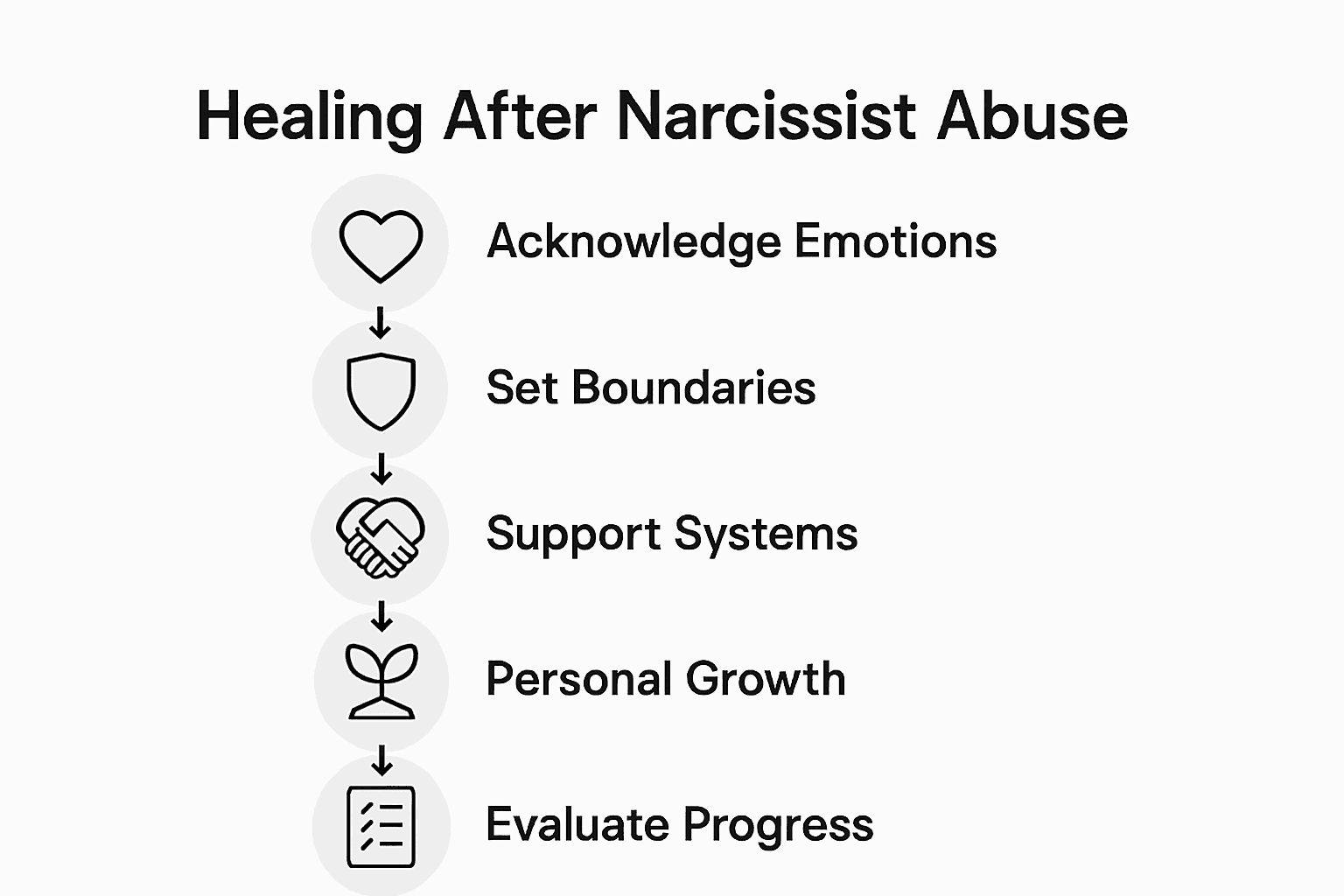
What You’ll Learn: 5 Steps to Heal After Narcissistic Abuse
| Key Point | Explanation |
|---|---|
| 1. Acknowledge Your Emotions | Accept and validate all feelings experienced during and after the relationship; this is crucial for healing. |
| 2. Set Clear Boundaries | Define what behaviors are acceptable to protect your emotional well-being; enforcement is vital for self-respect. |
| 3. Rebuild Support Networks | Identify and reconnect with trustworthy relationships to nurture healing and emotional recovery. |
| 4. Establish Growth Habits | Create daily routines focusing on mindfulness and self-reflection to foster personal development and well-being. |
| 5. Regularly Evaluate Progress | Periodically assess your healing journey, celebrate successes, and adjust strategies as needed for continued growth. |
Step 1: Acknowledge Emotional Impact
Acknowledging the emotional impact of narcissistic abuse is a critical first step toward healing. This stage involves recognizing and validating the complex range of feelings you have experienced during and after your relationship with a narcissist.
Emotional acknowledgment means allowing yourself to feel and understand the full spectrum of your reactions without judgment. Mental health experts recognize that victims often suppress their emotions as a survival mechanism during abusive relationships. You might experience confusion, self doubt, anger, grief, and profound sadness. These feelings are normal and represent your brain processing the traumatic experience.
Start by creating a safe space for emotional exploration. This could mean journaling your experiences, speaking with a trusted therapist, or practicing mindful reflection. Allow yourself to sit with these emotions without attempting to immediately rationalize or minimize them. Remember that healing is not linear and every emotional response you have is valid and important.

Pro tip: Write down your emotions without censoring yourself. Capture raw, unfiltered feelings to help you understand and process your emotional landscape more effectively.
Step 2: Establish Safe Boundaries
Establishing safe boundaries is a crucial step in recovering from narcissistic abuse. This stage focuses on creating clear personal limits that protect your emotional and psychological well-being and prevent further manipulation.
Setting boundaries requires understanding and defining your personal comfort zones. Experts recommend identifying specific types of boundaries that are most relevant to your situation. These can include physical boundaries that control personal space, emotional boundaries that protect your feelings, and communication boundaries that limit toxic interactions. Begin by clearly articulating what behaviors you will and will not tolerate from others.
Implementing these boundaries means consistent and firm communication. Practice direct statements like I do not feel comfortable with that or I will not engage if you continue this behavior. Be prepared to follow through with consequences if someone disrespects your limits. This might mean reducing contact, ending conversations, or removing yourself from situations that compromise your safety and peace of mind. Remember that setting boundaries is an act of self respect and healing.
Pro tip: Write down your boundary statements beforehand to help you feel more confident and clear when communicating them in real situations.
Use this quick reference for examples of boundaries in recovery:
| Boundary Type | Example Statement | Purpose |
|---|---|---|
| Physical | “I need personal space” | Protects your physical comfort |
| Emotional | “My feelings are valid” | Maintains emotional safety |
| Communication | “I won’t respond to insults” | Limits negative interactions |
Step 3: Reconnect With Support Systems
Reconnecting with support systems is a transformative step in healing from narcissistic abuse. This crucial phase involves rebuilding trust and creating a network of genuine connections that nurture your emotional recovery.
Understanding the importance of community can help you strategically rebuild your social connections. Start by identifying relationships that were authentic and supportive before the narcissistic relationship. These might include family members, friends, former colleagues, or support group members who demonstrated consistent care and respect. Reach out cautiously and gradually. Share only what feels comfortable and be prepared to set clear boundaries during these interactions.
Rebuilding your support system requires emotional intelligence and patience. Consider seeking professional support through group therapy or counseling sessions specifically designed for abuse survivors. These environments provide structured opportunities to practice social interactions while receiving guidance. Select connections that validate your experiences, offer empathy, and demonstrate a genuine commitment to your healing. Remember that quality matters more than quantity when reconstructing your social network.
Pro tip: Create a personal support checklist with specific criteria for healthy relationships to help you consciously choose connections that truly support your healing journey.
Step 4: Foster Personal Growth Habits
Fostering personal growth habits is a critical transformation phase in healing from narcissistic abuse. This step empowers you to rebuild your sense of self and create meaningful patterns that support your emotional and psychological recovery.
Practicing mindfulness and self-reflection provides a solid foundation for personal development. Begin by establishing daily routines that prioritize your mental and physical well-being. This might include meditation, journaling, regular exercise, or engaging in creative activities that help you reconnect with your authentic self. Focus on activities that bring you joy and help you process your experiences without judgment.
Expand your personal growth by setting intentional goals that reflect your values and aspirations. These goals should be realistic and compassionate, allowing you to gradually rebuild your confidence and sense of purpose. Consider exploring new skills, pursuing educational opportunities, or reconnecting with passions you may have abandoned during the narcissistic relationship. Remember that personal growth is a non linear journey with multiple paths and no predetermined timeline.
Pro tip: Create a weekly self-care schedule that includes at least three activities specifically designed to nurture your emotional and personal development.
Step 5: Evaluate Progress and Adjust Strategies
Evaluating your healing progress and adjusting strategies is a crucial step in recovering from narcissistic abuse. This phase allows you to reflect on your journey, recognize your growth, and make intentional modifications to support continued healing.
Monitoring physical and emotional recovery indicators provides valuable insights into your healing process. Create a personal assessment framework that tracks tangible changes in your emotional well-being. This might include documenting improvements in sleep patterns, reduced anxiety levels, increased self confidence, and the quality of your relationships. Consider keeping a journal or using a tracking app to record these observations objectively and compassionately.
Adjusting your healing strategies requires flexibility and self compassion. Recognize that recovery is not linear and setbacks are normal parts of the healing journey. Schedule regular check ins with yourself or a trusted therapist to review your progress. Be willing to modify your approach if certain strategies are not producing the desired results. This might mean trying new therapeutic techniques, exploring different support groups, or shifting your personal growth activities to better align with your evolving needs.
Pro tip: Develop a quarterly personal healing review where you honestly assess your progress, celebrate your achievements, and thoughtfully adjust your recovery strategies.
Here is a summary of each healing step and its primary focus:
| Step | Core Focus | Key Benefit |
|---|---|---|
| Acknowledge Emotional Impact | Validating and accepting emotions | Reduced self-blame, increased awareness |
| Establish Safe Boundaries | Defining and protecting limits | Greater safety, less manipulation |
| Reconnect With Support Systems | Restoring genuine relationships | Increased trust, emotional support |
| Foster Personal Growth Habits | Building positive routines | Renewed confidence, self-discovery |
| Evaluate Progress & Adjust | Assessing and refining strategies | Sustainable, adaptive healing |
Take the Next Step Toward Healing After Narcissistic Abuse
Recovering from the emotional wounds caused by a narcissist can feel overwhelming. This guide highlights key challenges such as acknowledging your feelings, setting safe boundaries, and rebuilding support systems—all vital steps toward lasting healing. If you are seeking compassionate support to navigate these difficult emotions and establish healthy personal growth habits, help is available.

Explore expert insights and personalized therapy options with the team at Bergen County Therapist. Our experienced professionals specialize in trauma recovery and offer tailored approaches to assist your journey. Discover more about the complexities of narcissistic abuse and healing strategies in our Narcissism Archives or dive deeper into stories and advice in the narcissist Archives. Take control of your mental health today by scheduling a free consultation through Bergen County Therapist. Your path to reclaiming peace starts with one step.
Frequently Asked Questions
What should I do first in my healing process after narcissistic abuse?
Start by acknowledging the emotional impact of your experience. Take time to identify and validate your feelings through journaling or therapy to better understand your emotional landscape.
How can I establish safe boundaries after ending a relationship with a narcissist?
To establish safe boundaries, clearly define what behaviors you will and will not tolerate from others. Communicate your boundaries with direct statements and be prepared to enforce consequences if someone crosses those lines.
How can I reconnect with my support system after experiencing narcissistic abuse?
Reconnecting with your support system involves reaching out to people who were supportive before your narcissistic relationship. Start by contacting friends or family members you trust and share only what feels comfortable while being clear about your boundaries.
What personal growth habits should I focus on during my recovery?
Focus on fostering personal growth habits such as daily mindfulness practices, regular exercise, or creative activities that bring you joy. Establish a weekly self-care routine that includes at least three activities specifically designed to nurture your emotional and personal development.
How often should I evaluate my healing progress and adjust my strategies?
Regularly evaluate your healing progress, at least once every three months, to track changes in your emotional well-being. Use this time to celebrate achievements and adjust your strategies if certain methods aren’t yielding the results you desire.
What specific emotional responses are normal after narcissistic abuse?
It’s normal to experience a range of emotions such as confusion, self-doubt, anger, and profound sadness after narcissistic abuse. Allow yourself to sit with these feelings without judgment, as they are a natural part of processing your trauma.