

Over 30 percent of American teenagers now face anxiety so severe it disrupts daily life. Bergen County parents often feel caught between worry and confusion as they search for answers that go beyond advice found on social media or casual conversations. This article offers clear insights into teen anxiety, debunks common myths, and points you to practical strategies and local resources designed to support your child’s mental well-being.
What This Article Covers: Teen Anxiety, Types & Parental Support
- Defining Teen Anxiety And Common Myths
- Types Of Anxiety Disorders In Adolescents
- Recognizing Symptoms And Underlying Causes
- Risks, Complications, And When To Seek Help
- Effective Strategies For Parental Support
- Treatment Options And Local Resources
Key Takeaways
| Point | Details |
|---|---|
| Understanding Teen Anxiety | Teenage anxiety is a legitimate neurological condition affecting about 8% of adolescents, requiring compassionate understanding and intervention. |
| Types of Anxiety Disorders | Awareness of various anxiety disorders, such as Generalized Anxiety Disorder and Social Anxiety Disorder, is crucial for effective support and intervention. |
| Symptoms and Causes | Anxiety in teens manifests both psychologically and physically, influenced by environmental factors, brain changes, and personal experiences. |
| Effective Parental Support | Open communication, emotional validation, and knowledge of mental health resources are essential for helping teens navigate anxiety. |
Defining Teen Anxiety and Common Myths
Teens experience anxiety as a complex emotional and physiological response that goes far beyond typical stress or nervousness. Teenage anxiety is a nuanced condition affecting approximately 8% of children and teenagers nationwide, representing a significant mental health challenge that requires understanding and compassionate intervention.
Unlike common misconceptions, teen anxiety isn’t simply teenagers being dramatic or overly sensitive. Understanding anxiety disorders reveals that anxiety represents a legitimate neurological experience involving intricate brain changes and social pressures. While some anxiety can serve as a motivational force helping teens perform and stay safe, it becomes problematic when persistent and disruptive to daily functioning.
Teen anxiety manifests through multiple symptom clusters, including psychological, emotional, and physical indicators. Common symptoms range from persistent worrying and irritability to physical complaints like headaches, stomachaches, and unexplained muscle tension. Social anxiety might cause teens to avoid interactions, while performance anxiety could trigger intense stress about academic or extracurricular expectations. These symptoms often differ from childhood anxiety, shifting from external fears to more complex internal worries about social acceptance, academic performance, and personal identity.
Many parents misunderstand teen anxiety, believing teenagers can simply “snap out” of their emotional experiences. However, research demonstrates that anxiety represents a genuine neurological condition requiring professional support and strategic intervention. Professional therapists can help teenagers develop coping mechanisms, understand their emotional landscape, and learn techniques for managing anxious thoughts effectively.
Pro tip:Create open communication channels with your teenager, actively listening without judgment and validating their emotional experiences while maintaining a supportive, non-confrontational approach.
Types of Anxiety Disorders in Adolescents
Anxiety disorders represent a complex spectrum of mental health challenges that significantly impact adolescent development and functioning. Types of anxiety disorders demonstrate remarkable diversity, affecting approximately one in four teenagers with distinct manifestations that require specialized understanding and targeted interventions.
Generalized Anxiety Disorder (GAD) emerges as a particularly prevalent condition among teenagers, characterized by persistent and excessive worry about multiple aspects of life. Adolescents with GAD experience intense, uncontrollable anxiety that extends beyond typical developmental concerns, creating substantial emotional distress. These teens often struggle with academic performance, social interactions, and personal relationships due to their pervasive sense of apprehension and anticipatory anxiety.
Other critical anxiety disorders impacting adolescents include Social Anxiety Disorder, which triggers intense fear of social interactions and potential judgment, and Panic Disorder, marked by unexpected and overwhelming panic attacks. Specific Phobias represent another significant category, involving irrational fears of particular objects, situations, or experiences that can severely limit a teenager’s daily functioning. These disorders frequently overlap, creating complex psychological landscapes that require nuanced professional assessment and treatment.
Here is a summary of common anxiety disorders in teenagers and how they typically present:
| Disorder Type | Key Characteristics | Usual Triggers |
|---|---|---|
| Generalized Anxiety Disorder | Excessive worry about many topics | School, family, world news |
| Social Anxiety Disorder | Intense fear of social interactions | Peer events, new situations |
| Panic Disorder | Sudden panic attacks, physical symptoms | Unexpected stressors |
| Specific Phobias | Extreme fear of one object/situation | Heights, animals, needles |
Risk factors for developing anxiety disorders in adolescents encompass genetic predisposition, environmental stressors, traumatic experiences, and familial mental health history. Understanding these disorders demands a comprehensive approach that recognizes the intricate neurological and psychological components driving teenage anxiety. Professional therapeutic interventions, including cognitive behavioral therapy and potentially targeted medication, can help teenagers develop effective coping mechanisms and reclaim their emotional equilibrium.
Pro tip:Encourage teenagers to maintain a feelings journal, documenting anxiety triggers and emotional responses to help develop self-awareness and provide valuable insights for therapeutic interventions.
Recognizing Symptoms and Underlying Causes
Teenage anxiety manifests through a complex array of psychological, emotional, and physiological symptoms that extend far beyond typical adolescent stress. Recognizing depression and anxiety signs becomes crucial for parents and caregivers seeking to understand their teenager’s mental health landscape.
Psychological Symptoms of teen anxiety often include persistent and excessive worrying, heightened irritability, and significant difficulty concentrating. Teenagers might experience racing thoughts, overwhelming self-doubt, and an intense fear of potential negative outcomes. These mental manifestations can create substantial emotional turbulence, making it challenging for adolescents to navigate daily academic, social, and personal challenges.
Physical indicators frequently accompany psychological symptoms, presenting as muscle tension, recurring headaches, unexplained stomach problems, and sleep disturbances. Many teenagers experience rapid heartbeat, sweating, and trembling during anxious episodes. Notably, these physical symptoms can be particularly distressing, as teens may struggle to articulate or understand the connection between their emotional state and bodily reactions. Environmental factors such as academic pressures, social media influences, family dynamics, and global uncertainties significantly contribute to teenage anxiety development.

Understanding the underlying causes requires a nuanced approach that recognizes the multifaceted nature of adolescent mental health. Developmental brain changes, hormonal shifts, genetic predispositions, and traumatic experiences can all play critical roles in anxiety emergence. Professional assessment becomes essential in distinguishing between normal developmental stress and clinical anxiety disorders, ensuring appropriate support and intervention strategies.
Pro tip:Create a supportive environment where teenagers feel safe discussing their emotions without judgment, actively listening and validating their experiences while maintaining open communication channels.
Risks, Complications, and When to Seek Help
Teenage anxiety represents a significant mental health challenge with potential long-term consequences that extend far beyond temporary emotional distress. Nearly one in three adolescents now experience anxiety disorders, creating an urgent need for comprehensive understanding and proactive intervention. Understanding generalized anxiety disorder becomes crucial for identifying potential risks and implementing timely support strategies.
Potential Complications of untreated teen anxiety can be profound and multifaceted. Adolescents may face increased risks of developing depression, experiencing academic difficulties, struggling with social withdrawal, and encountering challenges in personal relationships. Chronic anxiety can also trigger destructive coping mechanisms, including substance abuse, self-harm, and heightened vulnerability to suicidal ideation. These secondary impacts underscore the critical importance of early professional assessment and targeted intervention.
Recognizing when professional help becomes necessary requires careful observation of specific warning signs. Parents and caregivers should be alert to persistent symptoms that significantly disrupt daily functioning, such as consistent school avoidance, complete social isolation, dramatic changes in behavior, prolonged sleep disturbances, or frequent unexplained physical complaints. Clinical guidelines recommend comprehensive screening for children eight years and older, emphasizing that early intervention can dramatically improve long-term mental health outcomes and prevent potential developmental complications.
The pathway to addressing teenage anxiety involves a collaborative approach between families, mental health professionals, educational institutions, and the teenagers themselves. Professional evaluation typically includes comprehensive psychological assessments, potential cognitive behavioral therapy, and in some cases, carefully monitored pharmacological treatments. The goal remains creating a supportive environment that validates the teenager’s emotional experiences while providing practical tools for managing anxiety effectively.
Pro tip:Maintain open, non-judgmental communication channels with your teenager, actively listening and showing genuine empathy while gently encouraging professional support when anxiety symptoms persist.
Effective Strategies for Parental Support
Supporting a teenager experiencing anxiety requires a delicate balance of empathy, understanding, and strategic intervention. Supporting teens in therapy demands a nuanced approach that recognizes the complex emotional landscape adolescents navigate during challenging mental health periods.
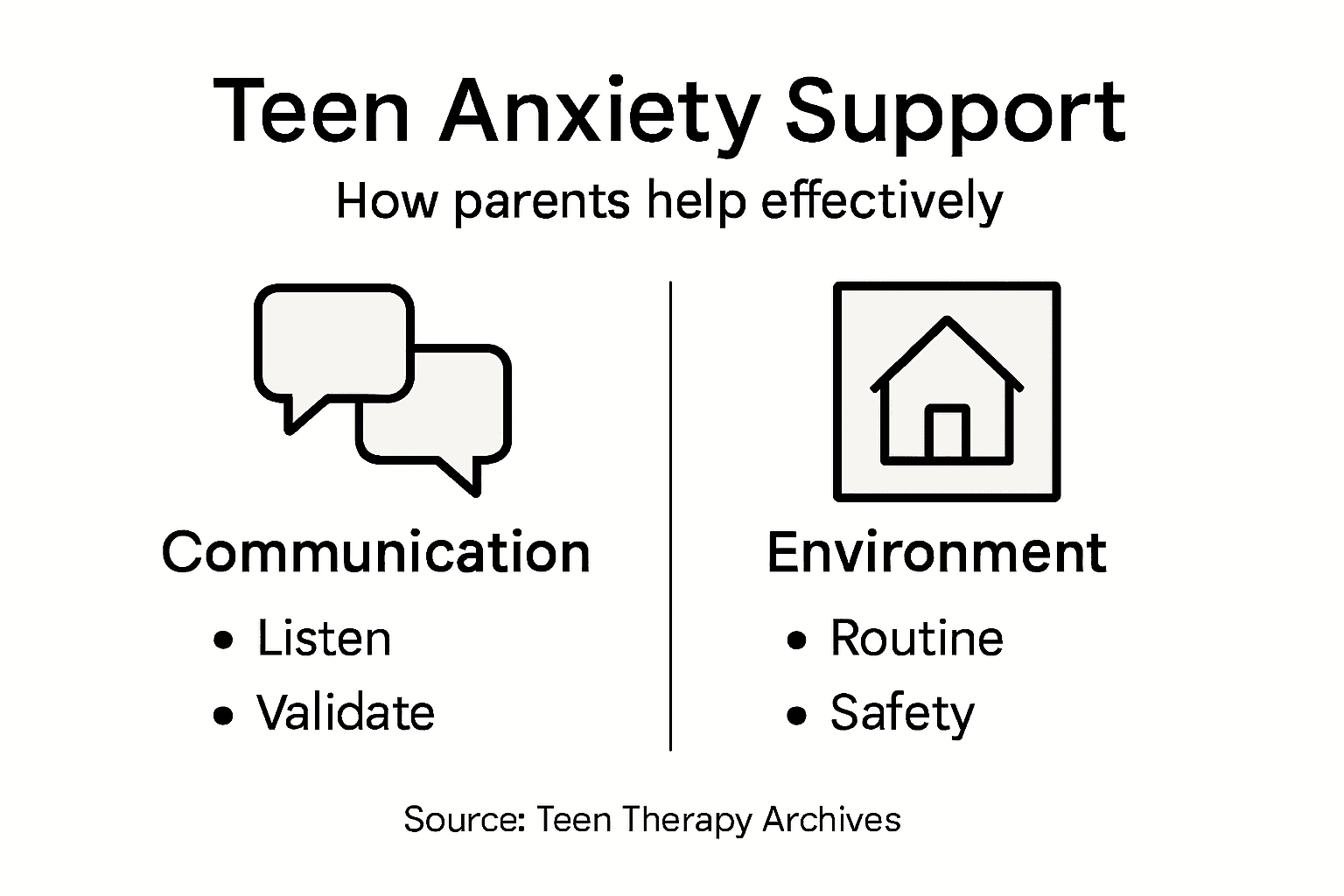
Communication Strategies play a pivotal role in effectively supporting anxious teenagers. Parents must cultivate an environment of open, non-judgmental dialogue where teens feel safe expressing their emotions without fear of criticism or immediate problem-solving. This approach involves actively listening, validating their feelings, and avoiding minimizing their experiences. Asking open-ended questions and demonstrating genuine curiosity about their inner world can help teenagers feel understood and supported, rather than feeling like their emotions are being dismissed or controlled.
Parents must also develop their own emotional awareness and stress management techniques to prevent inadvertently transferring anxiety to their teenagers. Modeling healthy coping mechanisms such as mindfulness, positive self-talk, and constructive emotional regulation becomes crucial. This might involve demonstrating how to manage personal stress, practicing breathing exercises together, or openly discussing strategies for handling challenging emotions. Understanding that anxiety manifests differently for each individual helps parents customize their support approach, recognizing that a one-size-fits-all strategy is ineffective.
Professional intervention often becomes a critical component of comprehensive teen anxiety support. Parents should educate themselves about anxiety disorders, recognize the difference between normal developmental worries and clinical anxiety, and be prepared to guide their teenagers toward professional help when necessary. This might involve collaborating with school counselors, seeking mental health professionals specializing in adolescent psychology, and maintaining consistent, supportive involvement throughout the therapeutic process.
Pro tip:Create a consistent, judgment-free routine of daily check-ins with your teenager, focusing on listening and understanding rather than immediately solving their problems.
Treatment Options and Local Resources
Addressing teenage anxiety requires a comprehensive approach that integrates multiple treatment modalities and professional support systems. Practical tips for choosing the right type of therapy can help families navigate the complex landscape of mental health interventions and find appropriate support strategies.
Treatment Options for teenage anxiety typically encompass a multifaceted approach combining psychotherapy, potential medication management, and holistic support strategies. Cognitive Behavioral Therapy (CBT) emerges as the gold standard intervention, helping teenagers develop coping mechanisms, challenge negative thought patterns, and build resilience. Individual therapy provides personalized strategies, while group therapy can offer valuable peer support and normalize their experiences. Some adolescents might benefit from family therapy, which helps improve communication and understanding within the family system.
Professional mental health resources in Bergen County offer specialized support for teenagers experiencing anxiety. Local therapists, school counseling services, and community mental health centers provide targeted interventions tailored to adolescent developmental needs. Comprehensive treatment often involves collaboration between mental health professionals, parents, and educational institutions to create a supportive ecosystem that addresses the teenager’s emotional and psychological well-being.
Medication can be an important component of anxiety treatment for some teenagers, typically prescribed in conjunction with psychotherapy. Selective Serotonin Reuptake Inhibitors (SSRIs) might be recommended by psychiatrists for moderate to severe anxiety disorders. However, medication decisions require careful evaluation, considering individual symptoms, medical history, and potential side effects. Holistic approaches including lifestyle modifications, stress management techniques, regular physical exercise, and healthy sleep habits can significantly complement formal therapeutic interventions.
The following table contrasts treatment approaches for teenage anxiety:
| Treatment Approach | Primary Benefit | Typical Setting |
|---|---|---|
| Cognitive Behavioral Therapy | Restructures negative thought patterns | Outpatient therapy office |
| Group Therapy | Peer support and skill building | School or clinic group |
| Family Therapy | Improves family communication | Family counseling sessions |
| Medication (SSRIs) | Reduces severe anxiety symptoms | Psychiatric evaluation |
| Lifestyle Modifications | Enhances overall well-being | Home and daily life |
Pro tip:Research local support groups and teen mental health resources in Bergen County, creating a comprehensive support network that extends beyond individual therapy sessions.
Take Confident Steps Toward Overcoming Teen Anxiety with Expert Support
If your teenager is facing the challenges of anxiety, including persistent worry or social fears, you are not alone. Understanding the complex impact of teen anxiety, its types, and effective support strategies is the first step to meaningful change. At Dr. Stephen Oreski & Associates, we specialize in compassionate, personalized care designed to help teens navigate anxiety and rebuild emotional balance.

Explore our dedicated Teen Therapy Archives for in-depth insights and resources tailored to adolescent anxiety. Whether your teen struggles with generalized anxiety or social anxiety, our expert team combines therapeutic approaches like cognitive behavioral therapy with supportive family involvement to create lasting positive outcomes. Don’t wait until anxiety disrupts your teen’s life further
Frequently Asked Questions
What are the common symptoms of teen anxiety?
Teen anxiety symptoms can include persistent worrying, irritability, difficulty concentrating, physical complaints like headaches and stomachaches, and behavioral changes such as social withdrawal or school avoidance.
How can parents support their teens who are experiencing anxiety?
Parents can support anxious teens by creating an open, judgment-free space for communication, actively listening to their concerns, modeling healthy coping strategies, and seeking professional help when necessary.
What types of anxiety disorders are common in teenagers?
The most common anxiety disorders in teenagers include Generalized Anxiety Disorder (GAD), Social Anxiety Disorder, Panic Disorder, and Specific Phobias, each presenting with unique symptoms and triggers.
When should parents seek professional help for their teenager’s anxiety?
Parents should seek professional help if their teenager exhibits persistent anxiety symptoms that disrupt daily functioning, such as school avoidance, significant social isolation, or dramatic changes in behavior.