

Supportive family environments reduce anxiety and depression by up to 40%, proving that the way families interact directly shapes emotional health. Family dynamics, the patterns of communication and roles within households, influence everything from conflict resolution to lifelong relationship satisfaction. Whether you’re navigating blended family challenges or seeking to strengthen bonds with teenagers, understanding these dynamics empowers you to create lasting positive change in your Bergen County home.
Table of Contents
- Introduction To Family Dynamics
- How Family Dynamics Affect Emotional Well-Being
- Influence Of Birth Order And Family Roles
- The Role Of Communication And Conflict Resolution
- Cultural And Structural Diversity In Family Types
- Common Misconceptions About Family Dynamics
- Practical Strategies For Improving Family Relationships
- Get Professional Support For Healthier Family Dynamics
Key takeaways
| Point | Details |
|——-|———||
| Family communication patterns strongly influence emotional health | Positive family interactions reduce anxiety and depression risks, improving overall mental well-being for all members. |
| Birth order and family roles shape conflict styles and decision-making | Early family position influences how you handle disagreements and make choices, affecting relationship satisfaction throughout life. |
| Cultural and family structure diversity affect dynamics and happiness | Four-member households report 20% higher happiness than very small or large families, and cultural context shapes interaction norms. |
| Misconceptions about family structure can hinder relationship improvement | Emotional outcomes depend more on relational quality than family type, so focusing on connection matters most. |
| Practical strategies can strengthen family bonds and emotional well-being | Identifying patterns, improving communication, and seeking therapy when needed build resilience and satisfaction in family relationships. |
Introduction to family dynamics
Family dynamics involve communication, roles, and interactions within families and shape emotional well-being. These patterns determine how members relate to one another during daily routines, stressful events, and major life transitions. Understanding these dynamics helps you recognize why certain conflicts arise and how to navigate them more effectively.
Family dynamics encompass the spoken and unspoken rules that govern behavior, the distribution of power and responsibilities, and the emotional climate of the household. They influence how love, support, and criticism flow between parents, children, siblings, and extended family. In Bergen County’s diverse communities, these patterns reflect cultural values, socioeconomic contexts, and individual personalities that make each family unique.
Different family structures create distinct dynamic patterns. Nuclear families, single-parent households, blended families, and multigenerational homes each face specific challenges and strengths. What matters most is not the structure itself but the quality of relationships within it.
Key elements of family dynamics include:
- Communication styles ranging from open and direct to closed and indirect
- Roles such as caregiver, mediator, or decision maker that members adopt
- Boundaries defining personal space, privacy, and emotional independence
- Conflict resolution approaches that either build trust or create resentment
- Emotional support systems that foster security or generate anxiety
These elements interact constantly, creating feedback loops that either strengthen or weaken family bonds. When you understand how your family operates, you gain the power to shift negative patterns toward healthier interactions. Family systems therapy offers frameworks for recognizing these patterns and making intentional changes that benefit everyone.
How family dynamics affect emotional well-being
Supportive family environments with positive interactions significantly improve adult mental health outcomes compared to high-conflict or unstable family backgrounds. The emotional tone of family life during childhood creates neural pathways and coping mechanisms that persist into adulthood. Adults who grew up in cohesive, communicative families show lower rates of depression, anxiety, and relationship dysfunction.
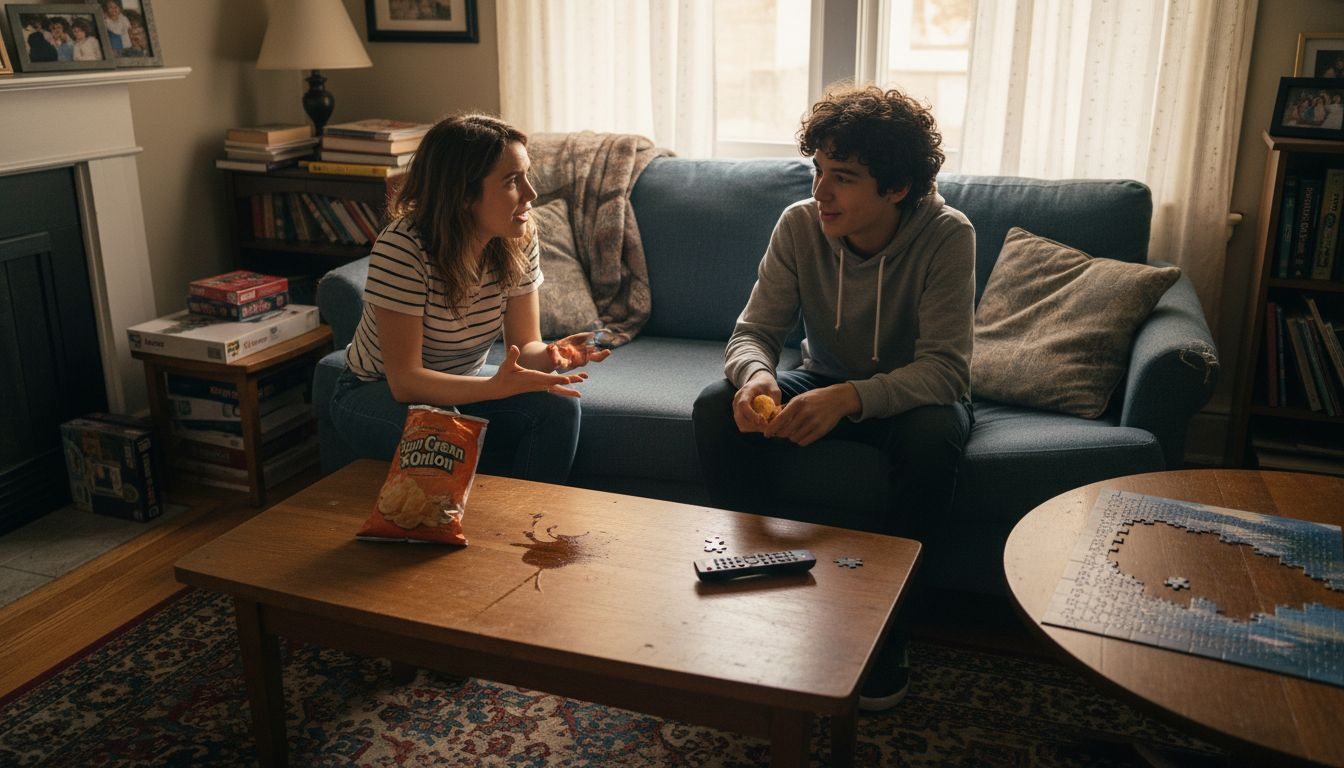
Research reveals that family adaptability, belongingness, and cohesion mediate spiritual and emotional well-being. Families that adjust flexibly to stress while maintaining emotional closeness create resilience in their members. This adaptability doesn’t mean chaos; it means responding thoughtfully to challenges rather than rigidly clinging to outdated rules or patterns.
Children’s development depends heavily on family emotional climate. Family emotional support influences learning engagement, affecting academic performance and social skills. When kids feel emotionally secure at home, they take healthy risks, explore new ideas, and recover from setbacks more effectively.
Families function as the primary training ground for emotional regulation, teaching children how to identify feelings, express needs appropriately, and navigate interpersonal challenges with confidence.
The mechanisms connecting family dynamics to emotional health include:
- Secure attachment formed through consistent, responsive caregiving
- Modeling of healthy coping strategies during stress or conflict
- Validation of emotions that builds self-awareness and confidence
- Social support networks extending from family to broader community
- Predictable routines creating safety and reducing anxiety
Poor family dynamics contribute to emotional struggles through criticism, neglect, inconsistency, or enmeshment. These patterns create confusion about self-worth, distort communication skills, and perpetuate cycles of dysfunction across generations. Encouraging conversations about mental health within your family breaks these cycles by normalizing emotional expression and help-seeking.
Influence of birth order and family roles
Birth order and roles within families affect decision-making and conflict resolution strategies, impacting marital satisfaction and stability. Firstborns often adopt leadership roles and perfectionist tendencies, middle children frequently become skilled negotiators, and youngest children may develop creativity and risk-taking behaviors. These patterns aren’t deterministic but represent common trends shaped by family dynamics.
Family roles established in childhood influence how you approach relationships as an adult. If you learned to mediate conflicts between parents or siblings, you might automatically assume that role in friendships and romantic partnerships. If you were the family caregiver, you may struggle with boundaries and self-care in adult relationships.
Understanding these influences helps you recognize automatic behaviors that no longer serve you. When you see a conflict pattern rooted in your family of origin, you can consciously choose different responses. This awareness transforms reactive behavior into intentional relationship building.
| Birth Order | Common Traits | Typical Conflict Style | Relationship Impact |
|---|---|---|---|
| Firstborn | Responsible, achievement-oriented, perfectionistic | Direct confrontation, rule-focused | High expectations for partners, difficulty delegating |
| Middle Child | Diplomatic, flexible, relationship-focused | Mediation, compromise-seeking | Strong negotiation skills, may avoid own needs |
| Youngest Child | Creative, outgoing, attention-seeking | Charm-based persuasion, avoidance | Innovative problem-solving, may resist responsibility |
| Only Child | Independent, mature, self-sufficient | Logical debate, sometimes inflexible | Comfort with solitude, learning to compromise |
Family roles beyond birth order also shape behavior:
- The hero who achieves to bring family pride
- The scapegoat who absorbs family dysfunction through acting out
- The lost child who withdraws to avoid conflict
- The mascot who uses humor to diffuse tension
Recognizing your adopted role helps you understand reactive patterns in current relationships. Conflict resolution strategies built on this awareness move you from automatic reactions to conscious choices that strengthen partnerships.
The role of communication and conflict resolution
Effective communication reduces depressive symptoms by up to 30%, demonstrating the powerful connection between how families talk and their emotional health. Open communication creates psychological safety where members express needs, set boundaries, and resolve disagreements without fear of rejection or retaliation.
Poor communication patterns lie at the root of most family dysfunction. Criticism, contempt, defensiveness, and stonewalling create cycles of hurt and disconnection. When family members can’t express feelings constructively, small issues escalate into major conflicts, eroding trust and intimacy over time.
Practical conflict resolution methods include:
- Active listening where you genuinely seek to understand before responding
- Using “I” statements that express feelings without blaming
- Taking breaks when emotions escalate to prevent destructive exchanges
- Focusing on specific behaviors rather than character attacks
- Finding common ground and shared goals before addressing differences
- Following up after conflicts to repair and reinforce connection
Pro Tip: Schedule weekly family meetings where each member shares highlights, challenges, and needs for the coming week. This routine prevents communication breakdowns and builds anticipation for connection rather than associating family talks only with problems.
Effective communication requires both speaking clearly and listening actively. Many families struggle because members talk at each other rather than with each other. Real listening means setting aside your defense, agenda, and judgment to genuinely understand another person’s experience.
Conflict itself isn’t destructive; how you handle it determines whether it strengthens or weakens relationships. Families that view disagreements as opportunities to understand differences and find creative solutions build resilience. Those that avoid conflict or handle it with aggression create resentment and distance.
Step by step family counseling provides structured approaches to rebuilding communication skills. Professional guidance helps families identify destructive patterns, practice new skills, and create accountability for lasting change. Online therapy options make these services accessible even with busy Bergen County schedules.
Cultural and structural diversity in family types
Households of about four members optimize happiness with 20% higher scores than very small or large households. This finding suggests a sweet spot where families have enough members for social richness without overwhelming complexity. However, family satisfaction depends more on relationship quality than household size alone.
Different family structures create unique dynamic patterns and challenges. Nuclear families face pressures of isolation without extended support. Single-parent households juggle limited resources while maintaining routines. Blended families navigate loyalty conflicts and boundary confusion. Multigenerational homes balance autonomy with interdependence across age groups.
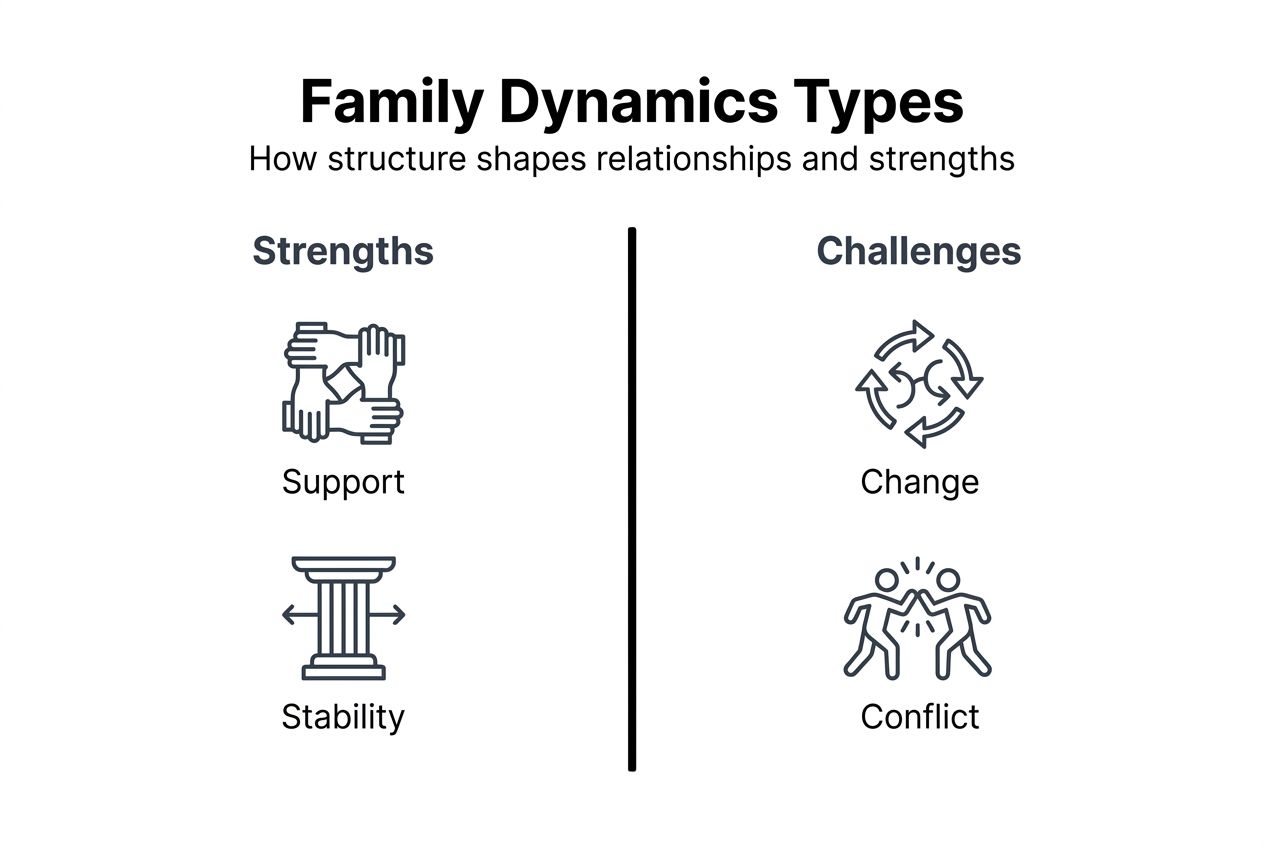
Stepfamily dynamics create unique challenges, especially affecting women and children who often bear the emotional labor of integrating new family members. Stepparents face the delicate task of building authority and affection without replacing biological parents. Children in blended families struggle with divided loyalties and adjusting to new rules and relationships.
| Family Structure | Common Strengths | Typical Challenges | Key Success Factors |
|---|---|---|---|
| Nuclear Family | Clear roles, consistent routines | Isolation, pressure on parents | Strong partnership, external support |
| Single-Parent | Resilience, close bonds | Resource limits, role overload | Community connections, self-care |
| Blended Family | Diverse perspectives, extended network | Loyalty conflicts, boundary confusion | Patience, clear communication, respect |
| Multigenerational | Wisdom sharing, built-in support | Privacy issues, generational conflicts | Defined boundaries, mutual respect |
Cultural context profoundly shapes family dynamics. Individualistic cultures emphasize personal autonomy and direct communication, while collectivistic cultures prioritize family harmony and indirect expression. Bergen County’s cultural diversity means families operate under different norms for decision-making, conflict resolution, and life transitions.
Successful navigation of diverse family types requires:
- Acknowledging that different doesn’t mean dysfunctional
- Adapting communication strategies to fit your family’s structure
- Building support networks specific to your family’s needs
- Celebrating unique strengths while addressing specific challenges
- Maintaining flexibility as family structures evolve through life stages
Understanding your family structure’s typical patterns helps you anticipate challenges and leverage strengths rather than comparing your family to an idealized model that may not fit your reality.
Common misconceptions about family dynamics
Many people believe family structure alone determines emotional outcomes, but emotional outcomes are more closely tied to relational quality than family type. A single parent providing consistent, loving care creates healthier outcomes than a two-parent household filled with conflict and emotional neglect. What matters is the quality of interactions, not the configuration of the family tree.
Another misconception holds that all conflict damages families. In reality, constructive conflict where members express differences respectfully and work toward solutions strengthens relationships. Families that avoid all disagreement create superficial connections and teach children to suppress needs rather than negotiate them effectively.
Some believe that family roles remain fixed throughout life. While early patterns influence behavior, adults possess the capacity to recognize and change unhelpful roles. You’re not condemned to repeat family of origin patterns; awareness and intention enable new choices.
Common myths include:
- Perfect families exist without struggles or disagreements
- Blood relationships automatically create strong bonds
- Children from divorced or blended families inevitably face emotional problems
- Talking about family problems makes them worse
- Professional help signals family failure rather than strength
These misconceptions prevent families from seeking help when they need it. They create shame around normal challenges and unrealistic expectations that generate disappointment. Recognizing that all families face difficulties and that seeking support shows wisdom, not weakness, opens doors to positive change.
Cultural and contextual factors also shape what “healthy” family dynamics look like. A family structure or communication pattern that works beautifully in one cultural context may create tension in another. Understanding this diversity prevents judgment and encourages families to find approaches that honor their unique values and circumstances.
Practical strategies for improving family relationships
Improving family dynamics requires intentional action across multiple domains. Start by identifying current patterns through honest observation and conversation. Notice when conflicts typically arise, how members respond to stress, and which communication styles dominate your household.
Implement these evidence-based strategies:
- Schedule regular one-on-one time with each family member to maintain individual connections.
- Establish family rituals like shared meals or weekend activities that build belonging.
- Practice active listening where you reflect back what you hear before responding.
- Set clear, consistent boundaries that respect individual needs within the family system.
- Create a culture of appreciation by regularly expressing gratitude for specific actions.
- Develop problem-solving processes where all voices contribute to solutions.
- Seek professional support when patterns persist despite sincere efforts to change.
Secure attachment and responsive parenting boost emotional regulation and identity formation in children and teens. Parents who respond consistently to emotional needs, validate feelings, and provide appropriate autonomy raise children with strong self-awareness and relationship skills. This doesn’t mean perfect parenting; it means repairing ruptures when they occur and maintaining overall warmth and availability.
Family therapy effectively addresses dysfunctional patterns and fosters cohesion. Professional therapists help families see patterns they can’t recognize from inside the system. They teach specific skills for communication and conflict resolution while providing accountability for practicing new behaviors. Therapy isn’t admission of failure; it’s investment in your family’s long-term emotional health.
Pro Tip: Create a family mission statement together that articulates your shared values and goals. Revisit this statement during conflicts to remind everyone of bigger purposes beyond immediate disagreements.
Key practices for daily implementation include:
- Starting each day with brief positive connection before rushing into tasks
- Using family meetings to address concerns before they escalate
- Modeling vulnerability by sharing your own feelings and mistakes appropriately
- Celebrating small wins and progress rather than expecting instant transformation
- Maintaining patience as new patterns take time to replace old habits
Conflict resolution strategies for couples strengthen the parental partnership, which forms the foundation of healthy family dynamics. When parents model respectful disagreement and collaborative problem-solving, children learn these skills naturally. Family counseling approaches provide structured pathways for implementing these changes with professional support.
Lasting change requires consistency over months, not days. Be patient with setbacks and focus on overall trends rather than perfect execution. Family therapy options in Bergen County offer local resources tailored to your specific situation and cultural context.
Get professional support for healthier family dynamics
Recognizing when your family needs professional help demonstrates strength and commitment to emotional well-being. Dr. Stephen Oreski & Associates specialize in helping Bergen County families navigate complex dynamics through evidence-based approaches tailored to your unique situation. Whether you’re facing communication breakdowns, integrating a blended family, or addressing long-standing conflicts, professional guidance accelerates positive change.
Our team offers comprehensive psychotherapy options including family systems therapy, emotionally focused therapy, and solution-focused approaches that address root causes rather than surface symptoms. We understand the cultural diversity of Bergen County and adapt psychotherapy treatment to honor your family’s values while building healthier interaction patterns. Family therapy services provide the structured support your family needs to transform conflict into connection and build lasting emotional resilience for every member.
FAQ
What are family dynamics?
Family dynamics are the patterns of interactions, communication, and roles among family members affecting relationships and emotional health. They include how families make decisions, resolve conflicts, express affection, and distribute responsibilities. These patterns shape individual development and overall family functioning across life stages.
How does birth order influence family relationships?
Birth order shapes typical behaviors and roles, influencing how family members handle conflicts and make decisions. Firstborns often assume leadership, middle children develop negotiation skills, and youngest children may be more creative and risk-taking. While not deterministic, these patterns affect adult relationship approaches and conflict styles.
Can family dynamics change over time?
Yes, family dynamics evolve as members grow, circumstances shift, and awareness increases. Life transitions like marriage, births, or losses naturally alter patterns. Intentional efforts through improved communication, therapy, or new routines accelerate positive changes. Flexibility and willingness to adapt determine how successfully families navigate these transitions.
When should families seek professional help for dynamics issues?
Seek professional help when conflicts persist despite sincere efforts, communication breaks down completely, or emotional distress affects daily functioning for any family member. Other indicators include substance abuse, domestic violence, severe mental health symptoms, or major life transitions creating overwhelming stress. Family therapy provides guidance and tools to rebuild healthier family interactions before problems become entrenched.