

TL;DR:
- Gaslighting is a form of psychological manipulation that causes victims to question their perceptions, memories, and confidence over time, often leading to emotional dependency. Recognizable tactics include denial, trivialization, countering, withholding, and diversion, which collectively erode self-trust and mental well-being. Recovery involves documenting incidents, seeking support, setting boundaries, and engaging in therapy to rebuild self-trust and address long-term psychological effects.
You might walk away from a conversation feeling confused, ashamed, or certain that something is wrong with you, yet unable to explain exactly why. That experience is more common than most people realize, and it often has a name: gaslighting. Gaslighting is psychological manipulation that causes victims to question their own perceptions, memories, and confidence over time, leading to increased dependence on the person causing the harm. This guide breaks down what gaslighting actually is, how it shows up in everyday relationships, and what you can do about it.
Table of Contents
- What is gaslighting? Defining psychological manipulation
- Typical signs and tactics of gaslighting
- How gaslighting impacts mental health
- Gaslighting versus other forms of abuse or manipulation
- Identifying and responding to gaslighting
- The uncomfortable truth about gaslighting most guides don’t mention
- Finding support and next steps
- Frequently asked questions
Key Takeaways
| Point | Details |
|---|---|
| Gaslighting erodes self-trust | It makes people doubt their perceptions, memories, and reality over time. |
| Recognize manipulation tactics | Common methods include denial, trivialization, and sowing confusion. |
| Serious mental health impact | Gaslighting is linked to increased anxiety, depression, and dependency. |
| Distinguish from other abuse | Gaslighting is unique because it systematically undermines your sense of reality. |
| Support is available | Professional therapy and resources can help you recover and regain confidence. |
What is gaslighting? Defining psychological manipulation
Gaslighting is not just a buzzword. It’s a specific form of psychological manipulation that, unlike a single argument or harsh comment, builds gradually over time. The name comes from a 1944 film in which a husband manipulates his wife into believing she’s losing her mind, dimming the gas lights in their home while insisting she’s imagining the changes.
“Gaslighting is psychological manipulation that makes a victim question their own perceptions, reality, memories, confidence, and self-esteem, often leading to increased dependence on the perpetrator.”
What sets gaslighting apart from other forms of emotional manipulation is this targeted erosion of your internal compass. A manipulative person might lie to get what they want. A gaslighter specifically works to make you stop trusting yourself, so that you rely on their version of events instead.
Key outcomes that define a gaslighting dynamic include:
- Persistent self-doubt about your memory of conversations or events
- Growing confusion after interactions that you can’t easily resolve
- Loss of confidence in your own perceptions and instincts
- Emotional dependency on the person who is confusing you
- Social withdrawal, often encouraged by the gaslighter to reduce outside perspective
Understanding the effects of emotional abuse on mental health is crucial because gaslighting falls squarely within that category. Recognizing the pattern early is the best protection you have.
Typical signs and tactics of gaslighting
With a clear definition in place, it’s important to know the specific behaviors and tactics that gaslighters use to manipulate others. The tactics are often subtle individually, but they accumulate into a pattern that becomes very difficult to ignore once you know what to look for.
Classic gaslighting tactics include:
- Denial: “That never happened. You’re making it up.”
- Trivialization: “You’re so sensitive. It was just a joke.”
- Countering: “You always remember things wrong. Your memory is terrible.”
- Withholding: Pretending not to understand or refusing to listen, then claiming you never tried to communicate.
- Diversion: Changing the subject every time you raise a concern so the issue never gets resolved.
These tactics appear in toxic relationships across all types of bonds, including romantic partnerships, friendships, family systems, and professional settings. One dismissive comment might just be a bad day. But when these responses happen repeatedly, they add up to something more deliberate and damaging.
Narcissistic patterns in relationships often overlap with gaslighting, because people with narcissistic tendencies frequently rely on making others doubt themselves to maintain control and admiration. Recognizing these patterns is the first layer of protection.
Research shows that sustained psychological manipulation creates a self-reinforcing cycle: the more you doubt yourself, the more you seek reassurance from the gaslighter, and the more power they gain over your perception of reality.
Pro Tip: If you frequently feel more confused or upset after conversations with a specific person than before them, that pattern is worth taking seriously. Chronic confusion following interactions is one of the clearest early indicators of gaslighting.
Knowing signs of an abusive relationship can also help you see the bigger picture when individual incidents seem minor on their own.
How gaslighting impacts mental health
Recognizing tactics is only the first step. Understanding how these behaviors impact mental health is just as critical, because the effects extend far beyond hurt feelings.
Research is still building robust measurement tools, but emerging evidence links gaslighting directly to anxiety, depression, and significant psychological distress. The 2025 Gaslighting Behaviour Measure study represents an important step in giving researchers and clinicians standardized language to assess what victims experience.
| Mental health outcome | How gaslighting contributes |
|---|---|
| Anxiety | Constant uncertainty about your own perceptions creates chronic stress |
| Depression | Prolonged self-doubt and helplessness erode motivation and mood |
| Low self-esteem | Repeated invalidation of your thoughts and feelings reduces self-worth |
| PTSD or trauma responses | Sustained manipulation can cause trauma symptoms in long-term victims |
| Social isolation | Victims often withdraw or are pushed away from support networks |
Statistic to know: Higher gaslighting scores in both personal and workplace settings directly predict anxiety and depression, according to 2025 research. This isn’t just an emotional experience. It’s a mental health issue with measurable consequences.
The long-term impact of emotional abuse can persist even after someone leaves a gaslighting relationship. Without support, many people continue to doubt themselves, struggle in new relationships, and carry the psychological weight of what happened.

For survivors, trauma therapy is often an important part of rebuilding a stable sense of self and reconnecting with your own perceptions and worth.
Gaslighting versus other forms of abuse or manipulation
It’s easy to confuse gaslighting with other forms of harmful behavior. A clear comparison helps you distinguish them and respond appropriately.
| Behavior | Core intent | Target | Duration |
|---|---|---|---|
| Gaslighting | Make you doubt your own reality | Your perception and memory | Sustained and repeated |
| Emotional manipulation | Influence behavior for personal gain | Your actions and choices | Can be isolated or repeated |
| Emotional abuse | Control or degrade through emotional means | Your sense of worth and safety | Often sustained |
| Lying | Avoid consequences or gain advantage | Your knowledge of the truth | Can be a single event |
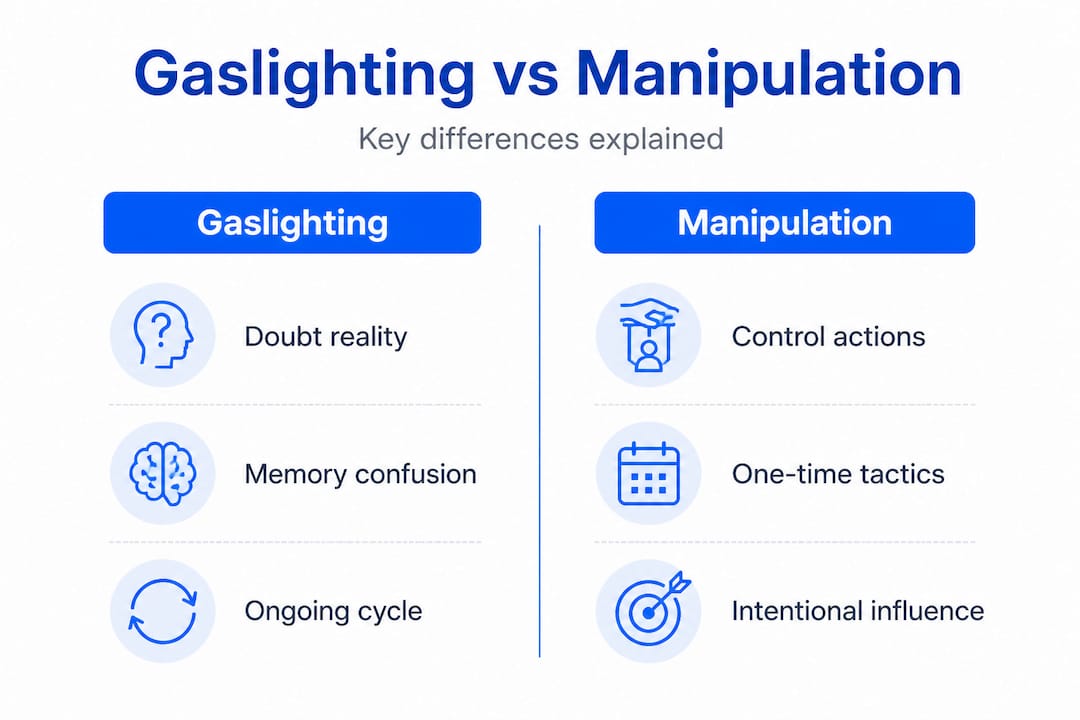
The key distinction, as defined clearly in major references, is that gaslighting specifically targets your trust in your own perceptions. Emotional manipulation might involve guilt-tripping or playing the victim, but it doesn’t necessarily make you question whether your memory is real.
Use this numbered process to determine whether a situation is gaslighting:
- Ask yourself whether you feel confused about what actually happened after most conversations with this person.
- Notice whether you find yourself apologizing frequently, even when you’re not sure what you did wrong.
- Consider whether you’ve stopped trusting your own judgment specifically because of this person’s influence.
- Check whether your distress goes up rather than down when this person tries to “explain” things.
- Reflect on whether others in your life have expressed concern about how this relationship affects you.
If you answered yes to several of these, a comprehensive guide to emotional manipulation can help you map the full picture.
Identifying and responding to gaslighting
After differentiating gaslighting, the vital next step is knowing how to respond, whether in your own life or as an ally supporting someone else.
- Start documenting. Keep a private journal of specific incidents, including dates, what was said, and how you felt. This creates an external record you can trust when your internal one is being challenged.
- Name the pattern, not just each incident. A single dismissive comment is different from fifty. Looking at a pattern gives you clarity.
- Reach out to trusted people. Gaslighters often work to isolate their targets. Reconnecting with friends, family, or a therapist gives you alternative perspectives that reinforce your reality.
- Set clear boundaries around what behavior you will and won’t accept, and take note of how the person responds to those limits.
- Seek professional support. A therapist who understands interpersonal abuse can help you process what’s happening without judgment.
If you suspect someone you care about is being gaslit, avoid telling them what to do or pushing them to leave. Instead, affirm their experiences, stay connected, and offer gentle support. Isolation makes gaslighting worse. Your presence matters.
The erosion of confidence in your own perceptions is a central warning sign, and emerging research reinforces why trusting that signal and taking action is so important.
Pro Tip: If someone you know seems to constantly second-guess themselves around one particular person, gently ask open questions rather than offering conclusions. Creating space for them to voice their experience, without pressure, is often the most effective form of support.
For anyone who identifies with signs of an abusive relationship, professional guidance and therapy for caregivers or loved ones can also be valuable parts of the healing process.
The uncomfortable truth about gaslighting most guides don’t mention
Most articles on gaslighting end with a clean checklist and the implication that awareness alone will set you free. In our experience working with clients, that’s not the full story.
One of the most uncomfortable truths is that gaslighting frequently happens without fully conscious intent. Many people who gaslight their partners, children, or colleagues learned these patterns in their own families. They genuinely believe they are the rational one in the room. That doesn’t make the harm any less real, but it does make the dynamic harder to address with simple confrontation.
Another overlooked reality is that leaving a gaslighting situation doesn’t automatically restore your sense of reality. Many people exit these relationships and still spend months or years questioning their own perceptions, replaying events, and wondering if they were the problem. The internal damage lingers long after the external situation changes.
Awareness campaigns and self-help content do important work, but they can inadvertently oversimplify recovery. Reading an article about gaslighting might help you name what’s happening. Actually undoing the damage often requires sustained therapeutic work that helps you rebuild trust in yourself from the ground up.
Understanding the deeper effects of emotional abuse is one step. Committing to the long and sometimes non-linear process of healing is another. That’s not meant to be discouraging. It’s meant to validate why so many survivors feel like they’re “not over it yet” long after things have changed. Recovery takes the time it takes, and getting professional support isn’t a sign of weakness. It’s the most practical decision you can make.
Finding support and next steps
If you recognized yourself, or someone you care about, in any part of this article, you don’t have to navigate it alone. Gaslighting creates real psychological harm, and addressing it fully usually requires more than willpower or information.

At Bergen County Therapist, Dr. Stephen Oreski and our team specialize in helping individuals process the effects of manipulation, rebuild self-trust, and develop healthier relationship patterns. We offer a range of psychotherapy approaches tailored to your situation, including support for depression and trauma that commonly follow gaslighting experiences. Whether you’re ready to start now or still exploring your options, you can begin your treatment journey with a free consultation. You deserve a space where your reality is respected.
Frequently asked questions
Is gaslighting always intentional?
No. While many gaslighters act deliberately, some use these tactics unconsciously based on learned behavior patterns from their own upbringing or past relationships.
What are the first warning signs of gaslighting?
Early signs include repeatedly doubting your memory, feeling confused after conversations, or constantly apologizing, all of which reflect the erosion of confidence that defines gaslighting’s core harm.
Can gaslighting happen at work or only in relationships?
Gaslighting can occur in any context with a power imbalance, and higher workplace gaslighting scores are shown to predict anxiety and depression, confirming it extends well beyond romantic relationships.
How is gaslighting different from lying?
Lying is a single act of deception aimed at hiding a fact. Gaslighting is an ongoing pattern designed to erode your trust in your own perceptions, which makes it far more psychologically damaging over time.
What should I do if I think I’m being gaslit?
Document specific incidents, reach out to trusted people outside the relationship, set clear limits, and seek support from a therapist. Trusting your instincts about your own perceptions is the starting point for recovery.