

- Parallel process in therapy involves unconscious mirroring of relational patterns between clients, therapists, and supervisors, revealing important clinical insights. In contrast, parallel processing in psychology and computing refers to handling multiple streams of information simultaneously without relational implications. Recognizing these dynamics enhances therapeutic outcomes by strengthening the alliance and facilitating healing, especially for trauma and LGBTQIA clients.
When you first hear the phrase “parallel process,” you might picture a computer running two programs at once. That’s actually a fair guess. The term carries two distinct meanings depending on whether you’re talking to a software engineer or a psychotherapist, and mixing them up can leave you more confused than when you started. For anyone in Bergen County exploring therapy, knowing what parallel process really means in a clinical setting can change how you think about your own healing journey and the relationships that shape it.
Table of Contents
- Two meanings of parallel process: Therapy vs. psychology
- How parallel process shows up in therapy: Real examples
- Why parallel process matters: Exploring its impact
- Applying parallel process insights: Supporting personal growth
- The hidden power of parallel process: Beyond textbooks
- Connect insights to your therapy journey in Bergen County
- Frequently asked questions
Key Takeaways
| Point | Details |
|---|---|
| Dual definitions matter | Clarifying the term ‘parallel process’ ensures meaningful therapy conversations. |
| Mirrored relationships | Therapists and supervisors can unconsciously reflect a client’s patterns, affecting therapy. |
| Improving outcomes | Recognizing parallel process supports deeper insight and strengthens the therapeutic alliance. |
| Actionable growth | Awareness of parallel process enables personal growth and collaborative healing. |
Two meanings of parallel process: Therapy vs. psychology
Before going deeper, let’s clarify what this term actually means because context matters enormously when you’re researching therapy options or talking with a mental health professional.
In clinical settings, “parallel process” describes a relational phenomenon. It occurs when a therapist unconsciously mirrors or recreates the same emotional dynamics from their client relationship inside their supervision sessions. Think of it as a kind of emotional echo that travels up from client to therapist to supervisor, repeating patterns across different relationships. This concept is central to psychodynamic and relational therapy approaches.
In cognitive psychology and computing, “parallel processing” refers to the brain’s or a computer’s ability to handle multiple streams of information simultaneously. For example, while you read this sentence, your brain processes the words, tracks the visual layout, and manages background sounds all at once. These two definitions share a name but almost nothing else.
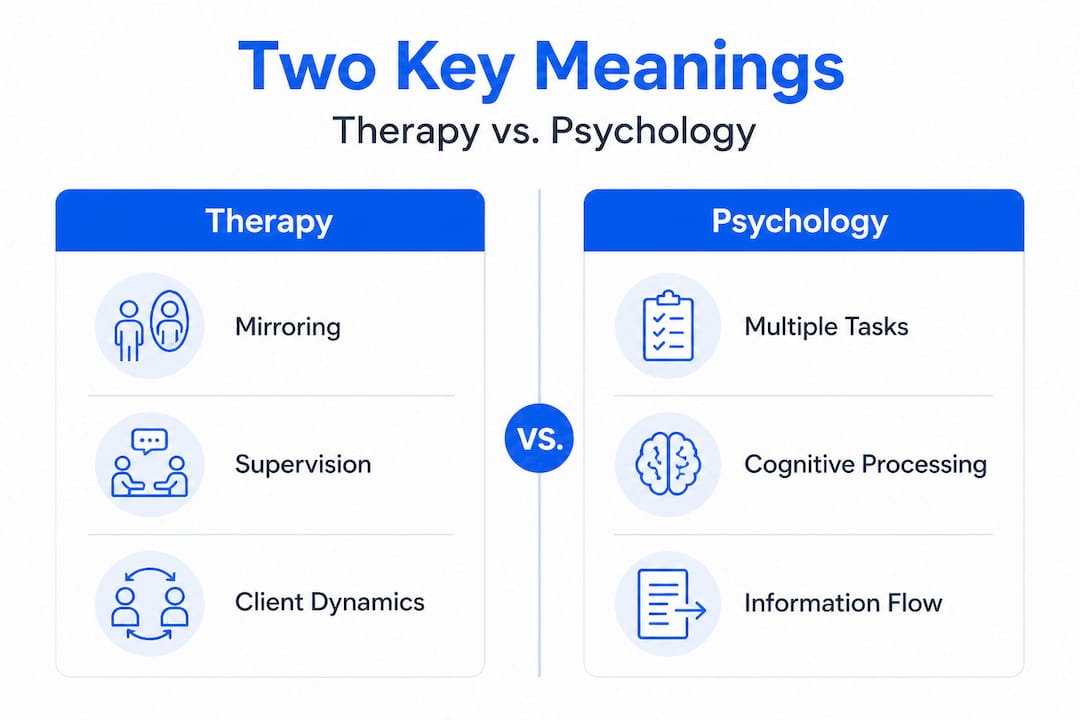
Here’s a simple side-by-side comparison:
| Feature | Parallel process (therapy) | Parallel processing (psychology/tech) |
|---|---|---|
| Primary domain | Clinical supervision, psychotherapy | Cognitive psychology, computing |
| Core idea | Mirroring relational dynamics | Simultaneous information handling |
| Key players | Therapist, client, supervisor | Brain, sensory systems, computers |
| Purpose | Understanding relational patterns | Efficiency in processing stimuli |
| Emotional component | Yes, highly relational | No, purely functional |
When you’re looking into therapy, the clinical definition is the one that matters most. Here’s what each definition involves at a glance:
- Therapy parallel process: Unconscious mirroring of relational patterns across the client-therapist-supervisor chain
- Cognitive parallel processing: Brain’s ability to process multiple inputs at the same time
- Tech parallel processing: Running multiple computational tasks simultaneously
- Key risk: Confusing the two when reading about mental health topics online
Pro Tip: When you Google “parallel process” for therapy research, add the word “supervision” or “psychodynamic” to your search to get the clinical results you actually need.
How parallel process shows up in therapy: Real examples
Now that the terminology is clear, let’s see how parallel process actually plays out inside therapy and supervision settings.
The core mechanism works like this: A client comes to therapy carrying unresolved patterns from past relationships, such as fear of being dismissed or a tendency to avoid conflict. These patterns naturally emerge in how the client relates to the therapist. Without awareness, therapists may unconsciously mirror those same dynamics when they bring the case to their supervisor, recreating the transference and countertransference (the emotional reactions flowing between client and therapist) in a new relationship.
“Parallel process is not a flaw or a failure on the therapist’s part. It is valuable clinical information about what the client is experiencing relationally.”
Here are some concrete examples that bring this to life:
- The silent client: A client consistently withdraws and goes quiet when vulnerable topics arise. In supervision, the therapist begins doing the same thing, hesitating to share difficult case details. The supervisor notices and uses this to understand the client’s relational pattern more deeply.
- The anxious people-pleaser: A client constantly seeks reassurance in session. The therapist begins over-explaining their choices to the supervisor, seeking validation. This mirroring signals the supervisor to explore the pattern further.
- The control dynamic: A client with a history of trauma tries to control the pace of every session. The therapist starts dictating the supervision agenda in an unusually rigid way. Again, the dynamic has traveled upward.
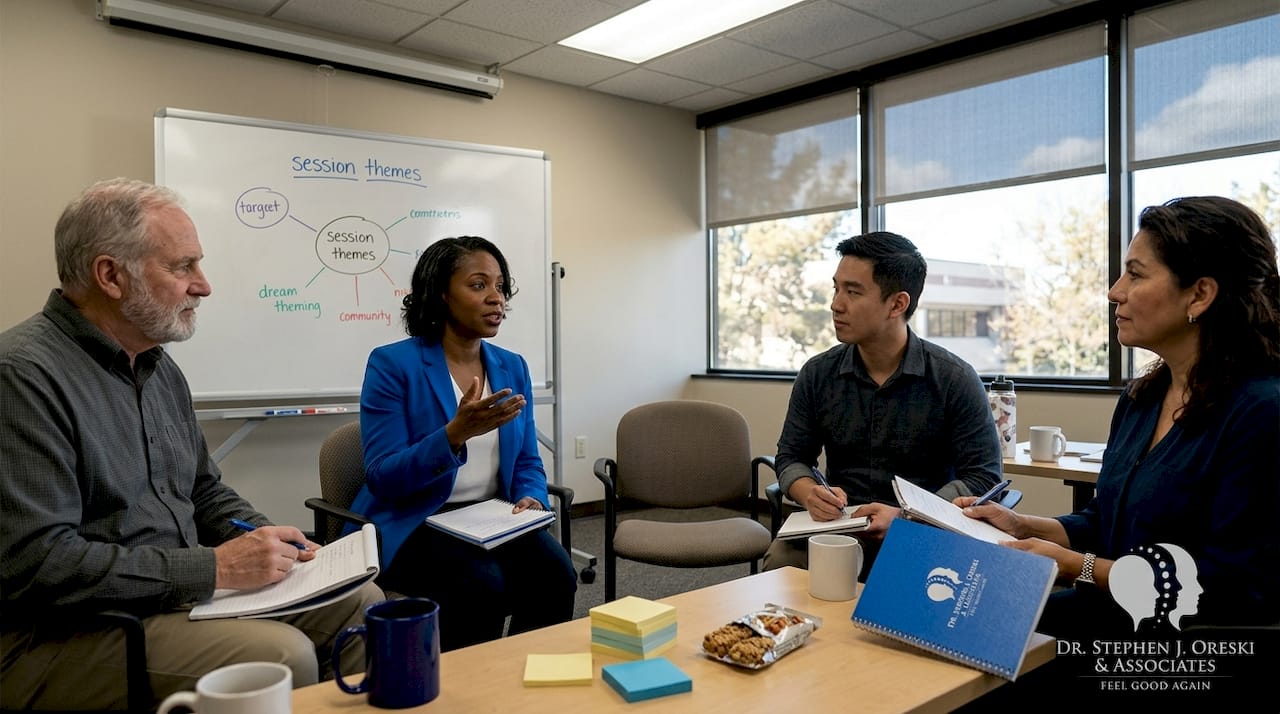
Understanding the benefits of group supervision becomes especially relevant here because group settings can surface parallel process patterns more clearly, with multiple observers catching the echoes in real time. Similarly, learning to understand countertransference helps both therapists and clients recognize how emotional reactions during sessions carry important clinical data.
Pro Tip: If you’re a client and you notice your therapist seems unusually distant, rigid, or anxious during a session, consider gently naming it. That kind of open dialog can actually accelerate your progress by surfacing patterns that might otherwise stay hidden.
Why parallel process matters: Exploring its impact
Understanding these dynamics is not just academic. It sits at the heart of achieving better therapeutic outcomes for real people dealing with real pain.
Parallel process is generally treated as useful clinical information rather than a problem to correct, prompting therapists and supervisors to reflect more deeply on relational dynamics. When recognized and explored, it strengthens the therapeutic alliance (the trust and collaboration between client and therapist, which research consistently identifies as one of the strongest predictors of positive outcomes).
Here’s a breakdown of its potential benefits and risks:
| Outcome | Benefit when recognized | Risk when ignored |
|---|---|---|
| Supervision quality | Richer case understanding | Missed relational patterns |
| Therapeutic alliance | Stronger trust and collaboration | Subtle ruptures in connection |
| Client progress | Accelerated insight and healing | Stalled sessions or dropout |
| Therapist wellbeing | Reduced emotional confusion | Burnout or secondary trauma |
Some specific benefits worth noting:
- Gives supervisors a live window into the client’s relational world
- Allows therapists to process their own emotional reactions safely
- Helps clients feel more deeply understood, even indirectly
- Surfaces patterns that verbal reporting alone might miss
- Informs treatment adjustments without requiring the client to explicitly describe every dynamic
Learning how to support mental health between sessions becomes more meaningful when you understand that the relational work happening inside sessions is actively being reflected upon outside them too. That supervision process, informed by parallel process awareness, directly shapes the quality of care you receive. Understanding psychotherapy and emotional well-being gives you a broader view of how these behind-the-scenes mechanisms translate into tangible healing.
The risks of ignoring parallel process are also real. A therapist who doesn’t recognize the mirroring dynamic may feel confused, reactive, or burned out without understanding why. A supervisor who dismisses the echoes in their sessions misses critical information about a client they may never meet directly.
Applying parallel process insights: Supporting personal growth
With clarity on its value, you can apply these insights to support your own growth in therapy, especially if you’re working through trauma, navigating relationship challenges, or exploring your identity as an LGBTQIA individual.
Discussing parallel process openly with your therapist helps both of you deepen your understanding of relational patterns and strengthen the therapy alliance over time. Here’s how to make that work practically:
- Name your patterns out loud. If you notice you always change the subject when a certain topic comes up, say it. Awareness is the first step toward change.
- Ask your therapist about the relationship. It’s completely appropriate to ask, “How are we doing in here? Does anything feel stuck?” Good therapists welcome this.
- Track how you feel after sessions. If you consistently leave feeling dismissed or unheard, that’s data. Bring it back into the room.
- Connect in-session patterns to outside relationships. The same dynamics playing out with your therapist often mirror what’s happening in your closest relationships at home or work.
- Be patient with slow patterns. Deep relational habits took years to form. Recognizing the parallel process is powerful, but real change builds gradually.
For anyone exploring individual therapy for healing, understanding that your therapist is actively reflecting on these dynamics, with a supervisor’s support, adds a meaningful layer of confidence in the process.
The hidden power of parallel process: Beyond textbooks
Let’s take a step back and look at what most articles about parallel process miss entirely.
Most clinical writing treats parallel process as a supervision tool, something for therapists and educators to study. That framing is accurate but incomplete. For the person sitting in the therapy chair, parallel process is not a clinical abstraction. It is the reason therapy sometimes feels eerily similar to conversations from your past, and why the therapy relationship can feel both unfamiliar and deeply familiar at the same time.
Here’s a perspective most people don’t hear: parallel process is not a problem to eliminate. It’s the therapy working. When those relational echoes show up, it means the material is real, alive, and present enough to move through different relationships. That’s actually what you want.
This matters especially for LGBTQIA clients who have often experienced relational patterns involving concealment, rejection, or conditional acceptance. When those patterns emerge inside the therapy relationship and get named, something powerful shifts. The therapist’s awareness, informed by good supervision, creates a space where old patterns can be seen clearly for the first time. Similarly, trauma survivors often find that parallel process moments become turning points rather than setbacks when they’re handled with care.
For teens in therapy, parallel process is especially potent. Adolescents are still forming their relational templates, which means catching and redirecting unhelpful patterns early can reshape the trajectory of their adult relationships.
The uncomfortable truth is that most of the real work in therapy happens in the space between explicit conversations, in the emotional textures, in what gets mirrored without anyone saying a word. Parallel process makes that invisible work visible.
Connect insights to your therapy journey in Bergen County
Ready to use these insights in your own growth? Here’s how local therapy options can help.
Understanding parallel process gives you a more informed, empowered perspective as you enter or continue therapy. Whether you’re processing trauma, navigating relationships, or stepping into self-discovery as an LGBTQIA individual, these relational dynamics are already at work in every session.
At Bergen County Therapist, Dr. Stephen Oreski and the team offer psychotherapy options tailored to your specific needs, including a dedicated LGBTQIA psychotherapy guide and specialized trauma therapy services. Every therapist on the team works within a supervised, reflective practice model, meaning the insights you’ve just read about are actively informing your care. Reach out today for a free consultation and take your next step toward meaningful, lasting change.
Frequently asked questions
What is the meaning of parallel process in therapy?
Parallel process in therapy refers to the phenomenon where a therapist unconsciously mirrors a client’s relational patterns in their interactions with a clinical supervisor. It serves as important information about the client’s relational dynamics.
How does parallel processing differ from parallel process?
Parallel processing in psychology describes the brain’s ability to handle multiple stimuli or inputs at once, while parallel process in therapy is specifically about relational mirroring between a client, therapist, and supervisor.
Why is recognizing parallel process important in therapy?
Recognizing parallel process helps supervisors and therapists gain deeper insight into client relational dynamics, which directly strengthens the therapeutic alliance and supports better client outcomes. It turns unconscious patterns into usable clinical information.
Are parallel process dynamics relevant for trauma or LGBTQIA therapy?
Yes, parallel process dynamics are especially meaningful in trauma and LGBTQIA-focused therapy because these contexts often involve deep relational patterns around safety, identity, and trust that show up naturally in the therapy relationship.