

- Therapists treat depression through structured, evidence-based techniques aimed at changing thought patterns, behaviors, and emotional responses. The most effective approaches include CBT, IPT, Behavioral Activation, and MBCT, each suited to different underlying causes and levels of severity. A strong therapeutic relationship and active participation are crucial for lasting change and relapse prevention.
Therapists treat depression through structured psychotherapy, using evidence-based methods to change the thought patterns, behaviors, and emotional responses that sustain depressive symptoms. This is not passive listening. Sessions are goal-oriented, collaborative, and built around techniques that produce measurable change in how you think, feel, and function. Understanding what do therapists do for depression removes the mystery from the process and makes it easier to take the first step toward getting help.
What types of therapy are used for depression?
Therapists draw from several well-researched models, each targeting depression from a different angle. No single approach works for everyone, and the right fit depends on your symptoms, history, and personal preferences.
| Therapy Type | Primary Focus | Typical Duration |
|---|---|---|
| Cognitive Behavioral Therapy (CBT) | Negative thoughts and behaviors | 12 to 20 sessions |
| Interpersonal Therapy (IPT) | Relationships and social context | 12 to 16 sessions |
| Behavioral Activation (BA) | Activity scheduling and motivation | 8 to 16 sessions |
| Mindfulness-Based Cognitive Therapy (MBCT) | Relapse prevention through mindfulness | 8-week program |
| Psychodynamic Therapy | Deeper emotional patterns and history | Varies |
CBT is the most studied approach. Hundreds of randomized controlled trials confirm its effectiveness at challenging distorted thinking, building coping skills, and lowering relapse risk compared to medication alone. That said, CBT is not uniquely superior. IPT and Behavioral Activation show comparable results depending on what is driving your depression.
Behavioral Activation deserves special attention because its core insight is counterintuitive. Scheduling rewarding activities before motivation returns, not after, is what breaks depression’s withdrawal cycle. You act first; motivation follows. MBCT, developed by Zindel Segal, Mark Williams, and John Teasdale, is specifically designed to prevent relapse in people who have experienced three or more depressive episodes. Psychodynamic therapy takes a longer view, and meta-analyses show its benefits continue growing even after treatment ends, making it well-suited for complex or chronic depression.
What does a typical therapy session look like?
Knowing what to expect from therapy reduces anxiety about starting. Sessions follow a recognizable structure, though the content shifts as treatment progresses.
- Mood check-in. Your therapist opens by asking how you have been feeling since the last session, often using a brief rating scale to track changes over time.
- Progress review. Any homework from the previous session is discussed. This might include a thought record, an activity log, or a behavioral experiment you tried during the week.
- Agenda setting. You and your therapist agree on the focus for today’s session, whether that is a specific situation that triggered low mood, a pattern you noticed, or a skill to practice.
- Active skill work. The therapist introduces or deepens a technique. Thought records, for example, map a triggering event to the automatic negative thought it produced, then guide you to replace that thought with a more balanced interpretation.
- Homework assignment. Sessions close with a concrete task to practice before the next appointment, reinforcing what was covered.
This structure is not rigid. A good therapist adapts the session when something urgent comes up. But the framework matters because therapy is a structured partnership that requires active participation, not passive attendance. Progress happens between sessions as much as during them.
Pro Tip: Before your first appointment, write down three situations in the past month where your mood dropped sharply. Bringing specific examples helps your therapist identify patterns faster and makes the first session far more productive. You can also review tips on how to prepare for your first session before you go.

Why does the therapeutic relationship matter so much?
The quality of the connection between you and your therapist predicts treatment success more reliably than any specific technique. Clients who feel safe and understood with their therapist improve more consistently, regardless of which model is used. This finding holds across CBT, IPT, and psychodynamic approaches.
What this means practically is that finding the right therapist is part of the treatment, not a preliminary step. It is normal to try more than one therapist before finding a strong fit. Switching is not a failure. It is sound clinical judgment.
Therapists also personalize treatment based on your specific presentation. Someone with depression rooted in grief responds differently to IPT than someone whose depression stems from chronic self-criticism, who responds better to CBT or compassion-focused approaches. You can read more about choosing the right therapy type to understand how these decisions get made.
For severe depression, the evidence is clear. Combination therapy, meaning both medication and psychotherapy together, is consistently recommended as the most effective approach. Medication can reduce symptom intensity enough to make therapy more accessible, while therapy builds the skills that medication alone cannot provide.
Therapy restores a sense of control that medication cannot replicate. It equips you to manage future depressive episodes rather than simply waiting for them to pass.
How does therapy change the brain?
The neurobiological evidence for psychotherapy is one of the most compelling arguments for pursuing it. Brain imaging studies show that therapy produces lasting changes in neural circuits responsible for mood regulation and cognitive control over emotional reactivity. These are not temporary symptom suppressions. They are structural shifts in how your brain processes negative experience.
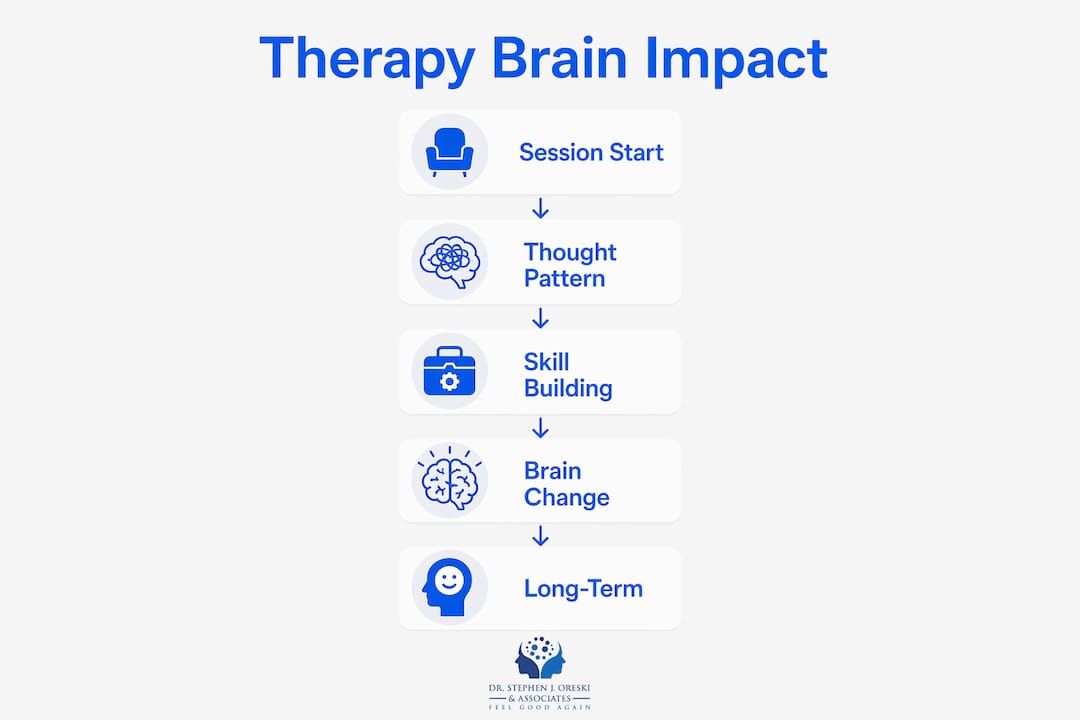
This matters because it explains why therapy effects often outlast medication after treatment ends. Medication adjusts brain chemistry while you take it. Therapy rewires the patterns of thinking and responding that generate depressive cycles in the first place. The skills you build in CBT, BA, or MBCT become part of how you process the world, not just tools you use during a crisis.
Pro Tip: If you are weighing therapy against medication, or considering both, the therapy vs. antidepressants breakdown at Bergencountytherapist covers the evidence clearly and helps you have a more informed conversation with your provider.
The practical implication is that therapy equips patients to manage future episodes with skills that remain available long after sessions end. This is the core benefit that separates psychotherapy from purely pharmacological treatment.
Key takeaways
Therapists treat depression through structured, evidence-based psychotherapy that changes thought patterns, builds coping skills, and produces lasting brain changes that protect against relapse.
| Point | Details |
|---|---|
| Multiple therapy types work | CBT, IPT, Behavioral Activation, and MBCT all show strong evidence for depression. |
| Sessions follow a clear structure | Mood check-ins, skill work, and homework assignments drive progress between appointments. |
| Therapeutic alliance predicts success | Finding a therapist you trust matters as much as the specific method used. |
| Severe depression needs combined care | Medication plus therapy produces better outcomes than either treatment alone. |
| Therapy changes the brain long-term | Neural circuit improvements from therapy persist after treatment ends, reducing relapse risk. |
What I’ve learned about therapy that most people don’t expect
After years of working with adults through depression, the thing that surprises people most is how active the process is. Most people come in expecting to talk and be heard. That matters, and it is part of what we do. But the sessions that produce real change are the ones where you leave with something concrete to try before we meet again.
The second thing people underestimate is how much the fit between client and therapist shapes everything. I have seen people try CBT with one therapist, feel nothing, switch to a different therapist using the same model, and experience a complete shift. The technique is the same. The relationship is different. That is not a minor variable. It is often the whole game.
What I tell people who are hesitant is this: you do not need to feel motivated to start. Motivation is a symptom of depression, not a prerequisite for treatment. Behavioral Activation is built on exactly this insight. You show up, you do the work, and the motivation follows. Waiting until you feel ready is the one thing most likely to keep you stuck.
— Stephen
Start depression therapy with Bergencountytherapist

Bergencountytherapist, led by Dr. Stephen Oreski and his team in Bergen County, offers depression therapy and screenings tailored to your specific symptoms and goals. Whether you are exploring CBT, IPT, or another evidence-based approach, the practice matches you with a therapist suited to your needs. Sessions are available in-person and online, making care accessible regardless of your schedule. You can review the full range of psychotherapy options offered or get started with treatment through a free initial consultation. Taking that first step is the most important one.
FAQ
What do therapists actually do in depression sessions?
Therapists use structured techniques like thought records, activity scheduling, and skill-building exercises to change the negative thought patterns and behaviors that sustain depression. Sessions are collaborative and include homework to practice between appointments.
What type of therapy is best for depression?
CBT, IPT, and Behavioral Activation all show strong evidence for treating depression, and no single approach is universally superior. The best fit depends on your symptoms, history, and what is driving your depression.
How long does therapy for depression take?
Most structured therapy models run between 8 and 20 sessions. CBT typically lasts 12 to 20 sessions, while Behavioral Activation can produce results in 8 to 16 sessions, depending on severity.
Do I need medication alongside therapy?
For mild to moderate depression, therapy alone is often as effective as antidepressants. For severe depression, combining medication with psychotherapy produces the best outcomes.
What questions should I ask a therapist before starting?
Ask about their primary treatment approach, how they measure progress, and what homework or between-session work looks like. These questions help you assess whether their style matches how you learn and engage.