

- Premarital counseling is a proactive tool for healthy couples to clarify expectations on finances, intimacy, and family. Most sessions, typically four to six, include joint discussions and individual questionnaires to uncover hidden issues early. Starting counseling a year before the wedding ensures couples build a strong foundation and address potential red flags effectively.
Most couples think premarital counseling is for relationships in trouble. It isn’t. What do you talk about in premarital counseling is one of the most-searched questions by couples who are already happy together and simply want to stay that way. The sessions cover far more than conflict resolution. They create a structured space to align on money, children, family, faith, and intimacy before those topics become sources of tension. Think of it as getting your financial plan in order before you need it, not after.
Table of Contents
- Key takeaways
- What premarital counseling is really for
- The core premarital counseling topics you’ll discuss
- How premarital counseling sessions actually work
- How to get the most out of your sessions
- My perspective on why couples underestimate this process
- Start your marriage with professional support
- FAQ
Key takeaways
| Point | Details |
|---|---|
| It’s proactive, not reactive | Premarital counseling builds a strong foundation rather than fixing existing problems. |
| Six core topics are covered | Finances, intimacy, children, family, roles, and values are central discussion areas. |
| Individual questionnaires matter | Separate assessments reveal blind spots that couples miss in joint conversation. |
| Four to six sessions is typical | Most counselors recommend this range for thorough preparation before the wedding. |
| Openness drives results | Couples who approach sessions honestly get the most lasting benefit from the process. |
What premarital counseling is really for
There’s a persistent myth that only struggling couples see a counselor before marriage. The reality is the opposite. Premarital counseling is a preventative and foundational tool, built for couples who want clarity, not couples who are already in crisis.
The benefits are specific and measurable. Counseling improves communication skills, conflict resolution, and helps couples set realistic expectations for what marriage actually looks like day to day. Those are skills you want before the wedding, not after the first major fight.
Counseling also creates something harder to find on your own: a genuinely neutral space. When a trained counselor guides the conversation, topics like money or children don’t spiral into arguments. Instead, they become productive discussions with a purpose.
- You’ll develop a shared decision-making process
- You’ll identify your own relationship patterns before they cause damage
- You’ll hear your partner’s perspective on topics you assumed you both agreed on
- You’ll address deal breakers before they become regrets
Pro Tip: Don’t wait until six months before the wedding. Starting counseling a year out gives you enough time to process anything unexpected without the pressure of a ticking clock.
The core premarital counseling topics you’ll discuss
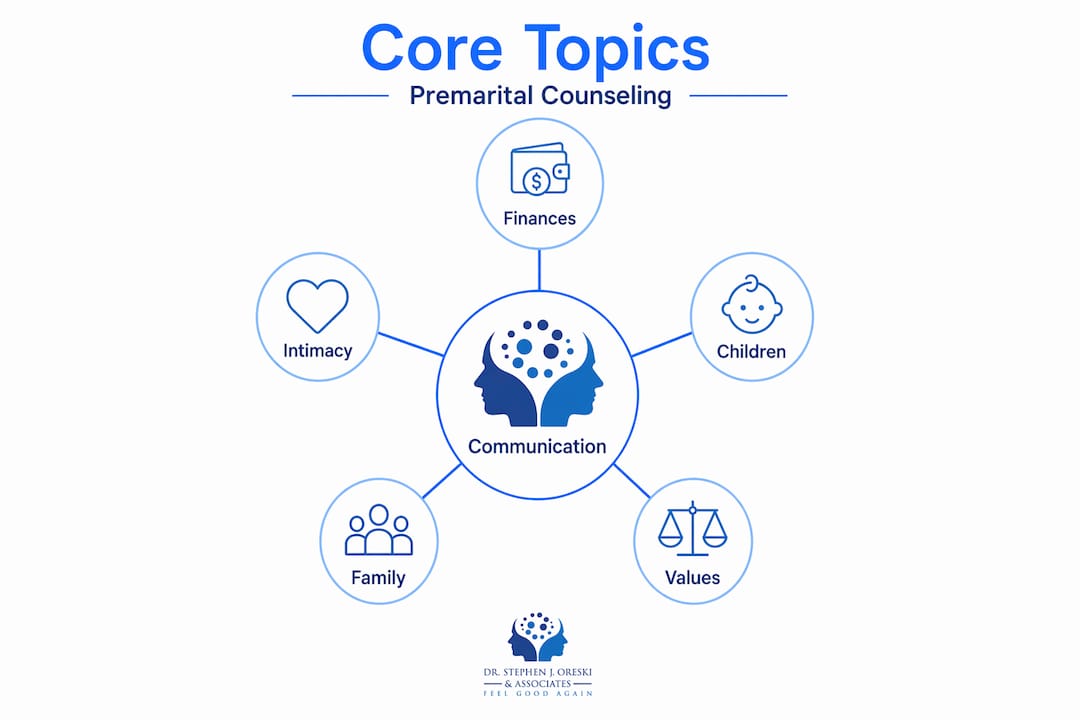
This is the section most couples are actually searching for. Key topics in counseling span finances, sex, children, religious beliefs, and family relationships. But the depth of those conversations goes well beyond a simple checklist.
Money and financial values
Financial disagreements are one of the leading causes of divorce. In counseling, you won’t just swap bank account balances. You’ll explore your relationship with money: spending habits, savings priorities, debt attitudes, and who handles what. Couples often discover they have deeply different money personalities they’ve never directly addressed. You can also explore specific resources like budgeting as a couple to go deeper on financial alignment outside of sessions.

Intimacy and sexual expectations
This topic makes some couples uncomfortable, which is exactly why it belongs in a counseling room. Frequency, preferences, and what happens when those expectations don’t align are all fair territory. Counselors are trained to make this conversation feel less awkward than you’re imagining.
Children and parenting philosophy
Do you both want children? How many, and when? What parenting style do you each envision? These are not questions to leave to chance. Counseling creates the space to be honest about expectations before they become silent assumptions.
Family relationships and in-law boundaries
How much involvement will your extended families have in your lives? What does a healthy relationship with in-laws look like to each of you? This topic surfaces more friction than most couples anticipate, and sorting it out early protects the marriage.
Here’s a quick comparison of topics and what they typically uncover:
| Topic | What often gets uncovered |
|---|---|
| Finances | Hidden debt, conflicting saving habits, spending guilt |
| Children | Disagreement on timing, number, or parenting styles |
| Family and in-laws | Unspoken expectations about holidays and boundaries |
| Faith and values | Differing beliefs that seemed minor before marriage |
| Roles in marriage | Assumptions about who handles what were never discussed |
| Intimacy | Mismatched expectations or fears that were never voiced |
Roles, responsibilities, and division of labor
Who cooks? Who manages bills? What happens if one partner’s career demands more time? These conversations about domestic roles prevent the quiet resentment that builds when expectations go unspoken.
Beliefs, values, and faith
Religious compatibility matters even for couples who consider themselves casual about faith. Different backgrounds often mean different expectations around holidays, raising children, and community. A counselor helps you map where your values align and where you’ll need to negotiate.
How premarital counseling sessions actually work
Knowing what happens in the room makes the process feel much less intimidating. Most couples start with an intake session where the counselor learns about both partners, the relationship history, and what you hope to get from counseling.
From there, sessions typically alternate between joint conversations and individual exercises. One of the most useful tools is the individual questionnaire. Filling these out separately surfaces blind spots that couples miss when they answer together, because partners tend to unconsciously align with each other in joint conversations rather than being fully honest.
Experts recommend 4 to 6 sessions before marriage for thorough preparation. For most couples, that’s roughly three to six months before the wedding. If something significant surfaces, the counselor may suggest additional sessions.
| Session | Typical focus |
|---|---|
| 1 | Relationship history, goals, and expectations for counseling |
| 2 | Communication styles and conflict patterns |
| 3 | Finances, roles, and practical life planning |
| 4 | Intimacy, children, and family relationships |
| 5 | Values, faith, and long-term vision |
| 6 | Review, red flag discussion, and relationship roadmap |
Pro Tip: Bring a list of topics or questions that feel sensitive or unresolved. Counselors appreciate when couples come prepared, and it ensures nothing slips through.
How to get the most out of your sessions
The structure of counseling only works if you show up honestly. Vetting each other honestly is the actual work. Counselors are there to guide, not to judge, so there’s no benefit in presenting a polished version of yourself.
A few things that make a real difference:
- Choose the right counselor. Look for someone with specific experience in premarital or couples work, not just general therapy. Read about their approach before booking.
- Commit to individual honesty. When you fill out questionnaires alone, answer for yourself, not for your relationship.
- Address red flags directly. If emotional or physical abuse is a factor, that requires individual support before couples work can be productive.
- Treat it as ongoing. Many couples return for a session or two annually, even after marriage. The skills you build carry forward.
- Don’t dismiss the uncomfortable topics. The conversations that feel hardest to start are almost always the most important to have.
You can read more about what to expect in sessions to walk in with a clear picture of the process.
My perspective on why couples underestimate this process
I’ve worked with couples across a wide range of backgrounds, and the pattern I see most often is this: couples come in thinking they’ll use counseling to confirm what they already believe. They leave discovering conversations they needed to have years ago.
The individual questionnaire is the part that catches people off guard every time. When partners answer separately, without influencing each other, the gaps appear. Not because something is broken, but because many assumptions were never said out loud.
My honest view is that proactive relationship fitness is the right frame for this work. You wouldn’t skip physical preparation before a major athletic event. Marriage deserves the same intentionality. The couples I’ve seen thrive long-term are the ones who treated counseling as a starting line, not a finish line.
The couples who struggle are usually the ones who waited too long or avoided the hard topics because they didn’t want to risk disrupting something good. Disrupting it in a counselor’s office is far better than disrupting it in year three of your marriage.
— Dr Stephen Oreski LCSW
Start your marriage with professional support
If you’re getting married and wondering where to begin, Bergencountytherapist offers premarital counseling services designed specifically for couples who want to build from a strong foundation. Dr. Stephen Oreski and his team work with engaged couples to cover the conversations that matter most, in a space that’s safe, structured, and entirely focused on your relationship.
Whether you’re curious about a single consultation or a full counseling series, couples therapy services are available in person and online throughout Bergen County. Scheduling a free consultation takes minutes, and it’s one of the most worthwhile investments you can make before your wedding day. You can also explore the benefits of premarital counseling to understand exactly what to expect before your first session.
FAQ
What do couples typically discuss in premarital counseling?
Couples discuss finances, intimacy, children, family relationships, shared values, and roles in marriage. These core counseling topics are designed to align expectations before they become sources of conflict.
How many sessions does premarital counseling usually take?
Most experts recommend 4 to 6 sessions before marriage. This gives couples enough time to work through major topics without rushing the process.
Do you have to have relationship problems to benefit from counseling?
No. Premarital counseling is specifically designed as a proactive tool for healthy couples. It helps you build communication skills and clarify expectations before problems arise, not after.
Are sessions done together or separately?
Both. Most premarital counseling includes joint sessions and individual questionnaires. The separate work is especially useful because it reveals blind spots that couples tend to miss when answering together.
When should you start premarital counseling before the wedding?
Starting six to twelve months before the wedding gives you enough time to work through any significant topics that come up. Waiting until the month before the wedding leaves very little room to process anything unexpected.