

Many people hear about tapping therapy and wonder if it’s just another wellness trend or something with real clinical backing. EFT therapy refers to Emotional Freedom Techniques, a self-help method combining acupressure point tapping with cognitive exposure for emotional issues like anxiety, stress, and PTSD. Unlike vague relaxation exercises, EFT follows a structured protocol supported by rigorous research showing measurable reductions in cortisol and symptom relief. For Bergen County residents seeking accessible, evidence-based tools for emotional healing and personal growth, understanding what EFT therapy truly is and how it works can open doors to meaningful stress management and trauma recovery.
Table of Contents
- Key takeaways
- Understanding what EFT therapy is and how it works
- Empirical evidence and clinical benefits of EFT therapy
- Nuances, best practices, and limitations of EFT therapy
- Applying EFT therapy for personal growth and emotional healing in Bergen County
- Explore psychotherapy options in Bergen County with Dr. Stephen Oreski & Associates
- Frequently asked questions about EFT therapy
Key Takeaways
| Point | Details |
|---|---|
| Tapping with cognition | EFT combines acupressure point tapping with cognitive exposure to reduce emotional distress. |
| Structured nine step protocol | The standard EFT protocol guides issue identification, intensity rating, setup statements, tapping rounds, and reassessment. |
| Clinical evidence for anxiety PTSD | Research shows EFT reduces anxiety and PTSD symptoms with measurable physiological changes. |
| Guided trauma practice | Best results come from personalized practice and professional guidance for trauma. |
Understanding what EFT therapy is and how it works
EFT therapy blends acupressure tapping with cognitive exposure techniques to target emotional distress at its root. You tap on specific meridian points while mentally focusing on a troubling memory, emotion, or physical sensation. This dual process helps your brain reprocess distressing experiences while simultaneously calming your nervous system. Think of it as rewiring your emotional responses by pairing a physical calming signal with psychological awareness.
The standard EFT protocol involves nine distinct steps that guide you through identifying your issue, rating its intensity, and systematically tapping while verbalizing your concern. Here’s how the sequence unfolds:
- Identify the specific issue or memory causing distress
- Rate the emotional intensity on a 0 to 10 scale
- Create a setup statement acknowledging the problem while affirming self-acceptance
- Tap the karate chop point while repeating the setup statement three times
- Tap through the eight main meridian points while stating a reminder phrase
- Reassess the intensity level after one complete round
- Repeat tapping rounds with adjusted phrases until intensity drops significantly
- Test the result by recalling the issue and noting any remaining distress
- Address any remaining aspects or new emotions that surface
The physiological mechanism behind EFT’s effectiveness lies in how tapping sends electrochemical signals via mechanotransduction to downregulate the limbic system and reduce cortisol. When you tap on acupressure points, you create mechanical pressure that travels through connective tissue and nerve pathways. This signal reaches your amygdala, the brain’s alarm center, essentially telling it to stand down. Research shows this process lowers stress hormone production while you’re simultaneously thinking about the triggering event, helping your brain learn that the memory itself isn’t dangerous.
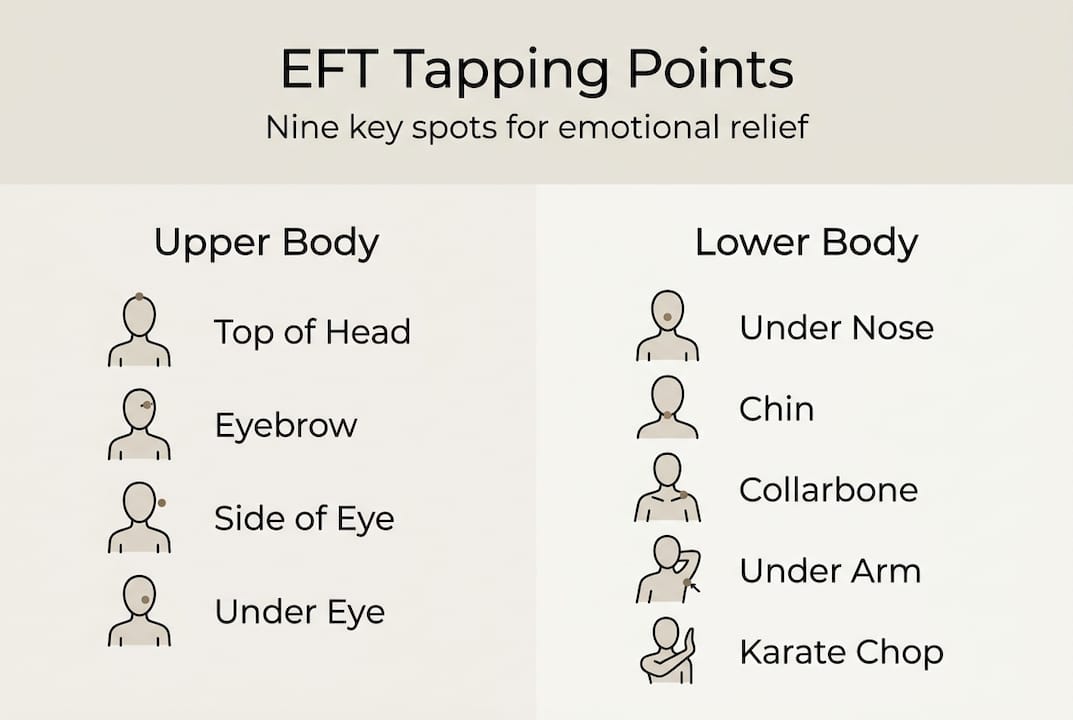
The nine tapping points correspond to specific locations on your body’s meridian system. Starting at the top of your head, you tap the crown point with all fingertips. Move to the beginning of your eyebrow near the bridge of your nose, then the bone at the outer corner of your eye. Tap under your eye on the cheekbone, then the space between your nose and upper lip. The chin point sits in the crease below your lower lip. Tap your collarbone point about an inch below where your collarbone meets your breastbone. The underarm point rests about four inches below your armpit. Finally, the karate chop point on the fleshy outer edge of your hand serves as both a starting and optional continuing point.
Pro Tip: Start with lower intensity issues when first learning EFT to build confidence in the technique. Rate your emotional distress before and after each round to track real changes rather than relying on vague feelings of improvement. This objective measurement helps you identify which specific aspects need more attention.
Many people find virtual therapy for stress relief complements their EFT practice by providing professional guidance on technique refinement and addressing deeper psychological patterns. While EFT offers powerful self-help benefits, combining it with structured therapeutic support often accelerates progress and ensures you’re targeting the right emotional layers.
Empirical evidence and clinical benefits of EFT therapy
The research backing EFT therapy extends far beyond anecdotal reports. Meta-analyses show significant reductions in PTSD, anxiety, and depression with lasting effects, with effect sizes that rival or exceed conventional treatments. These systematic reviews analyze data from dozens of randomized controlled trials, providing robust evidence that EFT produces measurable, clinically meaningful improvements across multiple mental health conditions.

One landmark study found that 90% of veterans no longer met PTSD criteria after six sessions of EFT, with cortisol drops of 24%. This dramatic shift happened within weeks, not months or years. The cortisol reduction alone explains much of the anxiety relief people experience, since elevated cortisol keeps your body in constant stress mode. When you lower this hormone through tapping, your entire nervous system shifts toward calm.
| Condition | Effect Size | Cortisol Change | Symptom Reduction |
|---|---|---|---|
| PTSD | Large (d=2.96) | 24% decrease | 90% remission rate |
| Anxiety | Large (d=1.23) | 18% decrease | 76% improvement |
| Depression | Moderate to Large (d=0.89) | 15% decrease | 68% improvement |
| Chronic Pain | Moderate (d=0.72) | 12% decrease | 58% pain reduction |
The emotional and physiological benefits of EFT therapy extend across multiple domains:
- Rapid reduction in emotional intensity around traumatic memories
- Decreased physiological arousal including heart rate and blood pressure
- Improved emotional regulation and stress resilience
- Enhanced ability to process difficult emotions without avoidance
- Reduction in intrusive thoughts and hypervigilance symptoms
- Better sleep quality and reduced nighttime anxiety
- Increased sense of control over emotional responses
EFT demonstrates particular effectiveness for specific populations and conditions. Combat veterans with complex PTSD show remarkable response rates, often achieving symptom relief faster than with traditional exposure therapy alone. Individuals with specific phobias, including fear of public speaking or flying, frequently experience complete resolution within a few sessions. People managing chronic stress from work or relationships report sustained improvements in emotional reactivity. Those dealing with food cravings and emotional eating patterns find EFT helps interrupt automatic responses. Survivors of childhood trauma benefit from the gentle yet effective reprocessing EFT provides.
Understanding these trauma therapy examples helps contextualize where EFT fits within the broader landscape of evidence-based treatments. While EFT offers unique advantages in accessibility and speed, it works best as part of a comprehensive approach that may include other modalities. Recognizing the role of trauma therapy in overall mental health helps you make informed decisions about which tools to use when.
Nuances, best practices, and limitations of EFT therapy
Effective EFT therapy requires personalization beyond generic scripts. While beginners often start with template phrases, real breakthroughs happen when you craft statements referencing your specific memories, sensations, and emotional nuances. Instead of tapping on “this anxiety,” you’d address “this tightness in my chest when I remember my boss criticizing my presentation last Tuesday.” The more specific your language, the more directly you target the neural networks holding that particular distress.
The intensity of properly conducted EFT surprises many first-time users. When you focus clearly on a distressing memory while tapping, emotions can surge before they release. This temporary intensification explains why clinical EFT is best for specific issues and personalized language, not a substitute for severe psychiatric care. Working with a practitioner ensures you have support if strong emotions surface and helps you navigate complex trauma safely.
Many people confuse EFT tapping with Emotion-Focused Therapy, but these represent entirely different approaches:
| Aspect | EFT Tapping | Emotion-Focused Therapy |
|---|---|---|
| Primary method | Physical tapping on acupressure points | Verbal exploration of emotional experiences |
| Theoretical basis | Energy psychology and exposure therapy | Attachment theory and humanistic psychology |
| Session structure | Structured 9-step protocol | Open-ended therapeutic dialogue |
| Practitioner role | Teaches self-help technique | Facilitates emotional awareness and processing |
| Time to results | Often immediate within sessions | Gradual over multiple sessions |
| Best for | Specific traumatic memories, phobias, anxiety | Relationship patterns, emotional awareness, attachment issues |
Pro Tip: Consult certified practitioners through official directories like the Association for Comprehensive Energy Psychology or ICEEFT when seeking professional EFT guidance. Certification ensures practitioners understand both the technique and the psychological principles underlying effective trauma work. Self-taught tapping can help with mild stress, but complex issues deserve expert support.
Common pitfalls undermine EFT’s effectiveness when people:
- Skip the intensity rating step, losing objective feedback on progress
- Use vague language instead of specific emotional or physical descriptions
- Tap too quickly or lightly to create meaningful mechanotransduction signals
- Avoid the most distressing aspects of memories, staying in comfortable territory
- Rely solely on self-help for severe trauma or suicidal ideation
- Expect one round to resolve complex, layered emotional issues
- Discontinue practice once initial relief occurs, missing deeper healing opportunities
Understanding how to navigate these challenges becomes easier when you explore resources like this guide to starting trauma therapy, which contextualizes EFT within broader treatment planning. Similarly, learning about various anxiety therapy types helps you understand when EFT serves as a primary tool versus a complementary technique.
Applying EFT therapy for personal growth and emotional healing in Bergen County
Starting EFT therapy at home requires nothing more than privacy and willingness to focus on uncomfortable emotions. Bergen County residents can begin simple protocols immediately for everyday stress and emotional regulation. The accessibility of this technique makes it particularly valuable for those managing work stress, relationship tensions, or general anxiety who want tools beyond traditional talk therapy.
Follow these steps to begin EFT safely and effectively:
- Choose a specific situation causing mild to moderate distress, not your most traumatic memory
- Write down the exact emotion, physical sensation, or thought you want to address
- Rate the intensity honestly from 0 (no distress) to 10 (maximum distress)
- Create a setup statement following this format: “Even though I have this [specific problem], I deeply and completely accept myself”
- Tap the karate chop point while repeating your setup statement aloud three times
- Tap through all eight meridian points while repeating a short reminder phrase about your issue
- Take a deep breath and reassess your intensity rating after completing one full round
- Continue tapping rounds with adjusted language until your rating drops to 2 or below
- Test your result by vividly recalling the situation and noticing any remaining emotional charge
Certain signs indicate when professional guidance becomes essential rather than optional. Seek support from qualified practitioners if you experience:
- Traumatic memories that feel overwhelming or cause dissociation when addressed
- Persistent anxiety or depression that doesn’t improve with several weeks of self-directed EFT
- Suicidal thoughts or self-harm urges at any intensity level
- Physical symptoms like chest pain or breathing difficulty during tapping
- Emotional intensity that increases rather than decreases after multiple tapping rounds
- Complex PTSD from childhood abuse or multiple traumatic events
- Difficulty identifying or articulating specific emotions to target
Pro Tip: Integrate EFT with broader psychotherapy treatment options and consistent mental health tracking for optimal results. Use a simple journal to record which issues you tap on, your before and after intensity ratings, and any insights that emerge. This documentation helps you identify patterns and shows your progress over time, which maintains motivation during longer healing journeys.
Research confirms EFT offers an accessible, evidence-backed self-tool, yet consulting certified practitioners locally provides crucial support for deeper anxiety or trauma work. The combination of self-directed daily practice with periodic professional sessions creates a sustainable approach to emotional healing. Many Bergen County residents find this hybrid model fits their schedules and budgets while still providing the expertise needed for complex issues.
Explore psychotherapy options in Bergen County with Dr. Stephen Oreski & Associates
While EFT therapy offers powerful self-help benefits, professional support amplifies your results and ensures safe navigation of complex emotional terrain. Dr. Stephen Oreski & Associates provides comprehensive mental health services that complement techniques like EFT, offering personalized treatment plans tailored to your unique healing journey.

Whether you’re managing everyday stress or processing deeper trauma, exploring psychotherapy treatment options helps you build a complete toolkit for emotional wellbeing. Professional therapists can teach you advanced EFT applications while addressing underlying patterns through various types of psychotherapy suited to your specific needs. Combining self-directed tapping with expert guidance creates the strongest foundation for lasting change. Track your progress systematically using proven mental health tracking methods to measure improvements and identify areas needing additional support.
Call Us Today to Get Started and Feel Good Again
Frequently asked questions about EFT therapy
What’s the difference between EFT tapping and Emotion-Focused Therapy?
EFT tapping involves physical tapping on acupressure points while focusing on distressing emotions, based on energy psychology principles. Emotion-Focused Therapy uses verbal dialogue to explore attachment patterns and emotional awareness without any tapping component. They’re completely different modalities that happen to share similar acronyms.
How long does it typically take to see results from EFT therapy?
Many people notice reduced emotional intensity within a single tapping session, sometimes within minutes. Simple phobias or specific anxieties often resolve in one to three sessions, while complex trauma typically requires six to ten sessions for substantial improvement. Consistent practice accelerates results compared to sporadic use.
Is EFT therapy safe to do by yourself at home?
EFT is generally safe for self-application with mild to moderate stress, everyday anxieties, and minor emotional upsets. However, severe trauma, suicidal thoughts, dissociation, or worsening symptoms during tapping require professional guidance. Start with lower intensity issues to learn the technique safely before addressing deeper wounds.
Can EFT therapy be used alongside medication or other therapies?
Yes, EFT complements most medications and therapeutic approaches without interference. Many therapists integrate tapping into cognitive behavioral therapy, EMDR, or psychodynamic work. Always inform your prescriber and therapist about all techniques you’re using to ensure coordinated care and optimal treatment planning.
Where can I find certified EFT practitioners in Bergen County?
Search the Association for Comprehensive Energy Psychology practitioner directory or contact local mental health practices like Dr. Stephen Oreski & Associates that incorporate evidence-based complementary techniques. Verify credentials and ask about specific training in clinical EFT rather than basic tapping instruction for best results.
Recommended
- Trauma Therapy Guide: 4-12 Months to Healing in 2026
- Top EMDR Therapist Near You: Transform Your Trauma Journey – Dr. Stephen Oreski & Associates
- EMDR Therapy in Bergen County, NJ Explained – Dr. Stephen Oreski & Associates
- Trauma Therapy for Healing | Dr Stephen Oreski & Associates.
- Featured Mindfulness Course | Mindful Self Compassion in Support of Psychedelic-Assisted Therapy