

Many people assume family issues stem purely from individual personalities or isolated conflicts. In reality, family dynamics operate as a complex system where every member’s behavior influences and is influenced by others. These patterns of interaction, roles, and relationships profoundly shape mental health, physical well-being, and life satisfaction. Understanding family dynamics as interconnected systems rather than separate personalities opens pathways to healthier relationships and effective therapy. This guide clarifies what family dynamics truly means, how they impact your well-being, and practical steps to improve them, especially if you’re considering therapy options in 2026.
Table of Contents
- What Is Family Dynamics? Definition And Core Concepts
- How Family Dynamics Affect Individual Well-Being And Relationships
- Key Family Systems Therapy Concepts To Understand Dynamics And Support Change
- Practical Ways To Improve Family Dynamics And When To Seek Therapy
- Explore Therapy Options To Improve Family Relationships
Key takeaways
| Point | Details |
|---|---|
| Family dynamics are systemic patterns | Interaction patterns, roles, and relationships shape family behavior beyond individual personalities. |
| They directly impact health | Family relationships influence psychological, physical, and behavioral well-being across all ages. |
| Systems theory guides understanding | Family Systems Theory views families as interconnected units where each part affects the whole. |
| Workload and conflict reduce satisfaction | Parental job stress and family conflict correlate strongly with reduced family satisfaction and adolescent depression. |
| Therapy addresses patterns | Family therapy focuses on relationship cycles and communication rather than blaming individuals. |
What is family dynamics? Definition and core concepts
Family dynamics refer to patterns of interactions among relatives, their roles and relationships, and the various factors shaping their interactions. Rather than viewing family members as isolated individuals, this concept recognizes families as dynamic systems where each person’s actions ripple through the entire unit. When your teenager withdraws, your partner becomes critical, or you feel overwhelmed, these responses don’t happen in a vacuum. They’re part of larger patterns maintained by everyone’s participation.
Family Systems Theory posits families function as complex, dynamic systems with interconnected parts and subsystems. Think of your family like a mobile hanging from the ceiling. Touch one piece, and everything else shifts to restore balance. This theory emphasizes several key concepts that help explain why families behave the way they do:
- Interdependence: Each family member’s emotions and behaviors affect everyone else, creating feedback loops that sustain or change patterns.
- Homeostasis: Families naturally seek balance, even if that balance is unhealthy, resisting change to maintain familiar patterns.
- Subsystems: Smaller units within the family like the parental subsystem, sibling subsystem, or individual relationships operate with their own rules.
- Boundaries: Families develop rules about emotional closeness and information sharing, ranging from rigid and closed to overly flexible and enmeshed.
- Roles: Members adopt specific functions such as caretaker, peacemaker, or scapegoat that organize family interactions.
Understanding these concepts helps explain why understanding family dynamics requires looking beyond individual blame. Modern families include diverse structures such as single parent households, blended families, same sex parents, multigenerational homes, and chosen family networks. The principles of family dynamics apply regardless of your family’s specific composition.
How family dynamics affect individual well-being and relationships
Family dynamics significantly influence well-being, shaping psychological, physical, and behavioral pathways throughout life. Your earliest family experiences create templates for how you relate to others, manage emotions, and respond to stress. These patterns don’t just affect childhood. They follow you into adult relationships, parenting styles, and even physical health outcomes.
Stressful family relationships create measurable impacts on mental and physical health. When essential family needs aren’t met, both physical and mental health issues emerge. Children raised in high conflict homes show elevated cortisol levels, disrupted sleep patterns, and increased anxiety. Adults carrying unresolved family patterns often experience depression, relationship difficulties, and chronic stress related illnesses.
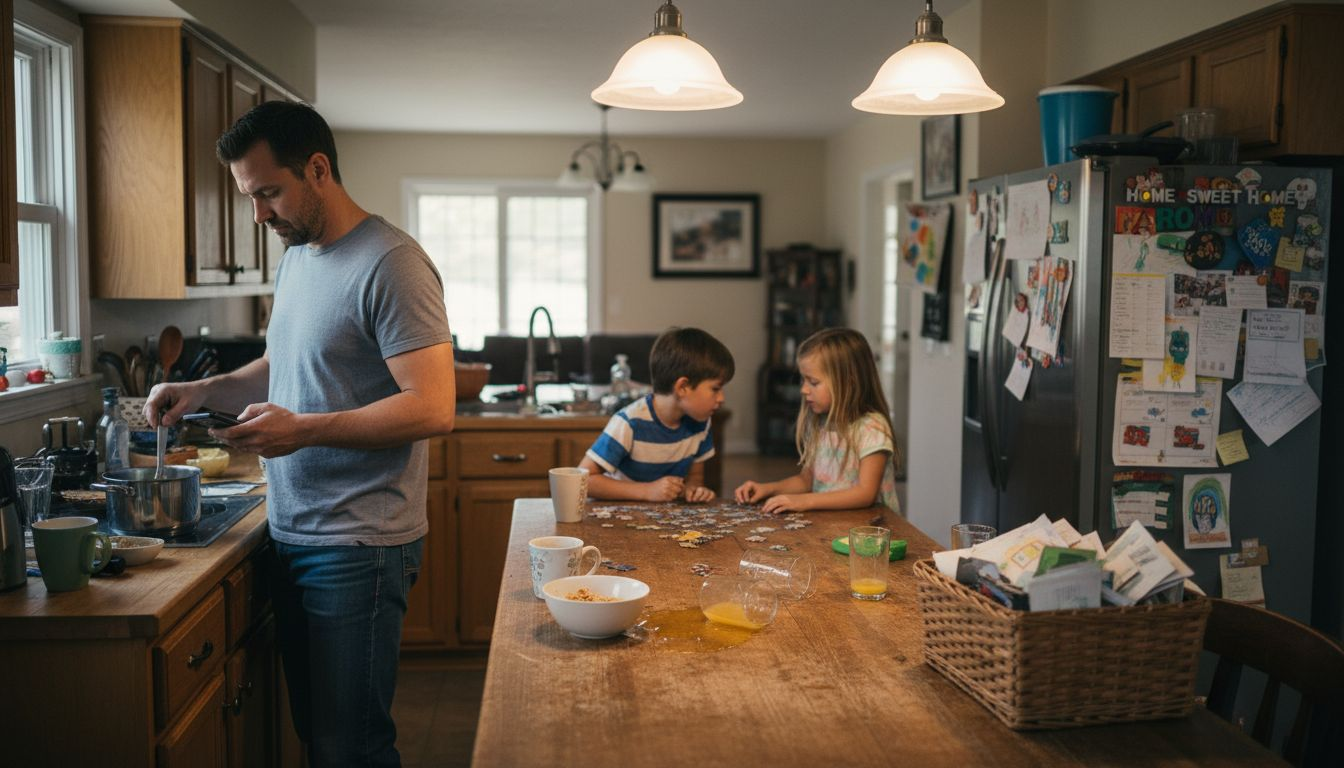
Recent research reveals specific mechanisms through which family dynamics shape well-being. Work-to-family conflict mediates workload and family satisfaction relationships. When parents struggle to balance job demands with family time, satisfaction plummets for everyone. This isn’t about working parents being bad parents. It’s about systemic pressures creating stress that ripples through family interactions.
Pro Tip: Notice how your mood at work affects your patience at home, and how family stress impacts your job performance. Recognizing these connections helps you address root causes rather than symptoms.
The relationship between family conflict and adolescent mental health demonstrates bidirectional influence. Family conflict correlates with depressive symptoms at r = 0.580, p < 0.001, showing a strong statistical relationship. Teenagers experiencing depression often trigger more family conflict through withdrawal or irritability, which intensifies their symptoms, creating a destructive feedback loop. Breaking this cycle requires addressing the family system, not just treating the adolescent in isolation.
Key impacts of family dynamics on well-being include:
- Emotional regulation skills: Families model how to identify, express, and manage feelings, shaping lifelong emotional intelligence.
- Attachment patterns: Early family relationships create secure or insecure attachment styles affecting all future intimate connections.
- Conflict resolution abilities: How your family handles disagreements teaches you whether conflict means danger or opportunity for growth.
- Self-esteem development: Family messages about your worth, capabilities, and lovability form core beliefs about yourself.
- Stress response systems: Chronic family stress can dysregulate your nervous system, making you hyper-reactive or emotionally numb.
Key family systems therapy concepts to understand dynamics and support change
Family systems therapy focuses on relationships rather than individual blame, emphasizing interdependence among family members. This therapeutic approach recognizes that symptoms in one person often reflect dysfunction in the larger system. When your child acts out or your partner withdraws, these behaviors serve functions within family patterns. Therapy helps identify what role these symptoms play and how to meet underlying needs more healthily.
Core concepts include homeostasis, subsystems, boundaries, and interdependence. Homeostasis explains why families resist change even when current patterns cause pain. Your family system developed its balance over years, and shifting it feels threatening even if the change is positive. Understanding this resistance helps you approach change with patience rather than frustration.
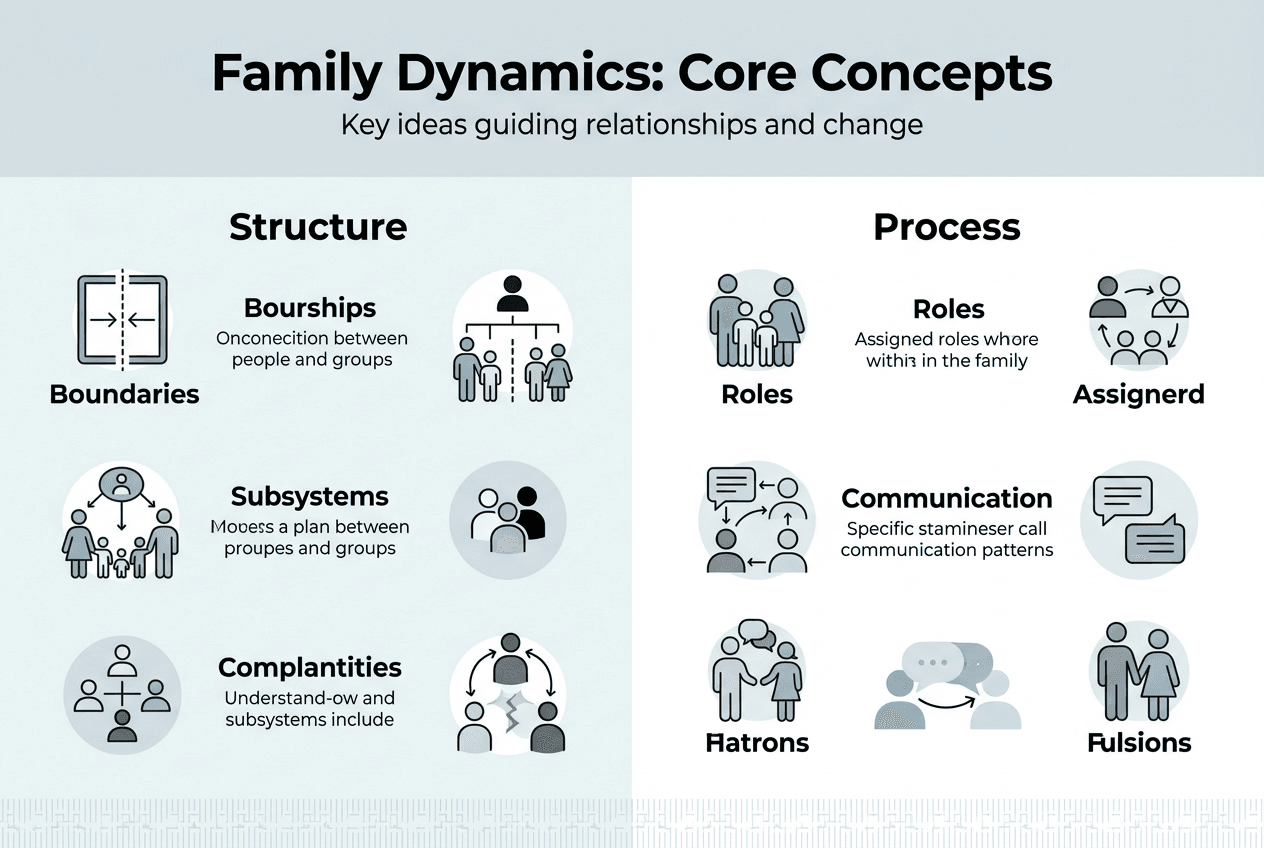
Subsystems organize family life into smaller functional units. The parental subsystem should maintain authority and partnership separate from children’s needs. The sibling subsystem allows kids to practice peer relationships and conflict resolution. When these boundaries blur, such as a child becoming a parent’s confidant or mediator, it creates role confusion and developmental problems. Healthy subsystems have clear but flexible boundaries that adapt as family members grow.
Bowenian theory and strategic therapy offer different but complementary approaches to family problems. Bowenian family therapy focuses on intergenerational patterns, exploring how anxiety, conflict styles, and relationship patterns transmit across generations. You might notice you parent exactly like your mother did, or you’ve sworn never to be like your father yet find yourself repeating his patterns. This approach helps you differentiate your authentic self from family expectations and inherited patterns.
Strategic family therapy targets communication patterns and immediate problem solving. Rather than exploring historical causes, strategic therapists interrupt dysfunctional interaction cycles and prescribe new behaviors. If your family’s pattern involves one person pursuing connection while another withdraws, creating more distance and pursuit, strategic interventions break this dance by changing one person’s steps.
Triangulation represents a common dysfunctional pattern where two people pull in a third to stabilize their relationship. When parents disagree, one might align with a child against the other parent, or siblings might compete for a parent’s favor. These triangles reduce direct conflict but create loyalty binds and prevent genuine resolution. Family therapy types address these patterns differently based on theoretical orientation.
Pro Tip: Focus on changing relationship patterns rather than trying to change individual family members. Sustainable improvement comes from shifting how you interact, not from making others behave differently.
Therapy identifies harmful cycles and fosters healthier interaction patterns by:
- Mapping family structure: Therapists observe who talks to whom, who holds power, and where boundaries are too rigid or too loose.
- Identifying stuck patterns: Recognizing repetitive sequences that maintain problems rather than solving them.
- Reframing problems: Shifting from individual pathology to systemic understanding, reducing blame and shame.
- Experimenting with change: Trying new behaviors in session and at home to discover what creates positive shifts.
- Processing emotions safely: Creating space to express feelings that usually get suppressed or explode destructively.
Understanding these concepts through family counseling communication approaches helps you recognize your family’s unique patterns and possibilities for change.
Practical ways to improve family dynamics and when to seek therapy
Improving family dynamics requires consistent effort and willingness to examine your own contributions to patterns. You can’t control others’ behavior, but changing your responses shifts the entire system. Here are five practical steps to strengthen family relationships:
- Practice open, honest communication: Create regular opportunities for family members to share thoughts and feelings without judgment or immediate problem solving. Set ground rules like no interrupting, no blaming, and speaking from personal experience using I statements.
- Establish and respect healthy boundaries: Clarify what’s private versus shared, who makes which decisions, and how much involvement is appropriate across subsystems. Healthy boundaries aren’t walls. They’re flexible guidelines that protect individual autonomy while maintaining connection.
- Share responsibilities fairly: Distribute household tasks, emotional labor, and decision making based on capacity and fairness rather than rigid gender roles or birth order assumptions. Regularly reassess whether current arrangements still work as family members’ ages and circumstances change.
- Recognize and interrupt negative patterns: Notice when familiar conflicts arise and pause before responding automatically. Ask yourself what function this pattern serves and whether there’s a healthier way to meet the underlying need.
- Prioritize essential family needs: Ensure everyone has adequate food, shelter, safety, belonging, and emotional support. Mitigating workload and work-to-family conflict enhances both parental job satisfaction and family satisfaction.
Pro Tip: Schedule brief weekly family check-ins to discuss what’s working, what’s challenging, and what needs attention. Regular communication prevents small issues from becoming major crises.
Recognize when professional help would benefit your family. Red flags suggesting therapy might be beneficial include:
- Conflicts that escalate quickly or never fully resolve, creating ongoing tension
- Family members experiencing anxiety, depression, or behavioral problems
- Major transitions like divorce, blending families, or coping with loss
- Repeated relationship patterns causing distress across multiple family members
- Communication breakdowns where family members can’t discuss important topics
- Abuse, addiction, or other serious dysfunction requiring expert intervention
Family systems therapy encourages healthier relating by identifying cycles that keep families stuck. Professional guidance helps you see patterns you’re too close to recognize and provides tools to create lasting change.
| Common Family Stressor | Impact on Family Dynamics | Suggested Intervention |
|---|---|---|
| High parental workload | Reduces time together, increases irritability, lowers satisfaction for all members | Set work boundaries, prioritize family meals, delegate tasks |
| Work-to-family conflict | Mediates relationship between job stress and family well-being | Communicate needs clearly, seek employer flexibility, use therapy |
| Adolescent depression | Increases family conflict, creates withdrawal or acting out behaviors | Family therapy addressing system patterns, individual teen support |
| Poor communication | Leads to misunderstandings, resentment, and emotional distance | Practice active listening, use I statements, schedule regular talks |
| Rigid role assignments | Limits individual growth, creates resentment, prevents adaptation to change | Redistribute responsibilities, challenge gender stereotypes, allow flexibility |
| Unclear boundaries | Causes enmeshment or emotional cutoff, prevents healthy autonomy | Define privacy rules, respect personal space, clarify decision authority |
Exploring family therapy for conflict resolution and learning how to prepare for counseling positions your family for positive change. Therapy works best when family members approach it with openness, honesty, and commitment to examining their own contributions rather than focusing solely on others’ faults.
Explore therapy options to improve family relationships
Understanding family dynamics is the first step toward healthier relationships. Professional support can accelerate this process by providing expert guidance, objective perspective, and proven therapeutic techniques. If you’re experiencing persistent family conflict, communication breakdowns, or individual symptoms rooted in family patterns, exploring therapy options makes sense.

Bergencountytherapist.com offers comprehensive psychotherapy options tailored to your family’s unique needs. Whether you’re dealing with parent-child conflicts, sibling rivalry, blended family challenges, or intergenerational patterns, specialized therapists can help you identify stuck cycles and develop healthier interaction patterns. Online therapy for families provides flexible access to professional support, making it easier to coordinate schedules and maintain consistency. Early intervention prevents minor issues from becoming entrenched problems. Taking the step to begin therapy support demonstrates commitment to your family’s well-being and models healthy help seeking behavior for children.
Frequently asked questions
What are common signs of unhealthy family dynamics?
Persistent conflict that never fully resolves, poor communication where important topics feel unsafe to discuss, rigid roles that limit individual growth, and emotional distance or enmeshment represent common signs. You might notice patterns repeating across generations, such as the same conflicts your parents had now appearing in your relationships. Recognizing these early allows intervention before patterns become deeply entrenched and harder to change.
How does workload affect family satisfaction?
Heavy workloads increase work-to-family conflict, which directly lowers family satisfaction for both parents and children. Both parents’ workloads reduce adolescents’ satisfaction and mediate family conflicts. When parents feel stretched thin between job demands and family needs, stress permeates all interactions, reducing quality time and patience. Managing workload through boundary setting, delegation, and employer flexibility can significantly improve family well-being.
What types of family therapy can help improve dynamics?
Bowenian theory focuses on intergenerational issues, while strategic therapy targets communication patterns. Bowenian therapy helps you understand how anxiety and relationship patterns transmit across generations, promoting differentiation from family expectations. Strategic therapy interrupts dysfunctional interaction cycles and prescribes new behaviors to solve immediate problems. Both approaches aim to break unhealthy patterns and promote positive change, with the best choice depending on your family’s specific needs and goals. Exploring types of family therapy helps you find the right fit.
Can family dynamics change, or are they fixed?
Family dynamics absolutely can change, though transformation requires consistent effort and often professional guidance. Families naturally resist change due to homeostasis, the tendency to maintain familiar patterns even when unhealthy. However, when one person changes their responses within the system, others must adapt, creating opportunities for new patterns. Therapy accelerates this process by identifying stuck cycles, providing tools for healthier interaction, and supporting family members through the discomfort of change.
How do I know if my family needs therapy?
Consider therapy if conflicts escalate quickly or never resolve, family members show signs of anxiety or depression, communication has broken down around important topics, or you’re facing major transitions like divorce or blending families. If you notice the same arguments repeating without progress, or if family stress is affecting work, school, or physical health, professional support can help. You don’t need to wait until problems become severe. Early intervention often prevents minor issues from becoming major crises and builds skills that benefit your family for generations.