

Many people assume therapy is about diagnosing what’s wrong with you, labeling your struggles, and fixing broken parts. That perspective can feel disempowering and stigmatizing. Narrative therapy flips this script entirely by treating you as the expert on your own life and viewing problems as separate from your identity. Developed in the 1980s by Michael White and David Epston, this approach helps you rewrite limiting stories and build empowering narratives that support healing and growth. For Bergen County residents exploring mental health resources, understanding narrative therapy opens doors to a strengths-based path toward emotional wellness and personal transformation.
Table of Contents
- Key takeaways
- What is narrative therapy and how does it work?
- Core principles and techniques of narrative therapy
- How narrative therapy supports healing and personal growth
- Comparing narrative therapy with cognitive behavioral therapy (CBT) and addressing limitations
- How to find and use narrative therapy in Bergen County
- Explore psychotherapy options with Dr. Stephen Oreski & Associates in Bergen County
- Frequently asked questions about narrative therapy
Key Takeaways
| Point | Details |
|---|---|
| Client as expert | Narrative therapy centers you as the expert on your own life rather than labeling you with a diagnosis. |
| Externalizing problems | It separates the problem from you so you can explore challenges without self blame. |
| Reauthoring narratives | Therapists help you identify alternative stories that reflect your strengths and goals. |
| Nonblaming stance | The approach avoids blaming and acknowledges how social and cultural contexts shape your stories. |
| Structured steps | The process guides you through naming and externalizing the problem, mapping its influence, and strengthening preferred stories. |
What is narrative therapy and how does it work?
Narrative therapy emerged in the 1980s when Michael White and David Epston developed a revolutionary psychotherapeutic approach centered on the stories people tell about themselves. Rather than viewing you through a lens of pathology or deficit, this method recognizes that your identity and experiences are shaped by narratives you’ve internalized from family, culture, and society. The therapy focuses on separating you from your problems through a process called externalizing, which allows you to examine challenges without shame or self-blame.
This approach rests on a foundational belief that you are the expert on your own life. Therapists don’t position themselves as authorities who diagnose and fix you. Instead, they collaborate with you to explore how problem-saturated stories have dominated your self-perception and identify alternative narratives that reflect your strengths, values, and preferred identity. The method is inherently non-blaming and culturally sensitive, acknowledging that broader social and cultural contexts shape the stories available to you.
Core practices in narrative therapy include:
- Externalizing conversations that separate the person from the problem
- Deconstructing dominant problem narratives to reveal hidden assumptions
- Identifying unique outcomes where you acted against the problem’s influence
- Re-authoring preferred stories that align with your values and goals
The therapeutic process typically follows these steps:
- Name and externalize the problem as something separate from you
- Map the problem’s influence on your life and relationships
- Identify moments when you resisted or overcame the problem’s control
- Thicken these alternative stories with rich details and meaning
- Connect preferred narratives to your broader life goals and identity
Therapists often use creative language and metaphors to help you express experiences that feel difficult to articulate. This flexibility makes narrative therapy particularly effective with children and families, where storytelling comes naturally. The approach also integrates well with affirming therapy examples that validate diverse identities and experiences without imposing normative expectations.
Core principles and techniques of narrative therapy
The core principles that guide narrative therapy create a fundamentally different therapeutic relationship than traditional models. First, people are not the problem; the problem is the problem. This externalizing stance allows you to examine challenges without internalizing shame or feeling defective. Second, your expertise about your own life is respected and centered throughout the process. Third, therapy maintains a non-blaming posture that acknowledges how problems develop within social and cultural contexts beyond individual control.
These principles translate into specific therapeutic techniques that practitioners use to help you re-author your story:
- Externalizing conversations: Naming the problem as a separate entity and exploring its tactics and influence
- Deconstructing dominant stories: Questioning taken-for-granted assumptions embedded in problem narratives
- Unique outcomes identification: Spotting exceptions where you demonstrated agency against the problem
- Re-authoring: Building richer, more detailed stories around preferred identities and values
- Mapping influence: Charting how the problem has affected various life domains and relationships
- Thickening preferred narratives: Adding depth, meaning, and connections to alternative stories
Pro Tip: Therapists may invite you to personify problems with names like “Anxiety” or “The Critic,” making it easier to talk about challenges as external forces rather than personal failures.
Additional therapeutic tools enhance the narrative process. Definitional ceremonies involve inviting supportive witnesses to hear and reflect on your re-authored story, strengthening new narratives through community acknowledgment. Therapeutic letters document progress and insights between sessions, creating tangible records of your evolving story. Scaffolding conversations build gradually from externalizing to re-authoring, ensuring you feel supported at each stage.
This approach works especially well with families and children because it avoids pathologizing language and uses accessible storytelling methods. Child therapy techniques often incorporate drawings, play, and creative expression to help young people externalize problems and identify strengths. The flexibility also makes narrative therapy suitable for online therapy approaches, where collaborative conversation and written exercises translate effectively to virtual formats.
How narrative therapy supports healing and personal growth
Research demonstrates that narrative therapy reduces symptoms of depression, anxiety, PTSD, trauma, eating disorders, and self-stigma with moderate to large effect sizes. Studies comparing narrative therapy to cognitive behavioral therapy found comparable effectiveness for several conditions, with narrative approaches showing particular strength for trauma recovery and identity-related struggles. The evidence base continues growing as more controlled trials examine outcomes across diverse populations and presenting concerns.

| Condition | Effect size | Key benefit |
|---|---|---|
| Depression | Moderate to large | Reduces self-blame and builds agency |
| Anxiety | Moderate | Externalizes worry and fear patterns |
| PTSD | Large | Separates trauma from identity |
| Eating disorders | Moderate to large | Challenges cultural narratives about bodies |
| Self-stigma | Large | Rewrites internalized shame stories |
The therapy empowers emotional healing by enabling you to rewrite limiting stories that have constrained your sense of possibility. When you can see problems as separate from your core identity, you gain space to imagine and enact different responses. This process builds resilience because you recognize your own agency in shaping your life narrative rather than feeling victimized by circumstances or personal deficits.
Narrative therapy achieves these outcomes without pathologizing you or assigning blame. Instead of focusing on what’s wrong, sessions highlight moments of strength, resistance, and alignment with your values. This strengths-based orientation creates hope and motivation, essential ingredients for sustained change. The approach respects your cultural background and social context, acknowledging that dominant narratives often reflect power structures rather than universal truths.
“Narrative therapy helped me see that my divorce didn’t define me as a failure. By externalizing the shame and guilt I carried, I could recognize how societal expectations about marriage had shaped my self-judgment. Re-authoring my story around resilience and growth transformed my emotional healing.”
Many people experience significant healing and adjustment after major life transitions when they work with narrative therapists. Trauma therapy examples show how externalizing traumatic experiences allows survivors to reclaim their identities beyond victim narratives. The re-authoring process helps you integrate difficult experiences into a coherent life story without letting trauma define your entire identity or future possibilities.
Comparing narrative therapy with cognitive behavioral therapy (CBT) and addressing limitations
Understanding how narrative therapy differs from CBT helps you determine which approach might suit your needs best. Narrative therapy externalizes problems and collaboratively re-authors stories, grounded in postmodern philosophy and strengths-based principles. CBT follows a more structured, manualized approach that focuses on identifying and modifying distorted thoughts and maladaptive behaviors through specific techniques and homework assignments.
| Feature | Narrative therapy | CBT |
|---|---|---|
| Philosophical basis | Postmodern, social constructionist | Cognitive, behavioral science |
| Problem view | External to person, socially constructed | Internal cognitions and behaviors |
| Therapist role | Collaborative partner | Expert guide |
| Structure | Flexible, story-driven | Manualized, protocol-based |
| Evidence base | Growing, strong for trauma and identity | Extensive across many conditions |
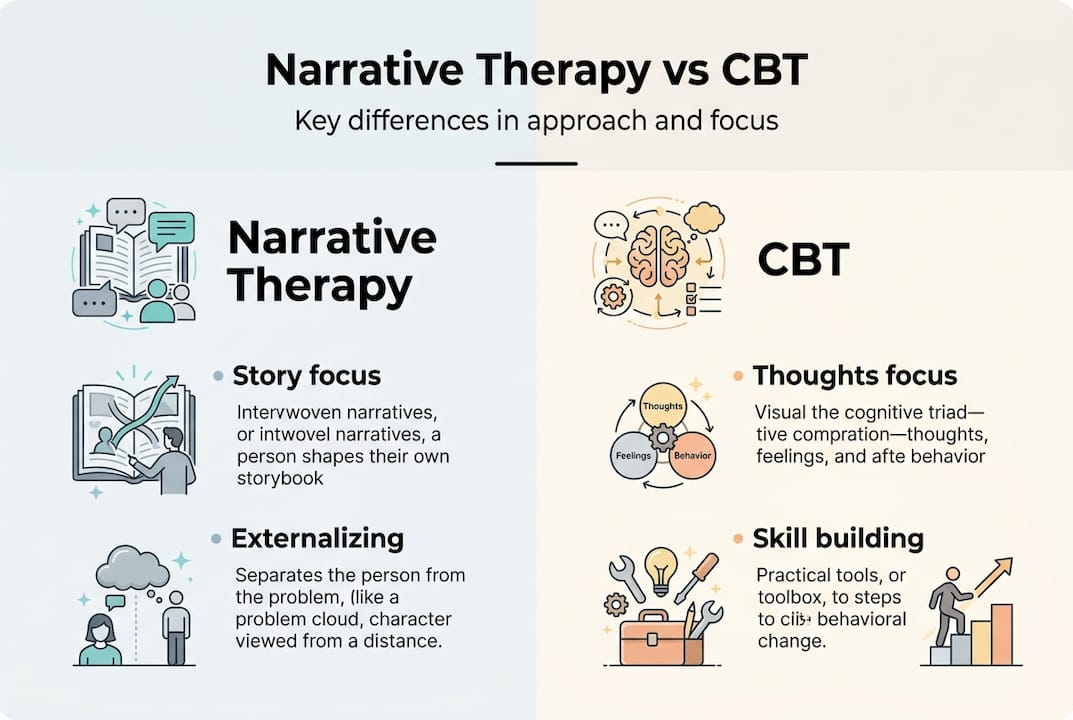
Both approaches offer valuable pathways to healing, and neither is universally superior. CBT’s structured format and extensive research base make it a first-line treatment for many conditions, particularly when you need concrete skills for managing specific symptoms. Narrative therapy’s collaborative, non-pathologizing stance may feel more empowering if you’ve experienced stigma or want to explore identity and meaning rather than symptom reduction alone.
Narrative therapy has limitations worth considering:
- May be less effective for severe or acute mental illness requiring immediate symptom management
- Requires verbal and abstract thinking skills that not everyone finds accessible
- Risks oversimplification if complex problems are reduced to simple story changes
- Subjectivity in narrative interpretation can vary between therapists
- Limited empirical breadth compared to CBT’s extensive research base
Criticisms include concerns about insufficient empirical validation, the need for strong verbal abilities, and unsuitability for crisis situations or severe psychiatric conditions where structured interventions provide essential safety and stabilization. Some critics worry that focusing on individual narratives might inadvertently minimize systemic oppression or structural barriers that require collective action beyond personal story revision.
Pro Tip: Combining narrative therapy with CBT techniques can enhance benefits for some clients, allowing you to develop practical coping skills while also exploring deeper identity and meaning questions.
The choice between approaches depends on your goals, preferences, and presenting concerns. If you value collaborative exploration and want to examine how cultural narratives have shaped your self-perception, narrative therapy offers unique benefits. If you prefer structured skill-building and symptom-focused interventions, CBT therapy might align better with your needs. Many therapists integrate elements from both approaches based on what serves you best.
How to find and use narrative therapy in Bergen County
Locating narrative therapists in Bergen County starts with online directories and local mental health agencies. Psychology Today listings allow you to filter by therapeutic approach, though not all practitioners explicitly label themselves as narrative therapists even when they use these methods. County mental health centers and community counseling agencies often employ therapists trained in diverse modalities, including narrative approaches.
When searching for a therapist, prioritize those who:
- Explicitly mention narrative therapy or postmodern approaches in their profiles
- Demonstrate experience with your specific concerns, whether trauma, identity exploration, or relationship challenges
- Show cultural competence and sensitivity to your background and values
- Offer free consultations so you can assess fit before committing
Expected benefits for trauma survivors include separating traumatic experiences from core identity, reducing shame and self-blame, and building narratives of resilience and post-traumatic growth. For identity exploration, narrative therapy helps you examine how cultural scripts have shaped your self-perception and author stories that align with your authentic values. Emotional healing occurs as you externalize painful experiences and thicken preferred narratives that reflect your strengths and aspirations.
Preparing for narrative therapy sessions enhances the process. Bring examples of personal experiences where you felt stuck or constrained by limiting stories. Be open to storytelling and creative expression, even if it feels unfamiliar at first. Some therapists provide worksheets for externalizing problems at home between sessions, helping you practice separating yourself from challenges in daily life.
You might complement narrative therapy with other approaches if your needs require it. Medication management, skills training, or crisis intervention can run alongside narrative work when circumstances demand multiple levels of support. Local services may integrate various types of psychotherapy rather than offering pure narrative therapy, which often works well since therapeutic relationships matter more than rigid adherence to single models.
Getting started with psychotherapy in Bergen County typically involves an initial consultation where you discuss your goals and the therapist explains their approach. This conversation helps you determine whether narrative methods align with what you’re seeking. For those dealing with traumatic experiences, exploring local trauma therapy resources provides additional context about specialized support available in the area.
Explore psychotherapy options with Dr. Stephen Oreski & Associates in Bergen County
Finding the right therapeutic support transforms your journey toward emotional healing and personal growth. Dr. Stephen Oreski and his team offer accessible psychotherapy options in Bergen County, including approaches that align with narrative therapy principles. Whether you’re exploring different types of psychotherapy or ready to take the first step toward starting therapy, expert guidance helps you navigate your options with confidence.

The practice provides specialized support for trauma recovery, identity exploration, and relationship challenges through compassionate, client-centered care. If you’re seeking trauma therapy resources in Bergen County, the team’s experience with diverse therapeutic modalities ensures you receive personalized treatment that honors your unique story and goals. Taking that first step toward professional support can open new chapters in your life narrative.
Reach Out to Us Today and Feel Good Again
Frequently asked questions about narrative therapy
What makes narrative therapy different from other therapies?
Narrative therapy treats you as the expert on your own life and separates problems from your identity through externalizing conversations. Unlike approaches that diagnose deficits or pathology, it focuses on re-authoring limiting stories into preferred narratives that reflect your strengths and values.
Is narrative therapy suitable for all mental health conditions?
Narrative therapy works well for depression, anxiety, trauma, identity struggles, and relationship challenges, but may be less appropriate for severe psychiatric conditions requiring immediate symptom management or crisis intervention. It requires verbal and abstract thinking abilities that not everyone finds accessible.
How long does narrative therapy usually take?
Duration varies based on your goals and the complexity of issues you’re addressing. Some people experience meaningful shifts in just a few sessions, while others engage in longer-term work to thoroughly re-author significant life narratives and build sustainable change.
Can narrative therapy be done online?
Yes, narrative therapy adapts well to virtual formats since it relies primarily on conversation and collaborative exploration. Online sessions allow you to engage in externalizing conversations, re-authoring exercises, and written reflections from the comfort of your own space.
How can I prepare for my first narrative therapy session?
Bring examples of situations where you felt stuck or defined by problems, and be open to exploring your experiences through storytelling. You don’t need special preparation beyond a willingness to examine how narratives have shaped your self-perception and consider alternative stories that align with your values.