
Every year, nearly half of married american couples report facing ongoing relationship struggles that feel difficult to resolve alone. These challenges can lead to frustration, distance, and even lasting emotional pain if left unaddressed. Relationship counseling steps in with proven methods that foster healthy communication and trust, giving anyone a chance to build a more supportive and lasting connection through guided professional help.
Table of Contents
- Defining Relationship Counseling And Its Purpose
- Main Types Of Relationship Counseling Services
- How Relationship Counseling Sessions Work
- Common Issues Addressed In Counseling
- Benefits, Costs, And Finding The Right Therapist
Relationship Counseling Guide: Overview & Key Topics
| Point | Details |
|---|---|
| Purpose of Relationship Counseling | It aims to improve communication and emotional connections among individuals, couples, and families, preventing conflicts from escalating. |
| Types of Counseling Services | Different approaches like couples therapy, family therapy, and premarital counseling cater to various interpersonal issues and needs. |
| Session Structure | Sessions involve assessments and evidence-based techniques to foster open dialogue and facilitate emotional growth. |
| Benefits of Counseling | Participants often experience improved communication, relationship satisfaction, and emotional intimacy, making it a valuable investment. |
Defining Relationship Counseling and Its Purpose
Relationship counseling is a specialized therapeutic approach designed to help individuals, couples, and families navigate interpersonal challenges, improve communication, and strengthen emotional connections. At its core, relationship counseling provides a structured, supportive environment where participants can explore complex emotional dynamics, resolve conflicts, and develop healthier interaction patterns. Marriage counseling for stronger relationships represents a critical intervention strategy that addresses relationship difficulties before they escalate into more significant problems.
Professional counselors facilitate this process by creating a neutral, non-judgmental space where all participants can express their thoughts, feelings, and perspectives openly. The primary purpose of relationship counseling extends beyond simply resolving immediate conflicts; it aims to equip individuals with sustainable communication skills, emotional intelligence, and conflict resolution strategies. These skills enable participants to build more resilient, understanding, and supportive relationships in the long term.
The therapeutic relationship itself plays a crucial role in successful counseling outcomes. Research emphasizes that the quality of the connection between the counselor and clients significantly impacts the effectiveness of the intervention. Skilled therapists use evidence-based techniques to establish trust, validate emotional experiences, and guide participants toward more constructive relationship patterns. Types of couples therapy offer diverse approaches tailored to specific relationship dynamics, ensuring that participants receive personalized support that addresses their unique challenges.
Relationship counseling can benefit various relationship structures, including romantic partnerships, marriages, family units, and even professional relationships. Whether addressing communication breakdowns, managing external stressors, healing from past traumas, or rebuilding trust, these therapeutic interventions provide a structured pathway toward healthier, more fulfilling interpersonal connections. The ultimate goal is not just to resolve current conflicts but to empower individuals and couples with the emotional tools and understanding necessary for sustained relational growth and mutual understanding.
Main Types of Relationship Counseling Services
Relationship counseling encompasses several specialized approaches designed to address diverse interpersonal challenges and support emotional growth. Couples therapy represents one of the most common forms of relationship counseling, focusing specifically on romantic partnerships experiencing communication breakdowns, trust issues, or persistent conflicts. Couples therapist roles are critical in facilitating constructive dialogues and helping partners develop more effective interaction strategies.
Family therapy emerges as another vital relationship counseling service that addresses complex familial dynamics. This approach involves multiple family members working together to improve communication, resolve intergenerational conflicts, and create healthier relationship patterns. Research highlights that family therapy techniques can be particularly effective in addressing systemic issues that impact the entire family unit, such as managing transitions, healing from trauma, or supporting members through significant life changes.
Other significant relationship counseling services include individual relationship counseling, where one person works with a therapist to understand their relationship patterns, improve emotional intelligence, and develop more effective interpersonal skills. Premarital counseling offers another specialized service, helping couples prepare for marriage by exploring potential challenges, establishing communication protocols, and building strong foundational understanding before making long-term commitments.
The diversity of relationship counseling services reflects the understanding that interpersonal challenges are complex and multifaceted. Whether addressing romantic partnerships, familial relationships, or individual relationship skills, these therapeutic approaches share a common goal: empowering individuals and groups to build more meaningful, supportive, and resilient connections. By providing targeted interventions and personalized strategies, relationship counseling services help participants navigate emotional challenges, improve communication, and create more satisfying relational experiences.
How Relationship Counseling Sessions Work
Relationship counseling sessions are structured therapeutic interactions designed to create a safe, supportive environment where participants can explore complex emotional dynamics and develop healthier relationship patterns. Couples therapy process typically begins with an initial assessment, during which the therapist gathers comprehensive background information about the participants’ relationship history, communication styles, and specific challenges they are experiencing.
The typical counseling session follows a carefully designed framework that prioritizes open communication and mutual understanding. Therapists employ various evidence-based techniques to facilitate productive dialogue, including active listening, reflective questioning, and conflict resolution strategies. Each session usually involves creating a collaborative environment where all participants feel heard and validated, with the therapist acting as a neutral facilitator who guides the conversation toward constructive insights and potential solutions.

Multiple session formats exist to accommodate different relationship dynamics and therapeutic needs. Individual sessions allow participants to explore personal perspectives and emotional patterns, while joint sessions bring partners or family members together to address shared challenges. Group counseling sessions can also provide valuable peer support and perspective, particularly for couples or families navigating similar relational issues. These diverse approaches ensure that participants receive personalized interventions tailored to their unique relationship context.
The progression of relationship counseling sessions is not linear but adaptive, responding to the evolving needs and insights of the participants. Therapists continuously assess progress, adjusting techniques and strategies to support meaningful emotional growth and relationship transformation. Ultimately, the goal extends beyond resolving immediate conflicts, focusing instead on equipping participants with sustainable communication skills, emotional intelligence, and relationship management strategies that can be applied long after the counseling process concludes.
Common Issues Addressed in Counseling
Communication breakdowns represent one of the most fundamental challenges addressed in relationship counseling, where partners struggle to express their needs, emotions, and perspectives effectively. Individual counseling strategies can help individuals develop more nuanced communication skills, enabling them to articulate complex emotions and listen more empathetically to their partners.
Relationship counseling frequently tackles issues of trust and emotional intimacy, which often emerge from past traumas, repeated patterns of betrayal, or chronic misunderstandings. These challenges can manifest in various forms, including infidelity, persistent conflicts, emotional withdrawal, and difficulties maintaining sexual and emotional connection. Therapists work closely with couples to unpack the underlying dynamics that contribute to these trust issues, helping participants understand their individual emotional triggers and develop healthier relationship patterns.
External stressors frequently impact relationship dynamics, making them another critical area of focus in counseling. Financial pressures, work-related stress, parenting challenges, and major life transitions can create significant strain on partnerships. Counseling provides a structured environment for couples to collaboratively address these external pressures, develop shared coping strategies, and maintain relationship resilience during challenging periods. Research highlights that low-income couples often face unique barriers in relationship maintenance, making professional support particularly valuable in navigating complex interpersonal and socioeconomic challenges.
Addressing deeper psychological patterns forms another crucial aspect of relationship counseling. This includes exploring individual attachment styles, recognizing and modifying destructive communication patterns, managing emotional regulation, and healing from past relationship traumas. By providing a compassionate, non-judgmental space, relationship counseling helps participants understand their own emotional landscapes, break generational patterns of dysfunction, and cultivate more authentic, supportive relational experiences.
Benefits, Costs, and Finding the Right Therapist
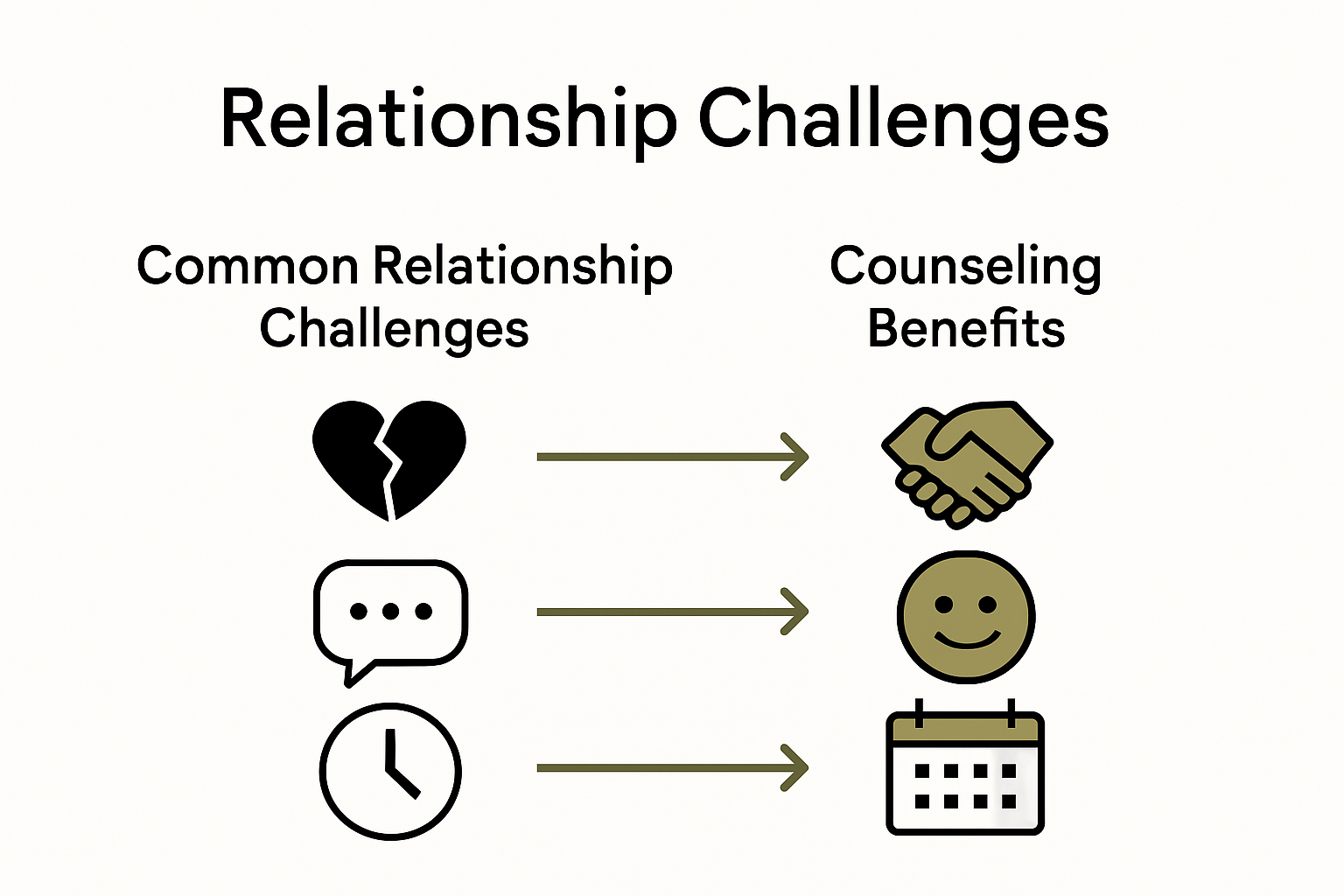
Relationship counseling offers substantial benefits that can transform interpersonal dynamics and emotional well-being. Research consistently demonstrates improved communication, increased relationship satisfaction, and enhanced emotional intimacy as primary outcomes. Role of therapists plays a critical part in helping individuals and couples navigate complex emotional landscapes, providing professional guidance that extends far beyond traditional problem-solving approaches.
The financial investment in relationship counseling varies widely, with costs typically ranging from $100 to $250 per session, depending on the therapist’s expertise, location, and session duration. Many practices offer sliding scale fees, insurance coverage, and flexible payment options to improve accessibility. While initial costs might seem significant, the long-term benefits of preventing relationship dissolution, reducing individual mental health challenges, and developing sustainable communication skills often represent a valuable investment in personal and relational health.
Selecting the right therapist requires careful consideration of several key factors. Potential clients should prioritize therapists with specialized training in relationship counseling, demonstrated experience with similar relationship challenges, and a therapeutic approach that resonates with their personal needs. Critical considerations include the therapist’s professional credentials, therapeutic philosophy, communication style, and ability to create a safe, non-judgmental environment. Preliminary consultations can help individuals assess compatibility and comfort level, ensuring a productive therapeutic relationship.
Beyond traditional in-person sessions, modern relationship counseling offers diverse formats to accommodate varying preferences and constraints. Telehealth options, group counseling sessions, and hybrid models provide flexibility for individuals with challenging schedules or geographic limitations. The most effective approach depends on individual circumstances, with some couples benefiting from intensive weekend workshops, while others prefer consistent weekly individual or joint sessions. Ultimately, successful relationship counseling hinges on mutual commitment, openness to personal growth, and a willingness to engage authentically in the therapeutic process.
Strengthen Your Relationships with Professional Support
Struggling with communication issues or trust challenges in your relationship can feel overwhelming. This article walks you through key concepts like emotional intimacy, conflict resolution, and sustainable communication skills that are essential for nurturing lasting connections. If you are looking to transform struggles into growth, discovering the right therapeutic approach is vital. Explore expert insights and practical tools designed to help you and your partner move forward with confidence.
Take the first step toward healthier relationships today by visiting Couples/Marriage Archives – Dr. Stephen Oreski & Associates. Our compassionate team at Bergen County Therapist offers personalized relationship counseling tailored to your unique needs. Learn how to rebuild trust, improve communication, and create the meaningful connections you deserve. Visit Relationships Archives – Dr. Stephen Oreski & Associates to explore more about the diverse counseling services available. Start your journey now with a free consultation and experience lasting positive change.
Frequently Asked Questions
What is relationship counseling?
Relationship counseling is a therapeutic approach designed to help individuals, couples, and families navigate interpersonal challenges, improve communication, and strengthen emotional connections.
How does relationship counseling work?
Relationship counseling sessions involve structured interactions where participants explore emotional dynamics. A therapist facilitates productive dialogue through various techniques like active listening and conflict resolution strategies.
What common issues can relationship counseling address?
Counseling can address communication breakdowns, trust issues, external stressors, and deeper psychological patterns. It aims to improve emotional intimacy and provide strategies for healthier interaction.
What are the benefits of relationship counseling?
The benefits of relationship counseling include improved communication, increased relationship satisfaction, and enhanced emotional intimacy. It can also help individuals develop sustainable communication skills and cope with complex relational challenges.
Recommended
- Marriage Counseling for Stronger Relationships – Dr. Stephen Oreski & Associates
- Couples Therapist Role: Everything You Need to Know
- Complete Guide to Benefits of Premarital Counseling – Dr. Stephen Oreski & Associates
- 7 Types of Couples Therapy and How Each Can Help You Grow – Dr. Stephen Oreski & Associates