

- Relationship counseling helps couples improve communication, resolve conflicts, and rebuild connections using evidence-based methods. It follows a structured process involving assessment, active therapy, and skill-building over 3 to 12 months. Both partners benefit most when they engage fully and seek therapy early before issues become ingrained.
Relationship counseling is a structured form of psychotherapy where a trained therapist helps partners improve communication, resolve conflicts, and rebuild connection by treating the relationship itself as the client. Known in clinical settings as couples therapy or couples counseling, it operates on evidence-based frameworks such as Emotionally Focused Therapy (EFT) and the Gottman Method. The goal is not to assign blame or declare a winner. The goal is to change the patterns that keep two people stuck.
What is relationship counseling, and what happens in sessions?
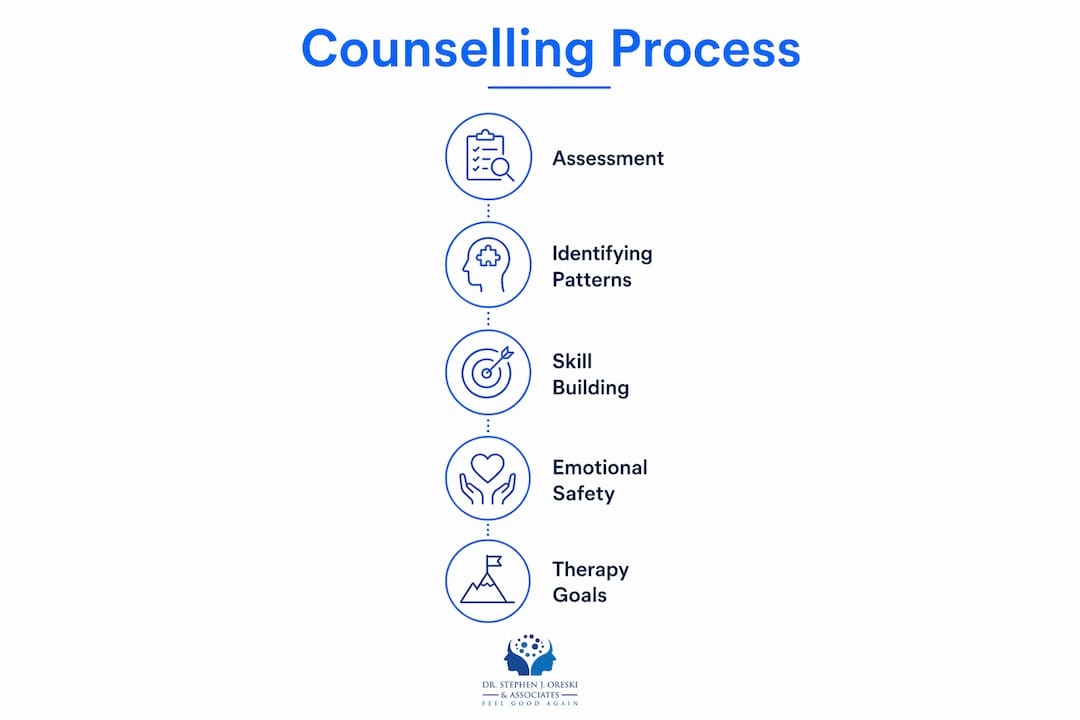
Couples therapy works through a clear process, not an open-ended conversation. Most practices begin with a structured assessment phase. About 90% of couples in structured practices complete the Gottman Assessment questionnaires across four sessions before active therapy starts. That baseline gives the therapist a map of the relationship’s strengths and stress points before any intervention begins.

After assessment, sessions move into active therapy. Weekly sessions typically last 60 minutes, with overall treatment running 3–12 months depending on the complexity of the issues. EFT protocols specifically span 8–20 sessions, focusing on attachment patterns and emotional responses. The couples therapy process follows a structured arc from assessment through skill-building to consolidation.
The therapist’s role is not passive. Therapists act as neutral guides who observe real-time interactions, interrupt conflict spirals, and coach repair skills in the moment. They are watching how you fight, not just what you fight about. Between sessions, partners practice specific exercises and communication skills at home, which is where real change takes root.
- Assessment phase: Joint and individual sessions establish the relationship’s baseline.
- Active therapy: Weekly sessions target specific interaction patterns and emotional responses.
- Skill practice: Homework exercises build new habits outside the therapy room.
- Consolidation: Partners learn to apply skills independently and sustain change.
Pro Tip: Go into your first session prepared to describe patterns, not incidents. “We always shut down after arguments” gives a therapist far more to work with than a detailed account of last Tuesday’s fight.
What issues does relationship counseling address?
Couples therapy addresses a wider range of problems than most people expect. Relationship counseling addresses communication breakdowns, recurring conflict cycles, rebuilding trust after betrayal, emotional disconnection, and stress during major life transitions such as parenthood or job loss. The therapist works with the relationship system as the client, not with either individual as the problem.
Common issues that bring couples into therapy include:
- Chronic communication breakdown: Arguments that repeat without resolution, often because the underlying emotional need is never named.
- Infidelity and trust repair: Rebuilding after betrayal requires structured steps that most couples cannot navigate alone.
- Emotional distance: Partners who feel like roommates rather than intimate companions.
- Life transition stress: Becoming parents, relocating, or facing illness can destabilize even strong relationships.
- Mismatched expectations: Differing views on finances, family, or intimacy that have never been openly discussed.
The therapist does not take sides. That neutrality is not a limitation. It is what makes progress possible because both partners feel safe enough to be honest.
Pro Tip: If you find yourself rehearsing your “case” before a session, pause. Therapy is not a courtroom. Treating it like one actively undermines the process by misusing the therapist’s role.
What evidence-based methods are used in couples therapy?
Two frameworks dominate modern relationship therapy: Emotionally Focused Therapy and the Gottman Method. Both are research-supported, but they approach change differently.
Emotionally Focused Therapy (EFT) targets attachment. Developed by Dr. Sue Johnson, EFT holds that most relationship conflict stems from unmet attachment needs, specifically the fear of not being loved or valued. Over 8–20 sessions, the therapist helps partners identify their emotional cycles, express underlying needs, and respond to each other with greater empathy. The focus is on emotion first, behavior second.
The Gottman Method focuses on interaction patterns. Based on decades of research by Drs. John and Julie Gottman’s approach identifies specific behaviors that predict relationship breakdown, including contempt, criticism, defensiveness, and stonewalling. Therapists trained in this method use the Gottman Assessment to map these patterns and then teach concrete skills for repairing conflict and building connection.
| Method | Core focus | Typical session range | Key technique |
|---|---|---|---|
| Emotionally Focused Therapy (EFT) | Attachment and emotion | 8–20 sessions | Identifying emotional cycles |
| Gottman Method | Interaction patterns | Varies by practice | Conflict repair and assessment |
Both methods share one critical prerequisite. Safety and emotional regulation must come before any real progress. When partners are emotionally flooded, rational thinking shuts down. Therapists slow or pause conversations to restore calm, which is what makes deeper work possible. You can explore the full range of evidence-based therapy models to understand which approach fits your situation.
Who benefits from couples counseling, and what should you expect?
Couples therapy is not reserved for relationships in crisis. Proactive couples who seek therapy early tend to have better outcomes than those who wait until problems become entrenched. Therapy works as well for partners who want to strengthen a good relationship as it does for those trying to repair a damaged one.
Realistic expectations matter more than most people realize. Common misconceptions include:
- The therapist will fix things for you. Therapists teach skills. Partners do the work.
- Progress will be fast and linear. Therapy progress is gradual, showing up as faster recovery from arguments and safer communication rather than sudden breakthroughs.
- Sessions will always feel comfortable. Long-suppressed feelings surface during therapy. That discomfort is a sign the process is working, not a sign something is wrong.
- One partner can be “fixed.” The relationship is the client. Both partners contribute to patterns, and both must engage for change to happen.
The long-term goal is for partners to become their own therapists. That means internalizing the skills well enough to catch conflict cycles early, regulate emotions independently, and choose connection over defensiveness. Exploring why couples seek therapy can help you decide whether now is the right time to start.
Key Takeaways
Relationship counselling works because it targets the interaction patterns between partners, not individual faults, using structured methods like EFT and the Gottman Method to build lasting communication skills.
| Point | Details |
|---|---|
| Relationship as the client | Therapy focuses on the couple’s dynamic, not on assigning blame to either partner. |
| Structured process | Sessions follow assessment, active therapy, and skill-building phases over 3–12 months. |
| Two leading methods | EFT targets attachment needs; the Gottman Method targets interaction patterns and conflict repair. |
| Proactive use works | Couples who start therapy before a crisis hits tend to achieve better outcomes. |
| Goal is independence | The aim is for partners to internalize skills and manage conflict without ongoing therapist support. |
What I’ve learned after years of working with couples
Most couples arrive in therapy believing the problem is their partner. That belief is understandable. It is also the first thing that has to shift.
What I see consistently is that both partners are caught in the same cycle, just from opposite ends. One pursues, the other withdraws. One escalates, the other shuts down. Neither is the villain. Both are responding to fear. The moment a couple can see that cycle as the problem rather than each other, something opens up.
The work is not always comfortable. Feelings that have been avoided for years tend to surface quickly in a structured session. That is not a sign that therapy is making things worse. It is a sign that the process is reaching something real.
Patience is not optional in this work. Small shifts, like recovering from a disagreement in an hour instead of three days, are genuine progress. They build on each other. The couples who commit to that gradual process are the ones who come out the other side with something stronger than what they started with.
Counseling is not a last resort. Choosing it early, before resentment calcifies, is one of the most clear-headed decisions two people can make together.
— Dr Stephen Oreski LCSW
Bergencountytherapist couples therapy services
Bergencountytherapist, led by Dr. Stephen Oreski and his team, offers couples therapy for partners at every stage, whether you are navigating a specific crisis or simply want a stronger foundation. Sessions are available in person in Bergen County and online, with personalized treatment plans built around your relationship’s specific needs.
If you are ready to take the first step, the couples therapy program at Bergencountytherapist walks you through exactly what to expect from your first session onward. Free consultations are available to help you find the right therapist fit before you commit. The right time to start is before the patterns become permanent.
FAQ
What is the difference between relationship counseling and marriage therapy?
Relationship counseling and marriage therapy refer to the same core practice. Marriage therapy typically applies to married couples, while relationship counseling covers any committed partnership regardless of legal status.
How long does relationship counseling take?
Sessions typically run 60 minutes weekly, with total treatment lasting 3–12 months. EFT protocols specifically span 8–20 sessions depending on the depth of the issues.
Does couples counseling work if only one partner wants to go?
Therapy is most effective when both partners engage fully. One partner attending alone can still build skills, but lasting change in the relationship system requires both people to participate.
What happens in the first relationship counseling session?
The first session is typically an assessment. The therapist gathers background information on the relationship, identifies key patterns, and may assign questionnaires, such as the Gottman Assessment, to establish a baseline before active therapy begins.
Is couples therapy only for relationships in crisis?
No. Proactive couples who seek therapy early tend to achieve better outcomes than those who wait for a crisis. Therapy works equally well as a tool for growth and prevention.