
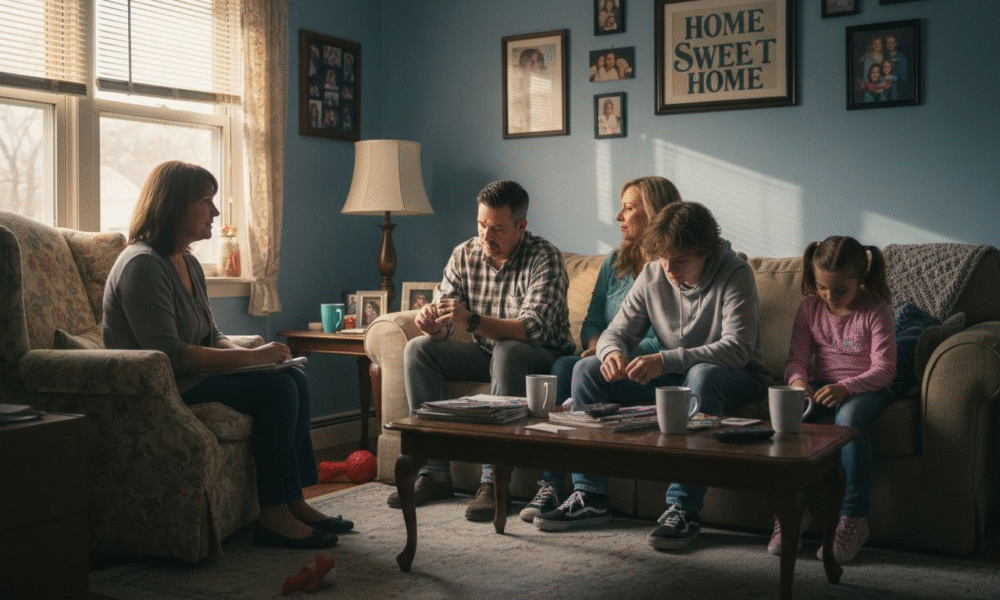
Even the best families get stuck in cycles of arguments, misunderstandings, or emotional distance that seem impossible to fix. When every conversation turns heated or certain topics feel off-limits, it’s easy to feel like there’s no way forward. Thankfully, there are practical tools that actually change how your family connects, communicates, and solves problems together.
Research shows family therapy provides evidence-based strategies for improving communication, reducing conflict, and building stronger relationships at home. With targeted techniques and expert support, your family can learn to break unhealthy cycles and support each other in meaningful ways. You’re about to discover exactly what makes family therapy so effective—and how each benefit can make daily life at home calmer, more connected, and more supportive.
Table of Contents
- Enhances Family Communication Skills
- Builds Stronger Emotional Connections
- Reduces Conflict and Tension at Home
- Supports Children’s Mental Health
- Promotes Effective Problem Solving
- Strengthens Family Resilience
Quick Summary
| Takeaway | Explanation |
|---|---|
| 1. Improve Communication Skills | Family therapy teaches effective communication strategies, reducing misunderstandings and conflict. |
| 2. Strengthen Emotional Connections | Emotional intimacy fosters understanding and resilience within the family, helping all members feel valued and supported. |
| 3. Reduce Conflict and Tension | Learning healthier conflict resolution techniques creates a calmer home environment and decreases argument intensity. |
| 4. Support Children’s Mental Health | Involving the whole family in therapy helps address children’s issues, improving their emotional wellbeing through parental support. |
| 5. Promote Effective Problem Solving | Families learn structured problem-solving skills that address root causes, preventing frustration and repeated issues. |
1. Enhances Family Communication Skills
Poor communication is often at the root of family conflict. When family members struggle to express themselves clearly or listen effectively, misunderstandings pile up quickly.
Family therapy directly addresses this core issue by teaching your family evidence-based communication strategies. Research shows that family therapy effectively improves interpersonal relationships and communication patterns, particularly when addressing behavioral and psychological concerns in children and adolescents.
Here’s what happens during this process:
- You learn to express your needs without blame or criticism
- Family members develop active listening skills that actually show they care
- Everyone practices asking clarifying questions instead of assuming intent
- The therapist models healthy communication in real time
- Your family creates new patterns that stick around long after therapy ends
Strong communication becomes the foundation for resolving almost every other family challenge.
Think about your own family conversations. How often do they turn into arguments? How frequently does someone feel unheard or misunderstood? These patterns didn’t develop overnight, and they won’t disappear without intentional effort.
A family therapist helps you break these cycles. They identify where communication breaks down—whether it’s in how you ask questions, how you respond to criticism, or how you handle disagreement. Then they give you tools to do it differently.
For parents in Bergen County managing tension between siblings or between parents and teens, improved communication often reduces conflict by 40-60% within the first few months. The whole family starts understanding each other better because you’re finally speaking the same language.
When you understand how family counseling improves communication in practical, measurable ways, you realize this isn’t just about talking more—it’s about talking smarter.
Pro tip: Start practicing one new communication skill at dinner this week. Have each family member share one thing without interruption, then repeat back what they said before responding. This simple technique prevents misunderstandings before they happen.
2. Builds Stronger Emotional Connections
Emotional distance in families grows quietly. One day you realize your teenager barely talks to you, or your spouse feels like a roommate instead of a partner.
Family therapy rebuilds these emotional bridges by helping family members understand and express their deepest feelings. Research demonstrates that emotionally focused therapy significantly enhances family connectedness and strengthens secure attachments between parents and children.
Here’s what transforms during this process:
- Family members learn to recognize emotions in themselves and others
- You move from defensive reactions to genuine understanding
- Parents and teens develop secure attachment patterns
- Everyone feels safer sharing vulnerable moments
- Empathy replaces judgment in family interactions
When emotional connection deepens, the whole family becomes more resilient against stress and conflict.
Think about the last time you felt truly understood by a family member. That feeling—where someone “gets” you without needing explanation—is what emotional connection creates. It’s the opposite of feeling alone in a house full of people.
Therapists trained in emotionally focused approaches help your family identify what’s really driving arguments. Often it’s not about the dishes or homework grades. It’s about feeling unseen, unvalued, or unsafe. When those underlying emotions surface and get acknowledged, everything shifts.
Parents working with their adolescents through family therapy report feeling closer within weeks. Siblings who couldn’t be in the same room without conflict start actually enjoying each other’s company. Couples remember why they chose each other.
For Bergen County families, this emotional reconnection protects against anxiety and depression in adolescents while building family resilience. Your kids need to know they matter to you—not just in words, but through genuine emotional presence.
The research is clear: improved emotional intimacy reduces vulnerability to mental health challenges while creating a family environment where everyone feels secure enough to be themselves.
Pro tip: Create a weekly check-in where each family member shares one thing they’re feeling without trying to fix it. Just listen. This simple practice builds emotional intimacy faster than you’d expect.
3. Reduces Conflict and Tension at Home
Constant arguing drains everyone. When conflict becomes the default, your home stops feeling like a safe refuge.
Family therapy directly tackles this by teaching your family healthier conflict patterns. Research shows that family interventions effectively reduce conflict intensity and frequency, creating households where tension decreases noticeably within weeks.
Here’s what changes:
- Arguments become shorter and less destructive
- Family members stop attacking each other’s character during disagreements
- You learn to separate the problem from the person
- Everyone understands what’s actually worth fighting about
- Conflict resolution happens faster without escalation
When families learn to manage disagreement without hostility, the entire home environment becomes calmer and more pleasant.
Think about your last family argument. Did it solve anything, or did it leave everyone upset for hours? Most family conflicts don’t really need to happen the way they do. They escalate because nobody knows how to handle disagreement without it turning personal.
Therapists help your family identify what triggers arguments and how to interrupt those patterns. Maybe it’s the tone of voice. Maybe it’s bringing up old grievances. Maybe it’s refusing to listen until someone is shouting. Whatever it is, these patterns can change.
Research on parenting interventions demonstrates that group-based family therapy is particularly effective at reducing co-parent conflict and associated household tension. When parents stop fighting in front of kids, children adjust better and behave better too.
Bergen County families report that their homes feel dramatically different after learning conflict resolution skills. The tension that used to hang in the air lifts. Kids stop walking on eggshells. Couples reconnect instead of constantly defending positions.
Conflict doesn’t disappear entirely—that’s not realistic. But it becomes manageable. When conflict resolution strategies replace old patterns, disagreements become opportunities to understand each other rather than battles to win.
Pro tip: When conflict starts, pause and name what you’re both actually upset about instead of attacking. Say “I think we’re upset about feeling unheard” instead of “You never listen to me.” This tiny shift prevents arguments from spiraling.
4. Supports Children’s Mental Health
Children struggle silently. They don’t always have words for what they’re feeling, and parents often miss the signs of anxiety, depression, or behavioral issues until things escalate.
Family therapy addresses children’s mental health by involving the whole system. When therapists work with your child and your family together, they treat the underlying issues more effectively than isolated child therapy alone.
Here’s why this matters:
- Children’s problems often reflect family dynamics, not just individual struggles
- Behavioral and emotional disorders respond better when parents understand and support treatment
- Family therapy teaches parents how to recognize and respond to their child’s mental health needs
- Kids see that their parents are invested in their wellbeing
- The entire family learns healthier patterns that protect children long-term
Children thrive when parents understand what they’re going through and adjust family patterns to support their emotional growth.
Your teenager’s irritability might be depression. Your child’s defiance might be anxiety. Your tween’s withdrawal might be both. Family therapists help you decode these signals and respond appropriately.
Research demonstrates that family therapy effectively treats behavioral and emotional disorders in youth by targeting the family system itself. Models like functional family therapy and attachment-based family therapy work because they transform how families interact.
Therapists help parents become active partners in their child’s mental health treatment. You’re not sitting on the sidelines hoping things improve. You’re learning specific strategies to support your child’s emotional wellbeing.
Bergen County parents often notice their children open up more when the whole family attends therapy together. Kids feel less singled out. They see their parents taking mental health seriously. The shame and isolation that often accompany childhood anxiety and depression begin to lift.
Understanding the key benefits of child counseling helps you recognize when your child needs support and what to expect from treatment.
Mental health challenges in childhood don’t disappear without intervention. They grow. Family therapy interrupts that trajectory by addressing problems early and giving your child the tools to manage them.
Pro tip: Pay attention to changes in your child’s behavior, sleep, appetite, or social withdrawal. Early intervention through family therapy prevents small issues from becoming serious mental health challenges.
5. Promotes Effective Problem Solving
Families get stuck in the same problems repeatedly. You address one issue only to have it resurface in a different form, leaving everyone frustrated and exhausted.
Family therapy teaches your family systematic problem-solving skills that actually work. Instead of going in circles, you learn structured approaches to identify, discuss, and resolve issues.
Here’s what changes:
- Your family learns to identify what’s actually being argued about
- Everyone contributes ideas without judgment or blame
- You evaluate solutions realistically instead of dismissing them immediately
- Decision-making becomes collaborative rather than dictatorial
- Problems stay solved because the root causes get addressed
When families develop strong problem-solving skills, they build resilience that helps them handle future challenges independently.
Think about the last problem your family tried to solve. Did everyone understand the real issue, or did conversations jump around? Did anyone actually listen to other people’s perspectives, or did everyone just argue their own position harder?
Most families never learned how to solve problems effectively. You probably picked up your approach from watching your own parents, who likely had ineffective methods too.
Therapists teach concrete problem-solving processes that move families beyond blame and defensiveness. Research shows that families with strong emotional communication and social connectedness solve problems much more effectively than those without these foundations.
The process looks simple but transforms how families function. You name the problem clearly. Everyone expresses how they feel about it. You brainstorm solutions without criticizing ideas. You choose the most workable option. You try it and adjust if needed.
Bergen County families report feeling empowered after learning these skills. Teenagers feel heard in family decisions. Parents feel supported instead of constantly battling. Everyone’s perspective matters.
When problems arise later—and they will—your family doesn’t panic. You know how to work through them together. That confidence itself prevents many conflicts from escalating.
Therapeutic approaches focused on direct problem-solving help families resolve presenting issues efficiently while building skills they’ll use for years.
Pro tip: When facing a family problem, write down what you’re each feeling about the situation before discussing solutions. This prevents arguments from tangling emotion with the actual problem you’re trying to solve.
6. Strengthens Family Resilience
Resilience is your family’s ability to weather storms and bounce back stronger. Without it, every challenge feels catastrophic and threatens to break the family apart.
Family therapy builds lasting resilience by strengthening the bonds that hold you together through difficulties. Research shows that families with strong emotional connections and cohesion develop significantly greater capacity to handle stress and adapt to challenges.
Here’s what resilience looks like in practice:
- Your family stays connected during tough times instead of isolating
- Members support each other through disappointment and loss
- You adapt quickly to unexpected changes or crises
- Kids develop confidence that their family can handle problems
- Everyone believes challenges are temporary, not permanent
Family resilience isn’t about avoiding problems. It’s about facing them together and knowing you’ll come through intact.
Consider what happens in your family when real difficulty strikes. Do you pull together or fall apart? Do you communicate openly about fears, or does everyone withdraw? These patterns determine whether your family bounces back or stays broken.
Therapists help families build resilience by strengthening emotional bonds and improving communication. When family members feel genuinely connected and understood, they’re willing to support each other through hardship instead of blaming each other.
This matters especially for Bergen County families facing ongoing stress. Whether it’s financial pressure, health concerns, school challenges, or major life transitions, resilient families navigate these situations without their relationships deteriorating in the process.
Research on emotionally focused therapy demonstrates that families experience lasting improvements in resilience after treatment. These improvements persist long after therapy ends because the family has developed new patterns.
Resilient families also teach children invaluable lessons. Kids who grow up seeing their parents handle difficulties thoughtfully, communicate effectively, and support each other develop their own resilience. They learn that problems don’t destroy families. Isolation and silence do.
When you strengthen family connections and emotional bonds, you’re building a protective factor that helps everyone manage stress more effectively.
Family therapy doesn’t prevent hard times. Nothing can. But it prepares you to handle them in ways that actually bring you closer instead of pushing you apart.
Pro tip: During difficult times, make a point to share at least one meal together daily without phones. This simple ritual reminds everyone they’re not alone and strengthens the bonds that hold families together through challenges.
Below is a comprehensive table summarizing the main strategies, benefits, and insights regarding the positive impacts of family therapy as discussed in the article.
| Key Aspect of Family Therapy | Description | Benefits and Outcomes |
|---|---|---|
| Enhancing Family Communication Skills | Teaches families how to express needs, listen actively, ask clarifying questions, and implement healthy communication habits. | Misunderstandings decrease, leading to improved familial relationships and reduced conflict levels. |
| Building Stronger Emotional Connections | Encourages family members to recognize and express emotions and develop deeper emotional ties. | Strengthens relationships, stabilizing emotional bonds and improving resilience against challenges. |
| Reducing Conflict and Tension | Introduces healthier conflict resolution methods and eliminates damaging argumentative patterns. | Creates a more harmonious home atmosphere with quicker resolution of disagreements. |
| Supporting Children’s Mental Health | Involves the family in addressing underlying issues contributing to children’s mental health struggles. | Promotes understanding and support, significantly improving children’s emotional well-being. |
| Promoting Effective Problem Solving | Teaches systematic approaches to identify, discuss, and resolve familial issues constructively. | Resolves conflicts efficiently and sustainably, fostering a cohesive family unit. |
| Strengthening Family Resilience | Equips families to face difficulties collectively and with confidence. | Enhances long-term adaptability and cohesion during stressful situations. |
Discover the Transformative Power of Family Therapy Today
If your family struggles with communication breakdowns, emotional distance, or ongoing conflict, effective family therapy can provide real solutions. The article highlighted how intentional work on communication skills, emotional connections, and conflict resolution leads to stronger, more resilient relationships. These challenges are common but do not have to define your family dynamics.

Start your journey toward healthier relationships by exploring expert-guided family therapy with Dr. Stephen Oreski and his team. Our personalized approach addresses the root causes of tension and supports your family’s mental health in supportive, compassionate ways. Learn more about our specialized Family Therapy Archives – Dr. Stephen Oreski & Associates and see how you can build lasting emotional bonds through proven strategies. Don’t wait for conflicts to escalate. Visit https://bergencountytherapist.com to schedule your free consultation and take the first step toward a better family life today. Explore resources in our broader Family Archives – Dr. Stephen Oreski & Associates for helpful insights and guidance.
Frequently Asked Questions
How can family therapy enhance communication skills within my family?
Family therapy enhances communication by teaching evidence-based strategies that improve how family members express their needs and listen to each other. Start implementing these techniques in daily conversations to see noticeable improvements, usually within a few months.
What emotional benefits does family therapy provide for strengthening relationships?
Family therapy promotes deeper emotional connections by helping family members understand and express their feelings more openly. Begin sharing feelings regularly in a safe space, which can foster closeness and empathy among family members quickly.
In what ways can family therapy reduce conflict at home?
Family therapy teaches healthier conflict resolution techniques that lead to shorter, less destructive arguments and improved understanding among family members. Work on these strategies during conflicts, aiming to reduce household tension by up to 60% in just a few sessions.
How does family therapy support my child’s mental health?
Family therapy addresses children’s mental health by involving the entire family, ensuring that underlying issues are recognized and treated effectively. Engage in family therapy as early as possible to help your child develop better emotional resilience and prevent small problems from escalating.
What problem-solving skills can we learn through family therapy?
Family therapy equips families with systematic problem-solving skills that allow them to address recurring issues collaboratively and effectively. Start practicing these structured approaches to resolve family challenges, which can lead to lasting solutions for identified problems.
How can family therapy strengthen our family’s resilience?
Family therapy builds resilience by reinforcing the emotional bonds between family members, enabling them to handle stress and challenges together. Focus on maintaining open channels of communication during difficult times to enhance your family’s ability to bounce back from adversity.