

Feeling misunderstood is all too familiar for many LGBTQIA+ individuals living in Bergen County. Emotional challenges tied to identity are often shaped by experiences of discrimination and internalized stigma, making support feel out of reach. Cognitive Behavioral Therapy offers a path toward greater self-acceptance, with affirmative techniques that validate and honor sexual orientation and gender identity rather than trying to change them. This introduction highlights how LGBTQIA+ affirmative CBT addresses unique stressors, debunks harmful myths, and empowers emotional wellness tailored to your lived experience.
Table of Contents
- CBT for LGBTQIA+: Core Concepts and Myths
- Affirmative Techniques in LGBTQIA+ CBT
- How CBT Addresses Internalized Stigma
- Navigating Minority Stress and Identity Challenges
- Barriers to Effective LGBTQIA+ CBT
- Costs, Accessibility, and Alternative Therapies
LGBTQIA+ CBT Guide: Core Concepts, Techniques & Resources
| Point | Details |
|---|---|
| CBT for LGBTQIA+ | Cognitive Behavioral Therapy is specifically tailored to empower LGBTQIA+ individuals, focusing on identity validation and emotional wellness rather than changing identity. |
| Affirmative Techniques | Affirmative CBT techniques aim to bolster coping mechanisms and promote self-acceptance, targeting internalized stigma and minority stress. |
| Barriers to Access | Significant barriers such as lack of cultural competence and rigid institutional policies hinder effective therapeutic support for LGBTQIA+ individuals. |
| Alternative Therapies | Cost-effective alternatives like online therapy and community support can enhance access to affirming mental health resources for the LGBTQIA+ community. |
CBT for LGBTQIA+: Core Concepts and Myths
Cognitive Behavioral Therapy (CBT) represents a powerful approach tailored to support mental health within the LGBTQIA+ community. Unlike traditional therapeutic models that pathologize identity, LGBTQIA+ affirming therapy recognizes sexual orientation and gender identity as fundamental aspects of personal experience rather than problems requiring correction.
At its core, CBT helps individuals identify and challenge negative thought patterns that emerge from minority stress experiences. These thought patterns often stem from societal discrimination, internalized stigma, and repeated microaggressions. By teaching clients to recognize distorted thinking, CBT empowers LGBTQIA+ individuals to develop healthier cognitive frameworks that support emotional resilience and self-acceptance.
Several critical myths persist about CBT for LGBTQIA+ populations that require explicit deconstruction. First, many mistakenly believe therapy aims to change sexual orientation or gender identity. In reality, affirming CBT works to strengthen self-understanding, build coping strategies, and validate personal experiences. The therapeutic goal centers on emotional wellness, not identity modification. Second, some assume CBT is a one-size-fits-all approach, when in fact, skilled therapists customize techniques to address each individual’s unique challenges and strengths.
Pro Tip:When seeking therapy, prioritize finding a clinician who demonstrates genuine understanding of LGBTQIA+ experiences and uses an affirmative, identity-affirming approach.
Here’s a comparison of traditional CBT and LGBTQIA+ affirmative CBT, highlighting their differing approaches and benefits:
| Approach | Traditional CBT Focus | LGBTQIA+ Affirmative CBT Focus | Key Benefit for LGBTQIA+ Clients |
|---|---|---|---|
| View of Identity | May overlook minority stress | Honors and affirms sexual/gender identity | Fosters self-acceptance and validation |
| Customization | Standardized interventions | Techniques tailored to individual needs | Addresses unique lived experiences |
| Therapeutic Goal | Symptom reduction | Emotional wellness and empowerment | Strengthens resilience and coping skills |
| Therapist Competence | General mental health | Specialized LGBTQIA+ cultural knowledge | Reduces risk of microaggressions |
Affirmative Techniques in LGBTQIA+ CBT
Affirmative Cognitive Behavioral Therapy (CBT) represents a transformative approach that goes beyond traditional therapeutic models by recognizing and validating the complex experiences of LGBTQIA+ individuals. Affirmative therapy for the LGBTQIA+ community centers on creating a supportive environment that acknowledges the unique challenges and strengths of sexual and gender minority populations.
Key affirmative techniques involve systematic skill-building designed to address minority stress and promote psychological resilience. Therapists utilize specialized interventions that help clients develop robust coping mechanisms, challenge internalized negative narratives, and build self-acceptance. These techniques often include reframing discriminatory experiences, developing assertiveness skills, creating supportive social networks, and cultivating positive self-narrative strategies that honor the client’s authentic identity.
Critical to affirmative CBT is the collaborative goal-setting process that centers the client’s lived experiences and personal objectives. Unlike traditional therapeutic approaches, this method does not attempt to modify sexual orientation or gender identity, but instead focuses on empowering individuals to navigate societal challenges, manage stress, and develop emotional intelligence. Therapists trained in affirmative techniques actively create safe spaces that validate diverse identities, recognize intersectionality, and provide culturally responsive mental health support.
Pro Tip:When seeking an affirming therapist, ask specific questions about their experience with LGBTQIA+ mental health and their approach to supporting minority stress and identity validation.
How CBT Addresses Internalized Stigma
Internalized stigma represents a profound psychological challenge for LGBTQIA+ individuals, manifesting as negative self-perceptions deeply rooted in societal discrimination and harmful messaging. Understanding CBT techniques provides a critical framework for dismantling these destructive thought patterns, allowing individuals to recognize and challenge internalized negative beliefs about their sexual orientation or gender identity.

Cognitive Behavioral Therapy employs targeted strategies to deconstruct internalized stigma by helping clients identify specific cognitive distortions. These distortions often include catastrophizing sexual or gender identity, overgeneralizing negative experiences, and engaging in harsh self-criticism. Therapists guide clients through a systematic process of examining these thoughts, challenging their validity, and developing more compassionate and authentic self-narratives that affirm their inherent worth and dignity.
The therapeutic process involves multiple interconnected techniques designed to rebuild self-esteem and resilience. Clients learn to differentiate between external societal messages and their personal truth, developing cognitive skills that allow them to recognize discriminatory thought patterns. By practicing cognitive reframing, individuals can transform internalized negative beliefs into empowering perspectives that celebrate their unique identity, ultimately reducing psychological distress and promoting emotional well-being.
Pro Tip:Keep a thought journal to track and challenge negative self-talk, noting the source of these thoughts and developing alternative, affirming statements that honor your authentic self.
Navigating Minority Stress and Identity Challenges
Minority stress represents a complex psychological phenomenon uniquely experienced by LGBTQIA+ individuals, characterized by chronic external and internal stressors arising from societal discrimination and marginalization. Psychotherapy for LGBTQIA+ individuals provides critical intervention strategies that help clients develop robust coping mechanisms to address these pervasive challenges, transforming systemic adversity into opportunities for personal growth and resilience.
Cognitive Behavioral Therapy offers targeted interventions that systematically deconstruct minority stress by addressing its multifaceted dimensions. Therapists work collaboratively with clients to identify specific stress triggers, challenge internalized negative beliefs, and develop adaptive cognitive strategies. This approach helps individuals reframe discriminatory experiences, build emotional regulation skills, and cultivate a more compassionate self-narrative that acknowledges the impact of systemic oppression while simultaneously empowering personal agency and self-determination.
The therapeutic process involves sophisticated techniques designed to support intersectional experiences and promote psychological flexibility. Clients learn to differentiate between external societal messages and their personal truth, developing nuanced cognitive skills that allow them to recognize and mitigate the psychological impact of chronic discrimination. By integrating minority stress frameworks with CBT principles, therapists create personalized interventions that validate individual experiences, strengthen social support networks, and promote holistic emotional wellness.
Pro Tip:Develop a supportive community network that affirms your identity and provides consistent emotional validation, as social connection can significantly buffer the negative impacts of minority stress.
Barriers to Effective LGBTQIA+ CBT
Effective Cognitive Behavioral Therapy for LGBTQIA+ individuals requires navigating complex systemic challenges that can significantly impede therapeutic progress. Types of therapy for LGBTQIA+ individuals demonstrate the critical importance of understanding and addressing the multifaceted barriers that emerge during mental health interventions. These barriers range from institutional limitations to individual practitioner biases, creating substantial obstacles in delivering truly affirming and effective therapeutic support.
One primary barrier is the pervasive lack of cultural competence among mental health professionals. Many therapists receive insufficient training in LGBTQIA+ specific issues, leading to unintentional microaggressions, heteronormative assumptions, and therapeutic approaches that fail to recognize the unique experiences of sexual and gender minorities. This knowledge gap can create an environment of mistrust, where clients feel misunderstood or invalidated, ultimately undermining the therapeutic alliance and reducing the potential effectiveness of CBT interventions.
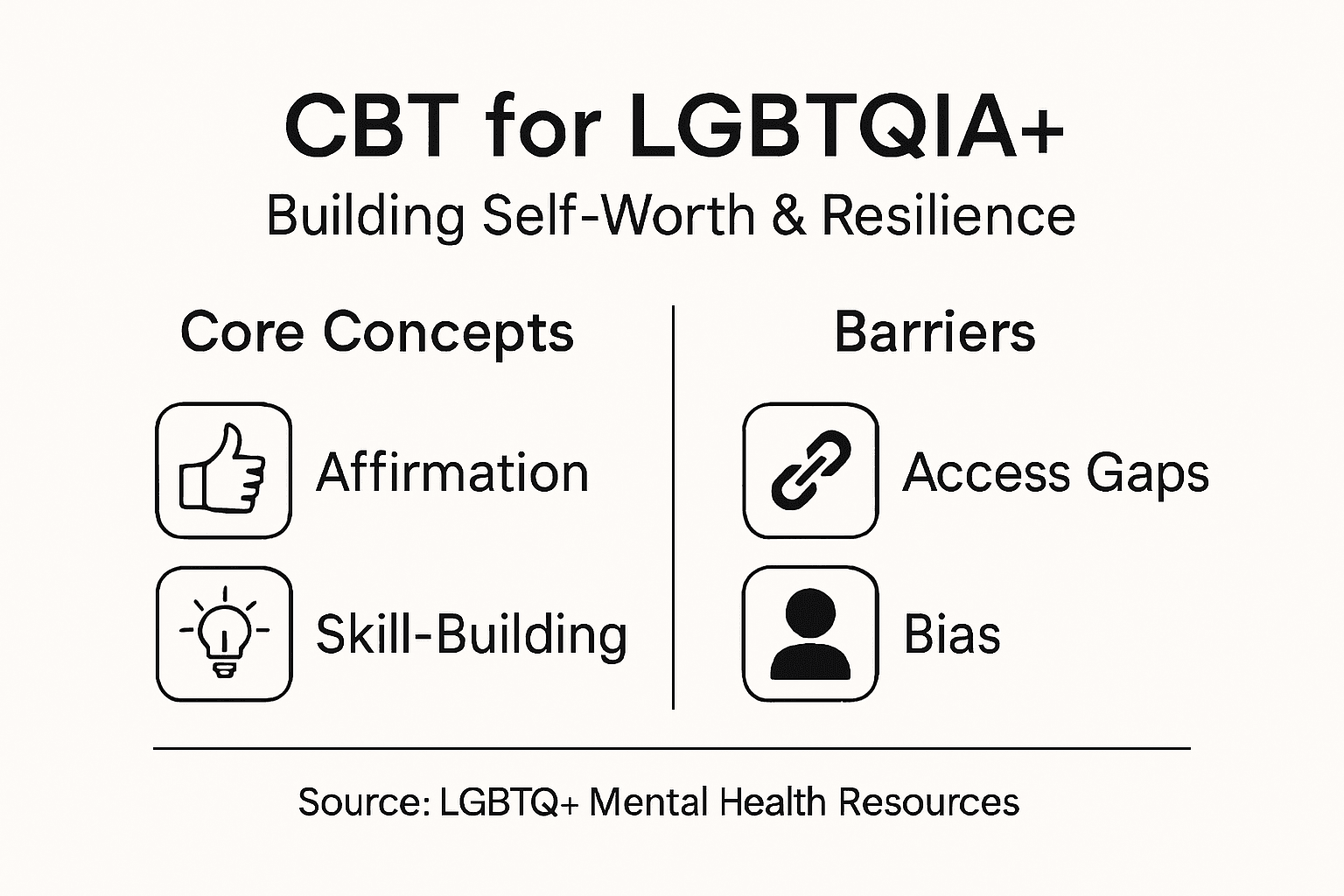
Institutional constraints further complicate the delivery of affirming CBT for LGBTQIA+ clients. Mental health systems often maintain rigid, binary frameworks that do not adequately accommodate gender diversity and complex sexual identities. These structural limitations manifest in assessment tools, treatment protocols, and therapeutic documentation that can feel alienating or dismissive of individual experiences. Consequently, many LGBTQIA+ individuals encounter significant barriers to accessing mental health resources that genuinely understand and support their lived realities.
The following table summarizes common barriers to effective CBT for LGBTQIA+ individuals, their impacts, and examples:
| Barrier | Common Impact | Example in Practice |
|---|---|---|
| Lack of cultural competence | Clients feel misunderstood or invalid | Therapist makes heteronormative assumptions |
| Rigid institutional policies | Incomplete gender identity options | Intake forms with only “male/female” |
| Financial cost | Limited access to therapy | Sessions unaffordable for client |
| Limited specialized training | Outdated or ineffective interventions | Therapist unaware of minority stress |
Pro Tip:When seeking therapy, prioritize mental health professionals who demonstrate clear evidence of LGBTQIA+ training, such as specialized certifications or explicit statements about affirming practices.
Costs, Accessibility, and Alternative Therapies
The landscape of mental health support for LGBTQIA+ individuals is increasingly complex, with significant barriers to accessing traditional therapeutic interventions. Online therapy benefits have emerged as a promising solution, offering more flexible and affordable options for individuals facing geographical, financial, and institutional challenges in obtaining affirming mental health care.
Cost remains a critical barrier for many LGBTQIA+ individuals seeking mental health support. Traditional in-person therapy can be prohibitively expensive, with session rates ranging from $100 to $250, creating substantial financial strain. Alternative approaches such as group therapy, community support networks, and internet-delivered cognitive behavioral interventions provide more accessible and cost-effective alternatives that maintain high-quality, identity-affirming therapeutic approaches.
Beyond traditional therapeutic models, emerging alternatives are expanding mental health support for LGBTQIA+ populations. Peer-led support groups, online counseling platforms, and community-based resources offer scalable solutions that address the unique challenges of accessing culturally competent mental health care. These alternatives not only reduce financial barriers but also create spaces that inherently understand and validate the diverse experiences of sexual and gender minority communities, providing support that goes beyond clinical interventions.
Pro Tip:Research sliding scale therapy options, community health centers, and telehealth platforms that specialize in LGBTQIA+ affirming mental health services to find affordable, accessible support.
Build Your Self-Worth and Resilience with Affirming Support
Struggling with the challenges of minority stress or internalized stigma within the LGBTQIA+ community can feel overwhelming. The article highlights how Cognitive Behavioral Therapy (CBT) tailored for LGBTQIA+ individuals focuses on fostering emotional wellness, self-acceptance, and coping skills through identity-affirming approaches. If you want therapy that honors your authentic self and helps you break free from negative thought patterns, understanding your unique experiences is the first step.

Take control of your mental health journey today with compassionate, personalized care offered by Dr. Stephen Oreski and his team. Explore our lgbtqia+ Archives – Dr. Stephen Oreski & Associates to learn more about supportive CBT techniques and affirming practices. You can also visit our broader LGBTQ Archives – Dr. Stephen Oreski & Associates for more insights tailored to your needs. Ready to begin transforming your resilience and self-worth? Connect now at https://bergencountytherapist.com for a free consultation and start building lasting positive change.
Frequently Asked Questions
What is Cognitive Behavioral Therapy (CBT) for LGBTQIA+ individuals?
Cognitive Behavioral Therapy (CBT) for LGBTQIA+ individuals is a mental health approach that focuses on identifying and challenging negative thoughts and beliefs resulting from societal discrimination and internalized stigma, promoting emotional resilience and self-acceptance.
How does LGBTQIA+ affirmative CBT differ from traditional CBT?
LGBTQIA+ affirmative CBT differs from traditional CBT by specifically honoring and affirming clients’ sexual and gender identities, customizing techniques to address their unique experiences, and focusing on emotional wellness rather than symptom reduction alone.
What techniques are commonly used in LGBTQIA+ affirmative CBT?
Common techniques in LGBTQIA+ affirmative CBT include cognitive reframing, skill-building for assertiveness, developing supportive social networks, and cultivating a positive self-narrative that honors the individual’s authentic identity.
How can CBT help address internalized stigma in LGBTQIA+ individuals?
CBT helps address internalized stigma by encouraging clients to identify and challenge negative self-perceptions linked to their sexual orientation or gender identity, transforming harmful beliefs into empowering narratives and promoting greater self-worth.
Recommended
- Therapy for LGBTQIA Individuals: A Safe Space – Dr. Stephen Oreski & Associates
- Affirmative Therapy for the LGBTQIA+ Community – Dr. Stephen Oreski & Associates
- The Essential Guide to Psychotherapy for LGBTQIA+ – Dr. Stephen Oreski & Associates
- The Importance of Having LGBTQ+ Affirming Therapy Available – Dr. Stephen Oreski & Associates