

Every parent faces moments when their teenager’s mood shifts, sleep patterns change, or social circles grow smaller, leaving them to wonder what lies beneath. In Bergen County, understanding the real impacts of trauma can make all the difference in supporting your teen’s mental well-being. This guide sheds light on how trauma is more than just a response to major disasters, offering clear insight into the many experiences that shape a young person’s sense of safety and emotional health.
Table of Contents
- Defining Trauma And Common Misconceptions
- Major Types Of Trauma Affecting Teens
- Signs And Symptoms Teens May Exhibit
- Long-Term Impact On Teen Development
- Supporting Teens Through Trauma Recovery
Navigating Teen Trauma: Effects, Signs & Support Strategies
| Point | Details |
|---|---|
| Understanding Trauma | Trauma is a complex experience that can arise from various sources, not just dramatic incidents, affecting individuals uniquely. |
| Teen Vulnerability | Adolescents are particularly susceptible to trauma’s effects due to their developing brains and emotional regulation skills. |
| Symptoms and Signs | Trauma in teenagers can manifest through behavioral, emotional, and physical symptoms, necessitating a compassionate response. |
| Support and Recovery | Effective support requires creating safe environments and employing tailored therapeutic interventions to aid in recovery. |
Defining Trauma and Common Misconceptions
Trauma represents a complex psychological experience that profoundly impacts an individual’s mental and emotional landscape. At its core, trauma involves exposure to an event or series of events that overwhelm a person’s ability to cope, creating lasting disruptions in their sense of safety and emotional regulation.
Contrary to popular belief, trauma is not limited to extreme or dramatic incidents like natural disasters or violent attacks. Research from the National Institute of Mental Health reveals that trauma can stem from multiple sources, including:
- Witnessing domestic violence
- Experiencing persistent neglect
- Sudden family separation
- Prolonged emotional abuse
- Persistent bullying or social exclusion
- Medical procedures or serious health challenges
Many people mistakenly assume trauma only affects individuals who directly experience a catastrophic event. However, trauma can manifest through indirect experiences and varies dramatically between individuals. What might be traumatizing for one teenager could potentially be manageable for another, highlighting the deeply personal nature of psychological responses.
Teenagers are particularly vulnerable to trauma’s complex psychological impacts. Their developing brains and emerging emotional regulation skills make them more susceptible to lasting psychological effects. Common misconceptions suggest teens should simply “get over” traumatic experiences, but neurological research demonstrates that trauma fundamentally alters brain chemistry and neural pathways.
Trauma is not a sign of weakness, but a natural human response to overwhelming experiences that exceed one’s coping mechanisms.
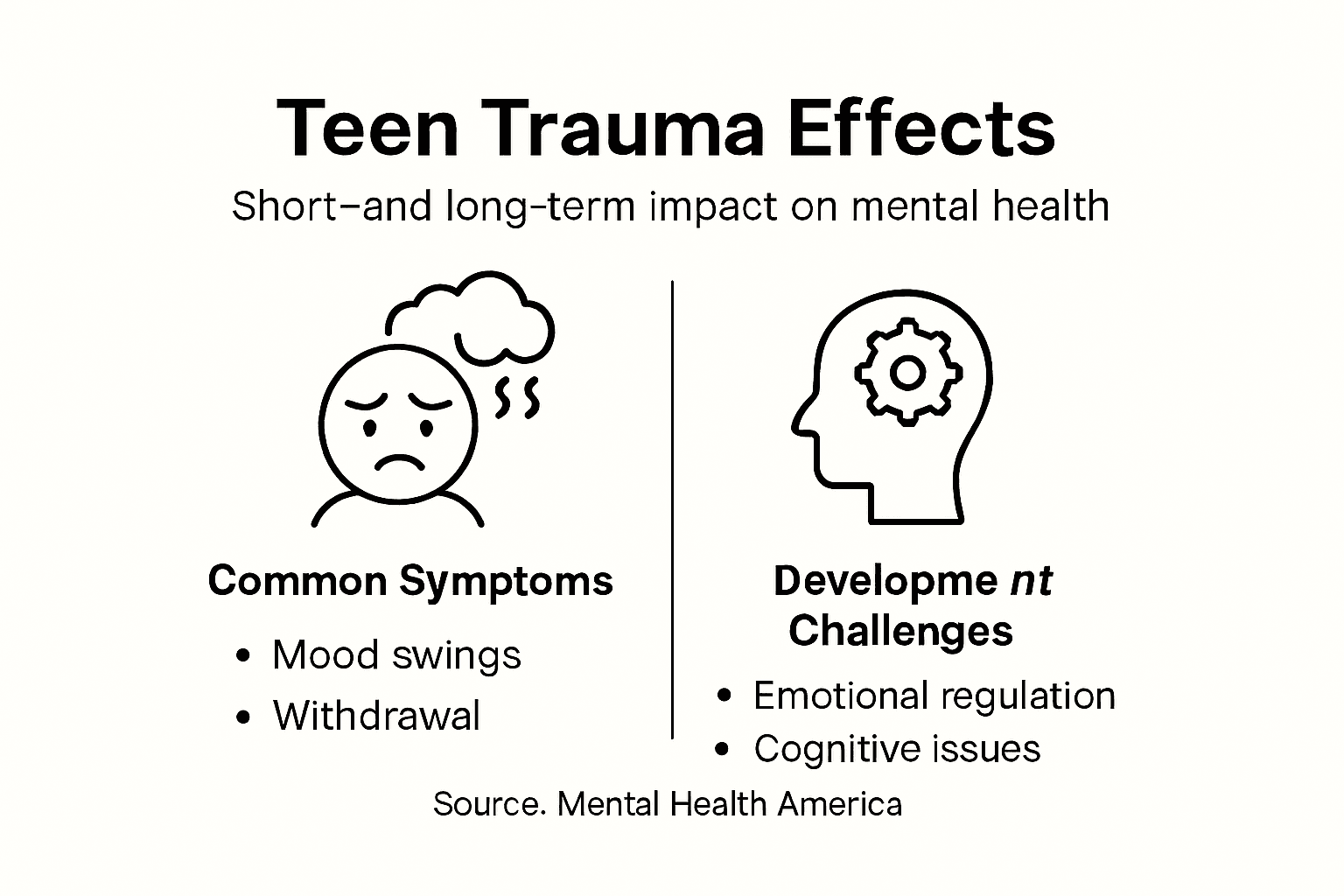
Symptoms of trauma in teenagers can manifest through various behavioral and emotional indicators, including:
- Persistent anxiety or hypervigilance
- Sudden mood swings
- Difficulty concentrating
- Sleep disruptions
- Withdrawal from social interactions
- Unexplained physical symptoms like headaches
Pro tip:Create a safe, non-judgmental environment where teenagers feel comfortable discussing their experiences without fear of criticism or minimization.
Major Types of Trauma Affecting Teens
Trauma in teenagers encompasses a broad spectrum of experiences that can profoundly disrupt emotional development and psychological well-being. Understanding these various types of trauma is crucial for recognizing the nuanced ways adolescents experience and process challenging life events.
According to the National Child Traumatic Stress Network, teen trauma can be categorized into several distinct types, each with unique psychological implications:
- Community Violence: Exposure to neighborhood violence, gang activity, or random acts of aggression
- Domestic Violence: Witnessing physical or emotional abuse within the family unit
- Bullying: Persistent harassment, cyberbullying, or social exclusion
- Medical Trauma: Serious illness, invasive medical procedures, or chronic health challenges
- Physical or Sexual Abuse: Direct experiences of personal violation
- Race-Based Trauma: Repeated exposure to systemic discrimination and racial prejudice
Teenagers are particularly vulnerable to trauma’s complex psychological impacts. Adolescent trauma therapy approaches recognize that each trauma type requires a specialized understanding of developmental stages and individual resilience.
Natural disasters and mass violence represent another significant category of traumatic experiences. The National Institute of Mental Health highlights that events like school shootings, hurricanes, or terrorist incidents can create lasting psychological scars. These large-scale traumatic events can trigger profound emotional responses that extend far beyond the immediate incident.
Not all trauma looks the same. Individual responses to traumatic experiences are as unique as the teenagers experiencing them.
Emerging trauma types increasingly reflect our digital and socially complex world, including:
Here’s a comparison of traditional and emerging trauma types affecting teenagers:
| Trauma Type Category | Common Examples | Main Triggers |
|---|---|---|
| Traditional Trauma | Abuse, violence, disasters | Physical/psychological harm |
| Emerging Trauma | Cyberbullying, pandemic stress | Digital/social disruption |
| Indirect/Observed Trauma | Witnessing violence, exclusion | Proximity, vicarious stress |
| Intergenerational Trauma | Family historical adversity | Unresolved ancestral issues |
- Cyberbullying and online harassment
- Social media-induced psychological stress
- Refugee and displacement experiences
- Intergenerational trauma transmission
- Pandemic-related psychological challenges
Pro tip:Recognize that trauma is not a one-size-fits-all experience and approach each teenager’s story with compassion, patience, and individualized support.

Signs and Symptoms Teens May Exhibit
Trauma manifests differently in teenagers, creating a complex landscape of psychological and physiological responses that can be challenging to recognize and understand. The impact of traumatic experiences extends far beyond immediate emotional reactions, potentially reshaping a teenager’s entire perception of safety and relationships.
According to the National Institute of Mental Health, trauma symptoms in teenagers can be categorized across multiple domains:
Emotional Indicators:
- Persistent anxiety and unexplained sadness
- Intense mood swings
- Emotional numbness or detachment
- Heightened irritability
Behavioral Changes:
- Social withdrawal
- Sudden academic performance decline
- Avoidance of trauma-related triggers
- Increased risk-taking behaviors
Physical Manifestations:
- Chronic headaches
- Sleep disturbances
- Unexplained stomach problems
- Changes in appetite
Teen therapy approaches recognize that these symptoms can overlap and vary significantly between individuals, making comprehensive assessment crucial.
Cognitive symptoms represent another critical dimension of trauma’s impact. Teenagers might experience intrusive thoughts, difficulty concentrating, memory problems, and persistent negative beliefs about themselves or the world. These cognitive disruptions can significantly interfere with daily functioning, academic performance, and social interactions.
Trauma symptoms are not a sign of weakness, but a natural psychological response to overwhelming experiences.
Relationship dynamics often reflect underlying traumatic experiences. Teens may struggle with:
- Trust issues
- Difficulty forming intimate connections
- Fear of abandonment
- Hypersensitivity to potential rejection
- Challenges in maintaining stable friendships
Pro tip:Create a supportive environment where teenagers feel safe expressing their experiences without judgment, allowing for open and compassionate dialogue about their emotional journey.
Long-Term Impact on Teen Development
Trauma can fundamentally reshape a teenager’s developmental trajectory, creating lasting psychological and neurological changes that extend far beyond the initial traumatic experience. The complex interplay between early adverse experiences and brain development can significantly alter a teen’s cognitive, emotional, and social functioning.
Research from the National Child Traumatic Stress Network reveals that complex trauma can profoundly impact multiple developmental domains:
Cognitive Development:
- Impaired executive functioning
- Difficulties with attention and concentration
- Reduced academic performance
- Challenges in problem-solving skills
Emotional Regulation:
- Heightened stress responses
- Difficulty managing emotional reactions
- Increased vulnerability to anxiety and depression
- Challenges in developing healthy emotional coping mechanisms
Social and Relational Functioning:
- Struggles with forming healthy relationships
- Trust and attachment difficulties
- Increased risk of social isolation
- Potential engagement in high-risk behaviors
Counseling approaches for teens recognize the critical importance of early intervention to mitigate these long-term developmental impacts.
Harvard School of Public Health highlights that adolescents with adverse childhood experiences face significantly higher risks of mental health challenges. These risks extend beyond immediate psychological symptoms, potentially influencing educational attainment, future career prospects, and overall life trajectory.
Trauma is not a life sentence, but a challenge that can be addressed with appropriate support and intervention.
Neurological consequences of prolonged trauma include:
This summary contrasts short- and long-term impacts of trauma on teens:
| Impact Timeline | Effects on Teens | Areas Most Affected |
|---|---|---|
| Short-Term Impact | Heightened anxiety, sleep issues | Mood, behavior, concentration |
| Long-Term Impact | Impaired relationships, depression | Cognitive, emotional, social |
| Neurological Change | Altered brain chemistry | Stress response, immune system |
- Altered brain chemistry
- Disrupted neural pathway development
- Increased vulnerability to chronic stress
- Potential long-term changes in stress response systems
- Compromised immune system functioning
Pro tip:Prioritize comprehensive, compassionate support that addresses the whole teenager, recognizing that healing is a holistic journey of rebuilding safety, trust, and self-understanding.
Supporting Teens Through Trauma Recovery
Trauma recovery is a delicate, non-linear journey that requires compassionate, targeted support tailored specifically to a teenager’s unique experiences and emotional landscape. Understanding that healing is not a one-size-fits-all process is crucial for parents, educators, and mental health professionals working with traumatized teens.
The National Child Traumatic Stress Network recommends several key strategies for supporting teen trauma recovery:
Create Safe Environments:
- Establish predictable routines
- Ensure physical and emotional safety
- Minimize potential triggers
- Provide consistent, calm interactions
Therapeutic Intervention Approaches:
- Individual counseling
- Group therapy sessions
- Cognitive-behavioral techniques
- Family therapy
- Trauma-informed care
Emotional Support Techniques:
- Active listening without judgment
- Validating their experiences
- Encouraging emotional expression
- Teaching healthy coping mechanisms
How to support teens in therapy emphasizes the importance of creating a holistic, patient-centered approach that respects each teenager’s unique healing process.
Cognitive-behavioral techniques play a critical role in trauma recovery, helping teenagers reframe negative thought patterns and develop resilience. These strategies teach emotional regulation, stress management, and healthy interpersonal skills that can mitigate long-term psychological impacts.
Recovery is not about forgetting the trauma, but learning to live meaningfully despite it.
Practical recovery support involves multiple interconnected approaches:
- Professional psychological counseling
- Building strong support networks
- Developing emotional intelligence skills
- Practicing mindfulness and stress reduction techniques
- Encouraging positive self-narrative
Pro tip:Approach trauma recovery as a collaborative journey, focusing on the teenager’s strengths and potential for growth rather than viewing them through the lens of their traumatic experiences.
Support Teens Struggling with Trauma to Protect Their Mental Health
Understanding the deep and lasting effects trauma can have on teens is the first step toward healing. Many teenagers face overwhelming emotions like anxiety, mood swings, and withdrawal that disrupt their development and daily life. If you recognize these signs or want to learn more about how trauma impacts mental well-being, professional support tailored specifically for teens is essential.

Discover compassionate, personalized care through expert teen counseling designed to address trauma’s unique challenges. At Bergen County Therapist, Dr. Stephen Oreski and his team provide specialized teen therapy and trauma-informed approaches to help teens rebuild safety, trust, and resilience. Don’t wait for these effects to deepen—reach out now to start a healing journey that offers hope and lasting positive change. Learn more about trauma therapy and find the right support today at Bergen County Therapist.
Frequently Asked Questions
What is trauma and how does it affect teenagers?
Trauma is a complex psychological experience resulting from exposure to overwhelming events, affecting teens’ mental and emotional well-being. It can disrupt their sense of safety and emotional regulation.
What are common signs of trauma in teens?
Common signs include persistent anxiety, sudden mood swings, difficulty concentrating, sleep disturbances, withdrawal from social interactions, and unexplained physical symptoms like headaches.
How can trauma impact a teenager’s development?
Trauma can lead to long-term developmental issues, including impaired cognitive functioning, emotional regulation challenges, and difficulties in forming healthy relationships, which can significantly impact their future.
What strategies can help support teens in their trauma recovery?
Key strategies include creating safe environments, employing therapeutic intervention approaches such as counseling and group therapy, and providing emotional support through active listening and validating their experiences.