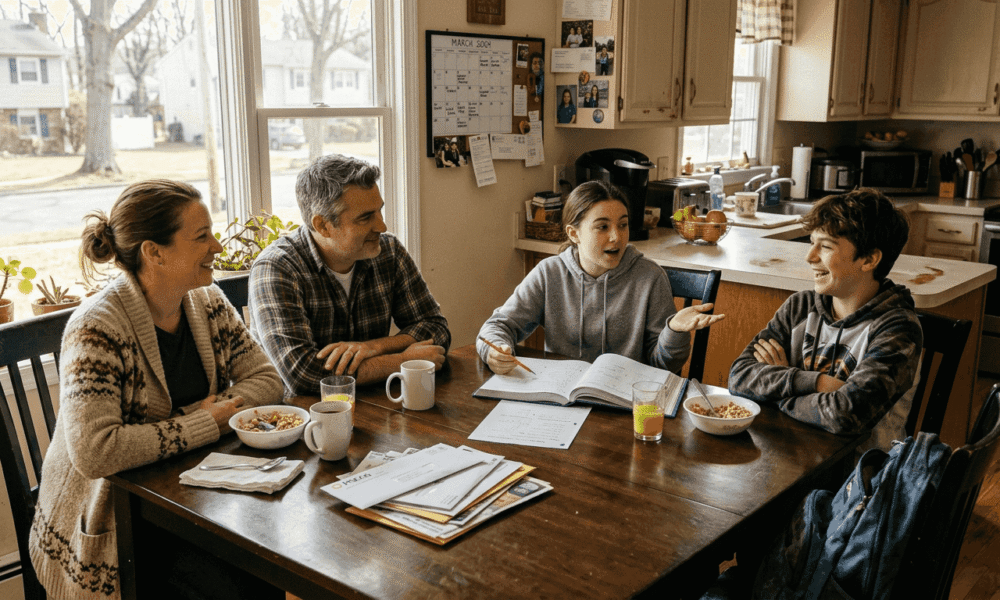
Many Bergen County parents accept frequent misunderstandings and tension as unavoidable parts of family life. Research shows this belief is both common and incorrect. Strong family communication patterns reduce depression and anxiety by measurable margins while building resilience that protects against stress. This guide explains how conversation and conformity orientations/06:_Communication/6.01:_Types_of_Communication) shape family dynamics, shares evidence linking open dialogue to mental health improvements, and provides practical strategies tailored for Bergen County families seeking healthier relationships. You’ll discover local resources that support communication skills and learn when professional help makes the difference between ongoing conflict and lasting harmony.
Table of Contents
- Understanding Family Communication Patterns And Their Impact
- How Effective Family Communication Improves Mental Health And Happiness
- Practical Communication Strategies For Stronger Family Bonds
- Leveraging Bergen County Resources For Family Communication Support
- Explore Professional Support To Improve Your Family’s Communication
- What Are The Main Types Of Family Communication Patterns?
- How Can I Improve Communication With My Teenager?
- What Local Resources Support Family Communication In Bergen County?
- When Should We Seek Professional Help For Family Communication Issues?
Key takeaways
| Point | Details |
|---|---|
| Communication patterns shape outcomes | Families fall into four types based on conversation and conformity orientations, with pluralistic and consensual styles promoting better development. |
| Mental health improves significantly | High conversation orientation reduces depression, anxiety, and stress while building cognitive flexibility and happiness. |
| Practical strategies work immediately | Active listening, I statements, and regular family meetings resolve 71% of conflicts stemming from poor communication. |
| Local resources provide support | Bergen County offers Family Connects NJ visits, Parent Cafes, and accessible online therapy for families. |
| Professional help accelerates progress | Therapy addresses persistent conflicts and emotional distress that daily strategies alone cannot resolve. |
Understanding family communication patterns and their impact
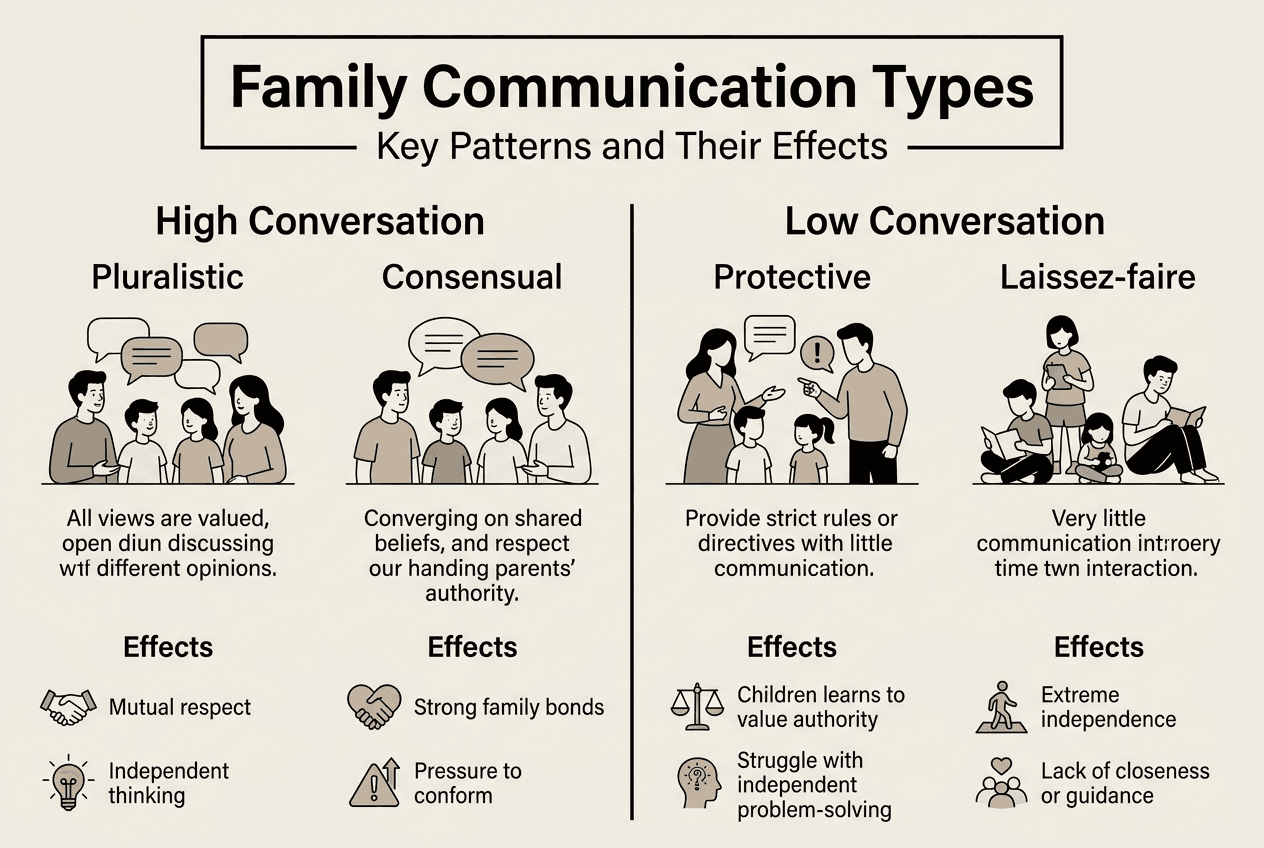
Family Communication Patterns theory identifies two core dimensions that define how families interact. Conversation orientation measures how freely family members discuss topics and share thoughts. Conformity orientation reflects the degree to which families emphasize obedience, shared attitudes, and hierarchical decision making. These dimensions create four distinct family types/06:_Communication/6.01:_Types_of_Communication) with measurably different outcomes for children and parents.
Pluralistic families combine high conversation with low conformity. Parents encourage open discussion while respecting individual perspectives. Children in these families develop strong communication skills and independence. Consensual families score high on both dimensions, valuing discussion but also expecting agreement with family values. These families balance exploration with structure, though children may experience pressure to conform. Protective families emphasize conformity over conversation, prioritizing obedience and discouraging open debate. This pattern limits children’s communication development and decision making skills. Laissez-faire families score low on both dimensions, offering little guidance or emotional connection. Children often lack both structure and communication modeling.
| Family Type | Conversation Level | Conformity Level | Impact on Development |
|---|---|---|---|
| Pluralistic | High | Low | Strong social skills, independence, cognitive flexibility |
| Consensual | High | High | Balanced development with some conformity pressure |
| Protective | Low | High | Limited communication skills, reduced autonomy |
| Laissez-Faire | Low | Low | Weak guidance, poor communication modeling |
Research confirms that pluralistic and consensual families produce better social development than protective and laissez-faire types. Children from conversation-oriented homes show greater emotional intelligence, problem solving ability, and relationship satisfaction. They handle conflict constructively and adapt more successfully to stress. Parents benefit too, reporting lower parenting stress and stronger family bonds when conversation flows freely.
Recognizing your family’s current pattern provides the foundation for intentional improvement. Most families blend characteristics rather than fitting neatly into one category. The goal isn’t perfection but awareness. Understanding where you fall helps identify specific communication skills to develop. Strengthening social connection through deliberate conversation practices shifts families toward healthier patterns. For families seeking structured support in this process, online therapy for families offers convenient access to professional guidance.
How effective family communication improves mental health and happiness
The mental health benefits of conversation-oriented family communication extend far beyond improved relationships. A 2024 study tracking college students found that high conversation orientation predicts lower depression, anxiety, and stress while significantly improving self-esteem. Students from families that encouraged open discussion reported measurably better psychological well-being than peers from conformity-focused or disengaged families. The protective effect remained strong even when controlling for other family factors.
These benefits appear across age groups and life stages. Parents who maintain open communication with children experience:
- Reduced parenting stress and burnout
- Greater confidence in handling behavioral challenges
- Stronger emotional bonds that buffer against external stressors
- Improved personal mental health alongside children’s well-being
- Enhanced problem solving during family transitions
The mechanism behind these improvements involves cognitive flexibility and emotional regulation. Family communication mediates happiness through cognitive flexibility by teaching family members to consider multiple perspectives and adapt thinking patterns. When families practice open dialogue regularly, members develop stronger skills for managing difficult emotions and reframing challenges. This cognitive flexibility then predicts higher life satisfaction and resilience.
Communication’s protective effect proved especially valuable during the COVID-19 pandemic. Longitudinal research showed that families maintaining high conversation orientation experienced significantly less psychological distress than families with restricted communication. The stress-buffering effect worked both ways, protecting parents and children simultaneously. Open dialogue created space to process anxiety, validate emotions, and problem solve together rather than letting stress accumulate silently.
“Family communication patterns don’t just influence how we talk. They shape how we think, feel, and cope with life’s challenges. Conversation-oriented families build psychological resources that protect mental health across the lifespan.”
For Bergen County families dealing with depression or anxiety, improving communication patterns offers a practical intervention with research-backed results. The skills transfer across contexts, helping at home, school, and work. Parents who model open communication teach children lifelong emotional regulation strategies. These benefits compound over time as improved communication becomes habitual. Families struggling to establish these patterns independently often find that online therapy provides the structured support needed to make lasting changes.
Practical communication strategies for stronger family bonds
Transforming family communication requires specific, actionable strategies rather than vague intentions to “talk more.” Research shows that 71% of family conflicts stem from poor communication, but targeted methods dramatically improve outcomes. These five evidence-based approaches work for Bergen County families regardless of children’s ages or current communication patterns.
Practice active listening without interrupting. Put phones away, make eye contact, and reflect back what you hear before responding. Ask clarifying questions that show genuine curiosity about the other person’s perspective. This simple shift reduces misunderstandings and helps family members feel valued.
Use I statements instead of you accusations. Say “I feel worried when curfew passes without a text” rather than “You never respect our rules.” I statements express your experience without triggering defensiveness. They open dialogue instead of shutting it down.
Hold regular family meetings on a consistent schedule. Weekly 20-minute check-ins create predictable space for discussing concerns, celebrating wins, and planning together. Rotate who leads the meeting to build ownership. Keep the tone positive and solution-focused.
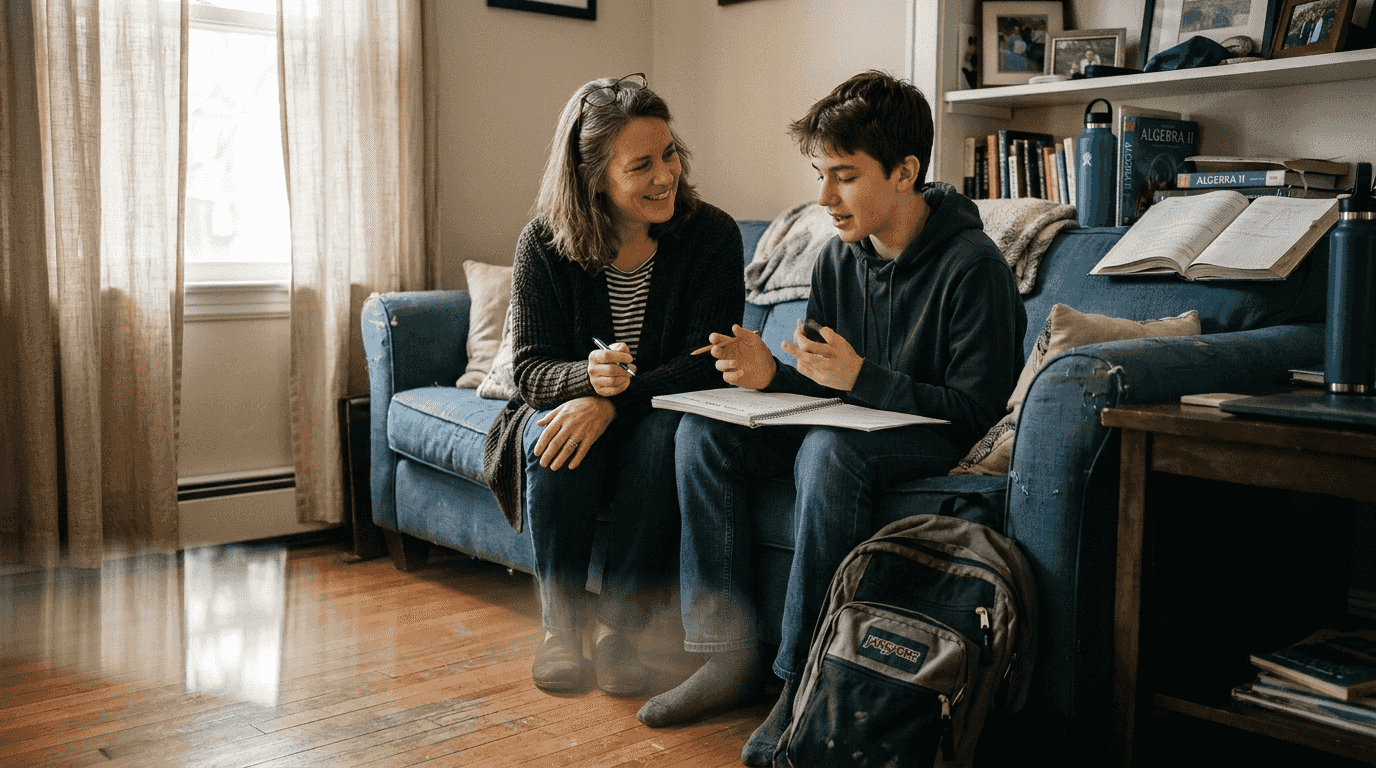
Adapt communication to developmental stages. Young children need concrete language and shorter conversations. Teens require respect for growing autonomy and privacy. Tailoring communication with boundaries and respect reduces reactance and conflict during adolescence. Match your approach to where each child is developmentally.
Model the communication behavior you want to see. Children learn more from watching how you handle disagreements than from lectures about communication. Demonstrate apologizing, managing frustration constructively, and expressing appreciation regularly.
Pro Tip: Schedule family meetings at the same time each week, like Sunday evenings after dinner. Consistency makes the practice automatic and ensures communication doesn’t get dropped during busy periods.
These strategies prove especially valuable during stressful transitions like divorce, relocation, or family illness. Clear communication prevents misunderstandings from compounding stress. It creates stability when other aspects of life feel uncertain. For families navigating divorce, maintaining communication routines helps children process changes and feel secure despite upheaval.
Implementing all five strategies simultaneously can feel overwhelming. Start with one or two that address your family’s biggest communication gaps. Build consistency before adding more. Many Bergen County families find that family therapy accelerates this process by providing expert guidance on which strategies to prioritize and how to adapt them to your specific dynamics. The investment pays dividends as improved communication becomes your family’s default pattern rather than something requiring constant effort.
Leveraging Bergen County resources for family communication support
Bergen County offers several targeted programs that support families in building stronger communication patterns. These resources complement the strategies above by providing expert guidance, community connection, and ongoing accountability. 60% of Bergen County families report communication problems, yet many remain unaware of available local supports.
Family Connects NJ provides free nurse home visits for families with newborns. Nurses assess family needs, offer parenting education, and connect families to community resources. These early visits establish communication foundations during a critical developmental window. The program serves all Bergen County families regardless of income, focusing on prevention rather than crisis intervention.
Parent Cafes create welcoming spaces where parents gather to share experiences, build resilience, and learn from each other. Trained facilitators guide discussions using the Strengthening Families framework. Topics include effective communication, stress management, and building support networks. The cafes meet regularly at locations throughout Bergen County, offering both English and Spanish language options.
Online family therapy removes barriers of transportation and scheduling that prevent many families from accessing support. Licensed therapists provide video sessions that fit into busy schedules. This format works especially well for families with teens who prefer the privacy and convenience of virtual meetings. Sessions address communication breakdowns, conflict resolution, and relationship strengthening.
| Resource | Eligibility | Primary Benefit | Access Method |
|---|---|---|---|
| Family Connects NJ | Families with newborns | Early intervention and resource connection | Automatic hospital referral or self-referral |
| Parent Cafes | All parents in Bergen County | Peer support and resilience building | Drop-in at scheduled locations |
| Online Family Therapy | Families seeking professional help | Expert guidance and skill development | Schedule through therapy practices |
These programs work best when families engage early, before communication problems escalate into entrenched patterns. Prevention proves far more effective than remediation. A family struggling with occasional misunderstandings benefits more from Parent Cafe participation than waiting until conflicts become severe enough to require intensive therapy.
Pro Tip: Contact Family Connects NJ even if your baby is several months old. The program accepts referrals beyond the immediate postpartum period and can still connect you with valuable resources.
Combining community resources with professional support creates comprehensive communication improvement. Parent Cafes provide peer connection and normalize challenges. Online family therapy offers personalized strategies for your specific dynamics. Different psychotherapy options address varying family needs, from behavioral approaches for younger children to insight-oriented work for teens and parents. The key is matching resources to your family’s current situation rather than waiting for problems to worsen. Strong communication skills protect social connection during stress and create family resilience that lasts across generations.
Explore professional support to improve your family’s communication
When daily communication strategies and community resources don’t fully resolve persistent challenges, professional therapy provides the targeted intervention many families need. Bergen County families facing ongoing conflicts, emotional distress, or major life transitions benefit from working with therapists who specialize in family dynamics and communication patterns. Therapy isn’t a last resort for families in crisis. It’s a proactive choice that accelerates progress and prevents small issues from becoming entrenched patterns.
Professional therapists assess your family’s unique communication style and develop personalized strategies that address specific pain points. Different psychotherapy options suit different family needs, from cognitive behavioral approaches that build concrete skills to systems-based methods that shift overall family dynamics. The psychotherapy treatment process typically begins with assessment sessions to understand current patterns, then moves into active skill building and practice. For busy Bergen County families, online therapy for families offers convenient scheduling without sacrificing quality. Virtual sessions eliminate transportation time while providing the same expert guidance as in-person meetings. This flexibility helps families maintain consistency even during packed schedules.
What are the main types of family communication patterns?
What is conversation orientation in families?
Conversation orientation measures how freely family members discuss topics and share perspectives. High conversation families encourage open dialogue about feelings, decisions, and ideas. Low conversation families restrict discussion and limit sharing.
What is conformity orientation in families?
Conformity orientation reflects emphasis on obedience, shared beliefs, and hierarchical authority. High conformity families expect agreement with parental values and decisions. Low conformity families allow individual perspectives and independence.
What are the four family communication types?
The four types are pluralistic (high conversation, low conformity), consensual (high on both), protective (low conversation, high conformity), and laissez-faire (low on both). Each produces different developmental outcomes for children and stress levels for parents.
Which family communication pattern is healthiest?
Plualistic families typically show the strongest outcomes, balancing open communication with respect for autonomy. Consensual families also perform well despite some conformity pressure. Both patterns significantly outperform protective and laissez-faire approaches.
How can I improve communication with my teenager?
What communication strategies work best with teens?
Active listening and I statements reduce defensiveness while building trust. Ask open-ended questions that invite elaboration rather than yes/no answers. Validate emotions even when you disagree with behavior.
How do I set boundaries without damaging communication?
Frame boundaries as collaborative agreements rather than unilateral rules. Explain reasoning behind limits and invite teen input on implementation. Respectful boundaries reduce reactance and maintain open dialogue.
How often should I check in with my teenager?
Brief daily check-ins work better than occasional long talks. Ask specific questions about their day rather than generic “how was school” queries. Weekly family meetings provide structured time for deeper conversations.
What if my teen refuses to communicate?
Respect their need for processing time while maintaining availability. Avoid interrogating or forcing conversation. Share your own experiences to model vulnerability and create openings for reciprocal sharing.
What local resources support family communication in Bergen County?
What does Family Connects NJ offer?
Family Connects NJ provides free nurse home visits for families with newborns throughout Bergen County. Nurses assess needs, teach communication strategies, and connect families to community resources. All families qualify regardless of income.
Where can I find Parent Cafes in Bergen County?
Parent Cafes meet regularly at community centers, libraries, and schools across Bergen County. These drop-in gatherings offer peer support, resilience building, and practical communication strategies. Check local community boards for current schedules and locations.
Is online family therapy available in Bergen County?
Yes, licensed therapists offer virtual family therapy sessions for Bergen County residents. Online therapy provides convenient access without transportation barriers. Sessions address communication breakdowns, conflict resolution, and relationship strengthening with the same effectiveness as in-person meetings.
When should we seek professional help for family communication issues?
What signs indicate we need family therapy?
Persistent conflicts that resist resolution despite your best efforts signal a need for professional support. Emotional distress affecting daily functioning, school performance, or relationships indicates intervention would help. Repeated patterns where the same issues resurface despite attempts to address them benefit from expert guidance.
Can therapy help during major life transitions?
Absolutely. Divorce, relocation, illness, or loss strain family communication systems. Therapy provides structured support for processing changes and maintaining connection during upheaval. Early intervention prevents temporary stress from creating lasting communication breakdowns.
How do I know if communication problems are serious enough for therapy?
If communication issues cause significant distress, interfere with daily life, or persist despite your efforts to improve them, therapy offers valuable support. You don’t need to wait for a crisis. Proactive therapy prevents small issues from becoming entrenched patterns.
What if only one family member wants therapy?
Individual therapy for the motivated family member often catalyzes broader family change. One person learning new communication skills shifts overall family dynamics. Many families begin with one member and expand to family sessions as benefits become apparent.