

Over sixty percent of American families experience ongoing communication issues that affect their children’s well-being. If you are a parent in Bergen County, you know how even small misunderstandings can lead to bigger conflicts at home. By taking practical steps and working with skilled professionals, families like yours can build healthier relationships and create a more supportive environment for every child.
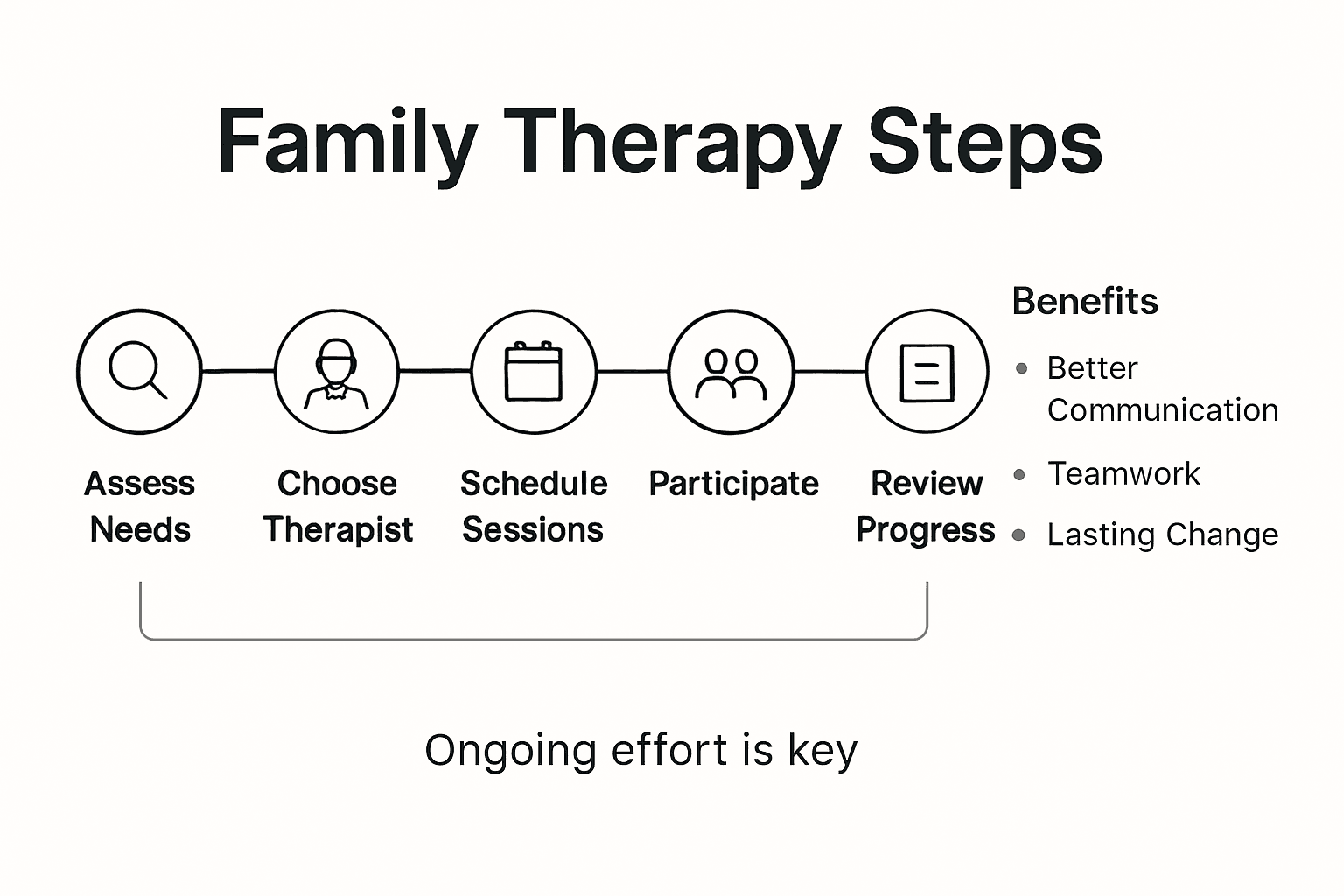
Family Therapy Roadmap: 5 Steps to Stronger Relationships
- Step 1: Assess Family Needs And Set Goals
- Step 2: Select A Qualified Family Therapist
- Step 3: Schedule And Prepare For Therapy Sessions
- Step 4: Participate Actively In Family Sessions
- Step 5: Evaluate Progress And Adjust Strategies
Quick Summary
| Key Point | Explanation |
|---|---|
| 1. Assess Family Needs Early | Initiate therapy by discussing everyone’s concerns to understand unique family dynamics and build a foundation for healing. |
| 2. Set Collaborative Goals | Use the SMART framework to create meaningful, achievable goals that reflect input from all family members during therapy. |
| 3. Choose the Right Therapist | Select a qualified therapist with expertise in family dynamics and credentials to ensure effective guidance for your family. |
| 4. Engage Actively in Sessions | Encourage open conversations and active listening during therapy to foster understanding and improve family communication. |
| 5. Evaluate and Adjust Progress | Regularly assess therapy effectiveness and remain flexible to adapt strategies for continuous familial growth and healing. |
Step 1: Assess Family Needs and Set Goals
Successfully resolving family conflicts requires a strategic approach to understanding your family’s unique dynamics and establishing clear therapeutic objectives. By carefully assessing your family’s specific needs and collaboratively setting meaningful goals, you can create a roadmap for meaningful transformation and healing.
The process begins with a comprehensive family assessment. During initial counseling sessions, each family member will have an opportunity to share their perspective and contribute to goal setting. Family therapy techniques help therapists facilitate open communication and identify underlying patterns of conflict. Start by encouraging every family member to articulate their concerns honestly and respectfully. This might involve discussing communication breakdowns, unresolved tensions, or specific behavioral challenges that are creating friction within the family unit.
Typically, goal setting follows a collaborative model where therapists help families develop specific, achievable objectives. Using frameworks like the SMART method (Specific, Measurable, Achievable, Relevant, Time-bound), families can translate broad desires into concrete action steps. Goals might range from improving communication skills and rebuilding trust to addressing specific behavioral issues or healing emotional wounds. The key is creating goals that reflect collective input and commitment from all family members.
Below is a summary of common family therapy goals and the benefits they provide:
| Goal Type | Example Outcome | Main Benefit |
|---|---|---|
| Improved Communication | Open, respectful conversations | Reduces misunderstandings |
| Conflict Resolution | Quicker, less intense arguments | Fosters harmony |
| Emotional Healing | Expressing and processing emotions | Builds trust |
| Behavioral Changes | Healthier daily family interactions | Promotes stability |
Pro tip:When setting family therapy goals, focus on shared outcomes rather than individual complaints to promote unity and mutual understanding.
Step 2: Select a Qualified Family Therapist
Choosing the right family therapist is a critical step in resolving family conflicts and creating meaningful change. Your selection will directly impact the effectiveness of your therapeutic journey and your family’s ability to heal and grow together.

When searching for a qualified therapist, prioritize professionals with specific expertise in family systems and interpersonal dynamics. Understanding the key questions to ask potential therapists can help you make an informed decision. Look for licensed professionals with advanced training in family therapy approaches such as systemic therapy, structural family therapy, or narrative therapy. Consider their experience working with families similar to yours in terms of structure, cultural background, and specific challenges. During initial consultations, assess their communication style, approach to conflict resolution, and ability to create a safe and supportive environment for all family members.
Credentials matter significantly in selecting a family therapist. Verify their professional licenses, check their educational background, and review any specialized certifications in family counseling. Many therapists offer initial consultations where you can discuss your family’s needs and evaluate their compatibility. Pay attention to how comfortable each family member feels during these interactions. The right therapist will demonstrate empathy, active listening skills, and a genuine commitment to understanding your family’s unique dynamics and goals.
Here is a comparison of key family therapy approaches and their primary focus:
| Approach | Primary Focus | Typical Techniques |
|---|---|---|
| Systemic Therapy | Family relationship roles | Examining patterns, context |
| Structural Therapy | Family hierarchy, structure | Restructuring interactions |
| Narrative Therapy | Personal and family stories | Reframing narratives |
Pro tip:Request recommendations from trusted healthcare providers and consider therapists who offer flexible session formats including in person and online options.
Step 3: Schedule and Prepare for Therapy Sessions
Scheduling and preparing for family therapy sessions requires thoughtful planning and commitment from every family member. Your proactive approach will set the foundation for a successful therapeutic experience that promotes healing and understanding.
Preparing for counseling effectively involves several critical steps. Begin by coordinating schedules to ensure all key family members can consistently attend sessions. Consider factors like work commitments, school schedules, and transportation logistics. During initial scheduling, discuss potential time slots that minimize stress and maximize everyone’s participation. Most family therapists recommend weekly or biweekly sessions lasting approximately 60 to 90 minutes, depending on your family’s specific needs and dynamics.
Before your first session, engage in open conversations with family members about expectations and goals. Encourage everyone to approach therapy with an open mind and a genuine desire for positive change. Prepare individually by reflecting on your personal communication patterns, emotional triggers, and areas where you hope to improve family interactions. Gather any relevant documentation, such as previous medical records, school reports, or previous counseling notes, that might provide context for your therapist. Emotional preparation is equally important. Ask each family member to commit to honest communication, active listening, and a willingness to engage in potentially uncomfortable but necessary conversations.
Pro tip:Create a shared family calendar for therapy sessions and designate a brief family meeting before each session to align expectations and emotional readiness.
Step 4: Participate Actively in Family Sessions
Active participation is the cornerstone of successful family therapy, transforming potentially challenging sessions into opportunities for genuine healing and understanding. Your willingness to engage honestly and openly will directly influence the effectiveness of your therapeutic journey.
Encouraging conversations about mental health requires intentional effort and emotional vulnerability. During therapy sessions, practice active listening by giving each family member uninterrupted time to speak, maintaining eye contact, and demonstrating genuine interest through your body language. Avoid defensive reactions or interrupting others, even when their perspective feels challenging or uncomfortable. Instead, focus on understanding the underlying emotions and experiences driving each person’s communication. Ask clarifying questions that show you are truly trying to comprehend their perspective, such as “Can you help me understand what you mean by that?” or “How did that experience make you feel?”
Be prepared to share your own experiences and emotions authentically while maintaining respect for others. This means being willing to acknowledge your role in family dynamics, express your feelings using “I” statements, and take responsibility for your actions. Recognize that therapy is not about winning arguments or proving who is right, but about creating a supportive environment where everyone feels heard and valued. Stay open to feedback, be willing to make personal changes, and approach each session with a collaborative mindset focused on collective healing and growth.
Pro tip:Keep a personal journal to reflect on therapy insights between sessions and identify patterns in your family interactions.
Step 5: Evaluate Progress and Adjust Strategies
Successful family therapy is an ongoing process of reflection, assessment, and strategic adaptation. Your commitment to regularly evaluating progress will ensure that your therapeutic journey remains dynamic, responsive, and aligned with your family’s evolving needs.
Measuring progress in family therapy requires a multifaceted approach that goes beyond surface-level observations. Work closely with your therapist to establish clear, measurable indicators of progress. These might include improvements in communication patterns, reduction in conflict intensity, increased empathy among family members, or specific behavioral changes. During periodic review sessions, discuss both quantitative and qualitative markers of improvement. Be honest about what strategies are working and which areas still need attention. Pay attention to subtle shifts in family dynamics such as more constructive dialogue, increased emotional vulnerability, and a growing sense of mutual understanding.
Remain flexible and open-minded about adjusting your therapeutic strategies. Recognize that healing is not a linear process and setbacks are normal parts of family growth. Your therapist can help you reframe challenges as opportunities for deeper understanding and more meaningful change. Document specific interactions, emotional breakthroughs, and communication patterns between sessions. This documentation will provide valuable insights during strategy reviews and help your therapist tailor interventions more precisely to your family’s unique context. The goal is continuous improvement rather than achieving a perfect endpoint.
Pro tip:Schedule quarterly family check-ins to collectively review therapeutic progress and realign your shared goals.
Strengthen Your Family Bonds with Trusted Support
Family conflicts can be overwhelming and emotionally draining. When communication breaks down and tensions rise, it is essential to take clear, purposeful steps toward healing. This guide highlights the importance of setting collaborative goals and engaging in structured family therapy to resolve challenges and build lasting trust. If your family is struggling with unresolved tension, misunderstandings, or emotional wounds, personalized guidance from experienced therapists can make a critical difference.

Discover tailored family therapy solutions at Family Therapy Archives – Dr. Stephen Oreski & Associates where expert support meets your unique needs. Take advantage of free consultations to explore strategies for improved communication and conflict resolution. Begin your family’s journey toward unity today by visiting Dr. Stephen Oreski & Associates. For broader insights into supportive therapeutic approaches, check out our Family Archives. Don’t wait for conflicts to deepen – connect now and experience the reassurance of compassionate, professional care designed to foster meaningful change.
Frequently Asked Questions
What are the first steps in family therapy to resolve conflicts?
To effectively resolve family conflicts, start by assessing your family’s unique needs and collaboratively setting goals. Encourage each family member to share their perspectives and concerns, which can help guide the overall therapy process.
How do I choose a qualified family therapist?
Select a family therapist with specific expertise in family dynamics and interpersonal relationships. Verify their credentials, experience, and communication style during initial consultations to ensure a good fit for your family’s needs.
What should I do to prepare for our first family therapy session?
To prepare for the first family therapy session, coordinate schedules to ensure everyone can attend and come to the session with an open mind. Encourage family members to reflect on their communication patterns and emotional triggers to foster honest discussions.
How can we ensure active participation during therapy sessions?
Encourage all family members to engage openly by practicing active listening and allowing each person uninterrupted time to share their thoughts. Foster a collaborative environment by using “I” statements and being willing to acknowledge personal roles in family dynamics.
How often should we evaluate our progress in family therapy?
Schedule regular progress evaluations, ideally every few months, to assess the effectiveness of your therapy strategies. Discuss measurable indicators of improvement to ensure your therapeutic journey continues to align with your family’s evolving needs.
What are some common goals for family therapy?
Common goals for family therapy include improving communication, resolving conflicts, and fostering emotional healing among family members. Focus on shared objectives that reflect collective input from all family members to strengthen unity and mutual understanding.