

Over half of American couples consider professional help when faced with relationship stress. Whether you are working through challenges as a couple or dealing with issues that affect the entire family, understanding the differences between family therapy and couples therapy can make all the difference. By exploring how each approach works, you gain clear insight into which path could offer the support and structure your unique situation needs.
In This Guide: Defining & Comparing Family vs Couples Therapy
- Defining Family Therapy And Couples Therapy
- Key Differences Between Family And Couples Therapy
- Common Goals And Techniques In Each Approach
- How To Decide Which Therapy Is Right
- Practical Examples And Real-Life Outcomes
Key Takeaways
| Point | Details |
|---|---|
| Understanding the Focus | Family therapy addresses dynamics within the entire family system, while couples therapy focuses on the relationship between two partners. |
| Choosing the Right Approach | Consider your main relational concerns; choose couples therapy for partner-specific issues and family therapy for broader family dynamics. |
| Goals of Therapy | Both therapies aim to improve communication and emotional connection, but utilize different techniques and strategies tailored to their unique focuses. |
| Initial Consultation Importance | Schedule a consultation with a professional therapist to determine the most suitable therapy approach based on your specific relationship context. |
Defining Family Therapy and Couples Therapy
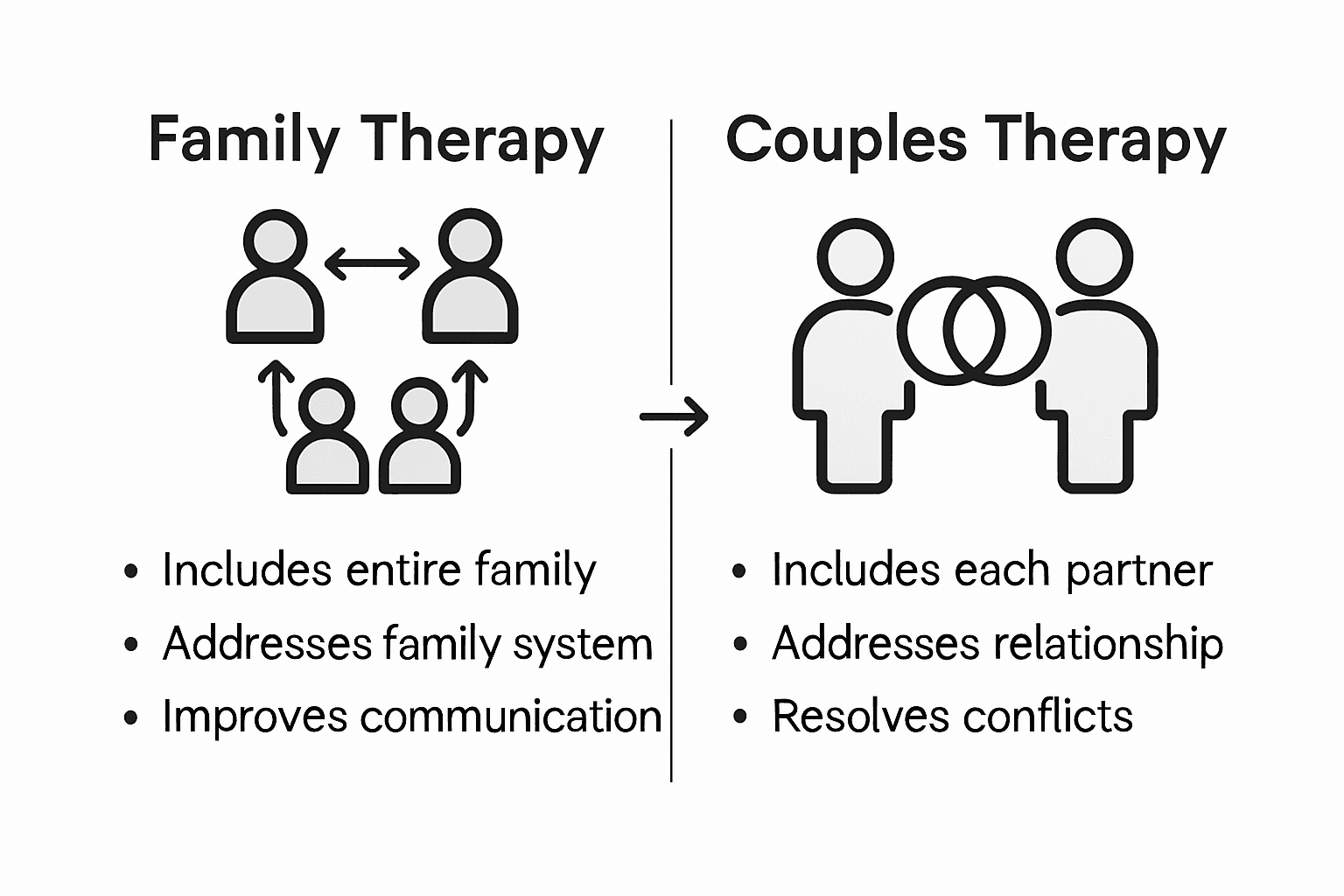
Family therapy and couples therapy represent two distinct yet interconnected approaches to resolving relational challenges. While both forms of therapy aim to improve interpersonal dynamics, they differ significantly in their scope, participants, and therapeutic strategies. Family therapy focuses on understanding and healing relationship patterns within an entire family system, whereas couples therapy concentrates specifically on the relationship between two partners.
In family therapy, therapists work holistically to address psychological, emotional, and behavioral issues that impact multiple family members. This approach recognizes that individual challenges do not occur in isolation but are deeply interconnected with family dynamics. Therapists examine communication patterns, resolve conflicts, and help family members develop healthier interaction strategies. The treatment typically involves multiple family members and seeks to create systemic change rather than focusing on a single individual’s symptoms.
Couples therapy, by contrast, zeroes in on the relationship between two partners. The primary goal is to improve communication, rebuild trust, resolve specific conflicts, and strengthen the emotional connection between partners. Unlike family therapy’s broader systemic approach, couples therapy tends to be more targeted, addressing issues directly impacting the romantic relationship such as intimacy challenges, communication breakdowns, or trust concerns.
Pro Tip: Before selecting a therapy approach, schedule an initial consultation to discuss your specific relationship dynamics and goals. A professional therapist can help you determine whether family or couples therapy will best address your unique situation.
Here is a side-by-side comparison of family therapy and couples therapy for quick reference:
| Aspect | Family Therapy | Couples Therapy |
|---|---|---|
| Primary Focus | Whole family system dynamics | Intimate partner relationship |
| Typical Participants | Multiple family members | Two romantic partners |
| Examples of Issues | Addiction, intergenerational conflict | Infidelity, intimacy, communication |
| Main Therapeutic Goal | Systemic change across relationships | Enhance trust and emotional connection |
| Approach | Systemic, holistic, broad | Targeted, focused, partnership-based |
Key Differences Between Family and Couples Therapy
Family and couples therapies represent nuanced approaches to relational healing, distinguished by their scope, participants, and therapeutic methodologies. While both aim to improve interpersonal dynamics, their fundamental strategies and treatment goals differ significantly. Understanding these distinctions can help individuals and families select the most appropriate therapeutic intervention for their specific needs.
The primary difference lies in participation and systemic focus. Family therapy involves multiple family members and examines complex relational patterns across generational and familial boundaries. Couples therapy concentrates exclusively on the relationship between two partners, addressing intimate relationship challenges more directly. Family therapists view individual challenges through a broader lens, recognizing how psychological issues interconnect with family system dynamics, whereas couples therapists zero in on the specific interpersonal dynamics between romantic partners.
Theoretical approaches also diverge between these therapeutic modalities. Family therapy typically employs a systemic perspective, exploring how family members’ behaviors and communication patterns mutually influence each other. Couples therapy tends to be more solution-focused, emphasizing communication skills, emotional intimacy, and conflict resolution strategies specific to romantic partnerships. Family therapists might investigate generational patterns, family-of-origin influences, and systemic interactions, while couples therapists concentrate on enhancing mutual understanding, rebuilding trust, and developing healthier relationship strategies.
Pro Tip: Select the right therapy approach by considering your specific relational context. A professional therapist can help you determine whether addressing family system dynamics or focusing on partner-specific challenges will most effectively support your emotional growth and relationship healing.
Common Goals and Techniques in Each Approach
Both family and couples therapy share fundamental therapeutic objectives, yet their techniques and implementation strategies differ significantly. These therapeutic approaches are designed to facilitate healing, improve communication, and help individuals and families develop more effective relational patterns. The overarching goal is to create sustainable positive change that extends beyond the therapy room and into daily interactions.
Couples therapy typically focuses on improving relationship dynamics through targeted interventions. Key techniques include communication skill building, conflict resolution training, and emotional intimacy enhancement. Therapists often employ strategies like active listening exercises, emotional validation techniques, and structured dialogue methods to help partners understand each other more deeply. The primary objectives include rebuilding trust, developing mutual empathy, addressing specific relationship challenges, and creating a more supportive and connected partnership.

Family therapy, by contrast, adopts a more systemic approach that examines relational patterns across multiple family members. Techniques may include genogram mapping, exploring family-of-origin influences, identifying communication blockages, and restructuring interaction patterns. Family therapists work to help family members understand how individual behaviors impact the entire family system, promoting collective healing and understanding. They often focus on breaking intergenerational patterns of dysfunction, improving communication across different family subsystems, and helping families develop more flexible and supportive relational dynamics.
Pro Tip: Before beginning therapy, discuss your specific goals and expectations with your therapist. A clear, collaborative approach will help maximize the therapeutic process and increase the likelihood of meaningful relational transformation.
The table below summarizes common techniques and outcomes in both therapy types:
| Therapy Type | Key Techniques | Typical Outcomes |
|---|---|---|
| Family Therapy | Genogram mapping, restructuring dynamics | Improved communication across family |
| Couples Therapy | Active listening, dialogue skills | Stronger partnership, rebuilt trust |
How to Decide Which Therapy Is Right
Choosing between family and couples therapy requires careful consideration of your unique relational dynamics, personal challenges, and therapeutic objectives. Different therapeutic approaches address distinct relationship patterns and emotional needs, making it crucial to understand the nuanced differences before selecting the most appropriate intervention strategy. Your specific circumstances, relationship structure, and underlying challenges will ultimately guide your decision.
Several key factors can help determine whether couples therapy or family therapy is more suitable. If your primary concerns revolve around romantic partnership challenges such as communication breakdowns, intimacy issues, or recurring conflicts between partners, couples therapy might be the most direct approach. Conversely, when relationship problems seem deeply rooted in broader family dynamics, involve multiple family members, or stem from intergenerational patterns, family therapy could provide a more comprehensive healing framework. Consider the number of individuals experiencing relational distress and the complexity of interactions as critical decision-making criteria.
Additionally, assess the nature and scope of your relational challenges. Family therapy proves especially beneficial when dealing with complex issues like addiction, trauma, grief, significant life transitions, or persistent communication patterns that impact multiple family members. Couples therapy, by contrast, works best for partnerships experiencing specific interpersonal challenges, trust issues, sexual difficulties, or emotional disconnection. Professional therapists can help you navigate this decision by conducting initial assessments that explore the depth and breadth of your relational dynamics.
Pro Tip: Schedule an initial consultation with a qualified therapist who can provide personalized guidance based on your specific relationship context. A professional evaluation will help you make an informed decision about the most effective therapeutic approach for your unique situation.
Practical Examples and Real-Life Outcomes
Real-life scenarios illustrate the transformative potential of family and couples therapy, demonstrating how targeted therapeutic interventions can create meaningful change in complex relational dynamics. Each therapeutic approach offers unique pathways to healing, addressing specific challenges through carefully designed strategies that promote understanding, communication, and emotional growth.
Couples therapy often proves particularly effective in scenarios involving communication breakdowns, persistent relationship conflicts, and emotional disconnection. Couples therapy techniques can help partners navigate challenges like infidelity, sexual intimacy issues, or recurring arguments. For instance, a couple struggling with trust after an extramarital affair might work through rebuilding emotional connection, establishing transparent communication, and developing strategies to prevent future breaches of trust. In another scenario, partners experiencing chronic communication problems could learn active listening techniques, emotional validation skills, and conflict resolution strategies that transform their interaction patterns.
Family therapy addresses more complex systemic challenges that impact multiple family members. Consider a family dealing with a teenager’s substance abuse, where individual behavioral challenges interconnect with broader family dynamics. Family therapy would explore underlying communication patterns, intergenerational trauma, and collective coping mechanisms. Another example might involve helping a blended family integrate successfully, addressing loyalty conflicts, establishing new relationship boundaries, and creating shared emotional understanding across different family subsystems. Such interventions recognize that individual challenges are deeply embedded within larger relational contexts.
Pro Tip: Document your therapeutic journey by keeping a reflective journal during therapy. Recording insights, emotional shifts, and communication improvements can help you track progress and maintain motivation throughout the healing process.
Find the Right Therapy Path for Your Unique Relationship Challenges
Choosing between family therapy and couples therapy can feel overwhelming when you face complex emotions, communication breakdowns, or persistent conflicts. This article highlights the key differences and goals such as systemic change in family therapy and rebuilding trust in couples therapy. If you recognize struggles that affect your family dynamics or intimate relationship, it is important to explore personalized treatment options that meet your specific needs.

Take the next step toward healing by exploring expert guidance through Family Therapy Archives – Dr. Stephen Oreski & Associates or strengthen your partnership with insights from Couples/Marriage Archives – Dr. Stephen Oreski & Associates. Dr. Stephen Oreski and his team are committed to crafting individualized plans for lasting positive change. Start your journey today with a free consultation at https://bergencountytherapist.com and discover the support you deserve.
Frequently Asked Questions
What is the main difference between family therapy and couples therapy?
Family therapy involves multiple family members and focuses on understanding and healing the dynamics within the entire family system. In contrast, couples therapy specifically targets the relationship between two partners, addressing challenges such as communication breakdowns and trust issues.
When should I consider family therapy over couples therapy?
If your relational challenges involve multiple family members or stem from broader family dynamics, such as intergenerational conflicts or issues impacting the entire household, family therapy may be the more appropriate choice. Couples therapy is more suitable for addressing direct issues between romantic partners.
What are some common techniques used in couples therapy?
Common techniques in couples therapy include active listening exercises, conflict resolution training, and emotional intimacy enhancement methods. These strategies aim to improve communication skills and rebuild trust between partners.
How can I decide which type of therapy is right for my relationship?
Consider the nature of your relationship challenges. If issues are specific to the romantic partnership, couples therapy may be ideal. If problems involve family dynamics or affect multiple family members, family therapy might be a better fit. Consulting with a qualified therapist can also provide personalized guidance.