

Choosing the right grief management strategy feels overwhelming when you’re already struggling with loss. Research shows that individual CBT reduces prolonged grief symptoms more effectively than general counseling, yet many adults in Bergen County don’t know where to start. This guide breaks down five evidence-based approaches, from targeted therapy to emerging digital interventions, helping you match strategies to your specific grief type, symptoms, and support needs. You’ll learn what works, when it works, and how to access these resources locally.
Table of Contents
- Criteria For Choosing Grief Management Strategies
- Individual Cognitive Behavioral Therapy For Grief
- Group And Family-Based Grief Interventions
- Emerging And Supportive Grief Management Strategies
- Comparing Grief Management Strategies: Making The Right Choice
- Explore Grief Support And Therapy Services In Bergen County
Key takeaways
| Point | Details |
|---|---|
| Individual CBT leads outcomes | Cognitive behavioral therapy shows the strongest evidence for reducing prolonged grief and PTSD symptoms in adults. |
| Match strategy to grief type | Sudden, traumatic, or ICU-related losses require different therapeutic approaches than anticipated deaths. |
| Group therapy builds connection | Peer support reduces isolation and provides shared coping experiences that protect against intense grief reactions. |
| Online programs work | Web-based grief interventions produce sustained symptom reduction maintained three months after completion. |
| Context shapes intensity | Being alone and home environment increase grief reactions, while social contact offers protective benefits. |
Criteria for choosing grief management strategies
Selecting the right grief management approach starts with understanding your specific situation. Prolonged and complicated grief require professional intervention, while normal grief often responds to peer support and self-care strategies. The type of loss matters significantly. Sudden deaths, traumatic circumstances, and ICU-related losses each create distinct emotional challenges that benefit from tailored approaches.
Your symptoms guide strategy selection. Persistent rumination, active avoidance of grief-related thoughts, or intrusive memories signal the need for structured therapeutic intervention. Social support availability influences which approaches will succeed. Strong family networks enable family-based interventions, while limited local support makes online programs more practical.
Research consistently shows that CBT-focused therapies work best for prolonged and traumatic grief. These targeted interventions address the cognitive patterns that maintain distress, unlike general counseling that may not directly tackle grief-specific mechanisms. Consider these factors when evaluating options:
- Severity and duration of grief symptoms
- Presence of trauma or sudden loss circumstances
- Current social support network strength
- Accessibility of local versus online resources
- Personal preference for individual, group, or family formats
Pro Tip: Match therapy intensity to your grief severity. Mild symptoms may respond to group support, while complex grief with significant functional impairment needs specialized individual treatment.
Environmental context matters more than most people realize. Your living situation, daily routines, and social contact frequency all influence grief intensity and recovery trajectory.
Individual cognitive behavioral therapy for grief
Individual CBT targets the specific thought patterns and behaviors that maintain prolonged grief. Therapists help you identify unhelpful beliefs about the loss, such as excessive self-blame or unrealistic expectations about recovery timelines. These cognitive distortions fuel rumination and avoidance, the two mechanisms most strongly linked to complicated grief.
The therapy teaches concrete skills. You learn to recognize when grief thoughts become repetitive and unproductive, then apply reframing techniques to shift perspective. Behavioral components address avoidance by gradually reintroducing activities and situations you’ve been avoiding since the loss. This exposure reduces the power these triggers hold over your emotional state.
Research demonstrates that individual CBT produces medium to large effect sizes in reducing both prolonged grief and PTSD symptoms. Treatment typically involves 12 to 16 weekly sessions, though trauma-related grief may require longer engagement. The structured format provides clear goals and measurable progress markers.
Benefits extend beyond symptom reduction. You develop lasting emotional regulation skills applicable to future losses and life stressors. The individualized attention allows exploration of personal grief narratives without group dynamics or family tensions influencing the process. Studies comparing formats show individual CBT reduces prolonged grief and PTSD more effectively than group approaches for severe cases.
Effective grief therapy techniques in individual CBT include:
- Cognitive restructuring of unhelpful grief beliefs
- Behavioral activation to counter withdrawal
- Exposure therapy for avoided grief reminders
- Meaning-making exercises about the loss
- Skills training for emotional regulation
Pro Tip: Seek therapists with specific training in grief-focused CBT protocols like Complicated Grief Treatment or Prolonged Grief Disorder therapy, not just general CBT certification.
Session structure typically begins with symptom monitoring, progresses through skill-building exercises, and includes between-session homework to practice new coping strategies. This active learning approach accelerates progress compared to purely talk-based counseling.
Group and family-based grief interventions
Group therapy creates a shared space where you connect with others navigating similar losses. This peer support directly counters the isolation that intensifies grief reactions. Hearing how others cope with comparable challenges normalizes your experience and introduces new strategies you might not discover alone. Group approaches foster social connection that research identifies as protective against prolonged grief.
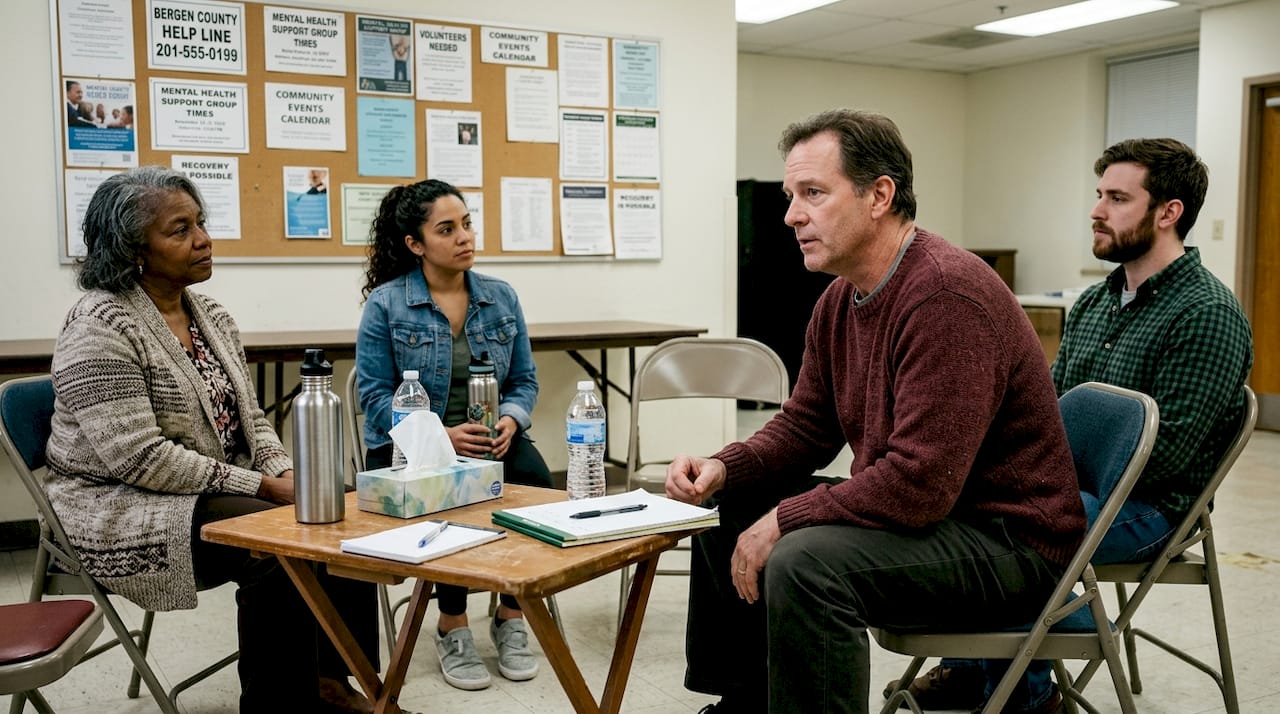
Family therapy targets the communication breakdowns that grief creates within households. Loss changes family dynamics, sometimes creating tension as members grieve differently or struggle to support each other effectively. Therapists help families develop shared understanding of individual grief processes and establish healthier interaction patterns. Family interventions improve communication, making collective healing more achievable.
Format choice depends on your situation. Individual therapy offers privacy and personalized attention but lacks peer modeling. Group settings provide social connection and diverse coping examples but may feel uncomfortable if you prefer private processing. Family approaches address relationship dynamics but require all members’ participation commitment.
Researchers note the need for more comparison studies between these formats, as current evidence bases vary in strength. Individual CBT has the most robust research support, while group and family approaches show promise but need additional randomized controlled trials.
| Format | Best For | Key Benefits | Limitations |
|---|---|---|---|
| Individual CBT | Severe prolonged grief, trauma | Personalized attention, strongest evidence | No peer support, higher cost |
| Group therapy | Mild to moderate grief, isolation | Peer connection, cost-effective | Less personalization, scheduling constraints |
| Family therapy | Household communication issues | Improves relationships, shared healing | Requires family buy-in, complex dynamics |
Many group and family programs incorporate CBT principles within their structure. This combination provides evidence-based skill-building alongside social support benefits. Consider exploring family grief therapy options if household relationships have deteriorated since the loss.
The benefits of group grief counseling become most apparent over time as relationships with fellow group members deepen. Initial discomfort often gives way to meaningful connections that extend beyond formal sessions, creating lasting support networks.
Emerging and supportive grief management strategies
Acceptance-based coping strategies help you acknowledge grief without fighting or suppressing it. Unlike avoidance or rumination, acceptance reduces complicated grief symptoms by allowing emotional processing without getting stuck in unproductive thought loops. This approach doesn’t mean resignation but rather realistic engagement with loss.
Problem-solving techniques address the practical challenges grief creates. Financial concerns, household management, and social role adjustments all require active coping. Cognitive reappraisal helps you reframe situations to reduce distress while maintaining realistic perspectives. These skills complement therapy by giving you tools for daily grief management.
Web-based interventions have emerged as accessible alternatives to traditional therapy. Online grief programs show positive effects sustained at three months, reducing grief, depression, and PTSD symptoms. These digital platforms offer flexibility for those with scheduling constraints or limited local resources. Interactive modules, peer forums, and therapist messaging create comprehensive support systems.
Contextual factors influence when and how intensely you experience grief. Research reveals that being alone increases grief reactions compared to being with others, while home environments can trigger intense emotional responses. Understanding these patterns helps you plan your environment strategically.
Web-based grief interventions demonstrate clinically meaningful reductions in grief symptoms that persist beyond program completion, offering a viable option for those unable to access in-person care.
Practical daily strategies include:
- Scheduling regular social contact to reduce isolation
- Creating grief-processing routines at specific times
- Modifying home spaces that trigger intense reactions
- Balancing acceptance with active problem-solving
- Using cognitive reappraisal for intrusive thoughts
Understanding traumatic grief helps distinguish when standard coping strategies need professional augmentation. Sudden, violent, or unexpected deaths often create trauma symptoms requiring specialized intervention beyond basic grief support.
For seniors navigating grief alongside aging challenges, mental health tips for emotional well-being provide age-specific guidance that addresses the unique intersection of loss and life stage transitions.
Comparing grief management strategies: making the right choice
Selecting your grief management approach requires matching strategy strengths to your specific needs. Targeted grief interventions outperform universal programs and non-CBT therapies, especially for prolonged grief. This evidence base guides decision-making when multiple options seem viable.
| Strategy | Grief Type | Social Support Needed | Symptom Severity | Evidence Strength |
|---|---|---|---|---|
| Individual CBT | All types, especially traumatic | Low to moderate | Moderate to severe | Strongest |
| Group therapy | Non-traumatic, anticipated | Moderate to high | Mild to moderate | Moderate |
| Family therapy | Any type affecting household | High (family participation) | Mild to moderate | Emerging |
| Online programs | Any type with access barriers | Low | Mild to moderate | Moderate |
| Acceptance coping | Non-traumatic | Any level | Mild | Moderate |
Follow these steps to evaluate your needs:
- Assess your grief severity using symptom duration and functional impairment as markers
- Identify your loss type and any traumatic circumstances surrounding the death
- Evaluate your current social support network strength and availability
- Consider practical factors like schedule flexibility, budget, and location
- Match your profile to the strategy showing strongest evidence for your situation
- Seek professional evaluation if symptoms persist beyond six months or worsen over time
Complex grief with significant impairment benefits most from individual grief-focused CBT. Milder symptoms with strong isolation concerns may respond better to group formats. Family relationship strain suggests family therapy as a primary or adjunct approach.
Explore different types of grief therapy to understand the full range of available interventions. Some people benefit from combining approaches, such as individual therapy for symptom management plus group support for social connection.
Don’t hesitate to try one approach and switch if it doesn’t fit. Therapy matching involves some trial and learning about what works for your personality and grief style. Professional therapists can help you evaluate progress and adjust treatment plans as needed.
Explore grief support and therapy services in Bergen County
Bergen County offers access to qualified grief therapists trained in evidence-based approaches discussed throughout this guide. Whether you need individual CBT for complicated grief, group support for social connection, or family therapy to improve household communication, local professionals can provide personalized care.
Start by exploring mental health tracking resources to monitor your symptoms and progress. Understanding your patterns helps therapists tailor interventions to your specific needs.

If family dynamics have shifted since your loss, family grief therapy can rebuild connection and develop shared coping strategies. For guidance on selecting the approach that matches your situation, review practical tips for choosing the right type of therapy before scheduling consultations.
FAQ
What are the most effective strategies for managing prolonged grief?
Individual cognitive behavioral therapy stands as the leading evidence-based treatment for prolonged grief, showing superior outcomes compared to general counseling or non-CBT approaches. Targeted grief-focused CBT directly addresses the rumination and avoidance patterns that maintain distress, producing lasting symptom reduction. For comprehensive understanding, explore complicated grief information to recognize when professional intervention becomes necessary.
How can group therapy support grief recovery?
Group therapy provides peer support and shared experiences that directly counter the isolation intensifying grief reactions. Connecting with others facing similar losses normalizes your experience and introduces diverse coping strategies through peer modeling. Research shows social connections protect against prolonged grief, making group formats particularly valuable for those experiencing isolation. Learn more about group grief counseling benefits to determine if this format suits your needs.
Are online grief management programs effective?
Online grief interventions reduce symptoms of grief, depression, and PTSD with benefits maintained at least three months after program completion. These digital platforms offer structured support for those with scheduling constraints, transportation barriers, or limited local resources. Interactive modules and therapist messaging create comprehensive care comparable to in-person options for mild to moderate grief. Explore benefits of online therapy to understand how virtual care might fit your situation.
Where can adults in Bergen County find grief therapy?
Bergen County has numerous qualified grief therapy providers offering individual, group, and family interventions discussed in this guide. Start your search at Bergen County Therapist for resources, therapist listings, and guidance on matching your needs to appropriate providers. Many practitioners offer free consultations to discuss your situation and determine the best therapeutic approach for your specific grief type and symptoms.