
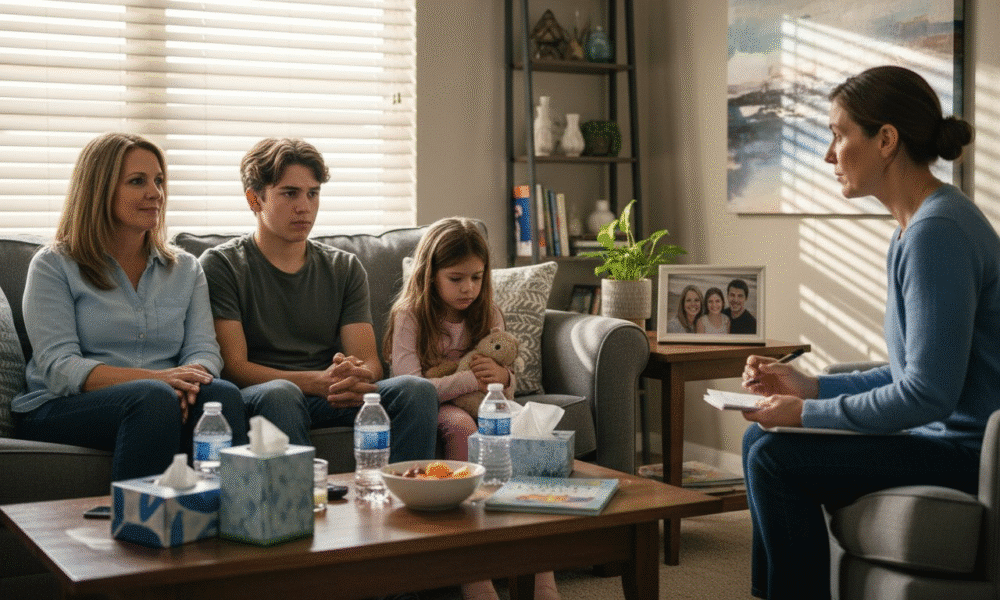
Over half of American families report that losing a loved one can disrupt daily life for months. When grief shakes the foundation of a household in Bergen County, it affects far more than just one person. Family-focused grief therapy offers practical support that encourages open communication, shared understanding, and renewed connection. This article explores how structured, compassionate therapy helps families transform pain into healing, guiding each member through their own journey while strengthening family bonds.
Table of Contents
- Defining Grief Therapy for Families
- Therapeutic Approaches and Modalities
- Key Features of Family-Centered Support
- Common Misconceptions and Challenges
- Accessing Therapy: Costs and Options
- Risks, Mistakes, and Safe Practices
Key Takeaways
| Point | Details |
|---|---|
| Family Grief Therapy | This approach focuses on shared emotional processing, recognizing grief as a collective experience that impacts family dynamics. |
| Therapeutic Modalities | Cognitive-Behavioral Therapy, Systemic Family Therapy, and Narrative Therapy are key approaches tailored to support families navigating loss. |
| Communication and Support | Effective family grief therapy relies on open communication and mutual understanding to foster collective healing. |
| Accessibility to Services | Families should explore a range of therapy options, including insurance-covered services, community resources, and online platforms for support. |
Defining Grief Therapy for Families
Family grief therapy represents a specialized therapeutic approach designed to help families navigate the complex emotional landscape of loss together. Unlike individual counseling, this method recognizes that grief is a collective family experience where each member processes trauma differently yet interconnectedly. Understanding how grief impacts family dynamics becomes crucial in developing healing strategies.
The core principle of Family Focused Grief Therapy (FFGT) centers on improving family communication and shared emotional processing. Developed within hospice care settings, this model acknowledges that healing occurs most effectively when family members can openly discuss their feelings, validate each other’s experiences, and adapt to significant changes together. By creating a supportive environment where vulnerability is welcomed, families can transform their grief from an isolating experience into a shared journey of healing.
Key components of family grief therapy typically include:
- Facilitating open and honest communication between family members
- Identifying individual and collective grief responses
- Developing healthy coping mechanisms
- Rebuilding family connections disrupted by loss
- Providing emotional support and validation
- Teaching resilience and adaptive strategies
Professional therapists trained in family grief counseling help families navigate these complex emotional terrains by offering structured interventions that promote understanding, empathy, and mutual support. They create safe spaces where family members can express their emotions without judgment, learn to listen actively, and gradually rebuild their sense of connection and hope.
Pro tip: Schedule regular family check-ins where each member gets uninterrupted time to share their feelings about the loss, using a compassionate and non-judgmental approach.
Therapeutic Approaches and Modalities
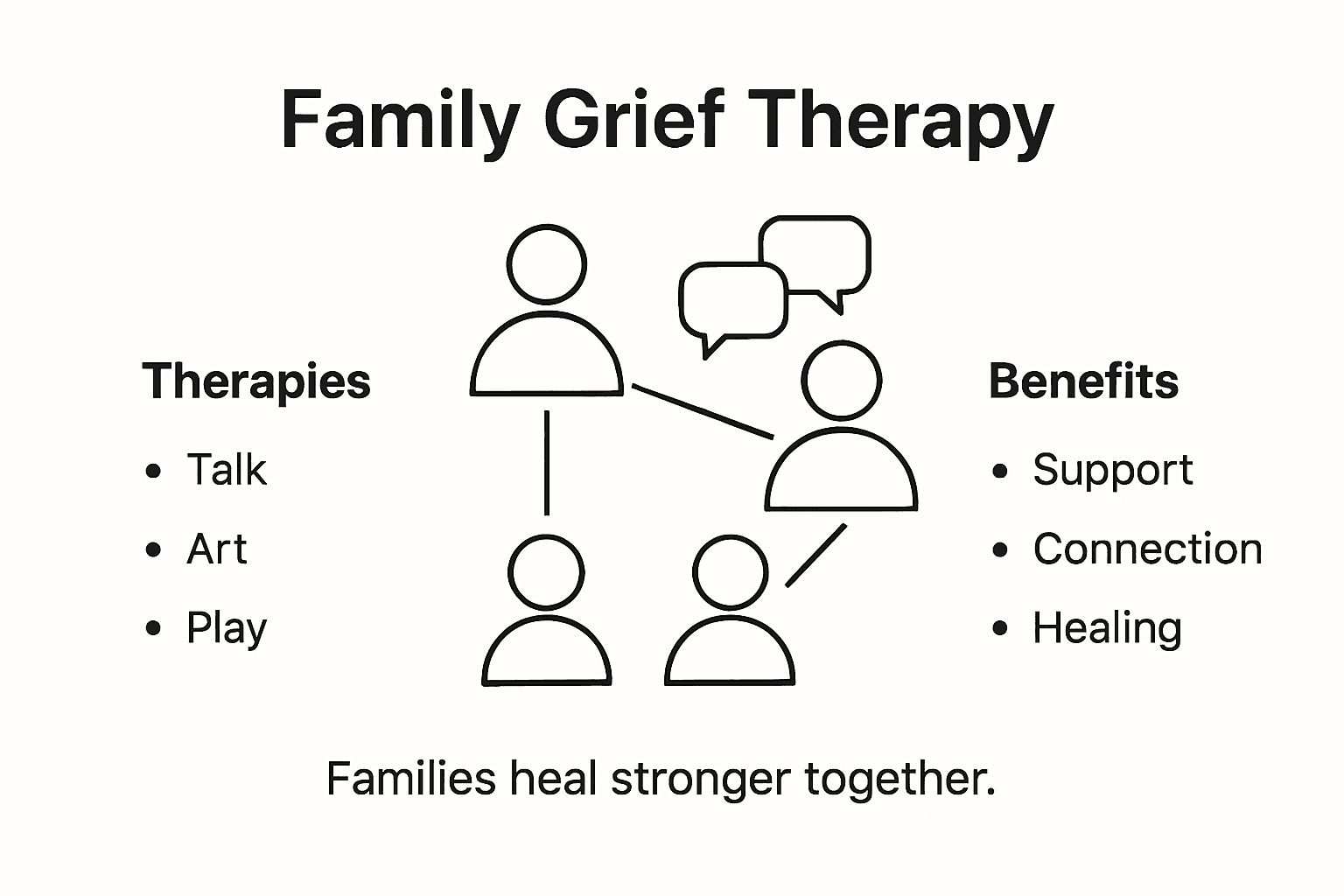
Grief therapy offers multiple therapeutic approaches designed to support families navigating loss, with each modality targeting specific emotional and psychological needs. Different types of psychotherapy play a critical role in helping families develop resilience and healing strategies through structured interventions tailored to their unique experiences.
Psychosocial interventions in grief counseling typically encompass three primary modalities: individual, group, and family therapy. Research consistently demonstrates that cognitive-behavioral therapy (CBT) can be particularly effective in individual settings, helping individuals process traumatic experiences and develop healthy coping mechanisms. Group therapy provides a supportive environment where family members can connect with others experiencing similar grief, reducing feelings of isolation and promoting collective healing.
Key therapeutic approaches in family grief counseling include:
- Cognitive-Behavioral Therapy (CBT)
- Helps identify and reframe negative thought patterns
- Develops adaptive coping strategies
- Addresses individual and collective emotional responses
- Systemic Family Therapy
- Focuses on improving family communication
- Explores family dynamics and interaction patterns
- Supports collective healing and resilience
- Narrative Therapy
- Encourages families to construct meaningful stories about loss
- Helps reframe traumatic experiences
- Promotes individual and collective sense of meaning
Professional therapists carefully select and integrate these approaches based on the family’s unique emotional landscape, developmental stages, and specific grief experiences. The goal is to create a comprehensive, compassionate therapeutic environment that supports each family member’s healing journey while strengthening overall family connections.
Pro tip: Consider keeping a shared family journal where members can write their thoughts and feelings, creating a collaborative space for processing grief and maintaining connection.
The following table highlights key differences between common grief therapy modalities to clarify their unique benefits for families:
| Therapy Modality | Focus Area | Typical Setting | Best For |
|---|---|---|---|
| Individual Counseling | Personal coping and emotions | One-on-one sessions | Private processing |
| Group Support | Peer connection and normalization | Multiple families | Reducing isolation |
| Family-Based Therapy | Collective healing, communication | Whole family unit | Strengthening relationships |
Key Features of Family-Centered Support
Family-centered grief support represents a holistic approach to healing that recognizes grief as a shared family experience. The benefits of family counseling highlight the importance of creating a supportive environment where each member can process loss together, acknowledging that individual healing is deeply interconnected with family dynamics.

Key features of family-centered grief support are grounded in creating a comprehensive, adaptive therapeutic framework. Research demonstrates that this approach goes beyond traditional counseling by fostering open communication, mutual understanding, and collective emotional resilience. The intervention is designed to be flexible, addressing the unique needs of different family structures while maintaining a core focus on strengthening relational bonds during the mourning process.
Essential components of family-centered grief support include:
- Collaborative Communication
- Creating safe spaces for emotional expression
- Encouraging honest and empathetic dialogue
- Breaking down emotional barriers between family members
- Systemic Healing Approach
- Recognizing interconnected emotional experiences
- Supporting individual and collective grief journeys
- Addressing family dynamics and interaction patterns
- Adaptive Intervention Strategies
- Tailoring support to specific family contexts
- Developing personalized coping mechanisms
- Promoting long-term emotional resilience
Professional therapists specializing in family grief support act as skilled facilitators, guiding families through complex emotional landscapes. They help families transform grief from an isolating experience into an opportunity for deeper connection, understanding, and mutual support. The ultimate goal is to create a healing environment that acknowledges each member’s unique emotional experience while simultaneously strengthening the family’s collective capacity to navigate loss.
Pro tip: Create a family ritual that honors your loved one’s memory, allowing each member to contribute and feel connected through shared remembrance.
Common Misconceptions and Challenges
Grief therapy for families is often misunderstood, with many people holding misconceptions that can impede the healing process. The different types of psychotherapy reveal the complexity of emotional healing, highlighting that grief is not a linear journey with a predetermined endpoint but a deeply personal and nuanced experience unique to each family.
Several critical misconceptions can significantly hinder a family’s ability to process grief effectively. Many people mistakenly believe that grief follows a predictable pattern, that all family members should grieve identically, or that emotional pain can be quickly resolved through willpower alone. Research demonstrates that grief is complex, with each individual experiencing loss differently based on their relationship, personality, and personal coping mechanisms.
Common misconceptions and challenges in family grief therapy include:
- Emotional Myths
- Believing grief has a standard timeline
- Expecting immediate emotional recovery
- Assuming all family members process loss similarly
- Communication Barriers
- Avoiding discussions about the loss
- Suppressing individual emotional experiences
- Minimizing the depth of collective family pain
- Support System Challenges
- Lack of understanding from external support networks
- Societal pressure to “move on” quickly
- Insufficient recognition of prolonged grief responses
Professional therapists understand that each family’s grief journey is unique, requiring a compassionate, flexible approach that respects individual differences while simultaneously supporting collective healing. They work to break down barriers, create safe emotional spaces, and help families develop adaptive strategies for processing loss together.
Pro tip: Acknowledge that each family member’s grief is valid, even when their emotional responses seem different or incompatible.
Accessing Therapy: Costs and Options
Navigating grief therapy options can feel overwhelming, especially when families are already experiencing emotional challenges. Questions to ask when looking for a family therapist can help demystify the process and make informed decisions about mental health support during difficult times.
Grief therapy access varies widely depending on healthcare systems, insurance coverage, and local resources. Families have multiple potential pathways, including individual counseling, group support sessions, family therapy, and emerging online therapeutic options. Understanding these alternatives can help families find affordable and appropriate support that meets their specific emotional needs and financial constraints.
Accessible therapy options include:
- Insurance-Covered Services
- Employee assistance programs
- Mental health benefits through health insurance
- Workplace wellness initiatives
- Community Resources
- Nonprofit grief support groups
- Local hospice center counseling
- Community mental health centers
- Faith-based support programs
- Alternative Support Formats
- Online therapy platforms
- Sliding scale fee counseling
- Telehealth grief counseling
- Support group webinars
Professional therapists recognize that financial barriers should not prevent families from accessing essential mental health support. Many practitioners offer flexible payment options, reduced-rate sessions, or can recommend low-cost community resources that provide quality grief counseling tailored to family needs.
Pro tip: Contact your health insurance provider to understand specific mental health coverage details and explore potential grief therapy reimbursement options.
Risks, Mistakes, and Safe Practices
Grief therapy involves intricate emotional dynamics that require professional sensitivity and strategic intervention. The different types of psychotherapy underscore the complexity of supporting families through traumatic loss, highlighting the critical importance of understanding potential risks and implementing safe therapeutic practices.
Mistakes in grief counseling can inadvertently cause additional emotional harm, potentially exacerbating family trauma instead of facilitating healing. Common errors include rushing therapeutic processes, imposing standardized grief models, minimizing individual emotional experiences, or failing to recognize the unique cultural and interpersonal contexts that shape each family’s mourning journey.
Key risks and potential therapeutic mistakes include:
- Therapeutic Missteps
- Forcing premature emotional resolution
- Overlooking individual grief variations
- Applying generic intervention strategies
- Minimizing personal mourning experiences
- Communication Risks
- Invalidating emotional responses
- Creating additional family conflict
- Misinterpreting nonverbal emotional cues
- Disrupting existing family dynamics
- Professional Boundary Challenges
- Insufficient cultural competence
- Lack of trauma-informed approaches
- Inconsistent therapeutic boundaries
- Inadequate personalized intervention strategies
Safe grief therapy practices demand continuous professional assessment, adaptable intervention strategies, and a deep commitment to understanding each family’s unique emotional landscape. Therapists must maintain rigorous ethical standards, demonstrate profound empathy, and create safe spaces that honor individual and collective healing processes.
Here is a concise summary of potential risks in grief counseling and corresponding safe practices therapists should follow:
| Potential Risk | Example Scenario | Recommended Safe Practice |
|---|---|---|
| Forcing emotional resolution | Pressuring closure in early stages | Pace sessions based on client needs |
| Overlooking cultural context | Ignoring family traditions | Integrate cultural sensitivity |
| Generic interventions | Using one-size-fits-all methods | Tailor strategies to each family |
| Minimizing diverse emotions | Dismissing unique grief responses | Validate all individual experiences |
Pro tip: Encourage family members to document their individual grief experiences separately, creating a comprehensive narrative that respects each person’s unique emotional journey.
Rebuild Stronger Family Connections with Expert Grief Therapy
Navigating grief as a family can be overwhelming because every member experiences loss differently. This article highlights how family grief therapy helps rebuild communication, fosters mutual support, and transforms grief into a shared healing journey. If your family seeks compassionate guidance to cope with loss and strengthen bonds, our team at Bergen County Therapist offers specialized care tailored to your unique needs.

Explore supportive resources and personalized treatment plans through our Family Therapy Archives and discover helpful insights on navigating loss in our Grief Archives. Don’t delay your family’s path to healing.
Visit bergencountytherapist.com today to schedule a free consultation and take the first step toward rebuilding your family’s connection.
Frequently Asked Questions
What is family grief therapy?
Family grief therapy is a specialized therapeutic approach that helps families navigate the complex emotions of loss together, recognizing that grief is a collective experience impacting each member differently.
How does family grief therapy improve communication among family members?
Family grief therapy fosters open and honest communication by creating safe spaces where family members can express their feelings, validate each other’s experiences, and address changes together, thus rebuilding connections.
What are some common misconceptions about grief therapy for families?
Common misconceptions include the belief that grief follows a predictable pattern, that all family members should grieve similarly, and that emotional pain can be resolved quickly. Grief is a deeply personal experience that varies for each individual.
What types of therapeutic approaches are used in family grief therapy?
Therapeutic approaches include Cognitive-Behavioral Therapy (CBT), Systemic Family Therapy, and Narrative Therapy. Each modality is tailored to support both individual and collective healing processes within the family unit.
Recommended
- Understanding Grief Therapy: Healing Through Loss – Dr. Stephen Oreski & Associates
- Coping With Grief After Losing a Loved One – Dr. Stephen Oreski & Associates
- What Is Grief Counseling? Complete Expert Guide – Dr. Stephen Oreski & Associates
- How to Find Grief Therapist: Step-by-Step Guide for Adults
- Fordele Ved Familieoplevelser – Styrker Samvær Og Læring – Rejs i Danmark