

Losing someone important can feel like your whole world has changed overnight. For teens in Bergen County, grief often shows up in ways that are confusing and unexpected, making everyday life feel heavy and complicated. Understanding your emotions is a crucial part of healing, and resources designed specifically for adolescents offer guidance and support that recognize how your journey is different from adults. Discover how grief therapy for teens creates a safe space to help you find strength, express your feelings, and reclaim hope.
What You Will Find in This Teen Grief Therapy Guide
- Defining Grief Therapy For Teens
- Types Of Grief And Teen Experiences
- Core Methods Used In Teen Grief Therapy
- Unique Challenges Teens Face With Grief
- Finding The Right Therapist And Support
Key Takeaways
| Point | Details |
|---|---|
| Teen Grief Therapy Is Specialized | Teen grief therapy focuses on the developmental needs of adolescents, helping them navigate their unique emotional experiences of loss. |
| Understanding Types of Grief | Adolescents may encounter various grief types, such as anticipatory grief and disenfranchised grief, requiring targeted support for effective coping. |
| Core Therapeutic Methods | Trauma-Focused Cognitive Behavioral Therapy (TF-CBT) and Multidimensional Grief Therapy (MGT) are essential approaches in addressing teen grief comprehensively. |
| Building Support Networks | It’s crucial to create emotional support networks that include trusted individuals and professionals to enhance the healing process for grieving teens. |
Defining Grief Therapy for Teens
Grief therapy for teens represents a specialized therapeutic approach designed to help adolescents navigate the complex emotional landscape of loss. Unlike adult grief counseling, teen grief therapy recognizes the unique developmental challenges teenagers face when experiencing significant emotional trauma. Trauma-informed teen therapy techniques provide targeted interventions that acknowledge adolescents process grief differently from children or adults.
At its core, grief therapy for teens helps young people understand that their emotional responses are normal and valid. The American Psychological Association highlights evidence-based interventions specifically tailored to youth, such as Trauma-Focused Cognitive Behavioral Therapy, which helps teens develop adaptive strategies for managing intense emotional experiences. These therapeutic approaches recognize grief as a multidimensional experience that impacts emotional, psychological, and social functioning.
The healing process in teen grief therapy involves creating safe, supportive environments where adolescents can explore their feelings without judgment. Therapists work to help teens recognize grief’s non-linear nature, understanding that emotional responses can fluctuate dramatically. Key therapeutic goals include helping teens develop healthy coping mechanisms, process complex emotions, rebuild a sense of personal narrative, and reconnect with hope and future possibilities after experiencing significant loss.
Pro tip:Keep a journal of your feelings and share it with your therapist to help track your emotional journey and identify patterns of healing.
Types of Grief and Teen Experiences
Teens experience grief in remarkably complex and individualized ways that differ significantly from adult emotional processing. Developmental grief manifests uniquely during adolescence, influenced by factors like personal relationships, cultural background, and individual emotional maturity. Adolescent trauma therapy approaches recognize that teenage grief is not a uniform experience but a nuanced journey shaped by multiple psychological and social variables.
Research highlights several distinct types of grief that teenagers may encounter. Anticipatory grief occurs when teens know a loss is imminent, such as with a terminally ill family member. Sudden loss grief emerges from unexpected events like accidents or sudden deaths, which can create profound emotional shock. Disenfranchised grief represents another complex category, where teens experience losses that might not be socially recognized or validated, such as the death of a friend, pet, or experiencing significant non-death losses like parental divorce or relationship breakups.
Adolescents process grief through varied emotional and behavioral responses that can include intense mood swings, academic performance changes, social withdrawal, or unexpectedly heightened emotional resilience. Some teens might demonstrate seemingly contradictory responses – appearing stoic one moment and overwhelmingly emotional the next. These fluctuating reactions are normal and reflect the complex neurological and emotional development occurring during teenage years. Understanding these diverse grief experiences helps caregivers, therapists, and support systems provide more compassionate, targeted emotional support.

Here’s a summary of common types of teen grief and how they may manifest:
| Type of Grief | Examples of Triggers | Typical Teen Reactions |
|---|---|---|
| Anticipatory Grief | Terminal illness in family, impending loss | Anxiety, sadness, dread |
| Sudden Loss Grief | Accidents, unexpected deaths | Shock, numbness, confusion |
| Disenfranchised Grief | Loss of pet, parent divorce, friend breakup | Guilt, isolation, unvalidated feelings |
Pro tip:Create a personal grief journal to track your emotional journey and identify patterns in your healing process.
Core Methods Used in Teen Grief Therapy
Teenage grief therapy utilizes specialized therapeutic approaches that recognize the unique emotional landscape of adolescent loss experiences. Teen therapy approaches demonstrate that effective intervention requires nuanced, developmentally sensitive strategies tailored to adolescents’ complex psychological needs. Trauma-Focused Cognitive Behavioral Therapy (TF-CBT) emerges as a primary method, addressing both the emotional trauma of loss and the cognitive processes that shape grief responses.
Multidimensional Grief Therapy (MGT) represents another critical intervention strategy, systematically targeting three primary dimensions of teenage grief: separation distress, identity distress, and circumstance-related distress. This evidence-based approach uses a two-phase intervention model that combines psychoeducation, emotion regulation techniques, and personalized grief processing. The method helps teens understand their emotional experiences, develop healthy coping mechanisms, and reconstruct their sense of self after significant loss.
Therapeutic interventions for teens typically incorporate multiple complementary techniques, including narrative therapy, expressive arts, group support, and individual counseling. These methods aim to provide adolescents with diverse tools for emotional expression and healing. Cognitive strategies help teens reframe traumatic experiences, preserve positive memories of lost loved ones, and develop resilience. Emotional regulation techniques teach teens to recognize, understand, and manage intense feelings without becoming overwhelmed, ultimately supporting their long-term emotional health and psychological recovery.
The following table compares two leading therapeutic approaches for teen grief:
| Therapy Model | Main Focus | Strengths for Teens |
|---|---|---|
| Trauma-Focused Cognitive Behavioral Therapy (TF-CBT) | Managing trauma and thought patterns | Builds resilience and emotional regulation |
| Multidimensional Grief Therapy (MGT) | Addressing separation, identity, circumstances | Offers tailored support across grief phases |
Pro tip:Practice sharing your feelings with trusted support systems, allowing yourself grace and patience during your grief journey.
Unique Challenges Teens Face With Grief
Adolescents experience grief through a complex lens of developmental transitions, social dynamics, and emerging emotional complexity. Teens therapy approaches recognize that teenage grief differs dramatically from adult or child grief experiences, involving intricate psychological challenges unique to adolescent brain development and social contexts. Developmental instability intensifies grief responses, making emotional regulation particularly challenging during these formative years.
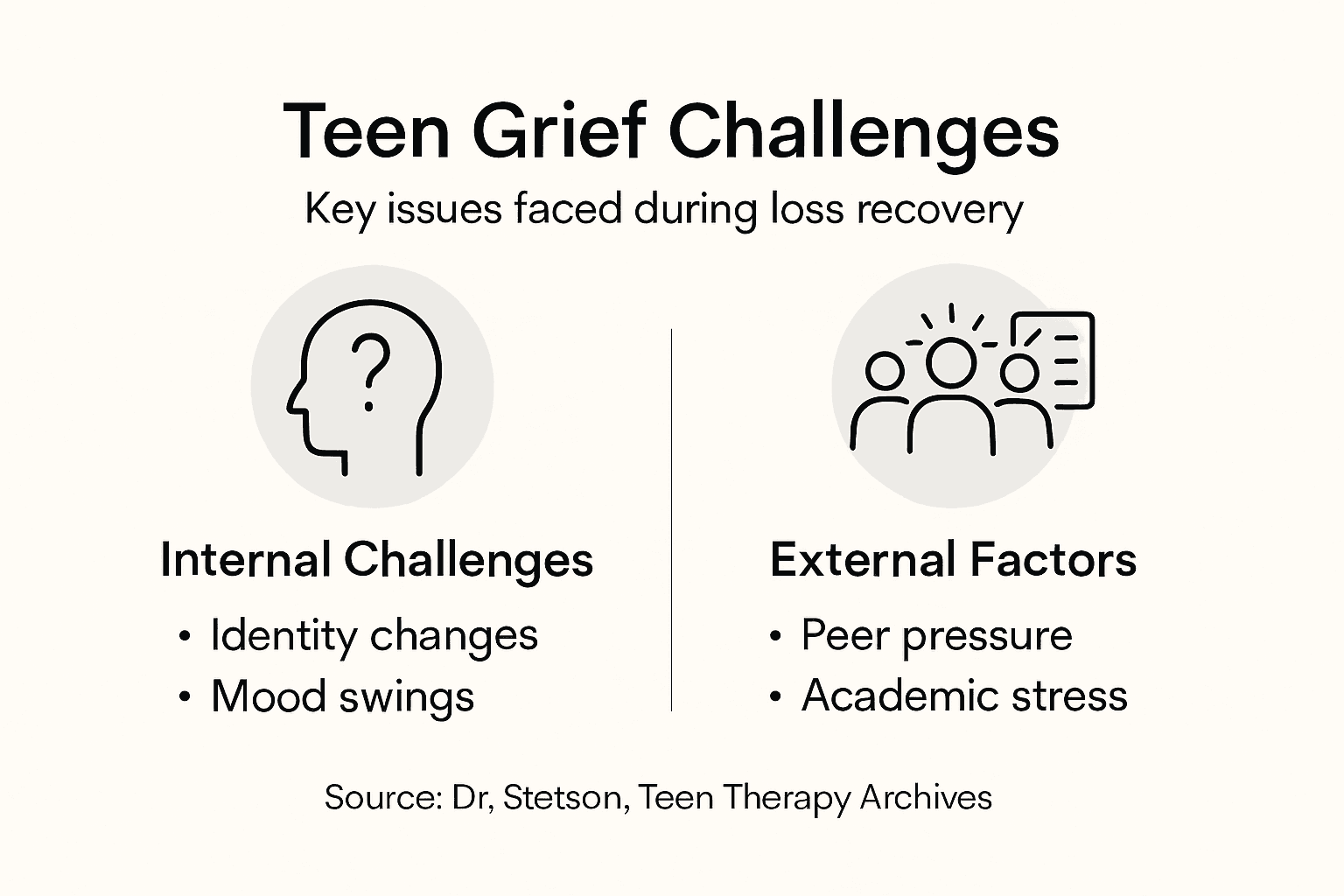
Unique grief challenges for teens include profound identity disruption, social integration struggles, and heightened emotional vulnerability. Adolescents often face disenfranchised grief, where their emotional experiences may be minimized or overlooked by adults who fail to understand the depth of their loss. Family role shifts, peer relationship dynamics, and ongoing neurological development can complicate their grieving process, creating additional layers of emotional complexity that distinguish teenage grief from other life stages.
External factors significantly impact teenage grief experiences, including disrupted social rituals, academic performance challenges, and potential long-term psychological impacts. Marginalized teens may encounter compounded grief challenges, experiencing additional layers of emotional strain related to systemic inequalities and reduced access to supportive resources. The COVID-19 pandemic has further complicated grief experiences, increasing bereavement rates and limiting traditional mourning practices that typically help adolescents process loss and emotional trauma.
Pro tip:Create a personal emotional support network that includes peers, trusted adults, and professional counselors who understand your unique grief journey.
Finding the Right Therapist and Support
Selecting an appropriate therapist requires carefully navigating specialized approaches tailored to adolescent grief experiences. How to find the right therapist for teens involves understanding specific qualifications and therapeutic expertise critical for effective teen grief counseling. Specialized training in adolescent grief therapy distinguishes professionals who can genuinely support teenage emotional healing, making credential evaluation a crucial first step in the support journey.
Effective therapist selection demands comprehensive assessment of professional background, specific grief intervention expertise, and demonstrated experience working with teenagers. The American Psychological Association recommends seeking professionals trained in evidence-based approaches like Trauma-Focused Cognitive Behavioral Therapy and Multidimensional Grief Therapy. Key evaluation criteria should include the therapist’s understanding of developmental grief dynamics, ability to create safe emotional spaces, and skill in addressing complex adolescent psychological needs.
Support networks extend beyond individual therapy, incorporating multiple resources to create comprehensive healing environments. Peer support groups, community counseling services, school-based support programs, and online grief resources can complement professional therapy. Marginalized teens might require additional specialized support that addresses intersectional challenges, including cultural sensitivity, systemic barriers, and unique emotional processing needs. Collaborative approaches involving family, educational institutions, and mental health professionals can create more holistic support structures for grieving teenagers.
Pro tip:Schedule initial consultations with multiple therapists to assess personal comfort and therapeutic compatibility before committing to ongoing counseling.
Support Your Teen’s Healing Journey Through Grief Therapy
Losing someone important is one of the most challenging experiences a teenager can face. This article highlights how grief therapy for teens addresses the unique emotional and developmental struggles that come with loss. If your teen is showing signs of anxiety, mood swings, or withdrawal after a death or major life change, professional support can make a powerful difference. Therapy approaches like Trauma-Focused Cognitive Behavioral Therapy and Multidimensional Grief Therapy help teens build resilience, understand their feelings, and regain hope.

Explore compassionate and personalized care specifically designed for adolescents on our Teen Therapy Archives – Dr. Stephen Oreski & Associates page. Learn more about how grief impacts young minds by visiting our Grief Archives – Dr. Stephen Oreski & Associates. Begin transforming grief into strength today with tailored support that truly understands the experience of adolescent loss. Take the first step now by scheduling a free consultation through https://bergencountytherapist.com and connect your teen with the right therapist.
Frequently Asked Questions
What is grief therapy for teens?
Grief therapy for teens is a specialized therapeutic approach that helps adolescents navigate their emotional responses to loss, recognizing their unique developmental challenges.
What are some common types of grief experienced by teenagers?
Teenagers may experience various types of grief, including anticipatory grief, sudden loss grief, and disenfranchised grief, each manifesting through different emotional responses.
How does trauma-informed therapy differ from traditional therapy for grieving teens?
Trauma-informed therapy focuses on understanding the impact of trauma on emotional processing, offering tailored interventions that address both the emotional and cognitive aspects of grief specific to teens.
What should I look for in a therapist for my grieving teenager?
When selecting a therapist for a grieving teen, it’s essential to consider their specialized training in adolescent grief therapy, experience with evidence-based approaches, and ability to create a safe emotional space for the teen.