

Finding genuine understanding can feel daunting for survivors of abuse in Bergen County. Group therapy offers a safe space where people with shared experiences come together under professional supervision, fostering connection and emotional healing. Supported by trained mental health specialists, these sessions help break isolation and provide new coping strategies. Explore how group therapy can offer comfort, guidance, and a sense of belonging as you seek recovery and personal growth.
Table of Contents
- What Is Group Therapy for Abuse?
- Types of Group Therapy for Abuse Survivors
- How Group Therapy Sessions Are Structured
- Benefits and Healing Potential of Groups
- Risks, Safety, and Confidentiality Concerns
Key Takeaways
| Point | Details |
|---|---|
| Group Therapy Enhances Healing | Group therapy offers survivors emotional support and coping strategies through shared experiences in a safe environment. |
| Diverse Therapy Models | Various group therapy models, such as Cognitive-Behavioral and Psychoeducational, cater to different healing needs of abuse survivors. |
| Structured Sessions Foster Growth | Structured group sessions prioritize safety and personal growth, promoting effective emotional processing and support. |
| Safety and Confidentiality are Crucial | Maintaining confidentiality and emotional safety protocols is essential for building trust within the group therapy setting. |
What Is Group Therapy for Abuse?
Group therapy for abuse is a specialized therapeutic approach designed to support survivors in healing from traumatic experiences through shared understanding and connection. Unlike individual counseling, this powerful intervention brings together individuals who have experienced similar challenges, creating a safe and supportive environment for processing complex emotions.
Group therapy provides survivors with several critical healing opportunities:
- A supportive community of individuals with shared experiences
- Professional guidance from trained mental health specialists
- Opportunities to learn coping strategies from peers
- Reduced feelings of isolation and shame
- Structured pathways for emotional recovery
In these carefully facilitated sessions, survivors can explore their experiences with professional therapeutic leadership. Trauma-informed group therapy approaches create structured environments where participants can safely discuss their experiences, learn from each other, and develop healthier emotional responses.
Typically, group therapy for abuse involves 5-15 participants meeting weekly under professional supervision. These sessions might utilize various therapeutic models – including cognitive-behavioral, skills-development, or support-based approaches – tailored specifically to address the unique psychological impacts of abuse.
Group therapy transforms individual pain into collective healing, allowing survivors to recognize they are not alone in their journey.
Pro tip:When considering group therapy, prioritize finding a professionally led group with trauma-informed facilitators who understand the delicate nature of survivor experiences.
Types of Group Therapy for Abuse Survivors
Survivors of abuse have access to multiple specialized group therapy approaches, each designed to address unique psychological and emotional healing needs. Abuse recovery strategies encompass diverse therapeutic models that provide targeted support for individuals processing traumatic experiences.
Group therapy models for abuse survivors typically include:
- Psychoeducational Groups
- Focus on teaching about trauma and its impacts
- Provide information about healing processes
- Help survivors understand their experiences
- Cognitive-Behavioral Groups
- Challenge and restructure negative thought patterns
- Develop healthier coping mechanisms
- Build emotional resilience
- Skills Development Groups
- Teach practical emotional regulation techniques
- Improve communication and boundary-setting skills
- Develop self-protection and self-care strategies
- Support Groups
- Create safe spaces for shared experiences
- Offer emotional validation
- Reduce feelings of isolation
- Specialized Trauma-Focused Groups
- Address specific types of abuse
- Use targeted therapeutic interventions
- Provide deeply personalized healing approaches
Each group therapy model offers unique benefits, allowing survivors to choose an approach that best matches their individual healing journey. The diversity of these therapeutic models ensures that survivors can find a supportive environment tailored to their specific emotional and psychological needs.
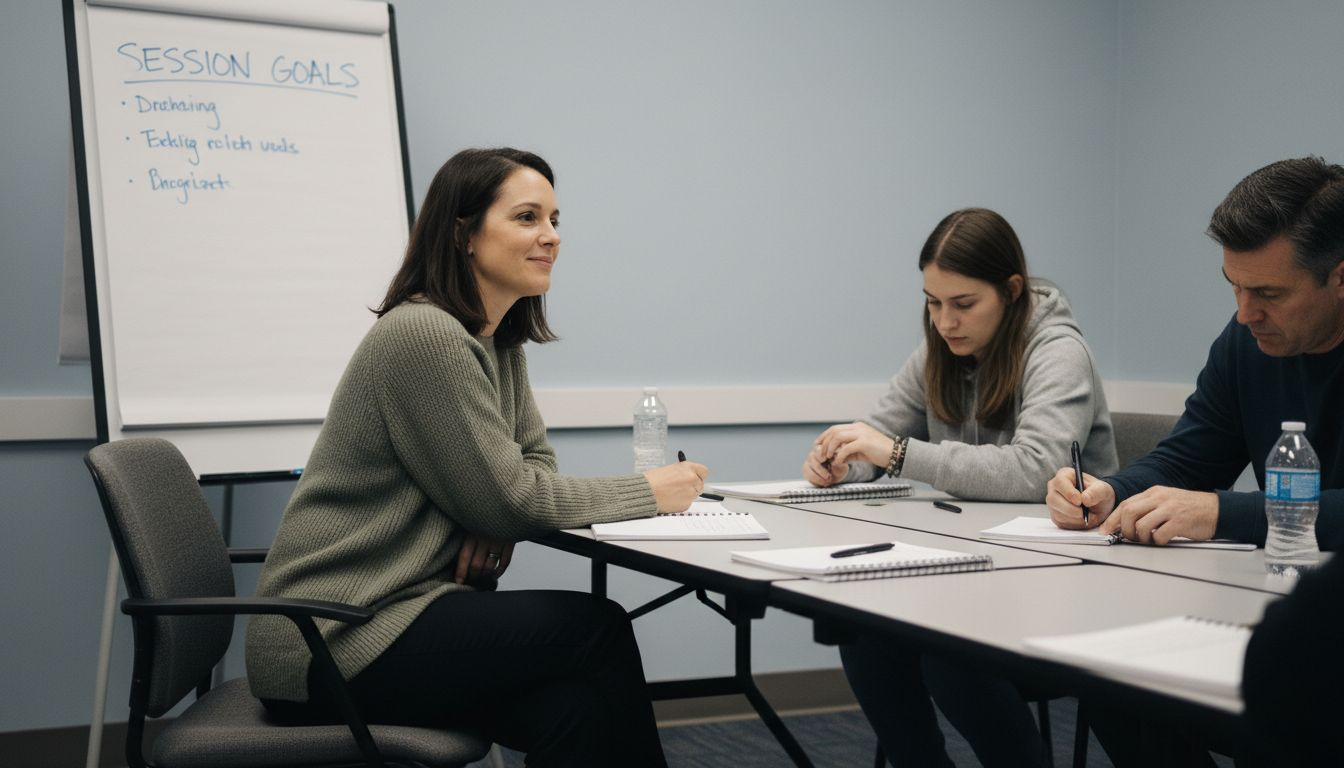
Here is a comparison of common group therapy models for abuse survivors:
| Group Type | Main Focus | Ideal For |
|---|---|---|
| Psychoeducational | Education about trauma | Those seeking knowledge |
| Cognitive-Behavioral | Changing thought patterns | Survivors needing coping tools |
| Skills Development | Building practical life skills | Those wanting social and emotional skills |
| Support | Emotional sharing and connection | Participants seeking peer support |
| Trauma-Focused | Healing specific abuse types | Individuals with unique trauma history |
Healing is not a one-size-fits-all process. The right group therapy approach can transform trauma into personal empowerment.
Pro tip:Consult with a trauma-informed therapist to identify the most appropriate group therapy model for your specific healing needs.
How Group Therapy Sessions Are Structured
Group therapy sessions for abuse survivors follow a carefully designed structure that prioritizes safety, healing, and personal growth. Effective group therapy techniques create a predictable yet dynamic environment that helps participants feel secure and supported throughout their therapeutic journey.
Typical group therapy sessions are structured around several key components:
- Opening and Check-In Phase
- Establish group safety and confidentiality
- Allow participants brief emotional check-ins
- Create space for sharing current experiences
- Focused Discussion or Activity
- Explore specific therapeutic themes
- Engage in guided therapeutic exercises
- Practice new emotional regulation skills
- Processing and Reflection
- Discuss group interactions and insights
- Provide supportive feedback
- Validate individual experiences
- Closing and Integration
- Summarize key session learnings
- Set individual and group intentions
- Provide emotional grounding techniques
Group sizes typically range from 5-15 participants, with sessions lasting 60-90 minutes. Professional facilitators carefully manage group dynamics, ensuring a balance between individual sharing and collective healing. The structure remains flexible, adapting to the group’s emerging needs while maintaining clear therapeutic boundaries.
Healing happens in connection. The structured approach of group therapy transforms individual pain into collective strength.
Pro tip:Arrive with an open mind and commit to the full session duration to maximize therapeutic benefits.
Benefits and Healing Potential of Groups
Group therapy offers survivors of abuse a powerful pathway to healing through shared experiences and collective support. Key group counseling benefits transform individual pain into a collaborative journey of recovery and empowerment.
Transformative benefits of group therapy for abuse survivors include:
- Reducing Isolation
- Demonstrate survivors are not alone
- Create connections with others who understand
- Break down feelings of shame and stigma
- Developing Coping Strategies
- Learn practical emotional regulation techniques
- Observe successful healing approaches from peers
- Practice new communication and boundary-setting skills
- Emotional Validation
- Receive support from individuals with similar experiences
- Normalize complex trauma responses
- Build collective resilience
- Personal Growth
- Challenge negative self-perceptions
- Develop stronger self-understanding
- Cultivate hope and future-oriented thinking
- Safe Skill-Building
- Practice interpersonal skills in supportive environment
- Learn from diverse perspectives
- Build confidence through shared experiences
The collective nature of group therapy creates a unique healing environment that individual therapy cannot replicate. Survivors benefit from witnessing others’ healing journeys, gaining hope, and realizing their experiences are valid and shared by many.
Healing is not a solitary journey. In group therapy, survivors discover strength in connection and shared resilience.
Pro tip:Approach group therapy with an open heart and willingness to both share and listen, recognizing that vulnerability is a pathway to healing.
Risks, Safety, and Confidentiality Concerns
Group therapy for abuse survivors requires carefully designed protocols to protect emotional safety and maintain participant trust. Confidentiality guidelines are essential in creating a secure therapeutic environment where survivors can share vulnerably without compromising their personal boundaries.
Key safety considerations in group therapy include:
- Information Privacy
- Establish strict confidentiality ground rules
- Protect personal details shared during sessions
- Prevent unauthorized information disclosure
- Emotional Safety
- Create supportive, non-judgmental atmosphere
- Monitor group dynamics for potential triggers
- Provide immediate intervention if conflicts arise
- Participant Screening
- Carefully assess group compatibility
- Ensure participants are at similar recovery stages
- Prevent potential re-traumatization
- Consent and Boundaries
- Obtain informed consent from all participants
- Clearly communicate confidentiality limits
- Respect individual comfort levels
- Professional Oversight
- Maintain professional ethical standards
- Implement mandatory reporting protocols
- Prioritize participant physical and emotional safety
Group therapists must balance open communication with strict confidentiality protocols. While participants are informed that complete privacy cannot be guaranteed, professional facilitators work diligently to create a secure, respectful environment that supports healing.
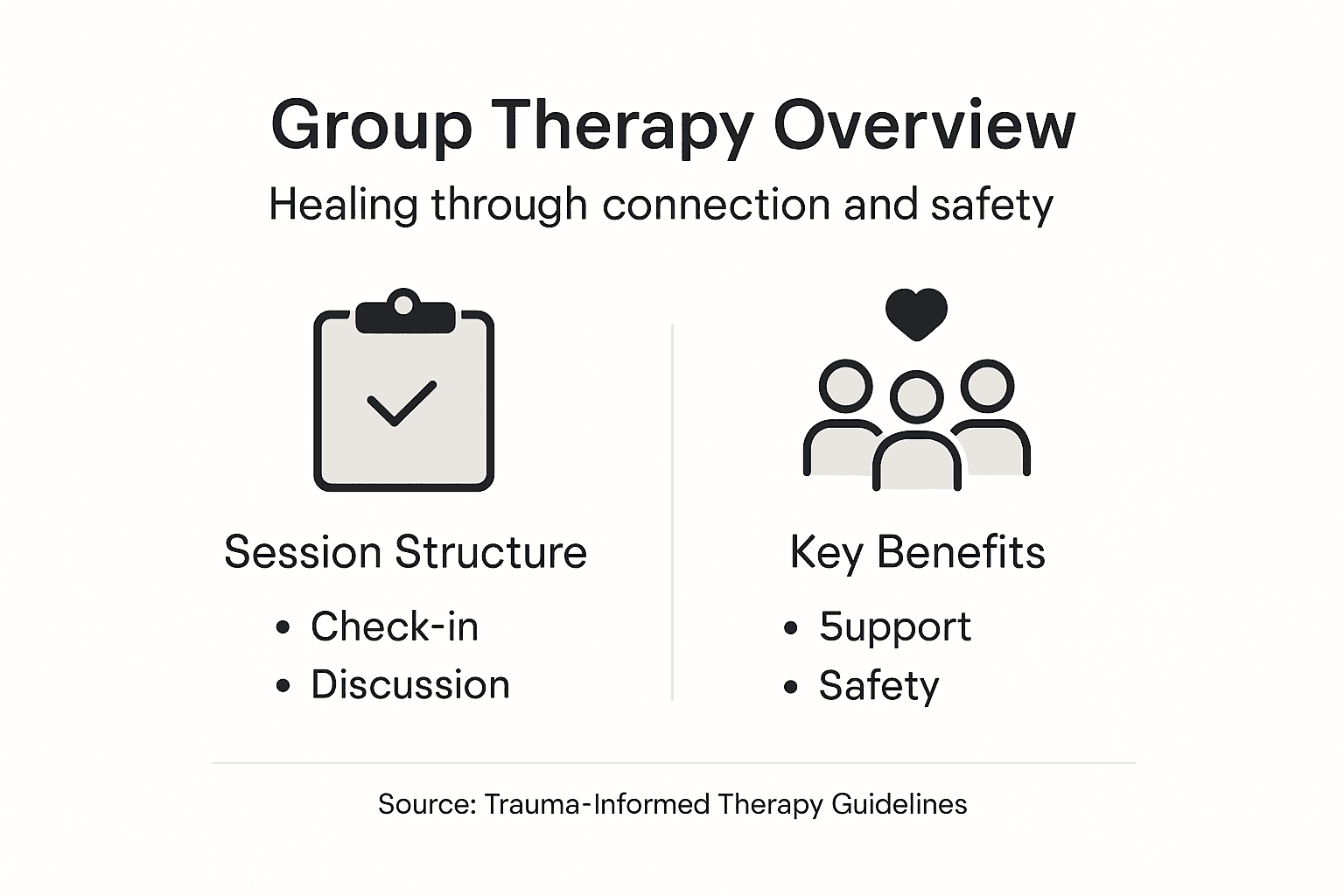
Below is a summary of key safeguards for safe group therapy:
| Safety Measure | How It Protects Participants | Who Is Responsible |
|---|---|---|
| Confidentiality Routines | Prevents info from being shared outside | Facilitator and members |
| Emotional Monitoring | Manages triggers and escalation | Professional facilitator |
| Participant Screening | Ensures group compatibility | Therapist |
| Consent Protocols | Keeps boundaries and expectations clear | All participants |
| Mandatory Reporting | Upholds legal and ethical obligations | Group leader |
Confidentiality is the foundation of trust in group therapy. What is shared in the group, stays in the group.
Pro tip:Always review confidentiality agreements thoroughly and ask questions about privacy protocols before joining a group therapy session.
Find Strength and Support with Group Therapy for Abuse Survivors
Healing from abuse requires connection, understanding, and safe spaces to share your journey. This article highlights how group therapy offers those vital opportunities by building community, providing professional guidance, and reducing isolation. If you are seeking a compassionate and trauma-informed group environment, explore the Group Therapy for Healing and Growth – Dr. Stephen Oreski & Associates services designed to meet your unique healing needs.

Take the important step towards recovery today. Visit https://bergencountytherapist.com to learn more about personalized treatment plans from Dr. Stephen Oreski and his team. You can also explore resources in our trauma Archives – Dr. Stephen Oreski & Associates and Sexual Abuse / Trauma Archives – Dr. Stephen Oreski & Associates to better understand your path forward. Book your free consultation now and join a supportive community committed to lasting positive change.
Frequently Asked Questions
What is group therapy for abuse?
Group therapy for abuse is a therapeutic approach that supports survivors in healing from trauma by creating a safe environment where individuals with shared experiences can connect and process their emotions together.
What are the benefits of group therapy for abuse survivors?
Group therapy offers several benefits, including reducing feelings of isolation, developing coping strategies, providing emotional validation, encouraging personal growth, and creating opportunities for safe skill-building in a supportive community.
How are group therapy sessions structured for abuse survivors?
Sessions typically follow a structured format including an opening check-in, focused discussion or activity, processing and reflection, and a closing integration phase. This structure prioritizes safety and emotional growth, lasting typically 60-90 minutes with 5-15 participants.
What types of group therapy are available for abuse survivors?
Common group therapy types for abuse survivors include psychoeducational groups, cognitive-behavioral groups, skills development groups, support groups, and specialized trauma-focused groups, each addressing different healing needs and therapeutic approaches.
Recommended
- Family Therapy for Abuse: Healing and Rebuilding Trust
- Effects of Child Abuse on Adult Survivors – Dr. Stephen Oreski & Associates
- Group Therapy for Trauma: Building Connection and Healing
- Healing From Harm Inside the Home: Addressing Domestic Violence – Dr. Stephen Oreski & Associates
- Group Therapy Explained: Healing Together in Recovery | Glendora Recovery Center