
Every parent knows the weight that communication struggles and emotional tension can put on the family. In Bergen County, many families search for ways to move past misunderstandings and reconnect with the people who matter most. Group therapy for families creates a supportive space where everyone’s voice matters, helping families develop healthier ways to talk, listen, and heal together.
Table of Contents
- Group Therapy for Families Defined
- Types of Family Group Therapy Approaches
- Core Features and How Sessions Work
- Benefits for Communication and Emotional Health
- Challenges, Misconceptions, and Limitations
- Choosing the Right Family Group Therapist
Key Takeaways
| Point | Details |
|---|---|
| Family Group Therapy Overview | This therapeutic approach treats the family as a whole, addressing communication and relationship dynamics rather than just individual issues. |
| Various Therapy Models | Multiple approaches exist, such as Functional Family Therapy and Multisystemic Therapy, each targeting specific family challenges and dynamics. |
| Session Structure and Benefits | Sessions focus on collaboration, communication skills, and conflict resolution, enhancing emotional health and relationships within the family. |
| Choosing a Therapist | Selecting a qualified family therapist requires assessing their credentials, experience, and compatibility with your family’s needs for effective outcomes. |
Group Therapy for Families Defined
Group therapy for families is a specialized therapeutic approach that addresses psychological challenges by treating the entire family system as an interconnected unit. Unlike traditional individual counseling, this method focuses on improving communication, resolving conflicts, and strengthening relationships among family members.
At its core, family group therapy recognizes that individual psychological problems do not exist in isolation but are deeply embedded within family dynamics. Family counseling models typically involve multiple treatment approaches designed to understand and transform relationship patterns.
Key characteristics of group family therapy include:
- Treating the entire family as a functional system
- Addressing interpersonal communication challenges
- Exploring shared emotional experiences
- Developing healthier interaction strategies
- Promoting collective healing and understanding
Therapeutic models in this approach can vary widely, including:
- Functional Family Therapy
- Multisystemic Therapy
- Attachment-Based Family Therapy
- Cognitive Behavioral Family Therapy
Each model targets specific issues such as adolescent behavior problems, substance use, depression, anxiety, and other mental health challenges. The primary goal is creating more supportive, communicative family environments that facilitate individual and collective emotional wellness.
Family group therapy transforms individual struggles into opportunities for collective healing and growth.
Pro tip:Schedule an initial family consultation to understand how group therapy could specifically benefit your family’s unique dynamics and challenges.
Types of Family Group Therapy Approaches
Family group therapy offers multiple specialized approaches designed to address complex psychological challenges within family systems. Understanding family therapy reveals a rich landscape of therapeutic models, each targeting unique family dynamics and interpersonal challenges.
Contemporary evidence-based approaches include several key methodologies that provide targeted interventions for different family needs:
- Functional Family Therapy: Focuses on transforming destructive interaction patterns
- Multisystemic Therapy: Addresses behavioral issues in adolescents by examining multiple systems
- Strategic Family Therapy: Short-term, goal-oriented approach solving specific family problems
- Narrative Family Therapy: Helps families reframe negative stories and perspectives
- Attachment-Based Family Therapy: Explores emotional connections and attachment styles
Each therapeutic model brings unique strategies to address psychological challenges:
- Structural Family Therapy examines and restructures family boundaries and roles
- Cognitive Behavioral Family Therapy targets specific behavioral and thought patterns
- Bowen Family Systems Therapy explores multigenerational emotional processes
- Brief Strategic Family Therapy provides rapid, solution-focused interventions
These approaches share a common goal: transforming family dynamics by improving communication, resolving conflicts, and creating more supportive emotional environments. Therapists carefully select and customize interventions based on each family’s specific needs, challenges, and relationship patterns.

Here’s a side-by-side look at popular family group therapy models and their main focus areas:
| Therapy Model | Main Focus | Typical Use Case |
|---|---|---|
| Functional Family Therapy | Disrupting negative interactions | Adolescent behavior issues |
| Multisystemic Therapy | Addressing issues across systems | Severe conduct problems |
| Attachment-Based Family Therapy | Improving emotional bonds | Adolescent depression/anxiety |
| Cognitive Behavioral Family Therapy | Modifying thought and behavior patterns | Anxiety, mood, or relational issues |
| Structural Family Therapy | Restructuring family roles/boundaries | Authority struggles or unclear roles |
| Bowen Family Systems Therapy | Multigenerational processes | Persistent emotional patterns |
| Narrative Family Therapy | Reframing family narratives | Overcoming stigmatizing stories |
| Brief Strategic Family Therapy | Short-term problem solving | Acute, targeted conflicts |
Family group therapy is not about assigning blame, but about understanding and healing together.
Pro tip:Approach family therapy with an open mind and willingness to explore new communication strategies that can strengthen your family’s emotional connections.
Core Features and How Sessions Work
Family group therapy sessions create a structured environment where multiple family members collaborate to address psychological challenges and improve interpersonal dynamics. Family therapy vs couples therapy highlights the unique approach of involving entire family systems in the healing process.
Typical family group therapy sessions are characterized by several core features that distinguish them from individual counseling approaches:
- Collaborative participation from all family members
- Structured yet flexible therapeutic environment
- Focus on communication and interaction patterns
- Shared problem-solving strategies
- Exploration of family roles and dynamics
The session process typically follows a systematic approach:
- Initial assessment of family dynamics and presenting challenges
- Establishing therapeutic goals and expectations
- Active intervention and communication skill building
- Implementing strategies for conflict resolution
- Ongoing evaluation and adjustment of therapeutic approaches
Therapists employ specialized techniques to facilitate meaningful interactions, including circular questioning, role enactments, and systemic interventions. These methods help reveal underlying communication patterns, emotional triggers, and relationship dynamics that contribute to family tensions.
Family group therapy transforms individual struggles into collective opportunities for healing and growth.
Pro tip:Approach each therapy session with openness, honesty, and a genuine commitment to understanding each family member’s perspective.
Benefits for Communication and Emotional Health
Family group therapy transforms emotional landscapes by providing powerful mechanisms for improving communication and psychological well-being. Improve communication in relationships demonstrates how structured therapeutic interventions can reshape family dynamics and emotional interactions.
The primary benefits of family group therapy for emotional health include:
- Reduction of anxiety and depressive symptoms
- Enhanced emotional regulation skills
- Improved interpersonal relationship quality
- Development of more effective communication strategies
- Increased family support and emotional bonding
Research indicates that family therapy provides significant psychological advantages through targeted interventions:
- Breaking negative communication patterns
- Creating safe emotional spaces for expression
- Teaching constructive conflict resolution techniques
- Building mutual understanding and empathy
- Supporting individual and collective emotional resilience
Participants typically experience profound shifts in emotional intelligence and relational dynamics. Emotional healing occurs through shared experiences, mutual support, and guided therapeutic techniques that help family members understand each other’s perspectives and emotional triggers.
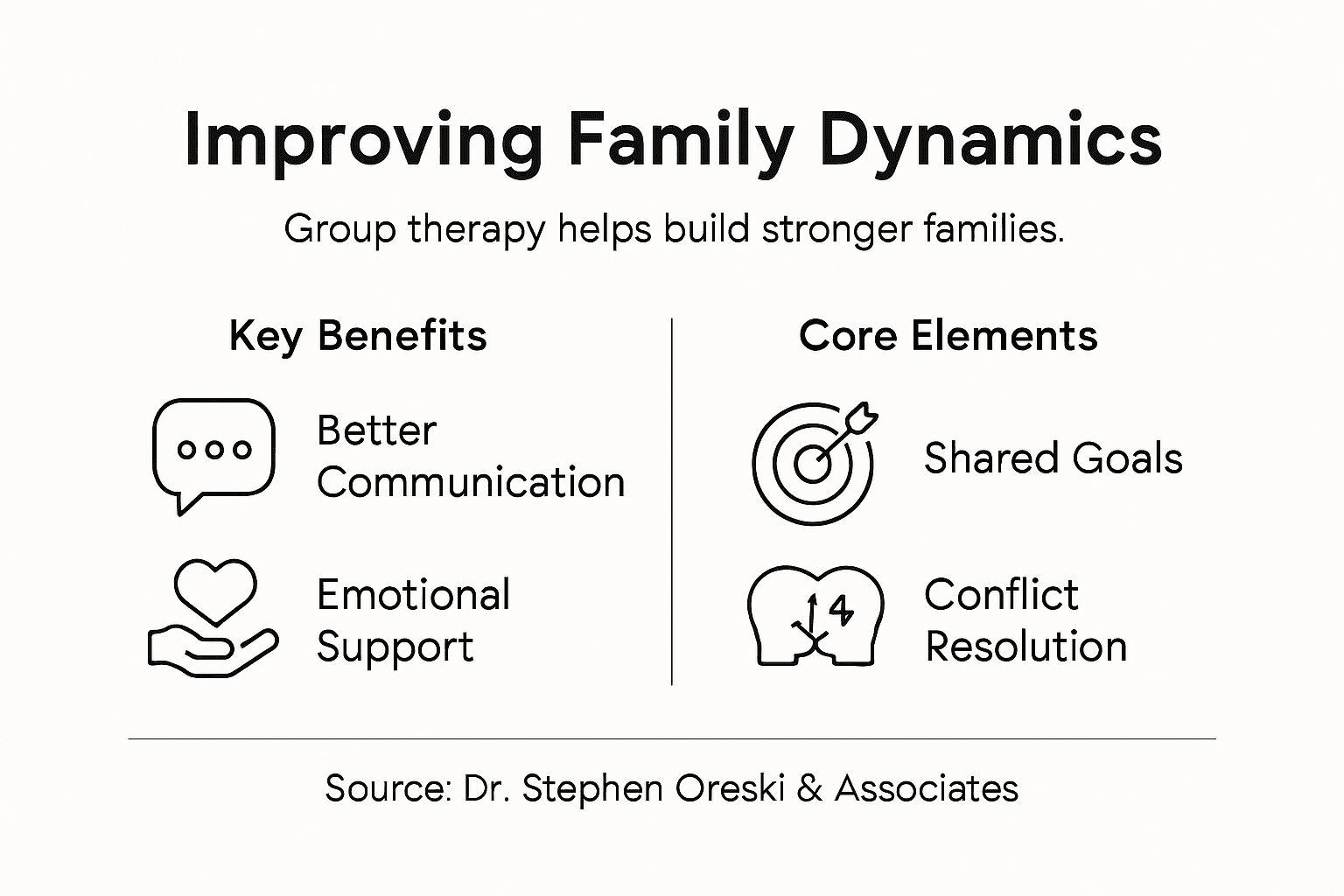
The table below summarizes how family group therapy benefits communication and emotional health:
| Benefit Area | Example Impact | Long-Term Effect |
|---|---|---|
| Communication Skills | Reduced misunderstandings | Healthier relationships |
| Emotional Regulation | Better control of reactions | Increased resilience |
| Conflict Resolution | Quicker positive outcomes | Fewer recurring issues |
| Family Support | Stronger emotional bonds | Lasting mutual trust |
| Empathy & Understanding | Improved perspective-taking | Deeper family connections |
Effective family therapy transforms individual pain into collective healing and growth.
Pro tip:Approach family therapy with genuine openness and a commitment to listening and understanding each family member’s unique emotional journey.
Challenges, Misconceptions, and Limitations
Family group therapy involves complex dynamics that can present significant challenges for participants and therapists alike. Couples how to regulate yourself demonstrates that emotional regulation becomes even more intricate when multiple family members are involved in therapeutic settings.
Common misconceptions about family group therapy include:
- Believing all family problems can be instantly resolved
- Assuming therapists will take sides
- Thinking therapy requires complete agreement among members
- Expecting immediate, dramatic transformations
- Believing participation guarantees relationship repair
Significant challenges in family group therapy often emerge from:
- Individual resistance to change
- Deep-rooted communication barriers
- Unresolved historical family conflicts
- Varying levels of emotional readiness
- Complex interpersonal dynamics
Research indicates that therapeutic effectiveness depends on multiple factors, including participants’ willingness to engage authentically, manage emotional triggers, and commit to sustained personal growth. Therapeutic limitations arise when families approach therapy with unrealistic expectations or minimal commitment to meaningful interaction.
Not every family will experience identical therapeutic outcomes, and progress requires patience and genuine engagement.
Pro tip:Enter family therapy with realistic expectations, understanding that healing is a gradual process requiring consistent effort from all participants.
Choosing the Right Family Group Therapist
Selecting a family group therapist requires careful consideration and strategic evaluation of multiple professional and interpersonal factors. 4 questions to ask when looking for a family therapist highlights the critical importance of making an informed therapeutic choice.
Key qualifications to consider when choosing a family group therapist include:
- Advanced professional credentials in family systems therapy
- Specialized training in group therapeutic techniques
- Proven experience with diverse family dynamics
- Strong communication and facilitation skills
- Demonstrated empathy and professional ethics
Critical steps in the selection process involve:
- Verifying professional certifications
- Checking relevant therapeutic experience
- Assessing therapeutic approach compatibility
- Evaluating communication style and interpersonal skills
- Understanding the therapist’s specific expertise in family dynamics
Professional competence extends beyond academic credentials. Therapeutic compatibility requires a nuanced understanding of family systems, emotional intelligence, and the ability to create a safe, non-judgmental environment that encourages open communication and collective healing.
The right family group therapist transforms challenges into opportunities for growth and understanding.
Pro tip:Schedule initial consultations with multiple therapists to assess their approach, ensuring you find the most compatible professional for your family’s unique needs.
Strengthen Your Family Connections with Proven Group Therapy
Families face complex challenges that often impact communication and emotional health. The article highlights how group therapy for families can transform these struggles into opportunities for healing by addressing relationship patterns and fostering supportive environments. If you recognize the pain points of unresolved conflicts or difficulty expressing emotions within your family, it is crucial to engage in therapeutic approaches that prioritize collective growth and understanding.
Discover how personalized Family Therapy Archives and Group Therapy for Healing and Growth at Dr. Stephen Oreski & Associates provide compassionate, effective support tailored to your family’s unique needs.
Take the next step toward improving your family dynamics today. Visit https://bergencountytherapist.com to schedule a free consultation and connect with experienced therapists who specialize in transforming communication, resolving conflicts, and fostering emotional resilience. Start the journey of healing together now.
Frequently Asked Questions
What is group therapy for families?
Group therapy for families is a therapeutic approach that treats the family as an interconnected unit, focusing on improving communication, resolving conflicts, and strengthening relationships among family members.
How does family group therapy work?
Family group therapy sessions involve collaborative participation from family members, where they explore communication patterns, establish therapeutic goals, and engage in active problem-solving to improve interpersonal dynamics.
What are the main benefits of family group therapy?
The primary benefits include reduced anxiety and depression, enhanced emotional regulation, improved communication skills, stronger familial support, and the development of healthier interaction strategies.
What challenges might families face in group therapy?
Families may encounter challenges such as individual resistance to change, deep-rooted communication barriers, historical conflicts, and varying emotional readiness among members, making progress a gradual process.
Recommended
- Understanding Family Therapy – Dr. Stephen Oreski & Associates
- Family Counseling | Therapy in Bergen County | Paramus, NJ
- The Benefits of Family Counseling? – Dr. Stephen Oreski & Associates
- Role of Family Therapy for Teens – Positive Change Explained
- Benefits of Art in Family Life: Nurturing Bonds and Growth – The Family Portrait Companys