

Finding the right trauma therapist in Bergen County can feel overwhelming when you’re already dealing with emotional pain. With over 500 trauma specialists in the area, how do you identify the professional who truly understands your needs and can guide your healing journey? The choice matters deeply because the therapeutic relationship directly impacts your recovery outcomes. This guide walks you through a clear, step-by-step process to evaluate credentials, assess fit, recognize red flags, and confidently select a trauma therapist who will support your path toward lasting healing and emotional well-being.
Table of Contents
- Key takeaways
- Understanding your trauma therapy needs
- Researching and evaluating trauma therapists in Bergen County
- Assessing fit, logistics, and red flags to finalize your choice
- Navigating complex trauma and continuing your healing journey
- Explore trauma therapy options with Dr. Stephen Oreski & Associates
- Frequently asked questions
Key Takeaways
| Point | Details |
|---|---|
| Identify trauma needs | Clarify your trauma type, symptoms, and goals to match the right therapist. |
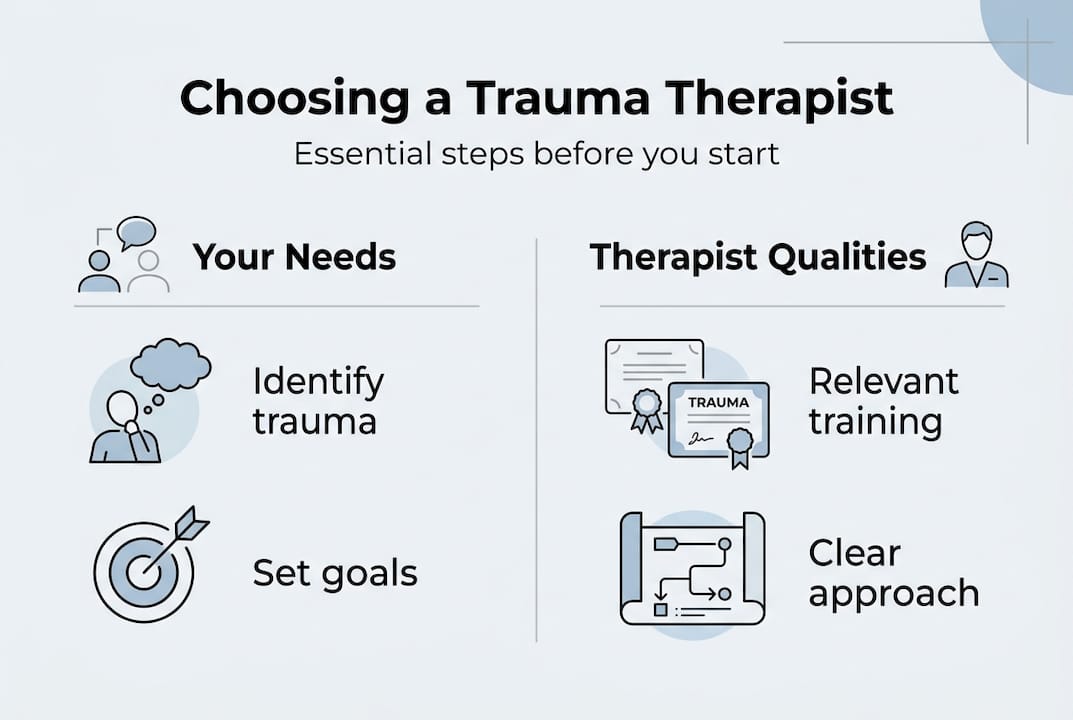
| Check credentials and training | Verify licensure and trauma specific training such as EMDR or trauma focused CBT. |
| Assess fit and logistics | Use consultations to judge rapport and confirm insurance, scheduling, and modality compatibility. |
| Watch for red flags | Be alert for minimizing trauma, unsafe practices, or boundary violations in care. |
| Online options and directories | Use trusted directories and consider online therapy to improve accessibility and options. |
Understanding your trauma therapy needs
Before you start contacting therapists, take time to identify specific trauma needs as your first step in choosing a trauma therapist. Understanding what you’re dealing with helps you find professionals who specialize in your particular situation. Trauma comes in many forms, and recognizing your experience matters for effective treatment.
Consider whether you experienced a single traumatic event like an accident or assault, or whether you’re dealing with complex trauma from repeated experiences such as childhood abuse or domestic violence. The type of trauma shapes which therapeutic approaches will work best for you. Complex trauma often requires different treatment phases than single-incident PTSD.
Think about how trauma currently affects your daily life. You might notice symptoms like intrusive memories, hypervigilance, emotional numbness, relationship difficulties, or physical stress responses. Some people experience full PTSD criteria, while others struggle with subclinical symptoms that still disrupt functioning. Parents should evaluate whether their child needs specialized support, as therapy approaches for childhood trauma differ significantly from adult treatment.
Clarifying your therapy goals provides direction for your search:
- Reducing specific PTSD symptoms like nightmares or panic attacks
- Improving emotional regulation and stress management skills
- Processing traumatic memories to decrease their emotional charge
- Rebuilding trust and improving relationship patterns
- Developing a coherent narrative about what happened to you
When you know your needs and goals, you can target therapists with relevant expertise and training. A therapist who excels at treating combat PTSD may not be the best fit for complex childhood trauma, and vice versa. This clarity saves time and increases your chances of finding effective help quickly.
Pro Tip: Write down your trauma history, current symptoms, and therapy goals before contacting therapists. This preparation helps you communicate clearly during consultation calls and evaluate whether each professional can address your specific needs.
Researching and evaluating trauma therapists in Bergen County
Once you understand your needs, start building a list of qualified candidates. Bergen County has over 500 therapists specializing in trauma and PTSD, many offering EMDR and CBT approaches. This abundance creates options but requires systematic evaluation.
Use these steps to research trauma therapists effectively:
-
Search trusted online directories like Psychology Today, filtering specifically for trauma specialization and Bergen County location. These platforms let you review therapist profiles, specialties, and accepted insurance.
-
Verify professional licensure through New Jersey state databases. Key credentials for trauma therapists include Licensed Clinical Social Worker (LCSW), Licensed Professional Counselor (LPC), Licensed Marriage and Family Therapist (LMFT), or Psychologist, each requiring 3,000 supervised clinical hours and passing state exams.
-
Look beyond basic licensure to trauma-specific training credentials. Eye Movement Desensitization and Reprocessing (EMDR) certification indicates specialized training in processing traumatic memories. Trauma-Focused Cognitive Behavioral Therapy (TF-CBT) training shows expertise in evidence-based approaches, particularly valuable for children and adolescents. Dialectical Behavior Therapy for PTSD (DBT-PTSD) certification suggests skills in treating complex trauma with emotion regulation challenges.
-
Prioritize trauma-informed therapists who emphasize safety, allow you to control the pace of therapy, and understand how trauma affects the brain and body. These professionals create therapeutic environments where you feel secure enough to explore painful experiences without retraumatization.
-
Contact several therapists for brief consultation calls. Most offer free 15-20 minute phone conversations where you can ask about their approach, experience with your type of trauma, and availability. Pay attention to how comfortable you feel during this initial contact.
When evaluating choosing trauma counseling in NJ, consider whether you prefer a smaller practice with personalized attention or a larger clinic with more scheduling flexibility and diverse specialties. Both models can provide excellent care, but they offer different experiences.

Pro Tip: Prepare three to five specific questions about the therapist’s experience with your trauma type before consultation calls. Ask how they typically approach treatment, what success looks like, and how they handle setbacks. Their answers reveal whether their style matches your needs.
During your research, notice which therapists explain their approaches clearly without jargon. Professionals who can translate complex concepts into understandable language tend to be better communicators throughout treatment. This skill matters tremendously when you’re working through difficult emotional territory and need clear guidance.
Assessing fit, logistics, and red flags to finalize your choice
Narrowing your list to two or three candidates requires evaluating both practical factors and therapeutic compatibility. Schedule consultation sessions to experience each therapist’s communication style firsthand. Therapeutic alliance and client safety pace are key for positive outcomes, so trust your gut reactions during these meetings.
During consultations, assess these fit indicators:
- Do you feel heard and validated when describing your experiences?
- Does the therapist explain their approach in ways that make sense to you?
- Can you imagine being vulnerable and honest with this person?
- Does their office environment or video setup feel comfortable and private?
- Do they respect your questions and concerns without defensiveness?
Logistical considerations matter just as much as personal connection. Verify whether the therapist accepts your insurance or offers sliding scale fees if you’re paying out of pocket. Understand their cancellation policy, typical session frequency, and availability for your preferred appointment times. Some therapists maintain waitlists, so ask about realistic start dates.
Consider whether in-person or online therapy better fits your situation. The benefits of online therapy include increased access for people with mobility limitations, busy schedules, or transportation challenges. Research shows virtual trauma therapy can be highly effective while offering convenience and privacy.
Be alert for warning signs that suggest a therapist may not provide safe, effective trauma care. Red flags include minimizing trauma or pushing unsafe treatments like couples therapy when domestic abuse is present. Other concerning behaviors include:
- Rushing you to process traumatic memories before establishing safety and coping skills
- Dismissing your concerns or telling you how you should feel
- Sharing excessive personal information or blurring professional boundaries
- Guaranteeing specific outcomes or promising quick fixes
- Pressuring you to continue therapy when you want to pause or end treatment
Pro Tip: Trust takes time to build, but you should feel basic safety and respect from the first session. If something feels off, honor that instinct. You can switch therapists without guilt, and many people try several professionals before finding the right match.
“The most important factor in therapy success isn’t the specific technique used, it’s the quality of the relationship between therapist and client. When you feel safe, understood, and respected, healing becomes possible even when the work feels difficult.”
Choose a therapist who demonstrates genuine respect for your healing timeline. Trauma recovery isn’t linear, and effective professionals understand that progress includes setbacks. They should celebrate small victories while maintaining realistic expectations about the work ahead. This balanced perspective helps you stay motivated through challenging phases of treatment.
Navigating complex trauma and continuing your healing journey
If you’re dealing with complex PTSD from prolonged or repeated trauma, understand that treatment typically follows a phased approach for complex PTSD. The first phase focuses on stabilization, teaching you skills to manage overwhelming emotions and stay grounded in the present. Only after establishing this foundation do you move into trauma processing work. Rushing into memory work without adequate preparation can destabilize you and slow overall progress.
DBT-PTSD shows particular effectiveness for people with complex trauma, especially when borderline personality disorder symptoms coexist with PTSD. This approach combines trauma processing with skills for emotional regulation, distress tolerance, and interpersonal effectiveness. The structured format provides containment that helps you process difficult material without becoming overwhelmed.
Comparing trauma therapy approaches helps you understand your options:
| Therapy Type | Best For | Key Features | Considerations |
|---|---|---|---|
| EMDR | Single-incident trauma, PTSD | Bilateral stimulation, memory reprocessing | Requires ability to tolerate distress |
| TF-CBT | Children and teens with trauma | Structured, includes parents, evidence-based | Age-specific, family involvement needed |
| DBT-PTSD | Complex trauma with emotion dysregulation | Skills training plus exposure | Longer treatment, requires practice |
| Internal Family Systems (IFS) | Parts work, self-compassion | Explores internal system of parts | Caution with dissociation or eating disorders |
| Prolonged Exposure | PTSD with avoidance | Gradual confrontation of triggers | Requires commitment to homework |
Expert research shows that multimodal therapies combining techniques can be more effective than single methods, but watch for destabilization risks with some approaches. Internal Family Systems, while popular, may not suit everyone. People with significant dissociation or eating disorders should proceed cautiously, as the parts-focused work can sometimes increase fragmentation rather than integration.
Maintain realistic expectations throughout your healing journey:
-
Progress isn’t linear. You’ll have good weeks and difficult weeks, and setbacks don’t erase previous gains.
-
Symptom reduction takes time. Most evidence-based trauma therapies require 12-20 sessions for meaningful change, and complex trauma often needs longer treatment.
-
Self-care supports but doesn’t replace professional help. Exercise, sleep, nutrition, and social connection enhance therapy but can’t substitute for it.
-
Healing doesn’t mean forgetting. The goal is reducing emotional charge around memories so they no longer control your present life.
-
You may need different therapists at different stages. The professional who helps you stabilize might not be the same one who guides you through trauma processing or maintenance phases.
If you’re exploring c-ptsd symptoms and therapy, recognize that complex trauma affects identity, relationships, and worldview more pervasively than single-incident trauma. Treatment addresses not just specific memories but also the broader impacts on how you see yourself and relate to others. This deeper work requires patience and a strong therapeutic alliance.
Consider reviewing practical tips for choosing therapy types to understand how different modalities address various mental health concerns. Some people benefit from combining trauma therapy with other supports like group therapy, psychiatric medication, or complementary practices such as yoga or mindfulness training.
Remember that seeking help demonstrates strength, not weakness. Trauma changes brain functioning in ways that make recovery difficult without professional support. The coping mechanisms that helped you survive may now interfere with thriving. A skilled trauma therapist helps you update these patterns and develop new ways of being in the world.
Explore trauma therapy options with Dr. Stephen Oreski & Associates
Finding the right trauma therapist in Bergen County becomes easier when you know where to start. Dr. Stephen Oreski & Associates offers personalized trauma therapy tailored specifically to Bergen County residents’ needs. Our experienced licensed therapists provide EMDR, CBT, and other trauma-informed approaches in a supportive environment that prioritizes your safety, respects your healing pace, and partners with you throughout your journey.

Whether you’re dealing with recent trauma or long-standing complex PTSD, our team has the specialized training and compassionate approach to support your recovery. We offer both in-person and online therapy options to fit your lifestyle and comfort level. Explore additional resources on how to track your mental health progress and learn about psychotherapy options available. Ready to begin? Discover how simple psychotherapy treatment start can be with our straightforward intake process and free consultation calls.
Frequently asked questions
How do I know if a trauma therapist is right for me?
Assess your comfort level during the initial consultation. A good trauma therapist listens without judgment, respects your pace, and explains their approach clearly. Trust and safe communication are essential indicators of fit, though building deep trust takes multiple sessions.
Can online trauma therapy be as effective as in-person sessions?
Research demonstrates that online therapy for PTSD shows large effect sizes comparable to in-person treatment. Virtual sessions expand access for people with scheduling constraints, mobility limitations, or transportation challenges while maintaining treatment effectiveness. Many clients appreciate the privacy and convenience of receiving care from home.
What should parents look for when seeking trauma therapy for their child?
Prioritize therapists with specific training in child trauma and family systems. Childhood trauma therapy approaches like Trauma-Focused Cognitive Behavioral Therapy (TF-CBT) are especially effective for children and teens. Look for professionals who include parents in the treatment process and use age-appropriate techniques.
How long does trauma therapy typically take to show results?
Most evidence-based trauma therapies produce noticeable symptom reduction within 12-20 sessions for single-incident trauma. Complex PTSD from prolonged experiences typically requires longer treatment, often six months to two years. Progress varies based on trauma severity, personal resources, and treatment consistency.
Should I continue therapy if I feel worse initially?
Feeling temporarily worse can be normal when beginning trauma work, as you’re confronting avoided experiences. However, discuss concerns with your therapist immediately. They should validate your experience, adjust pacing if needed, and ensure you have adequate coping skills before proceeding with deeper trauma processing work.