

Finding the right online therapist in Bergen County can feel overwhelming when you’re already struggling with anxiety, depression, or life challenges. With countless profiles, credentials, and therapy approaches to consider, many people delay getting help or settle for a poor fit. This guide walks you through proven, research-backed steps to confidently select an effective online therapist who matches your needs and communication style. You’ll learn what truly predicts therapy success, how to evaluate credentials and therapeutic approaches, and when to adjust your choice for better outcomes.
Table of Contents
- Understanding The Problem: Why Choosing The Right Online Therapist Matters
- Preparing To Choose: Assessing Your Needs And Therapy Options
- Executing The Search: Finding And Evaluating Online Therapists In Bergen County
- Verifying Your Choice: Ensuring Effective Therapy And Knowing When To Re-Evaluate
- Discover Expert Online And In-Person Therapy Options In Bergen County
- How To Choose Online Therapist: Frequently Asked Questions
Key takeaways
| Point | Details |
|---|---|
| Therapeutic alliance matters most | The therapeutic relationship predicts success more than the specific therapy type you choose. |
| Online therapy works effectively | Research shows online therapy achieves comparable results to in-person sessions for anxiety and depression. |
| Prepare before searching | Clarify your mental health goals and understand therapy approaches like CBT before evaluating therapists. |
| Trial sessions reveal fit | Initial consultations help you assess communication style and therapeutic rapport before committing long term. |
| Monitor and adjust as needed | Track your progress and be willing to switch therapists if the relationship or outcomes aren’t meeting your needs. |
Understanding the problem: Why choosing the right online therapist matters
Your choice of therapist impacts your mental health journey more than most people realize. The therapeutic relationship predicts success more powerfully than the specific type of therapy used. This alliance includes trust, shared goals, and mutual understanding between you and your therapist. When you feel heard and supported, you’re more likely to engage fully in treatment and experience lasting improvement.
Many clients make the mistake of focusing solely on therapy credentials or modalities while overlooking relationship quality. They search for someone who practices a specific technique they read about online, then wonder why therapy feels disconnected or unhelpful. The connection you build matters enormously. Research confirms that therapeutic alliance based on shared purpose forms the foundation of effective psychotherapy across all approaches.
Online therapy introduces unique considerations for building this alliance. While video sessions can foster strong connections, studies show the therapeutic bond may be slightly less robust than face-to-face interactions. This doesn’t mean online therapy is inferior. It simply means you need to be more intentional about finding a therapist whose communication style translates well through digital platforms. The benefits of online therapy include convenience and accessibility, but maximizing those advantages requires selecting someone who excels at virtual rapport building.
Understanding why the therapeutic relationship drives outcomes empowers you to make better decisions. You’ll prioritize chemistry and communication during initial consultations rather than just checking boxes on a credentials list. You’ll recognize that a licensed therapist with impressive training still won’t help you if you don’t feel comfortable opening up to them. This awareness shifts your selection process from transactional to relational, dramatically improving your chances of finding effective support.
“The quality of the therapeutic relationship matters more than the brand name of the therapy approach. Focus on finding someone you trust and feel understood by.”
Key factors that strengthen therapeutic alliance include:
- Feeling genuinely heard and validated during sessions
- Agreeing on treatment goals and how to measure progress
- Trusting your therapist’s expertise while maintaining collaborative decision making
- Experiencing consistent empathy and non-judgmental responses to your concerns
Preparing to choose: Assessing your needs and therapy options
Before searching therapist directories, invest time clarifying what you actually need from therapy. Write down specific issues you want to address, whether that’s managing panic attacks, improving relationship patterns, processing past trauma, or building coping skills for daily stress. Vague goals like “feel better” make it harder to evaluate whether a therapist specializes in your concerns. Concrete objectives help you filter candidates who have relevant experience and training.

Understanding common therapy approaches saves you from confusion during your search. Cognitive Behavioral Therapy effectively treats anxiety and depression by helping you identify and change unhelpful thought patterns. Other evidence-based approaches include psychodynamic therapy for exploring unconscious patterns, acceptance and commitment therapy for building psychological flexibility, and EMDR for trauma processing. You don’t need to become an expert, but knowing basic differences helps you ask informed questions during consultations.
Watch for red flags that suggest a therapist may not be right for you. Therapists over-identified with one specific brand of therapy sometimes force every client into the same mold regardless of individual needs. Similarly, therapists claiming expertise in ten different specialties may lack depth in any single area. Genuine specialists typically focus on a few related concerns and can articulate why their approach fits your situation.
Online therapy introduces logistical considerations beyond traditional in-person care. Think about where you’ll take sessions privately, whether your home internet connection supports video calls reliably, and what time slots work with your schedule. Consider your comfort level with technology and whether you prefer typing, talking, or video formats. Some people thrive with the slight distance of a screen, while others find it harder to connect virtually. Honest self-assessment about these preferences prevents frustration later.
Pro Tip: Create a simple checklist of your top three therapy goals, preferred session format (video, phone, or messaging), and any deal breakers like religious orientation or specific trauma training. This reference sheet keeps you focused during consultations when nerves might cloud your judgment.
Additional preparation steps include:
- Checking whether your insurance covers online therapy and which providers are in network
- Researching typical costs in Bergen County to set realistic budget expectations
- Identifying backup childcare or private space arrangements for uninterrupted sessions
- Reviewing choosing the right type of therapy to understand how different modalities work
- Learning about cognitive behavioral therapy benefits if anxiety or depression are primary concerns
Executing the search: Finding and evaluating online therapists in Bergen County
Start your search using trusted directories that verify therapist credentials and licenses. Psychology Today, TherapyDen, and your insurance provider’s directory offer filtered searches by location, specialty, and online availability. Bergen County has many licensed therapists offering virtual sessions, so narrow your list to five or six candidates who match your preparation checklist. Read their full profiles carefully, noting their therapeutic approaches, years of experience, and what populations they typically serve.
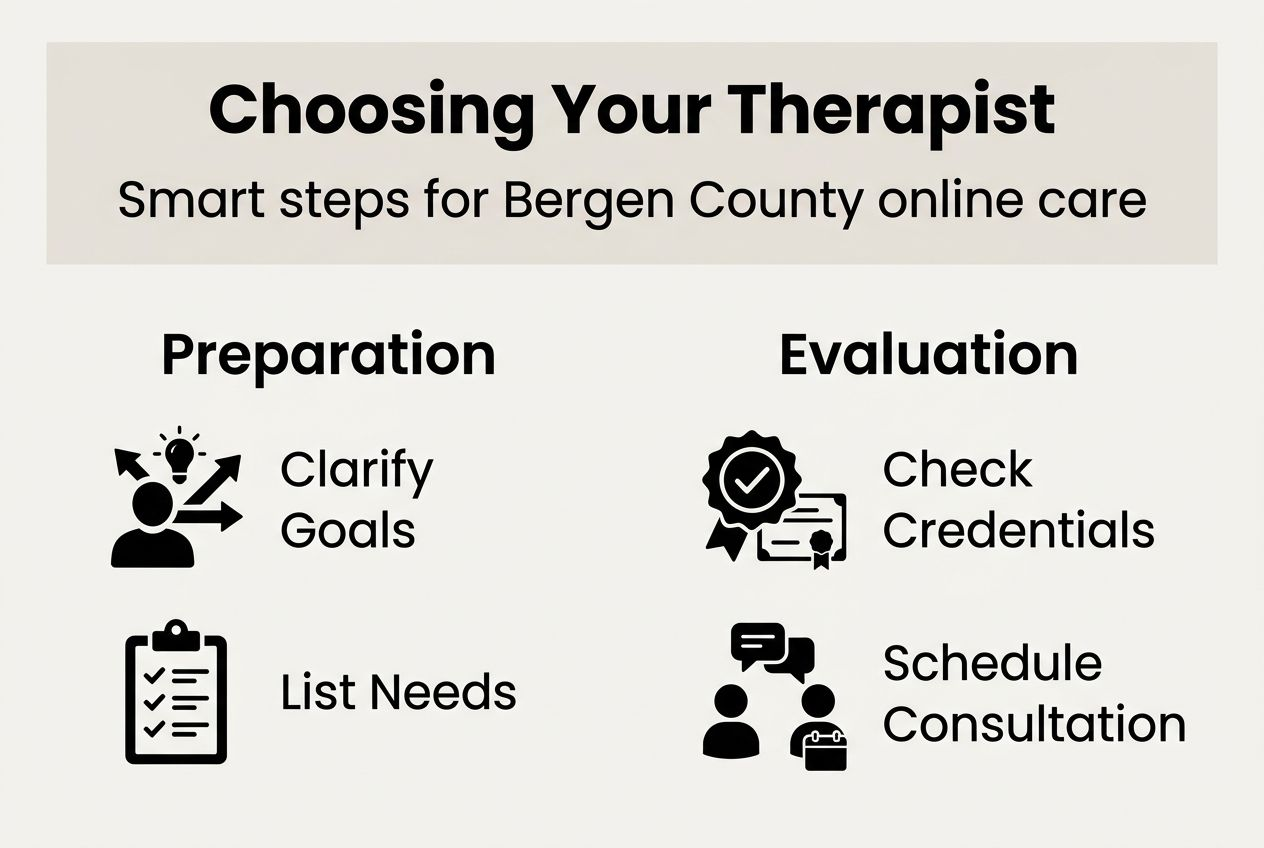
Verify credentials independently rather than relying solely on directory listings. Check the New Jersey Division of Consumer Affairs website to confirm active licenses without disciplinary actions. Look for therapists with specific training in online therapy delivery, not just those who added virtual sessions during the pandemic. Experience matters because conducting effective therapy through video requires different skills than in-person work. Therapists who invested in telehealth training typically provide better digital experiences.
Request initial consultations with your top three candidates. Most therapists offer free 15 to 20 minute phone calls to discuss your needs and their approach. Prepare questions about their experience treating your specific concerns, their typical treatment timeline, and how they measure progress. Pay attention to how they communicate during this brief interaction. Do they listen actively or rush through a sales pitch? Do their answers feel genuine and tailored to you, or generic and scripted? Trust your gut reactions about whether you could open up to this person.
Compare online and in-person therapy factors relevant to your situation:
| Factor | Online Therapy | In-Person Therapy |
|---|---|---|
| Accessibility | High flexibility with scheduling and location | Limited by office hours and commute time |
| Privacy concerns | Requires secure home space and technology | Private office setting guaranteed |
| Therapeutic alliance | Slightly lower than face-to-face but still effective | Stronger non-verbal communication and rapport |
| Cost | Often lower, no commute expenses | May include travel costs and time |
| Treatment efficacy | Comparable effectiveness for anxiety and depression | Full sensory presence aids certain therapies |
Follow these steps to conduct thorough evaluations:
- Schedule consultations with three therapists who meet your basic criteria and have availability matching your schedule
- Prepare identical questions for each consultation to enable fair comparisons of their responses and communication styles
- Ask specifically about their experience with online therapy delivery and what platforms they use for secure sessions
- Inquire how they handle technical difficulties, emergencies, and communication between scheduled sessions
- Request information about their cancellation policies, payment options, and whether they provide documentation for insurance reimbursement
- Assess whether they explain their therapeutic approach clearly and connect it specifically to your stated goals
Pro Tip: During consultations, notice whether the therapist asks thoughtful questions about your situation or dominates the conversation. Good therapists demonstrate curiosity about your unique experience rather than immediately prescribing solutions.
Explore resources like booking therapy appointments online to understand the scheduling process and what to expect. Learn about the role of psychotherapy online to set realistic expectations for virtual treatment. Trial sessions after the initial consultation help confirm your choice before committing to ongoing therapy. Many therapists allow you to book one or two paid sessions to experience their full approach before deciding on a longer treatment plan.
Verifying your choice: Ensuring effective therapy and knowing when to re-evaluate
Recognize signs that therapy is working through both objective and subjective measures. You might notice reduced anxiety symptoms, improved sleep patterns, better relationship interactions, or increased ability to handle daily stressors. Post-treatment improvements correlate with stronger therapeutic alliance after treatment begins. Track these changes in a journal or mood app to identify patterns over time rather than relying on memory alone.
The therapeutic relationship should feel progressively stronger as sessions continue. You’ll find yourself opening up more easily, trusting your therapist’s guidance, and feeling genuinely supported even when discussing difficult topics. If sessions consistently feel awkward, judgmental, or unhelpful after four to six weeks, that’s valuable feedback. Effective therapy doesn’t always feel comfortable, but it should feel productive and safe.
Understand the limitations inherent in online therapy so you can address them proactively. Video sessions reduce non-verbal cues that therapists use to gauge your emotional state. Technical glitches can disrupt emotional moments and break therapeutic flow. Some people struggle to feel fully present through a screen, especially when processing trauma or grief. Online therapy reduces stigma and improves access while in-person therapy provides more privacy and stronger rapport. Discuss these challenges openly with your therapist to find solutions.
Know when to consider switching therapists or modalities:
- You’ve completed eight to ten sessions without any noticeable progress toward your goals
- You feel judged, misunderstood, or dismissed when sharing vulnerable information
- Your therapist frequently cancels, reschedules, or seems distracted during sessions
- The therapeutic approach doesn’t match your learning style or feels forced rather than collaborative
- You’ve achieved your initial goals and need someone with different expertise for new concerns
Switching therapists isn’t failure. It’s an informed decision to optimize your care. Many people try two or three therapists before finding the right match. Be honest with your current therapist about your concerns first, as they may adjust their approach or refer you to a better fit. If that conversation feels impossible, that’s additional confirmation you need a change.
Pro Tip: Set specific three month goals with your therapist during your first session and schedule a progress review. This creates accountability and a natural checkpoint to evaluate whether the relationship and treatment are working.
Apply these practical strategies to strengthen your online therapy experience:
- Create a dedicated therapy space in your home with minimal distractions and good lighting
- Use headphones to improve audio quality and maintain privacy from household members
- Test your technology setup before each session to minimize technical disruptions
- Keep a therapy journal to track insights, homework assignments, and questions between sessions
- Practice tracking your mental health using simple mood logs or symptom scales
Discover expert online and in-person therapy options in Bergen County
Choosing an online therapist becomes easier when you have access to experienced professionals who understand both virtual care and the unique needs of Bergen County residents. Our practice offers trusted local therapists with extensive training in evidence-based approaches including cognitive behavioral therapy, psychodynamic therapy, and trauma-focused treatment. We’ve helped hundreds of clients build strong therapeutic alliances through both online and in-person sessions.
Every therapist on our team brings specialized expertise tailored to different life stages and mental health concerns. Whether you’re managing anxiety, navigating relationship challenges, processing past trauma, or supporting a teen through difficult transitions, we match you with someone who truly understands your situation. Our psychotherapy options include individual, couples, family, and specialized LGBTQIA affirming care.
We make getting started simple and pressure free. Schedule a free consultation to discuss your needs, learn about our approach, and determine whether we’re the right fit. Our online sessions provide the same quality care as in-person visits with added convenience and flexibility. Take the first step toward feeling better by exploring how to begin therapy in Bergen County or learning more about online therapy benefits specific to your situation.
How to choose online therapist: frequently asked questions
What questions should I ask during the first session with an online therapist?
Ask about their experience treating your specific concerns, their typical treatment approach and timeline, and how they measure progress. Inquire about their online therapy training, technical setup, and policies for handling emergencies or between-session communication. Most importantly, ask how they build therapeutic alliance virtually and what you can do to maximize the effectiveness of online sessions.
How do I know if online therapy is right for my mental health needs?
Online therapy works well for anxiety, depression, relationship issues, and many other common concerns. It may be less suitable if you need intensive crisis intervention, have severe symptoms requiring close monitoring, or struggle with technology that causes additional stress. Consider trying a few online sessions to assess whether you can build rapport and engage fully through video format before committing long term.
What are key signs that I should switch therapists?
Switch if you feel consistently misunderstood, judged, or dismissed after multiple sessions. Other red flags include lack of progress after two to three months, frequent cancellations or distracted behavior from your therapist, or feeling pressured into approaches that don’t fit your values. Trust your instincts when something feels off, and remember that finding the right fit sometimes requires trying multiple therapists.
How can I maintain privacy during online therapy sessions?
Use a private room with a locked door and inform household members of your session times to prevent interruptions. Wear headphones to keep conversations confidential and position your camera so the background doesn’t reveal sensitive information. Connect through a secure, password-protected wifi network rather than public internet. Discuss privacy concerns with your therapist, who can adjust scheduling or suggest additional strategies for your specific living situation.
How long does it typically take to see results from online therapy?
Many people notice small improvements within four to six sessions as they learn new coping skills and build therapeutic rapport. Significant symptom reduction often occurs within three to six months of consistent weekly sessions. Timeline varies based on your concerns, treatment approach, and engagement level. Review choosing the right type of therapy tips to understand how different modalities affect treatment duration and set realistic expectations with your therapist from the start.