

Finding a therapist for sexual abuse recovery can feel overwhelming, especially when you need specialized care that truly understands your story. Many Bergen County adults want more than a general counselor—they seek someone who brings compassionate expertise in sexual abuse trauma. This guide breaks down each step, from understanding your needs to choosing a therapist with the right qualifications, so you can confidently access professional support on your own terms.
Table of Contents
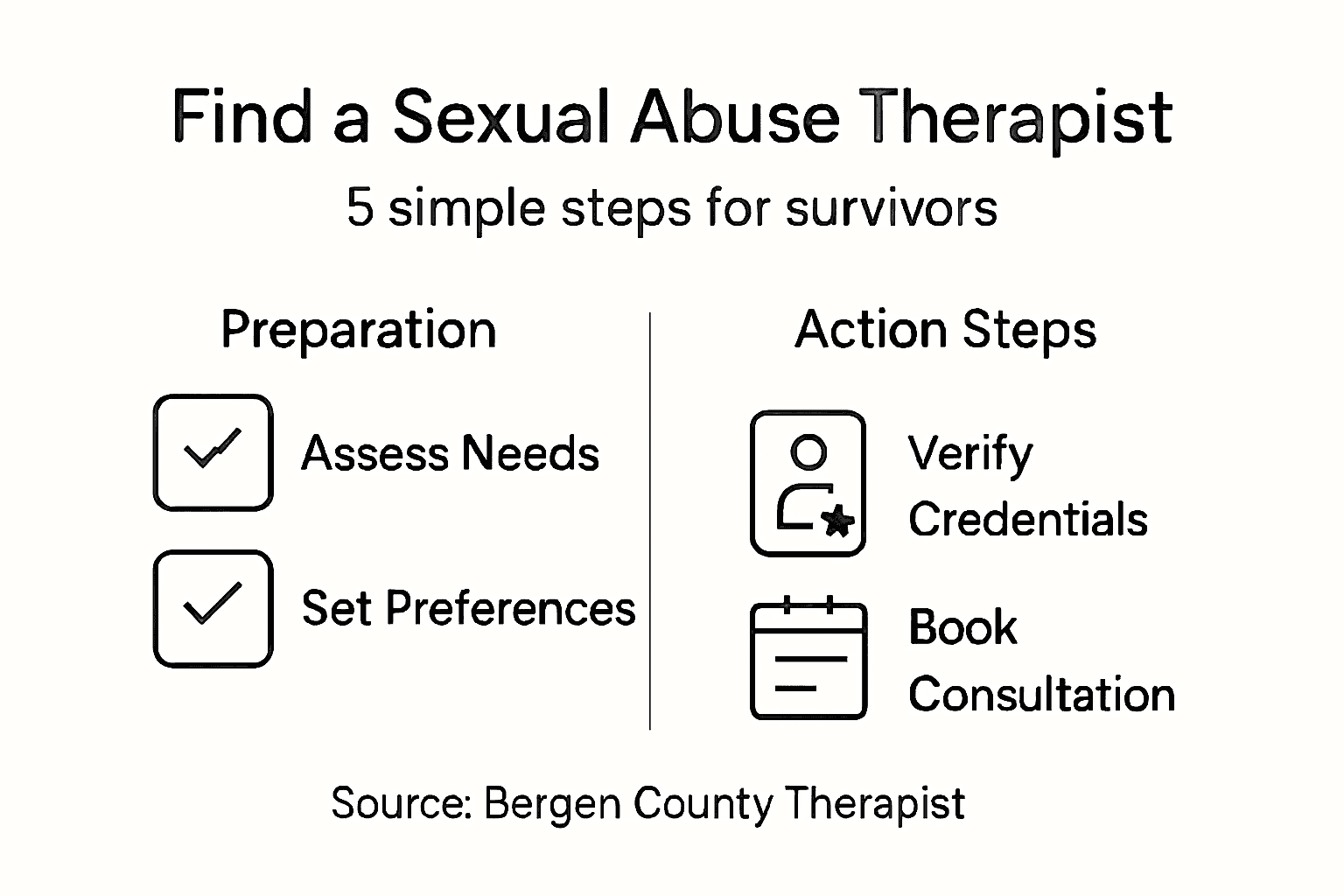
- Step 1: Assess Your Needs And Preferences
- Step 2: Research Therapists Specializing In Sexual Abuse
- Step 3: Verify Therapist Credentials And Experience
- Step 4: Contact Potential Therapists For Consultations
- Step 5: Evaluate Fit And Begin Therapy
Quick Summary
| Key Point | Explanation |
|---|---|
| 1. Assess therapeutic needs and preferences | Understand your unique requirements for therapy, including preferences for therapist gender, experience, and therapy style. |
| 2. Research qualified sexual abuse therapists | Use professional directories and trauma-specific networks to find therapists who specialize in sexual abuse recovery. |
| 3. Verify credentials and specialized training | Confirm the therapist’s licensure, experience, and membership in professional associations to ensure quality care. |
| 4. Initiate consultations with potential therapists | Prepare thoughtful questions to assess therapists’ communication styles and their approach to trauma-informed care. |
| 5. Evaluate emotional comfort and fit | Trust your feelings about the therapist’s approach and ensure it aligns with your healing goals before committing to therapy. |
Step 1: Assess your needs and preferences
Finding the right sexual abuse therapist starts with understanding your unique healing journey. This critical first step involves carefully evaluating your personal therapeutic requirements, emotional comfort level, and specific trauma recovery goals.
Begin by taking an honest, compassionate inventory of what you need from therapy. Consider these key elements when assessing your preferences:
- Therapist gender preference that makes you feel most comfortable
- Specialized trauma experience in sexual abuse recovery
- Communication style that resonates with your emotional processing
- Therapy modalities you might respond best to
- Scheduling flexibility that matches your personal availability
Your therapeutic needs are deeply personal and will vary based on your individual experiences. Some survivors prefer a therapist with extensive sexual trauma expertise, while others might prioritize a gentle, patient approach that allows them to progress at their own pace.
Your healing journey is unique, and there’s no universal template for trauma recovery.
Additionally, consider practical aspects like insurance coverage, session formats (online or in-person), and location convenience. These logistical factors can significantly impact your ability to consistently engage in therapy.
Here’s a summary of practical considerations to help you consistently attend therapy sessions:
| Factor | Importance | Potential Impact |
|---|---|---|
| Insurance Coverage | Reduces financial stress | Allows therapy to fit your budget |
| Session Format | Online or in-person | Influences comfort and accessibility |
| Location Convenience | Short travel times | Increases likelihood of attendance |
| Scheduling Flexibility | Matches your availability | Supports consistent engagement |
Pro tip:Create a confidential personal checklist of your therapy preferences before starting your search to help you stay focused and aligned with your healing goals.
Step 2: Research therapists specializing in sexual abuse
Researching the right therapist is a critical step in your healing journey, requiring careful and compassionate investigation. Your goal is to find a mental health professional with specialized expertise in sexual abuse trauma recovery.
Begin your research by exploring several key avenues for identifying qualified professionals:
- Professional directories like Psychology Today or therapist licensing boards
- Trauma-informed therapy networks specializing in sexual abuse recovery
- Recommendations from sexual assault support organizations
- Online therapy platforms with trauma-specialized counselors
- Local mental health clinics offering trauma-focused services
When evaluating potential therapists, prioritize those with demonstrated experience in sexual abuse counseling. Look for professionals trained in evidence-based trauma therapies such as Trauma-Focused Cognitive Behavioral Therapy (TF-CBT) and Eye Movement Desensitization and Reprocessing (EMDR), which are particularly effective for processing sexual abuse trauma.

Compare two leading trauma therapy modalities for sexual abuse recovery:
| Modality | Approach | Typical Benefits |
|---|---|---|
| Trauma-Focused Cognitive Behavioral CBT | Structured talk therapy | Reduces negative beliefs, builds coping skills |
| EMDR (Eye Movement Desensitization) | Uses guided eye movements | Helps process traumatic memories, lowers distress |
Specialized training matters more than general counseling experience when addressing sexual abuse recovery.
Additionally, consider therapists who offer multiple treatment modalities and demonstrate a compassionate, survivor-centered approach. Many experienced professionals understand that healing is not linear and requires individualized, patient-centered care.
Pro tip:Schedule initial consultations with 2-3 therapists to assess their approach and determine the best personal fit for your healing journey.
Step 3: Verify therapist credentials and experience
Verifying a therapist’s credentials is a critical step in ensuring you receive high-quality, specialized care for sexual abuse trauma. Your safety and healing depend on working with a truly qualified professional who understands the nuanced complexities of sexual abuse recovery.
When verifying credentials, focus on these essential elements:
- State licensure and current professional certification
- Advanced training in trauma-specific therapeutic approaches
- Years of specialized experience treating sexual abuse survivors
- Professional memberships in relevant counseling associations
- Continuing education in trauma-informed care
Your investigation should include multiple verification strategies. Check official licensing boards to confirm a therapist’s active credentials and look for specialized therapist qualifications that demonstrate expertise in sexual abuse trauma treatment.
Professional credentials are not just paperwork—they represent a therapist’s commitment to understanding and healing complex trauma.
Do not hesitate to ask direct questions during initial consultations about their specific training, therapeutic approaches, and experience working with sexual abuse survivors. Reputable therapists will welcome your thorough vetting process and appreciate your commitment to finding the right support.
Pro tip:Request a brief professional biography and don’t be afraid to verify credentials through multiple independent sources.
Step 4: Contact potential therapists for consultations
Initiating contact with potential therapists requires careful preparation and thoughtful communication. Your goal is to find a compassionate professional who understands the nuanced challenges of sexual abuse recovery and can provide supportive, trauma-informed care.
When reaching out, be prepared to explore these key areas during initial consultations:
- Communication style and therapeutic approach
- Experience treating sexual abuse survivors
- Session logistics like scheduling and fees
- Confidentiality protocols
- Treatment philosophy and goals
Start by preparing for counseling with a list of thoughtful questions. Most therapists offer free initial consultations, which provide an opportunity to assess their expertise and personal compatibility without financial commitment.
Your comfort and sense of safety are paramount in selecting the right therapeutic support.
During these conversations, pay attention to how the therapist listens and responds. A skilled trauma therapist will demonstrate empathy, patience, and a survivor-centered approach that makes you feel heard and respected.
Pro tip:Trust your intuition during initial consultations and remember that finding the right therapist might take a few attempts—it’s about finding someone who feels genuinely supportive.
Step 5: Evaluate fit and begin therapy
Evaluating therapeutic fit is a crucial moment in your healing journey, where you determine whether a therapist can truly support your path to recovery. This process involves assessing not just professional credentials, but also your personal comfort and potential for meaningful connection.
Consider these key aspects when evaluating therapeutic compatibility:
- Personal comfort and sense of emotional safety
- Therapist’s approach to trauma recovery
- Communication style and interpersonal dynamics
- Your gut feeling about potential trust and rapport
- Alignment with your healing goals
Start by understanding the initial intake process to set realistic expectations for your first therapeutic interactions. A good therapist will create a collaborative environment where you feel empowered to share at your own pace.
Healing is not a linear path, and finding the right therapeutic relationship is as important as the therapeutic techniques themselves.
Remember that it’s completely acceptable to try multiple therapists before finding the right match. Your emotional safety and comfort are paramount in this deeply personal journey of recovery.
Pro tip:Schedule a follow-up session after your initial consultation to assess how you feel and whether the therapeutic relationship feels supportive and constructive.
Take the Next Step Toward Healing With Expert Support
Finding the right therapist who truly understands the complex journey of sexual abuse recovery can feel overwhelming. The article highlights the importance of specialized trauma experience, personalized therapeutic approaches, and emotional safety as key to effective healing. If you are looking for compassionate guidance and a survivor-centered approach tailored to your unique needs explore our Sexual Abuse / Trauma Archives for valuable insights and resources.

At Bergen County Therapist, Dr. Stephen Oreski and his dedicated team provide expert care using evidence-based trauma therapies designed specifically for sexual abuse survivors. We offer free initial consultations to help you find the right therapist and start your healing journey with confidence. Do not wait to prioritize your emotional safety and begin building a trusting therapeutic relationship today. Learn more about our compassionate mental health services and how they can support your recovery at https://bergencountytherapist.com. Your path to lasting positive change starts here.
Frequently Asked Questions
How can I assess my therapy needs for finding a sexual abuse therapist?
To assess your therapy needs, evaluate your personal comfort, desired therapist gender, and trauma recovery goals. Make a checklist of these preferences to guide your search and ensure alignment with your healing process.
What should I look for when researching sexual abuse therapists?
When researching therapists, prioritize those with specialized expertise in sexual abuse recovery and trauma-informed therapy methodologies. Check professional directories and trauma-focused networks to find qualified professionals.
How do I verify a therapist’s credentials and experience?
To verify a therapist’s credentials, check their state licensure and specialized training in trauma treatment. Ask them directly about their experience with sexual abuse survivors during your initial consultation to ensure they are a good fit for your needs.
What key areas should I discuss during a consultation with a potential therapist?
During a consultation, discuss the therapist’s communication style, therapeutic approach, and experience with sexual abuse recovery. Prepare a list of questions regarding session logistics and confidentiality to evaluate their suitability for your healing journey.
How can I evaluate if a therapist is the right fit for me?
Evaluate your comfort level and sense of safety with the therapist after your initial sessions. Pay attention to the rapport you build and whether their approach aligns with your healing goals, as this is crucial for a successful therapeutic relationship.
What should I do if I don’t feel comfortable with my therapist?
If you don’t feel comfortable with your therapist, it’s completely acceptable to seek another professional. Trust your instincts and schedule consultations with different therapists until you find someone who feels right for your recovery process.