
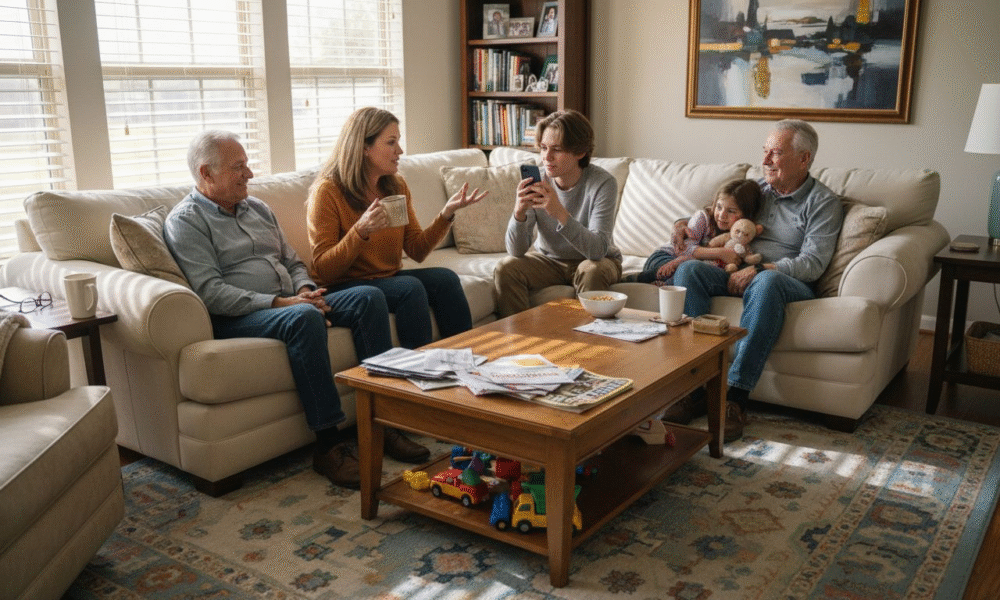
Every Bergen County family knows how quickly busy schedules and shifting priorities can make meaningful connections feel out of reach. Building strong emotional bonds and nurturing open communication is vital for both children’s well-being and family cohesion, as research confirms that consistent routines strengthen these relationships. This guide walks you through practical, evidence-based steps to assess your current dynamics, create intentional routines, and support lasting growth—even in the midst of a bustling household.
Overview of the 5-Step Guide to Improving Family Relationships
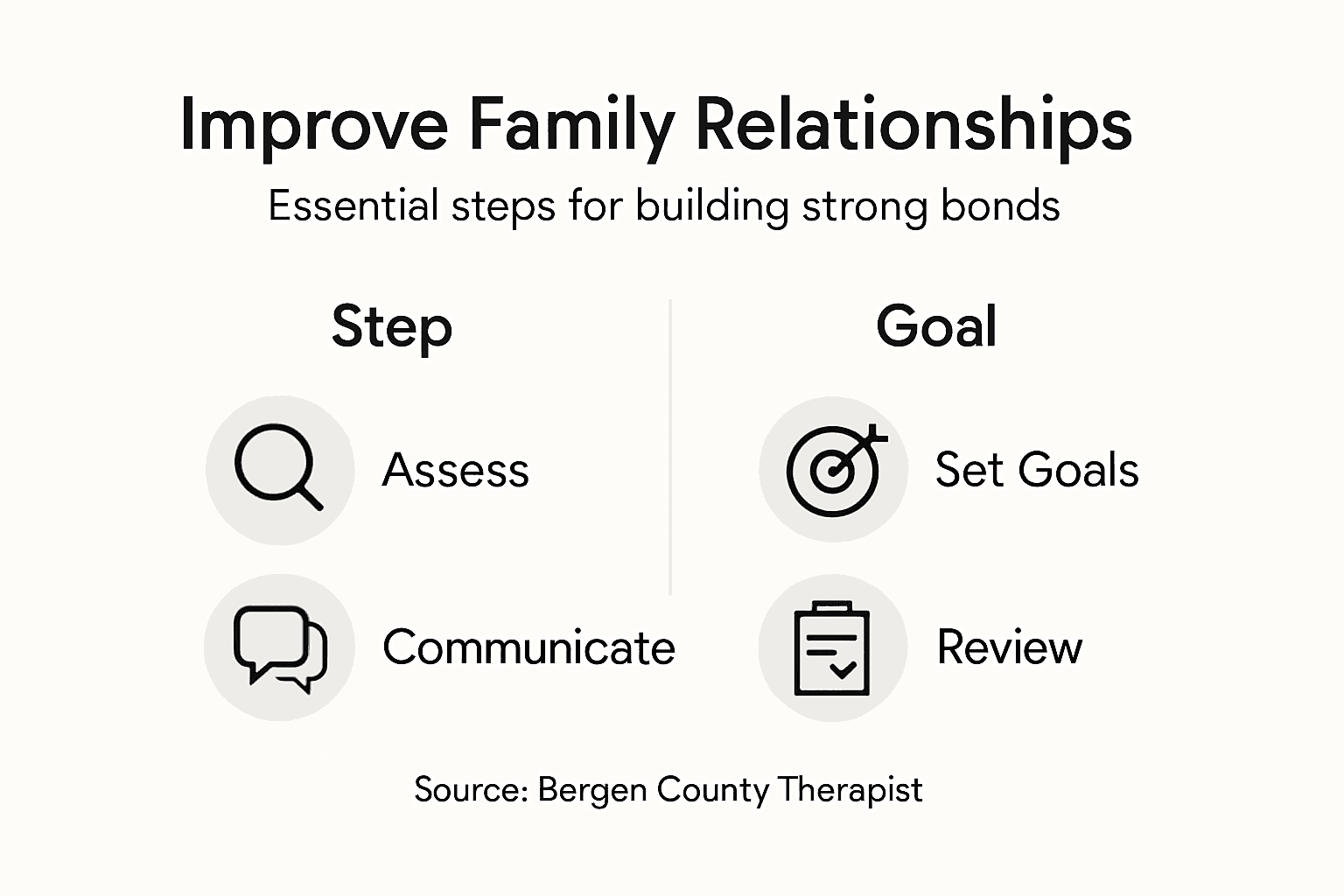
- Step 1: Assess Current Family Dynamics
- Step 2: Establish Clear Communication Routines
- Step 3: Set Shared Family Goals
- Step 4: Practice Active Listening and Empathy
- Step 5: Evaluate Progress and Adjust Strategies
Quick Summary
| Key Point | Explanation |
|---|---|
| 1. Assess Family Dynamics | Evaluate communication, interactions, and routines to understand relationships. |
| 2. Establish Communication Routines | Create consistent talking times and guidelines to improve family dialogues. |
| 3. Set Shared Family Goals | Collaboratively identify objectives that foster unity and support individual growth. |
| 4. Practice Active Listening | Engage fully in conversations to promote empathy and understanding among family members. |
| 5. Evaluate Progress Together | Schedule regular reviews to assess relationship improvements and adapt strategies. |
Step 1: Assess Current Family Dynamics
Understanding your family’s current dynamics is the foundational first step toward building stronger, more supportive relationships. By carefully examining how family members interact, communicate, and support each other, you’ll gain critical insights that will guide your improvement strategies.
To effectively assess your family’s current dynamics, consider conducting a comprehensive evaluation using these strategic approaches:
- Observe communication patterns: Note how family members speak to each other, including tone, frequency, and emotional engagement
- Track emotional responses: Pay attention to how individuals react during discussions or conflicts
- Identify interaction styles: Recognize recurring relationship patterns like who typically initiates conversations or resolves disagreements
- Evaluate family routines: Examine daily and weekly rituals that provide structure and connection
Research indicates that consistent daily family routines are closely linked to children’s emotional well-being and overall family cohesion. By carefully examining these interactions, you’ll develop a nuanced understanding of your family’s unique relationship landscape through the lens of family therapy services.
Family dynamics are complex systems shaped by individual needs, communication styles, and emotional expressions. A thoughtful assessment provides the roadmap for meaningful relationship improvements.
Start by scheduling dedicated time for open, honest conversations where each family member can share their perspectives without judgment. Create a safe, neutral environment that encourages vulnerability and mutual understanding.

Pro tip:Keep a journal documenting your observations and insights about family interactions to track progress and identify patterns over time.
Step 2: Establish Clear Communication Routines
Creating structured communication pathways is essential for transforming family interactions from sporadic exchanges to meaningful, intentional dialogues. By developing consistent communication routines, you’ll build trust, reduce misunderstandings, and foster deeper connections among family members.
Designing effective communication routines requires strategic planning and commitment. Consider implementing these key approaches:
- Schedule regular family meetings: Set aside dedicated time each week for open discussions
- Create communication guidelines: Establish ground rules like active listening, no interrupting, and respectful dialogue
- Select consistent communication channels: Determine preferred methods like in-person conversations, family group chats, or weekly check-ins
- Define communication purposes: Clarify whether meetings are for problem-solving, sharing updates, or emotional check-ins
Research highlights that successful communication plans involve understanding audience needs and employing suitable channels through the lens of encouraging conversations about mental health.
Effective communication is not about talking more, but creating meaningful exchanges where every family member feels heard and understood.
Begin by discussing these communication strategies together, ensuring everyone has input and feels invested in the new approach. Flexibility and mutual agreement are key to making these routines sustainable and genuinely beneficial.
Pro tip:Rotate meeting facilitation responsibilities among family members to encourage engagement and develop leadership skills.
Step 3: Set Shared Family Goals
Establishing shared family goals transforms individual aspirations into a collective journey of growth, motivation, and mutual support. By aligning your family’s objectives, you create a powerful framework that strengthens emotional bonds and promotes individual and collective development.
To create meaningful shared goals, follow these strategic approaches:
- Conduct a collaborative goal-setting session: Gather all family members to brainstorm and discuss potential objectives
- Use the SMART goal framework: Ensure goals are Specific, Measurable, Achievable, Relevant, and Time-bound
- Balance individual and collective goals: Create objectives that support personal growth while contributing to family unity
- Establish accountability mechanisms: Design ways to track progress and celebrate achievements together
Research demonstrates that structured goal-setting significantly enhances motivation and engagement through the lens of family counseling services.
Family goals are not just destinations, but transformative journeys that connect individuals through shared purpose and mutual understanding.
Begin by creating a visual representation of your goals, such as a family vision board or shared digital tracker. This tangible reminder will keep everyone motivated and aligned with the collective vision.
Pro tip:Schedule quarterly family goal review sessions to reassess, adjust, and celebrate your progress together.
Step 4: Practice Active Listening and Empathy
Developing active listening and empathy transforms family communication from transactional exchanges to deeply meaningful connections. By learning to truly hear and understand each other, you’ll create a supportive environment where every family member feels valued and respected.
Master active listening through these essential strategies:
- Give full attention: Put away electronic devices and maintain eye contact
- Use non-verbal cues: Nod, lean slightly forward, and demonstrate genuine interest
- Paraphrase and reflect: Summarize what you’ve heard to confirm understanding
- Ask open-ended questions: Encourage deeper exploration of feelings and perspectives
- Suspend judgment: Create a safe space where family members can express themselves without fear of criticism
Research indicates that improving communication in relationships requires intentional practice of empathetic listening techniques that validate individual experiences.
Empathy is not about agreeing with everything, but about creating a compassionate space where understanding can flourish.
Start by practicing these skills during low-stakes conversations, gradually building your capacity for deeper, more meaningful family interactions. Remember that active listening is a skill that improves with consistent, mindful practice.
Pro tip:Practice the “reflection technique” by repeating back what you’ve heard in your own words to ensure genuine understanding.
Step 5: Evaluate Progress and Adjust Strategies
Tracking your family’s relationship improvement journey requires intentional reflection and flexible adaptation. By systematically assessing your progress and being willing to modify approaches, you’ll create a dynamic, responsive framework for continuous family growth and connection.
Implement a comprehensive progress evaluation strategy using these key approaches:
- Schedule regular check-in meetings: Create dedicated time to discuss family relationship progress
- Use quantitative and qualitative metrics: Track both observable behaviors and emotional experiences
- Collect feedback from all family members: Ensure everyone’s perspective is considered
- Identify successful strategies: Recognize and reinforce what’s working well
- Pinpoint areas needing improvement: Develop targeted interventions for challenging dynamics
Research supports ongoing evaluation through the lens of family counseling services, which emphasize adaptive, personalized approaches to relationship development.
Progress is not about perfection, but about consistent, intentional movement toward deeper understanding and connection.
Remain open to experimenting with different communication and relationship-building techniques. Flexibility and a growth mindset are essential for sustainable family relationship improvements.
Pro tip:Create a simple family relationship scorecard that allows each member to rate their feelings of connection and satisfaction quarterly.
Use this table to identify practical tools that support family relationship growth:
| Tool or Resource | Purpose | How to Use |
|---|---|---|
| Family Journal | Track observations and patterns | Document insights from weekly discussions |
| Vision Board | Visualize collective family goals | Display shared achievements and milestones |
| Communication Guidelines | Set behavioral expectations | Review before each family meeting |
| Relationship Scorecard | Quantify feelings and satisfaction | Each member rates connection quarterly |
| Digital Tracker | Monitor goal progress | Update achievements and next steps monthly |
Here’s a quick comparison of structured family relationship improvement steps and their unique benefits:
| Step Focus | Primary Benefit | Example Result |
|---|---|---|
| Assess Family Dynamics | Reveals hidden communication patterns | Clearer understanding of roles |
| Establish Communication Routines | Builds trust and consistency | Fewer misunderstandings |
| Set Shared Family Goals | Fosters unity and motivation | Aligned family aspirations |
| Practice Active Listening & Empathy | Deepens connections and respect | Increased emotional support |
| Evaluate and Adjust Strategies | Ensures ongoing progress | Adaptive family strategies |
Take the First Step Toward Healthier Family Relationships
Improving family relationships requires understanding complex dynamics and building strong communication habits. If you are feeling overwhelmed by unresolved conflicts or desire to create shared goals and empathy within your family, know that professional support can make a real difference. Our Family Therapy Archives offers valuable strategies tailored to help families like yours develop meaningful connections.
Don’t wait for issues to deepen. At https://bergencountytherapist.com, Dr. Stephen Oreski and his team specialize in crafting personalized treatment plans that address your unique challenges. Whether you need guidance on active listening, managing emotions, or establishing communication routines, expert help is available both in-person and online. Reach out today for a free consultation and start transforming your family bonds for tomorrow.
Frequently Asked Questions
How can I assess my family’s current dynamics?
Start by observing communication patterns, emotional responses, and interaction styles among family members. Schedule a time for open conversations to share insights and promote understanding, aiming to complete this assessment within two weeks.
What are effective ways to establish communication routines in my family?
Implement weekly family meetings and create clear communication guidelines to foster regular discussions. Commit to these routines, ensuring they happen consistently for at least one month to see improvements.
How can we set meaningful shared goals as a family?
Gather all family members for a collaborative goal-setting session using the SMART goal framework. Aim to define a minimum of three shared objectives that reflect personal aspirations and promote family unity, doing this quarterly.
What techniques can we use to practice active listening and empathy?
Develop active listening skills by giving full attention, using non-verbal cues, and asking open-ended questions during conversations. Practice these techniques in daily interactions, with a goal to have at least one meaningful conversation each day.
How do we evaluate our progress in improving family relationships?
Schedule regular check-in meetings to discuss feelings and track progress on shared goals. Aim to complete these evaluations every month and adjust strategies based on family feedback to ensure continuous growth.
Recommended
- Guía paso a paso terapia familiar para mejorar relaciones
- Master the Parent-Child Therapy Process for Lasting Family Bonds – Dr. Stephen Oreski & Associates
- Guía para terapia familiar: resuelve conflictos paso a paso
- Family And Holidays – Dr. Stephen Oreski & Associates
- Wellness – Asli Nutrition
- How To Release Stress And Anxiety? Tips You Should Know – LongevityBotanicals