
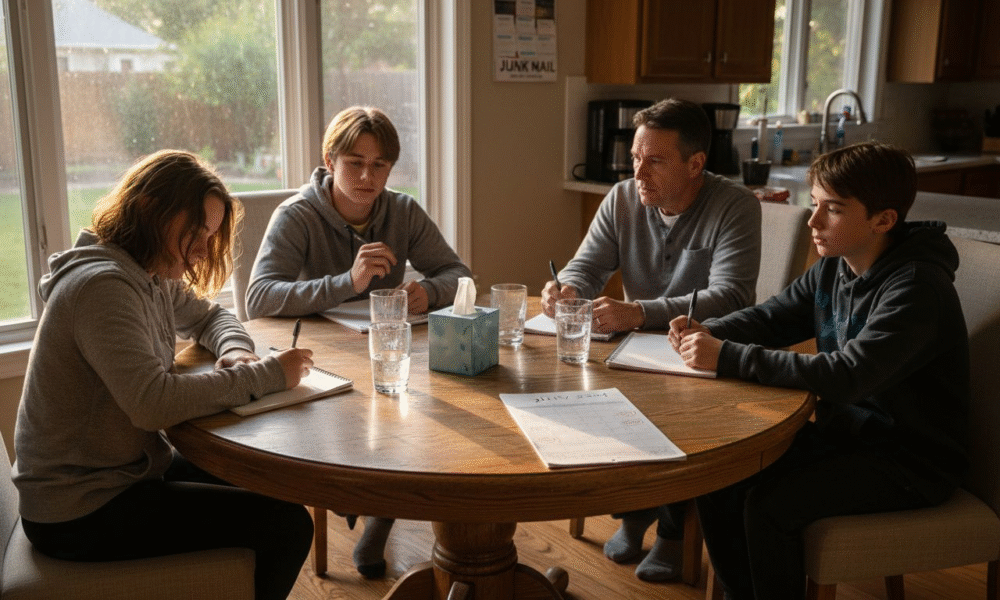
Every parent faces that moment when communication stalls and family routines feel more stressful than supportive. For families in Bergen County preparing for counseling, it can feel overwhelming to know where to start. Focusing on shared family goals and open discussion about everyone’s needs sets the foundation for lasting change, helping parents support their children more confidently while building stronger connections at home.
Table of Contents
- Step 1: Assess Family Needs And Set Shared Goals
- Step 2: Gather Relevant Information And Documents
- Step 3: Discuss Expectations And Arrange Logistics
- Step 4: Practice Open Communication And Active Listening
- Step 5: Review Progress And Adjust Your Approach
Overview of Family Counseling Preparation Steps
| Key Insight | Explanation |
|---|---|
| 1. Assess family needs through open communication | Schedule a family meeting to share thoughts and feelings honestly, ensuring everyone feels heard and valued. |
| 2. Set SMART goals as a family | Develop clear, achievable objectives like ‘weekly family dinners’ to measure progress in counseling. |
| 3. Organize crucial documents beforehand | Compile a family history and other relevant documents to give your therapist context about your family dynamics. |
| 4. Discuss expectations and logistics clearly | Align everyone’s expectations on session formats, timing, and participation to ensure effective engagement in counseling. |
| 5. Regularly review and track progress | Schedule check-in sessions to share insights on counseling effectiveness and adapt strategies for ongoing improvement. |
Step 1: Assess Family Needs and Set Shared Goals
Preparing for family counseling requires a strategic approach to understanding and articulating your family’s unique challenges and aspirations. This initial assessment phase helps create a roadmap for healing and positive transformation by identifying specific areas where your family wants to improve and developing clear, actionable objectives.
The most effective way to assess family needs is through open, honest communication that allows each family member to share their perspective. Start by scheduling a family meeting where everyone feels safe expressing their thoughts and feelings without judgment. Use active listening techniques to truly hear what each person is saying and look for common themes or underlying issues. Systematic goal setting can help transform individual concerns into collective strategies for growth.
When developing shared goals, apply the SMART framework which ensures objectives are Specific, Measurable, Achievable, Realistic, and Timely. For example, instead of a vague goal like “improve communication,” create a specific goal such as “have a weekly family dinner where everyone shares one positive experience and one challenge they are facing.” This approach provides clear direction and allows your family to track progress during counseling.
Pro tip:Before your first counseling session, have each family member independently write down their top three family goals to compare and discuss, which can reveal surprising alignments and differences in family perspectives.
Step 2: Gather Relevant Information and Documents
Successful family counseling requires comprehensive preparation through strategic information gathering. This step involves collecting critical documentation and insights that will help your therapist understand your family’s unique dynamics, challenges, and strengths.
Start by compiling a comprehensive family history document that includes key background information. This should encompass medical records, previous mental health assessments, school reports for children, and any relevant legal documents. Assessment documentation tools can help streamline this process. Consider creating a chronological timeline of significant family events, interpersonal challenges, and major life transitions that might impact your current family dynamics. Include perspectives from different family members to ensure a holistic view.
Organize your gathered documents in a clear, logical manner before your first counseling session. Consider using a folder or digital file with clearly labeled sections such as medical history, educational records, previous counseling notes, and individual family member assessments. This preparation demonstrates your commitment to the counseling process and provides your therapist with valuable context for developing targeted intervention strategies.
Pro tip:Create digital and physical copies of all important documents to ensure you have a backup and can easily share information with your therapist during counseling sessions.
Here’s a summary of practical tools for preparing family counseling documents:
| Preparation Tool | Main Function | Benefit for Counseling |
|---|---|---|
| Family history document | Records background | Provides therapist with family context |
| Chronological timeline | Tracks events | Highlights significant family changes |
| Document folder system | Organizes files | Allows quick access during sessions |
| Digital file backup | Secures documents | Prevents loss and simplifies sharing |
Step 3: Discuss Expectations and Arrange Logistics
Navigating the initial stages of family counseling requires clear communication about what everyone can expect from the process. This crucial step helps align your family’s goals, understand the counseling framework, and establish practical arrangements that support meaningful engagement.
Begin by scheduling an initial consultation where all participating family members can discuss their individual and collective expectations. Family engagement strategies recommend having an open dialogue about potential session formats, frequency, and participation levels. During this conversation, explore each family member’s comfort with sharing, preferred communication styles, and specific outcomes they hope to achieve. Be transparent about potential challenges and create a shared understanding of the counseling process.
Practical logistics are equally important in ensuring successful family counseling. Discuss and agree upon session timing, location preferences (whether in person or virtual), financial considerations, and individual scheduling constraints. Consider creating a flexible yet structured plan that accommodates everyone’s needs while maintaining consistent commitment to the counseling process. This collaborative approach demonstrates mutual respect and sets a positive foundation for your family’s therapeutic journey.
Pro tip:Create a shared family calendar or digital scheduling tool to help everyone track counseling sessions and maintain clear communication about upcoming appointments.
Step 4: Practice Open Communication and Active Listening
Successful family counseling hinges on developing robust communication skills that foster understanding, empathy, and genuine connection. This step focuses on transforming how your family communicates by introducing intentional listening techniques and creating a safe space for honest dialogue.

Improving communication strategies begin with creating an environment of psychological safety where every family member feels heard and validated. Practice active listening by giving full attention to the speaker without interrupting, maintaining eye contact, and using nonverbal cues that demonstrate engagement. When someone is speaking, resist the urge to formulate your response immediately. Instead, focus on understanding their perspective completely. Use reflective listening techniques such as summarizing what you heard by saying things like “What I hear you saying is…” to confirm understanding and show you are truly processing their message.
Adopt communication methods that minimize defensiveness and maximize mutual understanding. Use ‘I’ statements that express your feelings without blaming others. For example, instead of saying “You always ignore me,” try “I feel disconnected when I do not get a chance to share my thoughts.” This approach reduces conflict and creates space for empathetic dialogue. Encourage each family member to express themselves authentically while maintaining respect and compassion for different perspectives.
Pro tip:Schedule weekly family communication check-ins where each person gets uninterrupted time to share their feelings and experiences, rotating who leads the conversation to ensure everyone feels equally heard.
This table compares active communication techniques for family counseling:
| Technique | How it Works | Impact on Counseling |
|---|---|---|
| Active listening | Full focus on speaker | Builds trust and empathy |
| Reflective feedback | Summarizes perspectives | Strengthens understanding |
| ‘I’ statements | Expresses feelings clearly | Reduces defensiveness |
| Scheduled check-ins | Planned conversation time | Ensures everyone is heard |
Step 5: Review Progress and Adjust Your Approach
Successful family counseling is an evolving process that requires consistent reflection, honest evaluation, and flexible adaptation. This critical step involves systematically examining your family’s progress, understanding what strategies are working, and making intentional adjustments to support continued growth and healing.
Counseling progress tracking methods help families develop a clear understanding of their therapeutic journey. Schedule regular check-in sessions where each family member can openly share their perspectives on the counseling process. During these reviews, discuss specific changes you have noticed, challenges you are still experiencing, and potential areas where communication or understanding could improve. Approach these conversations with curiosity and compassion rather than criticism, focusing on collective progress rather than individual shortcomings.
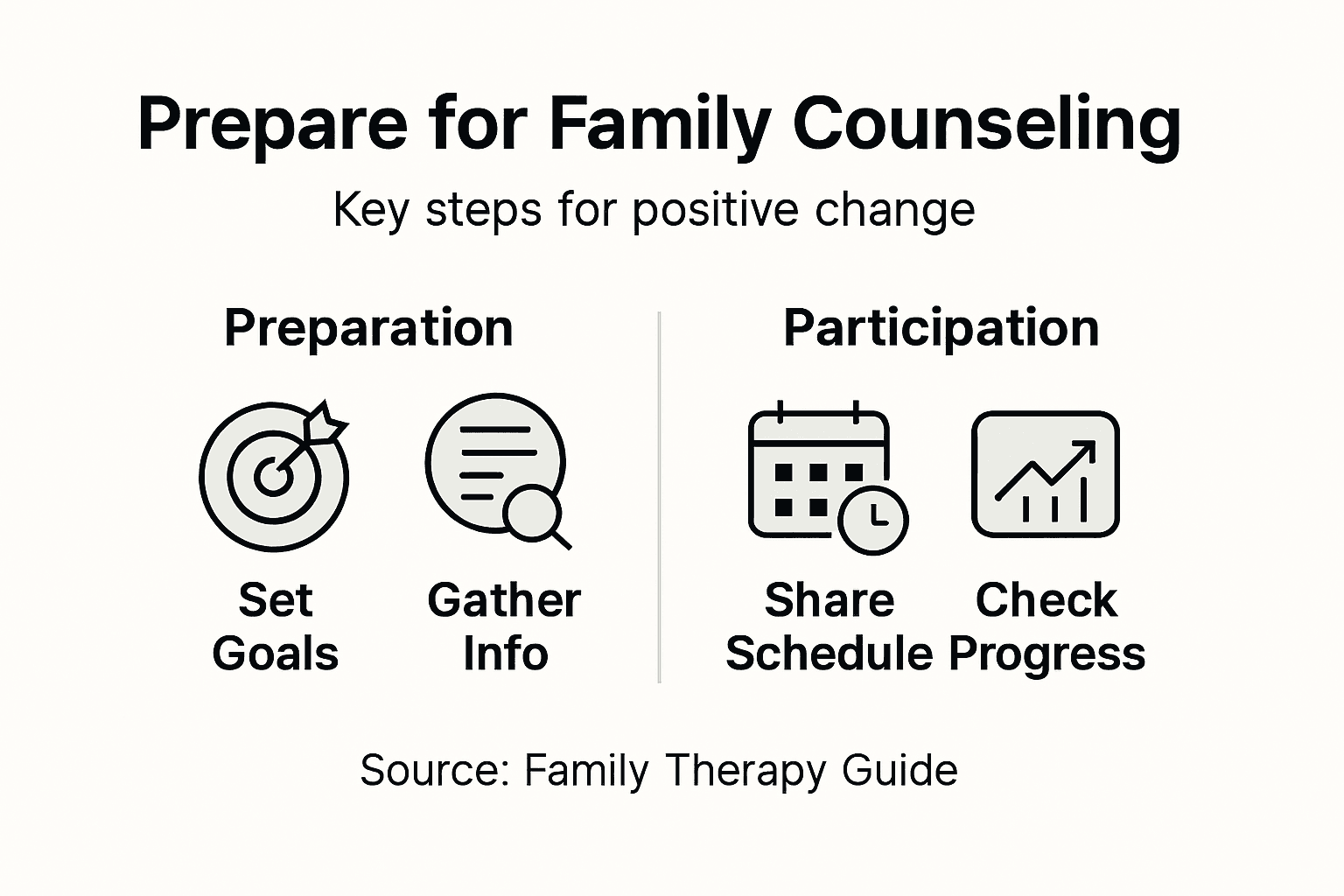
Remember that progress is not always linear. Some sessions might feel more challenging than others, and that is a normal part of the healing process. Be patient with yourself and your family members as you navigate complex emotional terrain. Consider keeping a shared journal or digital log where family members can record insights, breakthroughs, and ongoing challenges. This documentation can help your therapist understand your family’s dynamics more comprehensively and tailor interventions more precisely to your unique needs.
Pro tip:Create a family progress scorecard where each member can anonymously rate their sense of connection, communication effectiveness, and emotional well-being to provide objective insights into your collective healing journey.
Take the First Step Toward Lasting Family Harmony
Preparing for family counseling can feel overwhelming as you face communication barriers, unresolved conflicts, and uncertainty about change. This article highlights the importance of setting shared goals, practicing open communication and active listening, and regularly reviewing your progress to create positive transformation. If you recognize these challenges in your family, know that effective support is within reach. Our team understands the critical steps needed for meaningful healing and growth.
Explore trusted guidance and personalized care with our experienced therapists by visiting the Family Therapy Archives at Bergen County Therapist. Start your journey today with a free consultation designed to help your family build stronger connections and embrace positive change without delay. Discover how tailored strategies for your unique family story can turn challenges into opportunities for growth.
Frequently Asked Questions
What should we discuss during our initial family meeting before counseling?
Start by identifying each family member’s perspective on challenges and goals. Encourage open communication to ensure everyone’s thoughts are heard, setting the stage for meaningful counseling.
How can we gather relevant information effectively for family counseling?
Compile a comprehensive family history document, including medical records and educational reports. Organize this information in clearly labeled folders to provide your therapist with essential context during sessions.
What are some expectations to discuss before starting family counseling?
Discuss each family member’s individual expectations concerning the counseling process. Agree on the session format, timing, and financial considerations to create a shared understanding and commitment to the journey.
How can we improve our communication during family counseling sessions?
Practice active listening techniques by fully focusing on the speaker and using reflective feedback. Schedule a weekly family check-in to discuss feelings and experiences, ensuring everyone gets equal time to share.
How often should we review our progress in family counseling?
Schedule regular check-in sessions to openly discuss each member’s perspective on the counseling process. Aim to do this every four to six weeks to assess progress and make necessary adjustments to your approach.
What tools can we use to track our family’s progress throughout counseling?
Keep a shared journal or progress scorecard where each family member can record insights and emotional well-being. Use this documentation to guide your therapist in tailoring interventions to your family’s evolving needs.
Recommended
- How Counseling Can Help – Dr. Stephen Oreski & Associates
- Complete Guide to Benefits of Premarital Counseling – Dr. Stephen Oreski & Associates
- The Benefits of Family Counseling? – Dr. Stephen Oreski & Associates
- Encouraging Conversations About Mental Health Within the Family Unit – Dr. Stephen Oreski & Associates
- Cum să pregătești copilul pentru prima vizită la stomatolog cu succes | Lucilla Dental Clinic | cabinet stomatologic Bucuresti sector 4 | stomatologie Bucuresti
- Checkliste til aktiv ferie: Planlæg perfekte familieoplevelser – Rejs i Danmark