

Every parent faces that moment when their Bergen County teen retreats behind closed doors, leaving them worried and searching for answers. With stress and anxiety showing up as headaches, mood swings, or academic struggles, it can be tough to know how and when to step in. By learning how to create a safe space for open communication and recognizing warning signs early, you give your teen the best chance to share what really matters and get the right support.
Table of Contents
- Step 1: Create a Safe Space for Open Communication
- Step 2: Identify Signs of Stress and Anxiety Early
- Step 3: Implement Supportive Routines and Healthy Boundaries
- Step 4: Engage Professional Help When Needed
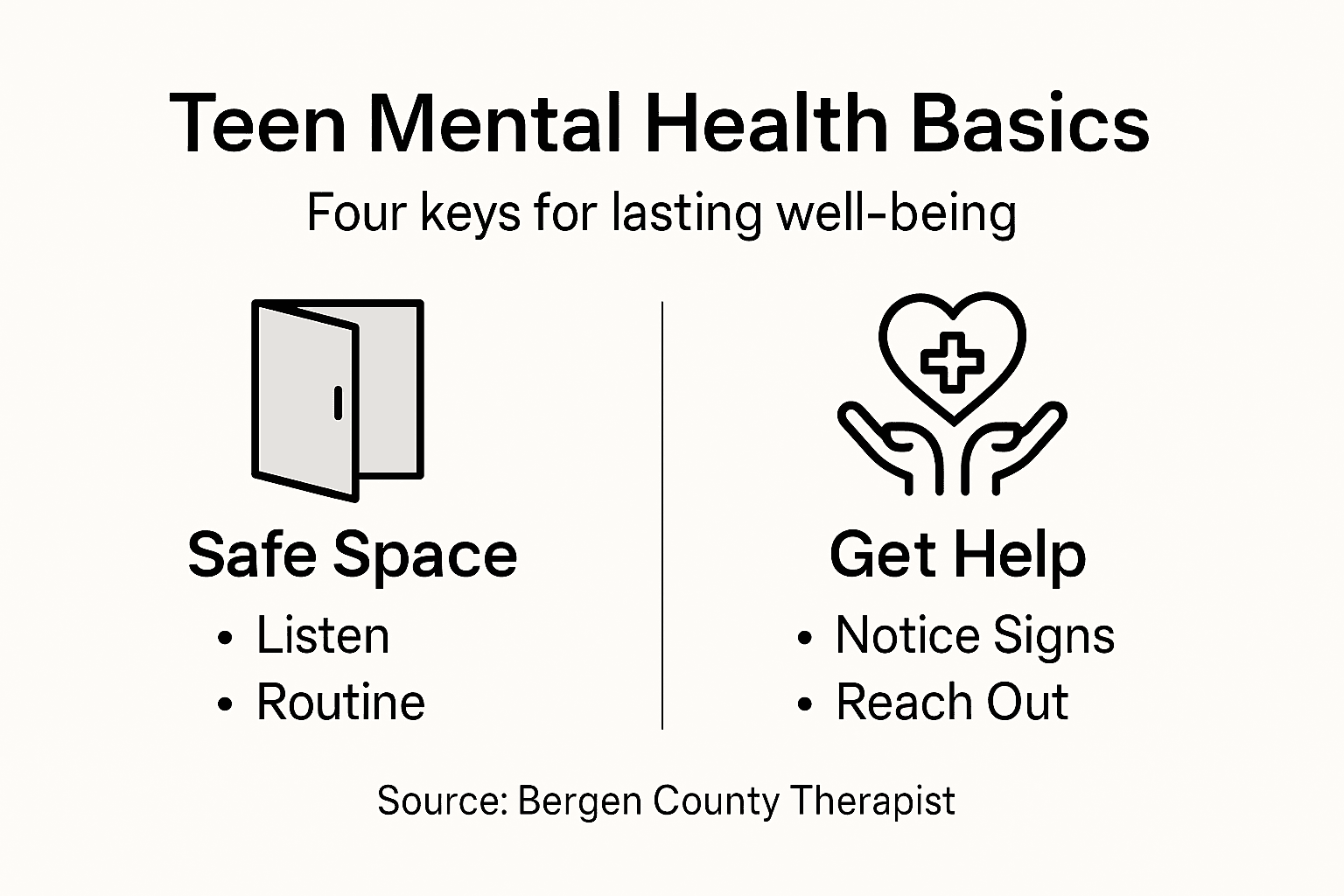
Quick Summary
| Key Point | Explanation |
|---|---|
| 1. Create a Safe Communication Space | Build trust by ensuring your teen feels free to express without fear of judgment or repercussion. Remove distractions during conversations to show your commitment. |
| 2. Recognize Signs of Stress Early | Monitor for physical complaints and emotional changes. Persistent issues may indicate serious underlying stress or anxiety needing intervention. |
| 3. Establish Supportive Routines | Create consistent daily routines that provide structure and predictability. Healthy boundaries clarify expectations and protect both teen and family wellbeing. |
| 4. Involve Professionals When Necessary | Don’t hesitate to seek professional support if your teen’s emotional challenges persist. Early intervention can prevent worsening mental health issues. |
Step 1: Create a Safe Space for Open Communication
Your teen’s willingness to talk about what’s really going on depends almost entirely on whether they feel safe doing so. This means building an environment where they trust you won’t judge them, blow up at them, or weaponize what they share against them later.
Start by removing distractions when your teen wants to talk. Put your phone away. Close the laptop. Turn off the television. Your full attention signals that what they’re saying matters more than anything else demanding your time right now.
Listen without immediately jumping to solutions or lectures. When teens share struggles, they often need to be heard first, not fixed. Practice active listening by reflecting back what you hear: “So it sounds like you felt left out when your friends made plans without you.” This shows you actually understood them.
Avoid the urge to judge or dismiss their feelings, even if their concern seems small to you. What feels devastating to a teenager is real to them. Validate their emotions:
- “That sounds really frustrating”
- “I can see why that would hurt”
- “Your feelings make sense”
- “Thank you for trusting me with this”
Establish predictable routines where conversation happens naturally. Maybe it’s a weekly family dinner, a car ride to soccer practice, or a walk around the neighborhood. Regular check-ins create consistency and show your teen that emotional conversations are normal and expected in your home.
Build trust through confidentiality. Don’t share what they tell you with their friends’ parents, your friends, or other family members (unless there’s genuine safety concern). Teens clam up fast when they discover their private struggles became neighborhood gossip.
Consider that understanding how to improve family relationships through better communication can significantly deepen the connection with your teen and make them more willing to open up.
A safe space isn’t about being permissive or avoiding all conflict. It’s about your teen knowing you’ll listen first, understand second, and judge third—if at all.
Pro tip: Start conversations about feelings during low-pressure moments (while cooking, driving, or doing an activity together) rather than sitting them down formally, which can feel intimidating and make teens defensive.
Step 2: Identify Signs of Stress and Anxiety Early
Teen stress and anxiety don’t always announce themselves loudly. Sometimes they show up as physical complaints, mood shifts, or behavioral changes that seem unrelated to mental health. Catching these signs early makes a real difference in how quickly you can help.
Pay attention to physical complaints that appear without obvious cause. Headaches, stomachaches, or frequent complaints of feeling tired might signal underlying stress. Teens often express emotional distress through their bodies before they can put feelings into words.
Watch for mood and emotional changes that stick around. A teen who’s usually upbeat becoming withdrawn, irritable, or unusually quiet for more than a week warrants attention. Persistent sadness, excessive worry, or emotional numbness are red flags worth taking seriously.
Notice changes in everyday behaviors:
- Sleep disruption (sleeping way more or less than usual)
- Appetite changes (eating significantly less or more)
- Declining grades or academic focus
- Social withdrawal from friends or activities they normally enjoy
- Increased irritability or emotional outbursts
- Risk-taking or reckless behavior
If your teen mentions self-harm, expresses hopelessness, or talks about not wanting to be around, seek professional support immediately. These are serious warning signs that require expert evaluation.
Timing matters. A bad day isn’t cause for alarm, but symptoms that persist for weeks or interfere with school, relationships, or daily functioning need professional attention. Understanding the many forms anxiety can take helps you recognize when your teen’s worry crosses from normal stress into something requiring intervention.
Keep in mind that stress in Bergen County teens often stems from academic pressure, social dynamics, and the general intensity of high school life. What looks like laziness might actually be depression. What seems like attitude might be anxiety.
Here’s a comparison of common early signs of stress versus anxiety in teens:
| Sign Type | Stress Indicator | Anxiety Indicator |
|---|---|---|
| Physical Symptoms | Occasional headaches | Frequent stomachaches |
| Mood Shifts | Short-term irritability | Persistent worry |
| Behavior Changes | Drop in focus or academics | Social withdrawal |
| Duration | Resolves in a few days | Lasts two weeks or more |
| Severity | Mild, temporary setbacks | Disrupts daily functioning |
Early recognition of mental health symptoms prevents small problems from becoming serious ones. The sooner you notice, the sooner you can help.
Pro tip: Keep a mental or written note of when you observe concerning changes and what situations seem to trigger them. This information becomes invaluable when talking to your teen or consulting with a mental health professional.
Step 3: Implement Supportive Routines and Healthy Boundaries
Structured routines create predictability in your teen’s life, which directly reduces anxiety and stress. When your teen knows what to expect, their nervous system can relax instead of constantly bracing for chaos. Healthy boundaries protect both your teen and your family by clarifying expectations and limits.
Start by establishing consistent daily routines around meals, sleep, and screen time. A teen who goes to bed at wildly different times struggles with focus, mood, and emotional regulation. Aim for consistent wake-up and bedtime, even on weekends, to stabilize their internal clock.

Build in meaningful activities that align with your teen’s interests. This might be sports, music, art, time outdoors, or hobbies that feel engaging rather than obligatory. Structured time doing things they enjoy provides stress relief and a sense of accomplishment.
Set clear boundaries across multiple domains:
- Physical boundaries: Privacy expectations, personal space, physical touch
- Digital boundaries: Screen time limits, social media rules, phone-free dinner
- Emotional boundaries: What topics are appropriate to discuss, respecting feelings without absorbing them
- Social boundaries: Who they spend time with, curfew expectations
Communicate boundaries clearly and consistently. Your teen needs to understand the “why” behind rules, not just the rules themselves. When they understand that a 10 p.m. phone bedtime helps them sleep better, they’re more likely to accept it.
Boundaries aren’t punishment. They’re guardrails. Learning about healthy boundaries and their role in well-being helps you implement them in ways that feel supportive rather than controlling.
Remember that your teen also needs to practice setting their own boundaries with friends and peers. If they can’t say no to plans they don’t want to attend or conversations making them uncomfortable, they’re vulnerable to peer pressure and burnout.
Routines and boundaries aren’t restrictive. They’re liberating. They free your teen from constantly deciding what comes next and worrying about where the line is.
Pro tip: Involve your teen in creating routines and boundaries when possible. A teen who helps set the rules feels ownership and is far more likely to follow them than one who feels rules were imposed on them.
Step 4: Engage Professional Help When Needed
Parenting a struggling teen sometimes goes beyond what you can handle alone, and that’s not a failure. Professional mental health support can make the difference between a teen who recovers quickly and one who spirals into deeper distress. Knowing when and how to seek help is crucial.
Recognize that professional intervention becomes necessary when symptoms persist despite your best efforts at home. If your teen’s anxiety, depression, or stress continues for weeks, worsens, or interferes with school and relationships, professional evaluation is the right move.
Start with your teen’s primary care doctor if you’re unsure where to begin. Many pediatricians can provide initial assessment and referrals to mental health specialists. They can also rule out medical causes for symptoms you’re observing.
Understanding when intervention becomes necessary helps you recognize critical moments when professional support shifts from helpful to essential for your teen’s safety and well-being.
There are multiple types of professional support available:
Below is a summary of professional support options available for teens:
| Type of Support | Typical Focus | Where to Access |
|---|---|---|
| Individual Therapy | Personal coping skills, emotions | Private clinics, hospitals |
| Family Therapy | Communication, relationships | Family therapy practices |
| Psychiatry | Medical evaluation, medication | Medical centers |
| School Counselor | Academic/social issues | School campus |
| Peer Support Group | Shared experiences, belonging | Community centers |
- Individual therapy: One-on-one counseling with a therapist or psychologist
- Family therapy: Working together as a family to improve communication and relationships
- Psychiatry: Medical evaluation and medication management if needed
- School counselors: On-campus resources for academic and emotional support
- Support groups: Connection with other teens facing similar challenges
Don’t let stigma or shame hold you back. Mental health treatment is medical care. Your teen needing a therapist is like needing a tutor or orthodontist. It’s support for a specific challenge.
When choosing a provider, look for someone with experience working with teens and expertise in your teen’s specific concerns. Ask about their approach and whether they create a comfortable environment for your teen.
Barriers like cost, availability, and trust can make seeking help feel overwhelming. Bergen County has multiple resources, and many therapists offer flexible scheduling and sliding scale fees. Your teen’s mental health is worth the effort to find the right fit.
Professional help isn’t a sign that parenting has failed. It’s a sign that you’re being proactive and prioritizing your teen’s well-being.
Pro tip: Prepare your teen before the first appointment by explaining what therapy is, reassuring them the therapist is there to help them (not report back to you on everything), and letting them know it’s normal to feel nervous about opening up to a stranger.
Support Your Teen’s Mental Well-Being With Professional Care
Supporting a teenager facing stress and anxiety can feel overwhelming without the right guidance. This article highlights critical steps like creating a safe space for open communication, spotting early signs of distress, establishing healthy boundaries, and seeking professional help when needed. If you recognize persistent changes in your teen’s mood or behavior, it is essential to act quickly to foster lasting well-being and prevent deeper struggles.
Discover how personalized therapy approaches at Bergen County Therapist can empower your teen with effective coping skills and provide your family with compassionate support. Our experienced team, led by Dr. Stephen Oreski, specializes in teen mental health, offering confidential individual and family therapy designed to build trust and resilience.
Are you ready to take the next step in safeguarding your teen’s mental health?

Connect with us today at Bergen County Therapist to schedule a free consultation. Early intervention creates stronger outcomes — let us support your family through this important journey. Find out more about when professional help is necessary and explore healthy boundaries for teens to help your teen thrive.
Frequently Asked Questions
How can I create a safe space for my teen to talk about mental health?
To create a safe space, eliminate distractions when your teen is speaking to you. Show active listening by reflecting their feelings and ensuring they know you won’t judge or share their words without permission.
What signs of stress and anxiety should I look for in my teen?
Look for physical complaints like headaches or stomachaches, mood changes such as irritability, and behavioral shifts like declining grades. If these signs persist for over two weeks, seek to understand their triggers and consider professional support.
How can I establish supportive routines for my teen’s mental well-being?
Establish structured daily routines around meals, sleep, and activities that interest your teen. Consistency in these routines helps reduce anxiety and fosters a sense of security, making your teen feel more in control of their environment.
When should I seek professional help for my teen’s mental health?
Seek professional help if your teen’s symptoms, such as anxiety or depression, continue for weeks or interfere with their daily functioning. Start by discussing concerns with their primary care doctor, who can guide you on the next steps.
How can I involve my teen in setting healthy boundaries?
Involve your teen by discussing and creating routines and boundaries together. When they participate in establishing the rules, they feel a sense of ownership, which increases their willingness to adhere to those guidelines.
What should I do if my teen mentions thoughts of self-harm?
If your teen mentions self-harm or expresses hopelessness, seek professional support immediately. Take their words seriously and ensure they get evaluated by a mental health professional to provide proper care and intervention.