

Feeling uncertain about starting therapy is a common experience for many adults in Bergen County, especially those hoping to grow personally or manage emotional stress. Therapy is not just for serious mental health conditions—it is a collaborative journey with a trained professional designed to enhance self-awareness and coping skills over time. Whether you are navigating life transitions or seeking clarity, this article sheds light on how individual therapy works, dispels popular myths, and explains the practical benefits so you can decide what fits your personal needs.
Table of Contents
- What Individual Therapy Involves and Dispels Myths
- Major Types and Approaches Used in Sessions
- How the Individual Therapy Process Works
- Deciding if Individual Therapy Is Right for You
- Costs, Privacy, and Practical Considerations
Overview of Individual Therapy: Myths, Approaches, Process & Costs
| Point | Details |
|---|---|
| Individual therapy is for everyone | It supports personal growth and emotional well-being, not just those with severe mental health challenges. |
| Therapeutic approaches vary | Different evidence-based methods like CBT, DBT, and ACT address unique needs and foster effective coping strategies. |
| The therapy process is collaborative | Clients and therapists work together to establish goals and adapt strategies for personal transformation. |
| Confidentiality is paramount | Therapists are obligated to protect client information, ensuring a safe and trusting therapeutic environment. |
What Individual Therapy Involves and Dispels Myths
Individual therapy represents a powerful, personalized journey of self-discovery and healing that challenges many common misconceptions. Far from being a solution only for those experiencing severe mental health challenges, therapy offers targeted support for anyone seeking personal growth and emotional well-being.
At its core, individual therapy is a collaborative and confidential process between a trained mental health professional and a client. The primary goals include:
- Developing deeper self-awareness
- Learning effective coping strategies
- Addressing specific emotional challenges
- Exploring personal patterns and behaviors
- Creating meaningful life changes
Contrary to popular belief, individual therapy for personal challenges is not a sign of weakness but an act of profound courage. It provides a safe, non-judgmental space where individuals can explore their thoughts, feelings, and experiences with professional guidance.

Many people mistakenly believe therapy is only for individuals with diagnosed mental health conditions. However, therapy can be beneficial for anyone experiencing life transitions, stress, relationship challenges, or simply wanting to understand themselves better. Professional therapists help clients navigate complex emotions, develop resilience, and create sustainable strategies for personal growth.
Therapy sessions typically involve structured conversations where clients discuss their experiences, emotions, and goals. Therapists use various evidence-based techniques to help clients gain insights, process emotions, and develop healthier thinking and behavioral patterns.
Therapy is not about fixing something broken, but about understanding and empowering yourself to live a more fulfilling life.
Pro tip:Schedule a free initial consultation to understand how individual therapy can be tailored to your unique personal growth journey.
Major Types and Approaches Used in Sessions
Individual therapy encompasses several evidence-based approaches, each designed to address unique psychological needs and personal growth objectives. The different types of psychotherapy offer specialized techniques that help clients navigate complex emotional landscapes and develop more effective coping strategies.
Five prominent therapeutic approaches stand out in modern psychological practice:
- Cognitive Behavioral Therapy (CBT): Focuses on identifying and changing negative thought patterns
- Dialectical Behavior Therapy (DBT): Helps manage intense emotions and improve interpersonal relationships
- Eye Movement Desensitization and Reprocessing (EMDR): Particularly effective for trauma recovery
- Acceptance and Commitment Therapy (ACT): Emphasizes psychological flexibility and value-driven living
- Accelerated Resolution Therapy (ART): Uses rapid memory visualization techniques for emotional healing
Therapeutic approaches are not one-size-fits-all solutions. Skilled therapists carefully assess individual client needs, selecting and sometimes blending techniques to create a personalized treatment strategy. Some clients might benefit from a single approach, while others might require a more integrated method that draws from multiple therapeutic frameworks.
The three foundational categories of psychotherapy include psychoanalytic, cognitive-behavioral, and humanistic therapies. Each approach offers unique perspectives on understanding human behavior, emotional processing, and personal transformation. The therapeutic relationship itself remains a critical factor in successful treatment, transcending specific methodological differences.
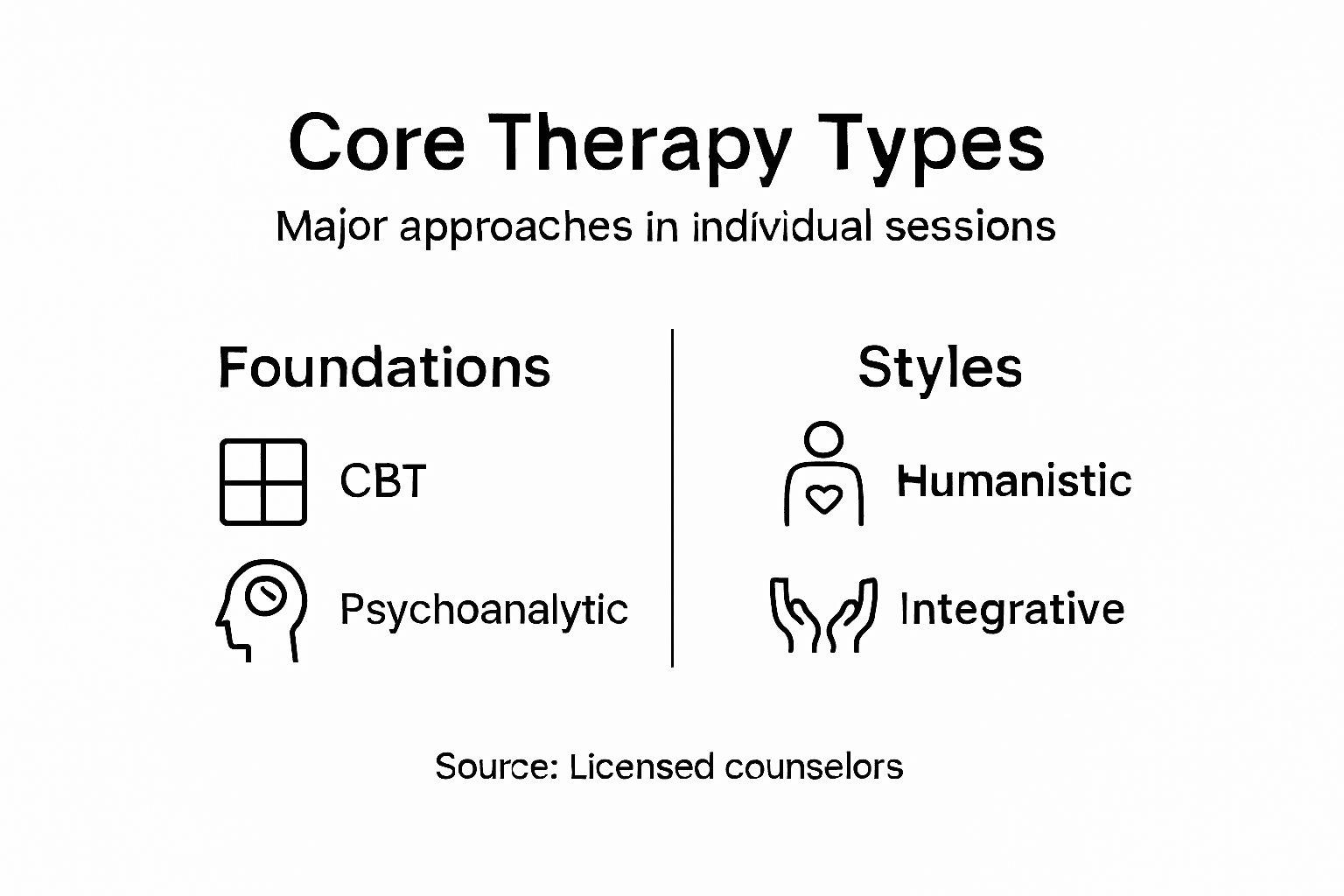
Here’s a summary of major individual therapy approaches and their distinct characteristics:
| Approach | Main Focus | Typical Benefit |
|---|---|---|
| Cognitive Behavioral Therapy | Changing thought patterns | Reduces anxiety and stress |
| Dialectical Behavior Therapy | Managing intense emotions | Improves emotional regulation |
| Eye Movement Desensitization and Reprocessing | Trauma recovery | Resolves past traumatic memories |
| Acceptance and Commitment Therapy | Values-based living | Increases psychological flexibility |
| Accelerated Resolution Therapy | Rapid memory visualization | Speeds up emotional healing |
Effective therapy is less about the specific technique and more about creating a supportive, collaborative environment for personal growth.
Pro tip:Discuss different therapeutic approaches with your potential therapist to understand which method might best suit your individual needs and goals.
How the Individual Therapy Process Works
The individual therapy process is a carefully structured yet deeply personalized journey of self-discovery and emotional healing. Individual therapy for personal growth and healing involves a collaborative approach where clients and therapists work together to understand underlying challenges and develop effective strategies for personal transformation.
Typically, the therapy process unfolds through several key stages:
- Initial Consultation: Exploring client’s background, concerns, and therapeutic goals
- Assessment Phase: Detailed evaluation of emotional, psychological, and relational dynamics
- Goal Setting: Collaboratively developing specific, measurable objectives for therapy
- Active Treatment: Implementing therapeutic techniques and strategies
- Progress Monitoring: Regular evaluation and adjustment of therapeutic approach
- Termination and Transition: Preparing for successful conclusion of therapy
During the initial sessions, therapists create a safe, non-judgmental environment that encourages open communication. Rapport building is crucial, as it establishes trust and enables clients to explore vulnerable aspects of their emotional landscape. Therapists use active listening techniques, empathetic responses, and carefully selected therapeutic interventions to support the client’s unique healing process.
The therapeutic approach is dynamic and responsive, adapting to the client’s evolving needs. Some clients might require short-term focused interventions, while others benefit from longer-term exploratory work. Therapists continuously assess progress, modify strategies, and ensure that the treatment remains aligned with the client’s personal growth objectives.
Therapy is a collaborative journey of self-discovery, where healing happens through compassionate exploration and genuine understanding.
Pro tip:Be honest and open during your initial sessions, as the quality of your engagement directly influences the effectiveness of your therapeutic experience.
Deciding if Individual Therapy Is Right for You
Choosing to start individual therapy is a deeply personal decision that requires honest self-reflection and understanding of your emotional needs. Psychotherapy treatment options can provide valuable insights into whether professional support might be beneficial for your current life circumstances.
Consider individual therapy if you are experiencing:
- Persistent feelings of anxiety or depression
- Difficulty managing stress or emotional challenges
- Unresolved trauma or past emotional wounds
- Significant life transitions or relationship difficulties
- Patterns of behavior that feel destructive or limiting
- Challenges in communication or interpersonal relationships
- A desire for personal growth and self-understanding
The readiness for therapy involves more than just recognizing challenges. It requires a willingness to engage in vulnerable, sometimes uncomfortable conversations and a commitment to personal growth. Successful therapy demands active participation, openness to self-exploration, and patience with the healing process.
Practical considerations also play a crucial role in determining therapy’s suitability. Factors like financial resources, time availability, personal motivation, and alignment with a therapist’s approach are essential. Some individuals might benefit from short-term focused interventions, while others may require more comprehensive, long-term therapeutic support.
Seeking therapy is not a sign of weakness, but a courageous step toward understanding yourself and creating meaningful life changes.
Pro tip:Schedule an initial consultation to discuss your specific needs and assess whether individual therapy aligns with your personal growth objectives.
Costs, Privacy, and Practical Considerations
Navigating the financial and privacy aspects of individual therapy requires careful consideration and understanding. Individual therapy services offer transparent approaches to addressing these critical practical concerns that often prevent individuals from seeking the support they need.
Key financial considerations include:
- Insurance coverage and potential reimbursement options
- Sliding scale fees for different income levels
- Session package discounts
- Potential health savings account (HSA) or flexible spending account (FSA) usage
- Comparison of in-person versus telehealth pricing
- potential employer wellness program benefits
Privacy represents a fundamental cornerstone of therapeutic practice. Confidentiality protections are rigorous, with legal and ethical standards ensuring that personal information remains strictly protected. Therapists are professionally and legally obligated to maintain client confidentiality, with rare exceptions involving imminent risk of harm to self or others.
Technological advancements have introduced new dimensions to privacy considerations. Modern therapy practices employ secure, HIPAA-compliant communication platforms that protect electronic records and telehealth interactions. Clients can expect robust digital security measures that safeguard their personal and medical information from unauthorized access.
The table below contrasts different therapy delivery options to help you consider practical factors:
| Factor | In-Person Therapy | Telehealth Therapy |
|---|---|---|
| Accessibility | Requires travel to office | Attend from any location |
| Privacy | Private office setting | Secure digital platform |
| Cost | May involve transportation | Often cost-effective |
| Scheduling | Set office hours | More flexible times |
Confidentiality is not just a legal requirement, but a fundamental trust between therapist and client that enables genuine healing and personal exploration.
Pro tip:Request a clear explanation of privacy policies and fee structures during your initial consultation to ensure complete transparency and comfort.
Discover Personalized Growth Through Individual Therapy
If you are navigating emotional challenges or seeking deep personal growth, understanding the unique benefits of individual therapy can be your first step toward meaningful change. This article highlights how therapy is a collaborative and compassionate process that empowers you to develop coping skills, explore personal patterns, and move beyond misconceptions. Whether you face persistent stress, relationship difficulties, or simply want to deepen self-awareness, the tailored support available at Therapy Archives – Dr. Stephen Oreski & Associates can guide you through your healing journey.

Take control of your mental well-being today by connecting with our experienced therapists who provide personalized treatment plans designed to meet your unique needs. Do not wait to experience the empowering benefits of one-on-one support. Visit https://bergencountytherapist.com to schedule your free consultation and learn how approaches such as Cognitive Behavioral Therapy (CBT) Insights from Experts – Dr. Stephen Oreski & Associates can be part of your tailored care. Your path to growth and healing starts here.
Frequently Asked Questions
What is individual therapy?
Individual therapy is a collaborative and confidential process between a trained mental health professional and a client. It aims to support personal growth and emotional well-being by developing self-awareness and coping strategies while addressing emotional challenges.
Who can benefit from individual therapy?
Individual therapy can benefit anyone experiencing various personal challenges, such as life transitions, stress, relationship difficulties, or those seeking self-understanding and personal growth. It is not limited to individuals with diagnosed mental health conditions.
What types of therapeutic approaches are used in individual therapy?
Common therapeutic approaches include Cognitive Behavioral Therapy (CBT), Dialectical Behavior Therapy (DBT), Eye Movement Desensitization and Reprocessing (EMDR), Acceptance and Commitment Therapy (ACT), and Accelerated Resolution Therapy (ART). Therapists may combine these techniques based on individual client needs.
How does the individual therapy process typically work?
The individual therapy process involves several stages, including an initial consultation, assessment phase, goal setting, active treatment, progress monitoring, and termination. Therapists create a safe environment that encourages honest communication and actively adapt their methods to best support the client’s needs.
Recommended
- Getting Started | Dr. Stephen J. Oreski, LCSW & Associates | Paramus, NJ
- Individual Therapy for Personal Growth and Healing – Dr. Stephen Oreski & Associates
- Individual Therapy: Transforming Personal Challenges
- Role of Therapists: Complete Guide to Mental Health Support – Dr. Stephen Oreski & Associates