

Feeling stuck or weighed down by emotional challenges is more common than most people in Bergen County realize. It takes true courage to seek support, yet old myths about therapy—like it being only for ‘crazy’ people or a sign of weakness—often hold adults back from reaching out. Individual therapy offers a confidential, personalized path to healing and growth, led by skilled professionals who tailor treatment to your unique needs. Discover how debunking misunderstandings about therapy can open the door to real transformation.
Table of Contents
- Defining Individual Therapy And Common Myths
- Major Types Of Individual Therapy Approaches
- How Individual Therapy Sessions Work
- Key Benefits Of Individual Therapy For Adults
- Potential Risks, Costs, And What To Avoid
Explore Individual Therapy: Myths, Approaches, Sessions & Benefits
| Point | Details |
|---|---|
| Understanding Individual Therapy | Individual therapy is a personalized approach that addresses psychological challenges through a confidential, one-on-one relationship with a therapist. |
| Myths about Therapy | Many misconceptions, like therapy being solely for severe issues or a sign of weakness, deter individuals from seeking help. |
| Different Therapeutic Approaches | Various therapy types, such as Cognitive Behavioral Therapy and Psychodynamic Therapy, cater to different needs and personal struggles. |
| Benefits of Therapy | Individual therapy fosters self-awareness, emotional resilience, and improved relationships over time, providing a structured space for growth. |
Defining Individual Therapy and Common Myths
Individual therapy, also called individual psychotherapy, is a one-on-one treatment where a therapist works directly with you to address psychological challenges and emotional struggles. Unlike group settings, this personalized approach means your therapist tailors the entire process to your specific needs, concerns, and circumstances. The therapist creates space for genuine exploration of what’s troubling you, whether that’s unresolved trauma, anxiety, depression, relationship difficulties, or personal growth you’re pursuing. The therapeutic relationship itself becomes part of the healing, built on confidentiality and mutual respect.
Yet many people hold onto deeply ingrained misconceptions about therapy that prevent them from seeking help. One of the most damaging myths is that therapy is only for people who are “crazy” or severely broken. This couldn’t be further from reality. People across all walks of life use therapy to process difficult experiences, develop better coping strategies, work through grief, navigate career changes, or simply understand themselves more deeply. Another common myth suggests that seeking therapy is a sign of weakness. In truth, it takes considerable courage to acknowledge that you’re struggling and to commit to the hard work of emotional healing. Many successful, accomplished people in Bergen County use therapy specifically because they understand that personal growth requires professional guidance.
Some folks believe therapy means endless conversations without actual progress, or that a therapist will judge them for their thoughts and feelings. The reality is that effective therapy moves purposefully toward change and healing. A qualified therapist maintains professional neutrality while remaining genuinely invested in your wellbeing. Your therapist isn’t there to judge or solve your problems for you. Instead, they help you understand patterns, develop new perspectives, and build skills for managing life’s challenges. This collaborative process means you’re an active participant, not a passive recipient of treatment. When you work with individual therapy services that prioritize personalized healing, you experience firsthand how therapeutic relationships create real transformation.
Another myth worth addressing is that therapy requires you to relive traumatic events repeatedly or that you’ll need years of treatment to see improvement. While some therapeutic approaches do involve processing trauma, good therapists work at your pace and use evidence-based methods designed for efficiency. Many people report meaningful shifts in their emotional wellbeing within just a few months. The timeline depends on your specific situation, the depth of work you’re willing to do, and the therapeutic approach that fits best. Understanding what individual therapy actually is, separate from popular misconceptions, opens the door to getting the support you genuinely need.
Pro tip:When evaluating whether therapy might help you, focus less on whether your situation feels “serious enough” and more on whether you’re experiencing emotional distress that impacts your daily life or relationships. Any challenge worth your emotional energy is worth professional attention.
Major Types of Individual Therapy Approaches
Therapy isn’t one-size-fits-all, and that’s actually good news. Different therapeutic approaches work better for different people depending on your personality, your specific challenges, and what resonates with you. Understanding the major types available helps you make an informed choice about what might work best for your situation. The most effective therapy is one you feel comfortable with and that addresses your particular struggles.
Cognitive Behavioral Therapy (CBT) focuses on the connection between your thoughts, feelings, and behaviors. This approach operates on the principle that our thoughts create our emotions, and by changing unhelpful thought patterns, we can change how we feel and act. CBT is highly structured and goal-oriented, making it excellent for anxiety, depression, and trauma. Your therapist will work with you to identify negative thinking patterns, challenge them with evidence, and develop healthier ways of thinking. Psychodynamic therapy takes a different angle by exploring how your past experiences, unconscious patterns, and early relationships shape your current behaviors and emotions. This longer-term approach works well if you want deeper insight into why you struggle with certain patterns. Acceptance and Commitment Therapy (ACT) teaches you to accept difficult thoughts and feelings while moving toward what matters most to you. Rather than fighting painful emotions, ACT helps you build a meaningful life despite challenges.
Dialectical Behavior Therapy (DBT) combines cognitive behavioral techniques with mindfulness and acceptance strategies, originally designed for people with serious emotional regulation issues but now used for various struggles. Person-centered therapy (also called humanistic therapy) creates a safe, non-judgmental space where your therapist believes in your capacity for growth and self-healing. This approach emphasizes the therapeutic relationship itself as the primary healing tool. Somatic therapy recognizes that trauma and emotions live in the body, so it incorporates body-based techniques like breathing, movement, and physical awareness. Understanding these different therapeutic modalities helps you understand which might align with your needs and communication style.
Your therapist might also blend approaches based on what you need. Some people benefit from cognitive techniques combined with somatic practices. Others find that psychodynamic work prepares them for more structured CBT interventions. The right approach depends on your goals, your comfort level, and what your therapist recommends based on their assessment of your situation. Many therapists in Bergen County are trained in multiple modalities specifically so they can customize treatment to fit you, not force you into a predetermined box.
Here’s a comparison of major individual therapy approaches and what challenges they best address:
| Therapy Approach | Core Focus | Suited For |
|---|---|---|
| Cognitive Behavioral Therapy | Restructuring negative thoughts | Anxiety, depression, trauma |
| Psychodynamic Therapy | Uncovering unconscious patterns | Persistent behavior issues |
| Acceptance & Commitment | Accepting emotions, values-driven action | Avoidance, chronic stress |
| Dialectical Behavior Therapy | Emotional regulation, mindfulness | Mood instability, intense emotions |
| Person-Centered Therapy | Growth through supportive relationship | Low self-worth, personal growth |
| Somatic Therapy | Body-based trauma and stress techniques | PTSD, chronic tension |
Pro tip:During your free consultation, ask your therapist which approaches they use and why they think a particular method might work for your situation. A good therapist can explain their reasoning in language that makes sense to you, which builds confidence in the process.
How Individual Therapy Sessions Work
Walking into your first therapy session can feel uncertain. You might wonder what to expect, how the conversation will flow, or whether you’ll know what to say. Understanding the structure and process of individual therapy sessions removes much of that anxiety and helps you prepare mentally for this important work.

Most individual therapy sessions follow a fairly consistent pattern. Your first session typically involves an initial assessment where your therapist gathers information about your background, current situation, and what brought you in. They’ll ask about your family history, past experiences, current stressors, and your goals for therapy. This isn’t interrogation. It’s conversation designed to help your therapist understand you as a whole person and identify what approach might work best. You’ll also discuss practical matters like confidentiality, session length (typically 50 minutes to an hour), frequency (usually weekly), and fees. This foundational session establishes the container for your work together.
Following sessions typically begin with a brief check-in where you might share what’s been happening since your last visit or what’s on your mind that day. Your therapist listens actively and might ask clarifying questions to understand your experience more deeply. Rather than giving advice, they help you explore your thoughts and feelings, identify patterns, and discover your own insights. Different therapeutic modalities work differently here. A CBT therapist might help you challenge negative thoughts and develop action steps. A psychodynamic therapist might explore the roots of your feelings. A somatic therapist might notice where you hold tension in your body. Regardless of approach, effective individual therapy creates genuine dialogue where you feel heard and understood.
Toward the end of each session, your therapist might summarize what you’ve discussed, highlight progress you’ve made, or suggest homework like journaling, practicing new skills, or noticing particular patterns. Some sessions feel like breakthroughs where you gain sudden clarity. Others feel like you’re just talking without obvious progress. Both are normal and valuable. Therapy isn’t linear. You might revisit similar issues from different angles as you develop deeper understanding and new coping skills. Over time, you’ll notice shifts in how you think about yourself, how you respond to situations, and how you feel emotionally. These changes come from consistent work, honest reflection, and the supportive relationship you build with your therapist.
Pro tip:Bring a notebook to your first session and jot down any questions you have about the process or logistics before your appointment. This ensures you get clarity on what to expect and helps you maximize your valuable session time.
Key Benefits of Individual Therapy for Adults
Individual therapy offers transformative benefits that extend far beyond the therapy room. For adults facing personal challenges, whether managing anxiety, processing trauma, navigating relationship difficulties, or simply seeking greater self-understanding, therapy provides a structured space for real change. The benefits accumulate over time as you develop new skills, gain perspective, and build emotional resilience.
One of the most immediate benefits is having a dedicated space to be heard without judgment. In daily life, people often minimize their struggles or feel they need to stay strong for others. A therapist creates a confidential environment where you can express yourself fully, including thoughts and feelings you might not share elsewhere. This unconditional acceptance itself becomes healing. Beyond listening, therapy provides clarity about yourself and your patterns. Many adults realize they’ve been operating on autopilot, repeating behaviors learned in childhood without questioning why. Therapy helps you understand the roots of your reactions, your emotional triggers, and the unconscious beliefs driving your choices. With this awareness comes the ability to change. You develop practical coping skills and strategies tailored to your specific challenges. Whether that’s anxiety management techniques, communication skills, boundary setting, or processing grief, you gain concrete tools you can use immediately. Another significant benefit is improved relationships. When you understand yourself better and develop healthier emotional patterns, your connections with others naturally improve. You communicate more effectively, set better boundaries, and create relationships based on authentic connection rather than old patterns.
Therapy also addresses emotional regulation in powerful ways. Adults often struggle with overwhelming emotions or, conversely, numbness and disconnection. Therapy helps you understand your emotional landscape and develop the ability to feel what you feel without being controlled by it. Over time, many people report decreased anxiety and depression, better sleep, improved focus at work, and enhanced overall wellbeing. The benefits of psychotherapy treatment extend to your sense of agency and hope. When you actively work on yourself with professional support, you experience tangible progress. You move from feeling stuck to feeling capable. This shift in self-perception ripples through every area of your life, from career decisions to personal relationships to how you see your future.
Pro tip:Track small changes between sessions by noting shifts in your mood, responses to situations, or how you feel about yourself. These incremental improvements often go unnoticed until you look back and realize how far you’ve come.
Potential Risks, Costs, and What to Avoid
Therapy is powerful, but it’s not risk-free. Being realistic about potential challenges helps you prepare mentally and choose the right therapist. Understanding what can go wrong actually strengthens your ability to get real benefit from treatment. The good news is that most risks are manageable when you work with a qualified, ethical professional.
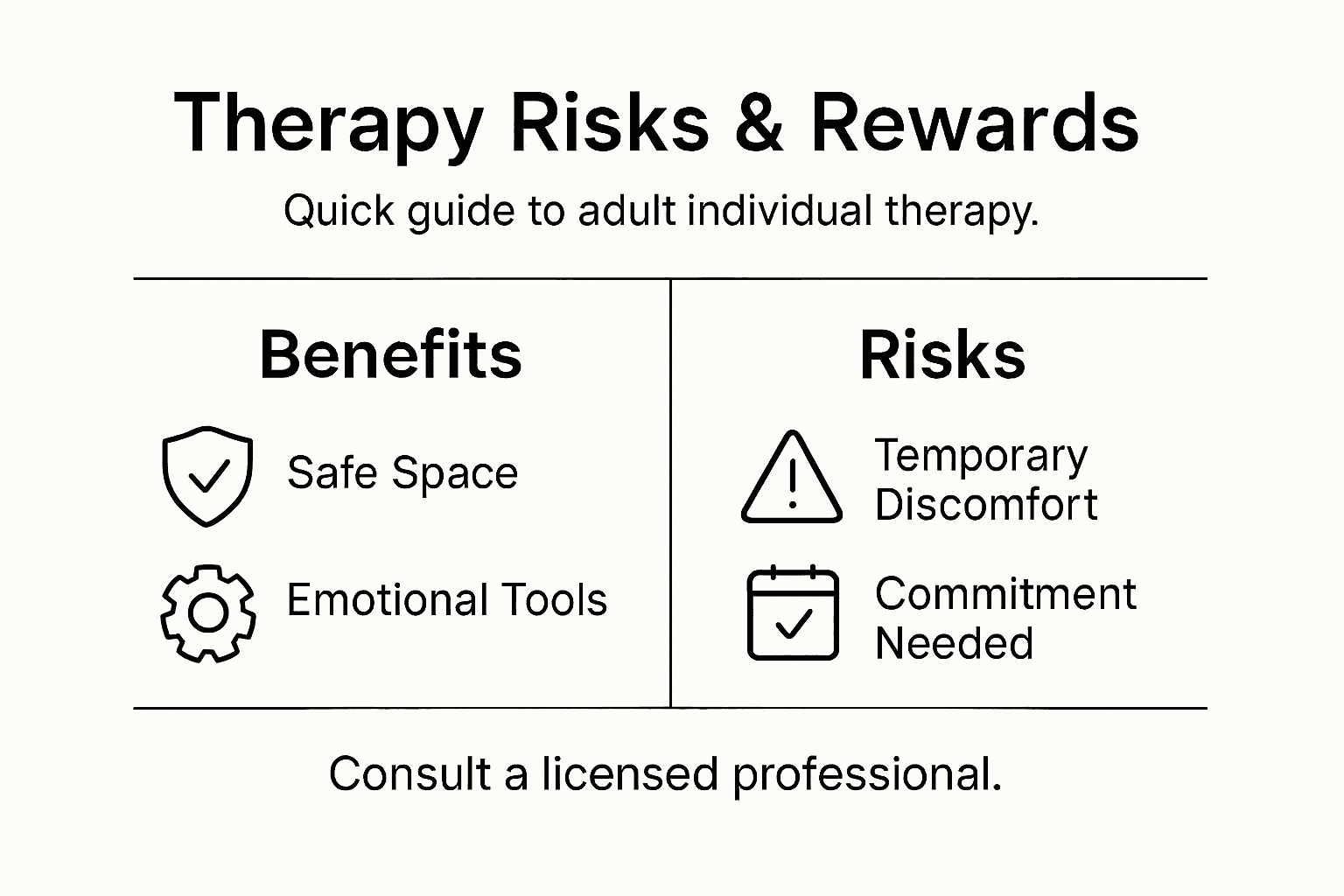
One significant risk is temporary symptom worsening. This might sound counterintuitive, but it’s actually common. As you begin exploring painful memories or confronting difficult patterns, you might experience increased anxiety, sadness, or emotional overwhelm in the short term. Research suggests about 10 percent of clients experience symptom exacerbation before improvement occurs. This temporary discomfort doesn’t mean therapy is failing. It often means you’re engaging with material that needed attention. Your therapist should prepare you for this possibility and help you manage it. Another risk involves emotional vulnerability without adequate support. Therapy requires you to open up about painful experiences and private struggles. If your therapist doesn’t create genuine safety or violates confidentiality, this vulnerability becomes harmful rather than healing. This is why choosing an ethical, qualified therapist matters enormously. Watch for red flags like boundary violations, inappropriate personal sharing from the therapist, or pressure to continue treatment beyond what helps you.
Financial and time costs are real considerations. Therapy requires significant commitment. Sessions typically cost between 100 and 250 dollars each, and treatment usually involves weekly appointments for months or longer. Without insurance coverage, these expenses add up quickly. Additionally, therapy demands emotional labor and time investment. You need to show up consistently, do homework between sessions, and stay engaged in the process. This commitment isn’t a small ask.
What should you actively avoid? Stay away from therapists who violate professional boundaries, such as engaging in dual relationships, inappropriate physical contact, or sharing excessive personal information. Avoid therapists who guarantee outcomes or pressure you to adopt their beliefs or values. Steer clear of practitioners without proper credentials or licensing. In Bergen County, verify that your therapist holds legitimate licensure and operates within professional ethical guidelines. Also avoid therapists who dismiss your concerns or make you feel judged. A good therapeutic relationship requires genuine respect and collaborative effort.
The following table summarizes possible risks and tips for minimizing them during individual therapy:
| Potential Risk | How It Appears | Minimizing Strategy |
|---|---|---|
| Temporary symptom worsening | Initial emotional distress | Prepare with coping skills |
| Poor therapist fit | Feeling unsafe or judged | Check credentials and style |
| Financial strain | High or ongoing costs | Ask about sliding scale or insurance |
| Boundary violations | Unprofessional behavior | Monitor ethics and seek reviews |
Pro tip:Before committing to a therapist, ask directly about their credentials, experience with your specific concerns, and their approach to confidentiality and ethics. A trustworthy therapist welcomes these questions and answers clearly.
Take Control of Your Personal Growth with Individual Therapy
If you have been struggling with emotional challenges like anxiety, unresolved trauma, or relationship difficulties the personalized support of individual therapy can make a significant difference. This approach offers a confidential and non-judgmental space where you can explore your thoughts and feelings with a skilled therapist who tailors treatment to your unique needs. Understanding major therapy methods such as cognitive behavioral therapy and somatic therapy helps you find strategies that build emotional resilience and foster lasting change.

Discover how working with therapists who prioritize your healing journey can unlock meaningful progress. Start your transformation today by connecting with experts dedicated to helping Bergen County residents overcome obstacles and gain clarity. Visit our site to learn more about our Therapy Archives – Dr. Stephen Oreski & Associates and schedule a free consultation at https://bergencountytherapist.com. Your path to healing begins with a single step.
Frequently Asked Questions
What is individual therapy?
Individual therapy, also known as individual psychotherapy, is a one-on-one treatment where a therapist works with you to address your psychological challenges and emotional struggles. This personalized approach allows the therapist to tailor the therapy process to your specific needs and concerns.
What are some common misconceptions about therapy?
Many people mistakenly believe that therapy is only for individuals who are ‘crazy’ or severely broken, or that it signifies weakness. In reality, therapy is a valuable resource for anyone experiencing emotional distress or seeking personal growth, and it takes courage to reach out for help.
How does individual therapy work on a practical level?
Individual therapy sessions typically start with an initial assessment to gather information about your background and goals. Following sessions include check-ins and discussions where you explore thoughts and feelings with your therapist, who helps you identify patterns and develop coping strategies.
What are the main benefits of individual therapy for adults?
Individual therapy offers numerous benefits, including a dedicated space for self-exploration, improved emotional regulation, practical coping skills, and enhanced relationships. Over time, consistent therapy can lead to a significant positive shift in how you think about and respond to life’s challenges.
Recommended
- Getting Started | Dr. Stephen J. Oreski, LCSW & Associates | Paramus, NJ
- Individual Therapy for Personal Growth and Healing – Dr. Stephen Oreski & Associates
- How Cognitive Behavioral Therapy Can Transform Your Life – Dr. Stephen Oreski & Associates
- Individual Therapy | Adult Therapy | Paramus NJ
- Ikigai Test – Discover Your Life Purpose | Ikigain