

Finding a sense of safety and acceptance in Bergen County can feel overwhelming when past experiences of rejection or discrimination still weigh on your mind. For many LGBTQIA+ individuals, trauma is not just a single event but a deep pattern of pain shaped by systemic discrimination and ongoing stress linked to identity. Here, you will discover how tailored support can address these unique challenges, helping you reclaim your strength and begin your journey toward healing.
Table of Contents
- Defining LGBTQIA+ Trauma And Support Needs
- Unique Trauma Types Affecting LGBTQIA+ People
- Minority Stress And Its Lasting Effects
- Affirming Therapy Approaches And Modalities
- Navigating Barriers To Safe, Effective Support
Key Takeaways
| Point | Details |
|---|---|
| LGBTQIA+ Trauma | Trauma in the LGBTQIA+ community is deeply rooted in systemic discrimination and involves unique psychological experiences like minority stress and internalized stigma. |
| Affirming Therapy | Affirming therapy prioritizes the unique experiences of LGBTQIA+ individuals, focusing on trauma-informed and culturally competent approaches that promote resilience. |
| Barriers to Support | Access to mental health care for LGBTQIA+ individuals is hampered by systemic barriers such as discriminatory practices and lack of provider cultural competency. |
| Specialized Support Needs | LGBTQIA+ individuals require targeted mental health support that reflects their unique trauma dynamics and affirming practices to foster healing. |
Defining LGBTQIA+ Trauma and Support Needs
Trauma within the LGBTQIA+ community represents a complex, multifaceted experience rooted in systemic discrimination, chronic social stress, and persistent psychological challenges. Unlike traditional trauma frameworks, LGBTQIA+ trauma emerges from pervasive societal rejection, microaggressions, and structural oppression that directly impact an individual’s sense of safety and belonging.
The research highlights several critical dimensions of LGBTQIA+ trauma that distinguish it from other psychological experiences:
- Minority stress resulting from ongoing discrimination
- Internalized negative messaging about sexual orientation and gender identity
- Cumulative emotional impact of societal marginalization
- Higher vulnerability to acute traumatic events
Trauma for LGBTQIA+ individuals often manifests through neurobiological and sociocultural mechanisms that extend far beyond single traumatic incidents. Chronic exposure to rejection can fundamentally alter an individual’s neurological stress responses, creating long-term psychological impacts that require specialized, affirming therapeutic approaches.
LGBTQIA+ trauma is not just about individual experiences, but a systematic pattern of oppression that impacts mental health at multiple levels.
Understanding these unique trauma dynamics requires recognizing how systemic discrimination creates ongoing psychological challenges. Research demonstrates that LGBTQIA+ individuals experience significantly higher rates of post-traumatic stress, depression, and anxiety compared to cisgender heterosexual populations, underscoring the critical need for targeted, compassionate mental health support LGBTQIA+ Therapy: Finding Affirming Support Today – Dr. Stephen Oreski & Associates.
Here’s how LGBTQIA+ trauma differs from general trauma experiences:
| Aspect | LGBTQIA+ Trauma | General Trauma |
|---|---|---|
| Root Cause | Systemic discrimination and societal rejection | Accidents, abuse, or sudden events |
| Duration | Chronic, ongoing exposure | Often single or short-term events |
| Psychological Impact | Minority stress, internalized stigma, identity harm | PTSD, anxiety, depression |
| Therapy Needs | Affirming, identity-informed approaches | Standard trauma therapies |
Pro tip:Seek mental health professionals specifically trained in LGBTQIA+ trauma who understand the nuanced experiences of minority stress and can provide culturally competent care.
Unique Trauma Types Affecting LGBTQIA+ People
LGBTQIA+ individuals experience a complex spectrum of trauma that goes far beyond traditional clinical definitions, encompassing deeply intersectional experiences of systemic oppression, violence, and psychological harm. These trauma types are uniquely characterized by their roots in societal discrimination and persistent marginalization.
Research identifies several distinct trauma categories specific to LGBTQIA+ experiences:
- Sexual violence with compounded psychological impacts
- Familial rejection and emotional abuse
- Hate-based physical and verbal harassment
- Institutional discrimination in healthcare, employment, and legal systems
- Internalized stigma and identity-based psychological injury
Sexual violence emerges as a particularly devastating trauma type, with research demonstrating profound psycho-physical consequences. Minority stress amplifies these experiences, creating layers of psychological vulnerability that extend beyond immediate traumatic incidents. Survivors often face additional challenges like limited healthcare access, internalized shame, and systemic barriers to support.
LGBTQIA+ trauma is not a singular experience, but a complex intersection of personal, social, and institutional violence.
The National Center for PTSD highlights that these trauma experiences significantly increase risks of mental health challenges, including LGBTQIA+ Therapy: Finding Affirming Support Today – Dr. Stephen Oreski & Associates higher rates of post-traumatic stress, depression, substance abuse, and suicidality compared to cisgender heterosexual populations.
Pro tip:Recognize that trauma healing is not linear, and seeking specialized LGBTQIA±affirming mental health support can provide crucial validation and comprehensive recovery strategies.
Minority Stress and Its Lasting Effects
Minority stress represents a profound psychological phenomenon uniquely impacting LGBTQIA+ individuals through persistent, systemic psychological pressures that extend far beyond isolated discriminatory incidents. This complex mechanism involves continuous exposure to social stigma, microaggressions, and structural oppression that gradually erode an individual’s mental and physical well-being.
The key components of minority stress include:
- External stressors like discrimination and social rejection
- Internal stressors involving internalized negative messaging
- Anticipatory stress from potential future discrimination
- Concealment stress related to managing personal identity
- Internalization of societal prejudice
Research demonstrates that chronic minority stress generates an allostatic load – a cumulative biological wear and tear on psychological and physiological systems. This persistent stress significantly increases risks of mental health challenges, including depression, anxiety, and post-traumatic stress disorders. The neurobiological impacts can fundamentally alter stress response mechanisms, creating long-term health vulnerabilities.
Minority stress is not just a psychological experience, but a systemic form of social violence that impacts entire community health.
The neurological consequences are profound. Continuous exposure to discriminatory environments triggers sustained activation of stress response systems, leading to LGBTQIA+ Therapy: Finding Affirming Support Today – Dr. Stephen Oreski & Associates increased cortisol production, compromised immune functioning, and higher risks of chronic health conditions.

Pro tip:Develop a strong support network of affirming individuals and professionals who understand minority stress experiences and can provide validated, compassionate support strategies.
Affirming Therapy Approaches and Modalities
Affirming therapy represents a revolutionary approach to mental health care that centers the unique experiences, identities, and challenges of LGBTQIA+ individuals. Unlike traditional therapeutic models, this approach prioritizes validation, empowerment, and holistic understanding of identity-related psychological experiences.
Key components of affirming therapeutic approaches include:
- Trauma-informed care that recognizes systemic discrimination
- Intersectional treatment acknowledging multiple identity dimensions
- Identity-affirming language and communication strategies
- Culturally competent intervention techniques
- Strengths-based therapeutic frameworks
Research highlights several critical modalities that demonstrate exceptional effectiveness for LGBTQIA+ mental health support. Narrative therapy emerges as particularly powerful, allowing individuals to reframe personal experiences, challenge internalized negative narratives, and reconstruct empowering personal stories. This approach helps clients separate their identity from systemic oppression, promoting resilience and self-acceptance.
Affirming therapy is not about fixing identity, but about healing from systemic trauma and celebrating individual authenticity.
Peer-led support models and group therapy approaches have shown remarkable potential in creating safe, validating environments. These modalities leverage shared experiences, reduce isolation, and LGBTQIA+ Therapy: Finding Affirming Support Today – Dr. Stephen Oreski & Associates provide collective healing opportunities that traditional one-on-one therapy might not achieve.
Pro tip:Seek therapists who demonstrate genuine commitment to LGBTQIA+ affirmation through continuous education, personal reflection, and demonstrated understanding of intersectional experiences.
Below is a summary of affirming therapy modalities and their unique benefits for LGBTQIA+ individuals:
| Modality | Approach | Benefit |
|---|---|---|
| Narrative Therapy | Reframes personal stories | Promotes self-acceptance |
| Peer Group Therapy | Shared experience support | Reduces isolation, builds community |
| Trauma-Informed Care | Recognizes discrimination effects | Validates intersecting identities |
| Strengths-Based Frameworks | Focuses on resilience and empowerment | Encourages positive self-view |
Navigating Barriers to Safe, Effective Support
Mental health access for LGBTQIA+ individuals remains critically complicated by systemic barriers that extend far beyond individual therapeutic encounters. These obstacles create profound challenges in obtaining affirming, effective mental health support, fundamentally impacting psychological well-being and community resilience.
Key barriers to LGBTQIA+ mental health support include:
- Discriminatory healthcare practices
- Lack of cultural competency among providers
- Insurance limitations for transgender-specific care
- Institutional heteronormativity
- Financial constraints for marginalized populations
- Geographical limitations in accessing specialized care
The Trevor Project’s research underscores the devastating consequences of these systemic obstacles. Institutional discrimination creates environments where LGBTQIA+ individuals often feel unsafe, misunderstood, and reluctant to seek critical mental health interventions. Young LGBTQIA+ people, in particular, face heightened risks of experiencing mental health challenges without adequate support structures.
Barriers to mental health care are not individual failures, but systemic challenges that require comprehensive, compassionate solutions.
Addressing these complex barriers demands multifaceted strategies, including provider education, policy reforms, and LGBTQIA+ Therapy: Finding Affirming Support Today – Dr. Stephen Oreski & Associates community-centered interventions that prioritize accessibility, understanding, and genuine affirmation.
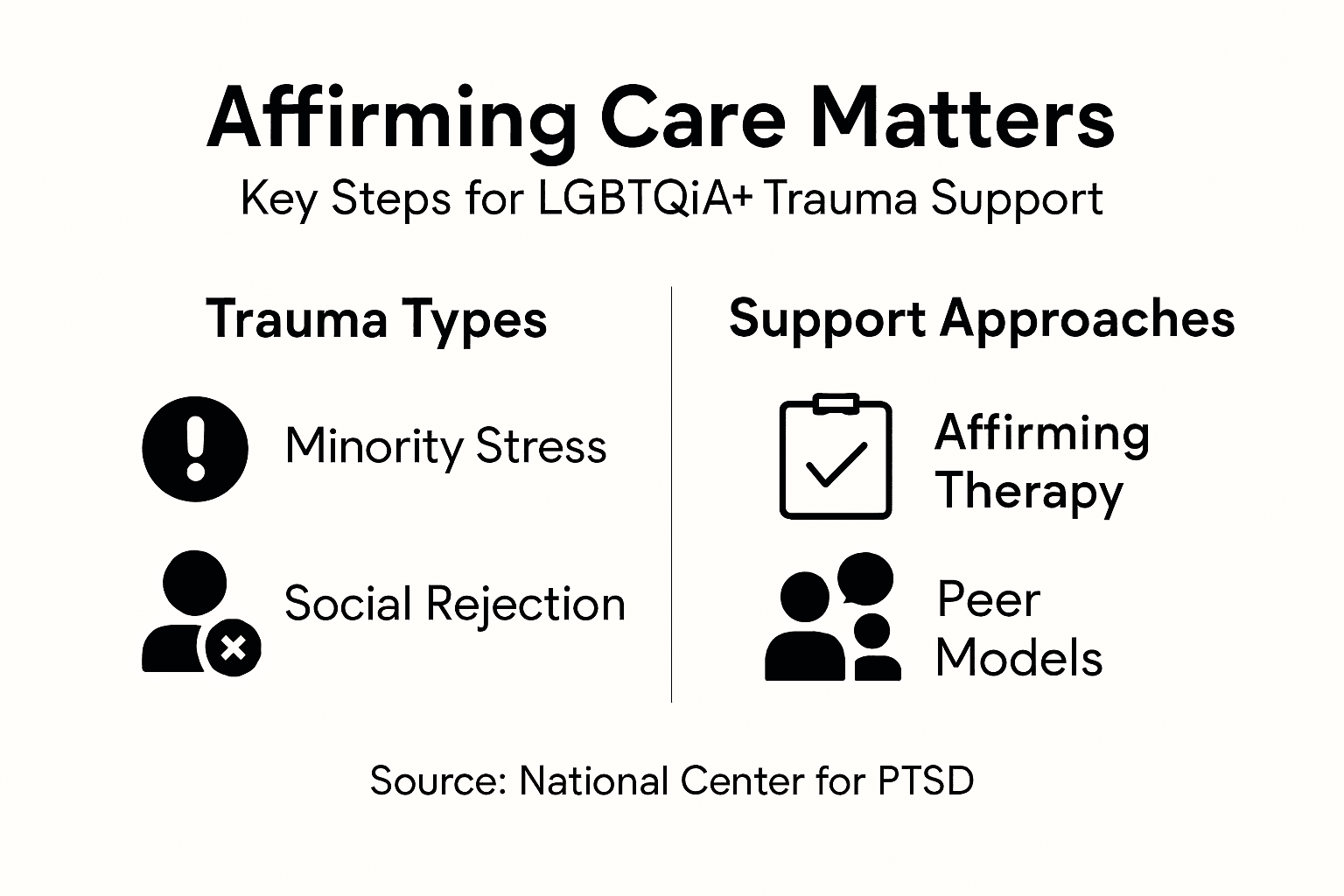
Pro tip:Research local LGBTQIA+ community centers and support networks that can provide referrals to culturally competent mental health professionals who understand intersectional experiences.
Find Compassionate Healing with Affirming LGBTQIA+ Trauma Support
If you or a loved one are facing the lasting effects of LGBTQIA+ trauma caused by minority stress, internalized stigma, or systemic discrimination, you deserve specialized care that truly understands these unique challenges. Our team at lgbtqia+ Archives – Dr. Stephen Oreski & Associates focuses on trauma-informed, identity-affirming therapy approaches designed to promote resilience and healing in a safe, validating environment.

Take the important step today toward personalized support tailored to your lived experience. Visit https://bergencountytherapist.com to explore how our experienced therapists provide culturally competent care that honors your journey. Discover practical strategies and compassionate guidance by learning more through our LGBTQ Archives – Dr. Stephen Oreski & Associates and connect with a trusted provider ready to support your path forward.
Frequently Asked Questions
What is LGBTQIA+ trauma?
LGBTQIA+ trauma refers to the complex psychological experiences stemming from systemic discrimination, social rejection, and chronic stress faced by individuals within the LGBTQIA+ community. It differs from traditional trauma in that it often involves ongoing exposure to societal oppression rather than isolated incidents.
Why is affirming therapy important for LGBTQIA+ individuals?
Affirming therapy is crucial because it recognizes and validates the unique experiences and identities of LGBTQIA+ individuals. This therapeutic approach prioritizes empowerment and healing from systemic trauma, offering support that is culturally competent and tailored to their specific needs.
What are some common types of trauma experienced by LGBTQIA+ individuals?
Common types of trauma within the LGBTQIA+ community include sexual violence, familial rejection, hate-based harassment, institutional discrimination, and internalized stigma. Each of these traumas significantly impacts mental health and requires specialized support.
How does minority stress affect mental health?
Minority stress involves chronic psychological pressure from social stigma and discrimination, leading to increased risks of anxiety, depression, and post-traumatic stress disorders in LGBTQIA+ individuals. This ongoing stress can alter both psychological and physiological health in significant ways.