

Feeling like your world has changed after a traumatic experience is more common than many realize. The overwhelming stress, loss of safety, and emotional turmoil can touch every part of your life, from relationships to daily routines. For adults in Bergen County, compassionate support and a personalized trauma recovery approach can make a real difference. Here, you will find clear guidance on the types of trauma, practical treatment strategies, and what to expect from dedicated therapists who put your unique healing journey first.
Comprehensive Trauma Recovery Guide: Basics, Types & Stages
- Defining Trauma And Recovery Basics
- Types Of Trauma And Treatment Approaches
- Stages Of Trauma Recovery Process
- Therapist’s Responsibilities And Core Skills
- Common Challenges And What To Avoid
Key Takeaways
| Point | Details |
|---|---|
| Understanding Trauma | Trauma disrupts an individual’s sense of safety and can have long-lasting psychological impacts. Effective therapy is crucial for recovery. |
| Types of Trauma | Trauma can be categorized into acute, chronic, and complex, each requiring tailored treatment approaches for effective healing. |
| Stages of Recovery | The trauma recovery process involves three stages: Safety and Stabilization, Trauma Processing, and Integration and Reconnection. Each stage serves a distinct purpose in healing. |
| Therapist’s Role | Trauma therapists need to foster a safe environment, employ compassionate strategies, and respect clients’ protective mechanisms to facilitate effective healing. |
Defining Trauma and Recovery Basics
Trauma represents a profound psychological and emotional experience that fundamentally disrupts an individual’s sense of safety and personal equilibrium. Psychological trauma occurs when an individual encounters an event or series of events that overwhelm their capacity to cope, causing intense emotional distress and potentially long-lasting psychological impacts.
Research indicates trauma can manifest in multiple dimensions, affecting individuals differently based on their personal history, resilience, and specific circumstances. The role of trauma therapy becomes critical in helping individuals navigate these complex emotional landscapes and restore psychological well-being.
Key characteristics of psychological trauma include:
- Profound disruption of personal safety
- Intense emotional and physiological stress responses
- Potential long-term impacts on mental health
- Unique manifestation for each individual
Trauma recovery is not a linear process but a deeply personal journey of healing. Effective recovery requires comprehensive support that addresses emotional, psychological, and physiological dimensions. Mental health professionals recognize that trauma impacts extend beyond immediate psychological symptoms, potentially affecting an individual’s relationships, professional functioning, and overall quality of life.
Trauma recovery is about rebuilding a sense of safety, reconnecting with oneself, and reclaiming personal agency in the aftermath of overwhelming experiences.
Mental health experts emphasize that recovery involves more than symptom management. It requires creating a supportive environment that allows individuals to process their experiences, develop coping mechanisms, and gradually rebuild emotional resilience.
Pro tip:When seeking trauma recovery support, prioritize finding a therapist who specializes in trauma-informed care and creates a safe, non-judgmental therapeutic environment.
Types of Trauma and Treatment Approaches
Psychological trauma encompasses complex experiences that manifest in multiple distinct forms, each requiring specialized therapeutic approaches. Researchers have identified several critical categories of trauma that shape treatment strategies and recovery pathways for individuals seeking healing and emotional restoration.
The primary types of trauma include:
- Acute trauma: Resulting from a single, intense incident
- Chronic trauma: Caused by prolonged or repeated exposure to distressing events
- Complex trauma: Stemming from multiple, interpersonal traumatic experiences often occurring during developmental stages
Mental health professionals utilize evidence-based treatment approaches tailored to specific trauma presentations. Examples of trauma therapy demonstrate the nuanced strategies therapists employ to address individual healing needs.

Here’s a summary that contrasts major types of psychological trauma and their unique effects:
| Trauma Type | Common Origin | Typical Impact Area | Treatment Focus |
|---|---|---|---|
| Acute Trauma | Single traumatic incident | Immediate emotional shock | Crisis intervention, coping |
| Chronic Trauma | Repeated exposure to adversity | Long-term stress response | Building resilience, stability |
| Complex Trauma | Multiple interpersonal violations | Relationships, self-concept | Identity repair, trust work |
Cognitive Behavioral Therapy (CBT) and Eye Movement Desensitization and Reprocessing (EMDR) represent two prominent therapeutic interventions for trauma recovery. These approaches help individuals process traumatic memories, develop coping mechanisms, and gradually reduce psychological distress associated with their experiences.
Effective trauma treatment requires a personalized, compassionate approach that recognizes each individual’s unique psychological landscape and healing potential.
Trauma-informed therapies focus not just on symptom management but on holistic healing. They integrate neurobiological understanding, clinical expertise, and patient-centered care to support comprehensive psychological recovery and resilience building.
Pro tip:When exploring trauma treatment options, seek a therapist who demonstrates expertise in multiple therapeutic modalities and prioritizes your individual healing journey.
Stages of Trauma Recovery Process
Trauma recovery is a deeply personal journey that unfolds through interconnected stages, each representing a critical phase of healing and psychological reconstruction. How to find a trauma therapist becomes an essential first step in navigating this complex process of emotional restoration and personal empowerment.
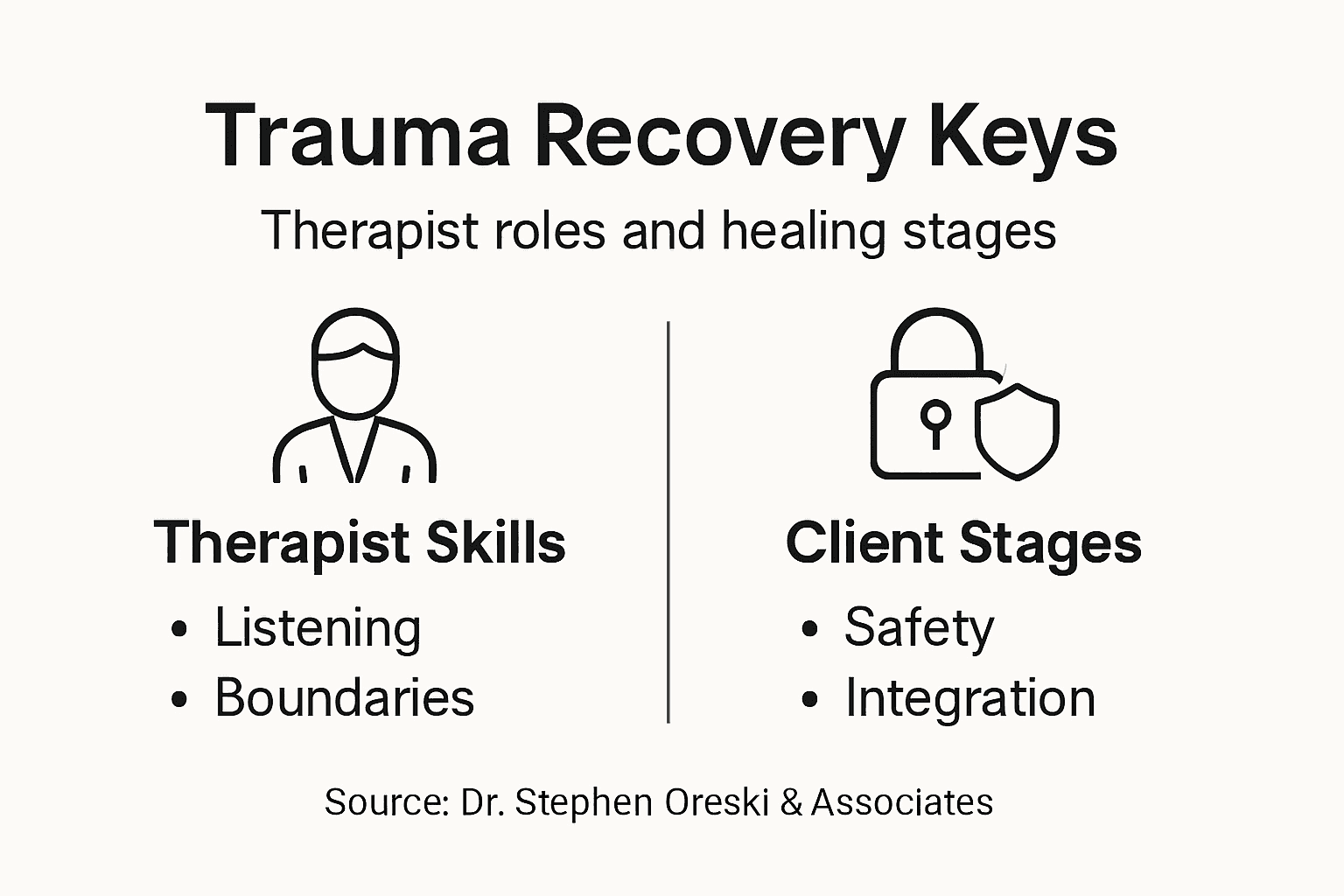
The trauma recovery process typically encompasses three primary stages:
- Safety and Stabilization: Establishing emotional and physical security
- Trauma Processing: Addressing and reprocessing traumatic memories
- Integration and Reconnection: Rebuilding personal identity and relationships
Establishing Safety represents the foundational first stage of trauma recovery. During this phase, individuals work with therapists to create a sense of physical and emotional security, develop coping mechanisms, and stabilize overwhelming symptoms that may include anxiety, hypervigilance, and emotional dysregulation.
Trauma recovery is not about erasing painful experiences, but about transforming their impact and reclaiming personal power and resilience.
The Trauma Processing stage involves carefully exploring and reframing traumatic memories under professional guidance. This delicate work helps individuals understand their experiences, reduce emotional reactivity, and develop healthier psychological responses to past traumatic events.
The final stage of Integration and Reconnection focuses on rebuilding personal identity, restoring trust in relationships, and developing a renewed sense of meaning and purpose. This phase represents a profound transformation where individuals gradually reclaim their sense of self and reconnect with life’s possibilities.
Below is a quick-reference table for stages of trauma recovery and therapist roles at each phase:
| Recovery Stage | Therapist’s Primary Role | Key Client Goal |
|---|---|---|
| Safety & Stabilization | Provide structure and support | Achieve emotional safety |
| Trauma Processing | Guide memory exploration | Reduce distress from traumatic events |
| Integration & Reconnection | Encourage self-rebuilding | Regain trust and personal meaning |
Pro tip:Remember that trauma recovery is a non-linear journey, and it’s okay to move between stages or seek additional support when needed.
Therapist’s Responsibilities and Core Skills
Trauma therapists carry a profound responsibility in guiding individuals through their most vulnerable moments of healing. Role of therapists in mental health support demonstrates the intricate balance of professional expertise and compassionate human connection required in trauma recovery.
Core skills essential for effective trauma therapy include:
- Empathetic listening
- Cultural sensitivity
- Trauma-informed communication
- Professional boundaries
- Emotional regulation
Therapeutic Expertise demands more than clinical knowledge. Trauma therapists must create a safe, non-judgmental environment where clients feel validated and supported. This involves developing deep understanding of trauma’s complex psychological and neurobiological impacts, while maintaining professional objectivity.
The most powerful healing occurs when therapists combine scientific understanding with genuine human compassion.
Professional Responsibilities extend beyond individual therapy sessions. Trauma therapists must collaborate with interdisciplinary healthcare teams, continuously update their clinical knowledge, and adapt therapeutic approaches to meet each client’s unique psychological needs.
Effective trauma therapists demonstrate exceptional skills in emotional attunement, maintaining professional boundaries while creating a genuine therapeutic relationship. They must balance technical intervention strategies with profound human understanding, helping clients transform traumatic experiences into opportunities for growth and resilience.
Pro tip:Recognize that your healing journey is collaborative, and the right therapist will create a partnership focused on your individual path to recovery.
Common Challenges and What to Avoid
Trauma recovery involves navigating complex emotional terrain where potential pitfalls can significantly impact healing progress. Role of therapist in healing highlights the critical importance of understanding these challenges to support effective recovery.
Common challenges in trauma therapy include:
- Premature emotional vulnerability
- Overwhelming treatment pacing
- Inadequate safety establishment
- Dismissing client’s defense mechanisms
- Therapist emotional burnout
Retraumatization Risk represents one of the most significant challenges in trauma therapy. Therapists must carefully avoid techniques or approaches that might inadvertently trigger intense emotional responses or recreate the original traumatic experience. This requires exceptional sensitivity and professional expertise in understanding trauma’s complex psychological impacts.
Healing is not about forcing progress, but creating a safe environment where recovery can naturally unfold.
Clients often develop protective psychological mechanisms as survival strategies, and premature attempts to deconstruct these defenses can lead to significant emotional distress. Effective trauma therapists recognize and respect these protective responses, working collaboratively to gradually build trust and create a sense of safety.
Potential missteps can include rushing therapeutic processes, minimizing client experiences, or attempting to immediately resolve deeply embedded trauma without establishing proper emotional groundwork. Successful trauma recovery demands patience, professional understanding, and a deeply compassionate approach that prioritizes the client’s emotional well-being.
Pro tip:Trust your instincts during therapy and communicate openly if something feels uncomfortable or overwhelming.
Find Compassionate Support with Skilled Trauma Therapists
Experiencing trauma can feel overwhelming with complex emotional challenges like emotional vulnerability and retraumatization risk. The article highlights the vital role of therapists who bring trauma-informed communication, empathetic listening, and professional boundaries to foster healing by creating a safe and supportive environment. If you are seeking guidance through the stages of trauma recovery or want help navigating acute, chronic, or complex trauma, it is essential to connect with knowledgeable therapists who understand your unique journey.

Take the next step in your healing process with expert care from Dr. Stephen Oreski & Associates. Explore our Trauma / PTSD Archives – Dr. Stephen Oreski & Associates to learn about effective trauma therapies and personalized treatment plans. Reach out today at https://bergencountytherapist.com to schedule a free consultation. Your path to recovery starts with a supportive, client-focused team dedicated to empowering your resilience and well-being.
Frequently Asked Questions
What is the role of a therapist in trauma recovery?
Therapists play a critical role in trauma recovery by providing a safe, non-judgmental environment to help clients process traumatic experiences, rebuild emotional resilience, and regain a sense of self.
What are the stages of the trauma recovery process?
The trauma recovery process typically includes three stages: Safety and Stabilization, Trauma Processing, and Integration and Reconnection, each focusing on different aspects of healing and psychological reconstruction.
How can I find a trauma therapist?
To find a trauma therapist, look for professionals who specialize in trauma-informed care and have experience with various therapeutic modalities. It’s important to choose someone who prioritizes creating a safe environment for your healing journey.
What challenges might I face during trauma therapy?
Common challenges in trauma therapy include the risk of retraumatization, overwhelming emotions, and the pace of treatment. It’s essential to communicate openly with your therapist about any discomfort or difficulties you encounter during the process.
Recommended
- Role of Therapist in Healing: Fostering Lasting Change
- Role of Trauma Therapy: Pathway to Recovery and Resilience
- How to Find a Trauma Therapist: A Step-by-Step Guide
- 7 Powerful Examples of Trauma Therapy for Healing
- How Stigma Impacts Substance Abuse Recovery – 12PanelNow | 12 Panel Drug Test | Free Shipping