
When daily conversations with your partner turn into repeated misunderstandings or silence, it is easy to feel distant and lost. For couples across Bergen County, discovering new ways to connect and communicate can mean the difference between growing together and drifting apart. With professional guidance, therapy offers practical tools for building strong foundations and helps prevent divorce by teaching effective strategies for communication and emotional understanding.
Contents: Exploring Couples Therapy to Prevent Divorce
- Defining Therapy’s Role In Divorce Prevention
- Major Types Of Couples Therapy Approaches
- How Therapy Strengthens Relationships
- Common Challenges And When Therapy Helps
- Mistakes That Undermine Therapy’s Impact
Key Takeaways
| Point | Details |
|---|---|
| Therapy as a Tool for Relationship Growth | Therapy helps couples navigate relationship challenges, enhancing communication and conflict resolution skills essential for stability. |
| Diverse Therapy Approaches | Various therapeutic approaches, such as Emotionally Focused Therapy and the Gottman Method, provide tailored strategies to meet couples’ unique needs. |
| Early Intervention is Key | Seeking therapy at the first signs of relationship issues can prevent deterioration and foster healthier dynamics. |
| Mutual Commitment Essential | Successful therapy requires active participation, vulnerability, and a shared commitment to understanding and improving the relationship. |
Defining Therapy’s Role in Divorce Prevention
Divorce prevention is not about avoiding conflict, but about learning how to navigate relationship challenges effectively. Therapy offers couples a strategic approach to understanding, addressing, and resolving underlying relationship issues before they escalate into irreconcilable differences.
Research consistently demonstrates that therapeutic interventions can significantly reduce marital conflict and promote relationship stability. According to a comprehensive study from the American Psychological Association, couples therapy helps partners develop critical communication and conflict resolution skills that are essential for maintaining long-term relationship health.
The core objectives of divorce prevention therapy include:
- Improving communication patterns
- Identifying and addressing core relationship conflicts
- Developing emotional intelligence and empathy
- Establishing healthy boundary-setting techniques
- Creating shared relationship goals and understanding
Particularly noteworthy is a 25-year longitudinal study showing that couples who engage in proactive relationship education and therapy experience substantially lower divorce rates. These interventions provide practical tools that couples can continue applying years after their initial therapeutic engagement.
Effective therapy is not about changing your partner, but about transforming how you interact and understand each other.
Couples facing relationship challenges should view therapy as a collaborative process of mutual growth and understanding, not as a last-resort intervention. By addressing issues early and comprehensively, partners can build resilience, strengthen emotional connections, and create a more sustainable partnership.
Pro tip:Schedule a consultation with a couples therapist at the first signs of persistent relationship tension, rather than waiting until conflicts become deeply entrenched.
Major Types of Couples Therapy Approaches
Modern couples therapy offers a diverse range of approaches designed to help partners navigate relationship challenges and strengthen their emotional connection. Therapeutic interventions have evolved to address the complex dynamics of intimate relationships, providing targeted strategies for different couples’ needs.
Research from contemporary psychological studies highlights several empirically supported approaches. Types of couples therapy can be categorized into distinct methodological frameworks, each with unique strengths and therapeutic techniques.
The primary couples therapy approaches include:
- Traditional Behavioral Couple Therapy (TBCT): Focuses on changing problematic interaction patterns
- Cognitive Behavioral Couple Therapy (CBCT): Addresses negative thought patterns and behaviors
- Integrative Behavioral Couple Therapy (IBCT): Emphasizes emotional acceptance and behavioral change
- Emotionally Focused Therapy (EFT): Concentrates on rebuilding emotional attachment and connection
- Gottman Method: Uses research-based interventions to improve relationship friendship and conflict management
Each approach shares fundamental goals of improving communication, managing conflicts, and fostering deeper emotional understanding. TBCT, for instance, helps couples develop more positive interaction patterns by teaching specific communication and problem-solving skills. CBCT goes further by identifying and transforming negative cognitive patterns that contribute to relationship distress.
Here’s a quick overview comparing major couples therapy approaches to help you choose the best fit:
| Therapy Approach | Core Focus | Best For |
|---|---|---|
| Traditional Behavioral Couple | Changing behavior patterns | Couples with communication issues |
| Cognitive Behavioral Couple | Restructuring negative thoughts | Partners with recurring negative thinking |
| Integrative Behavioral Couple | Emotional acceptance, behavior change | Those needing both change and acceptance |
| Emotionally Focused Therapy | Emotional bonds and attachment | Couples seeking deeper emotional connection |
| Gottman Method | Research-backed conflict management | Partners wanting practical, proven tools |
Not all therapy approaches work equally for every couple – finding the right fit is crucial for therapeutic success.
Emotionally Focused Therapy stands out by addressing deeper emotional needs, helping partners understand underlying attachment issues and creating more secure relational bonds. The Gottman Method, developed through extensive research, provides practical tools for building relationship resilience and navigating inevitable challenges.
Pro tip:Consider consulting with a therapist who can help you assess which therapeutic approach best matches your specific relationship dynamics and personal communication styles.
How Therapy Strengthens Relationships
Relationships are complex emotional ecosystems that require continuous nurturing, understanding, and strategic communication. Therapeutic interventions provide couples with essential tools to navigate relationship challenges, transforming potential sources of conflict into opportunities for deeper connection and mutual growth.

Research consistently demonstrates that relationship counseling plays a pivotal role in strengthening partnerships by addressing underlying emotional dynamics. Psychological studies reveal multiple mechanisms through which therapy enhances relationship resilience.
Key ways therapy strengthens relationships include:
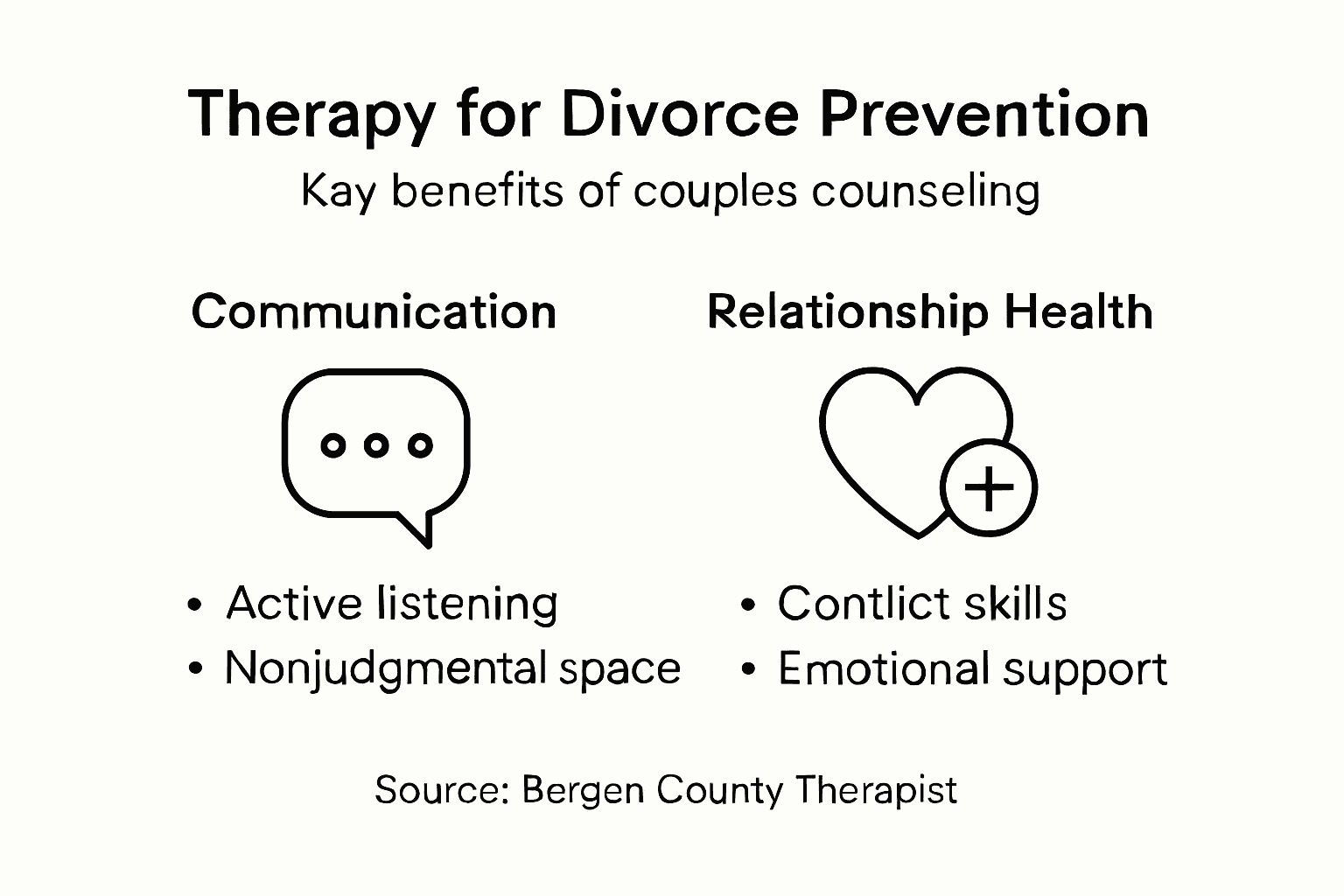
- Improving Communication Skills: Teaching partners to express needs effectively
- Developing Emotional Intelligence: Helping partners understand each other’s emotional landscapes
- Resolving Underlying Conflicts: Identifying and addressing root relationship issues
- Building Empathy: Encouraging deeper understanding and compassion
- Creating Shared Relationship Goals: Aligning individual expectations and aspirations
Emotional attunement emerges as a critical component of relationship health. Therapeutic approaches help partners develop a more nuanced understanding of each other’s emotional experiences, transforming potential sources of friction into opportunities for connection. By learning to recognize and respond to each other’s emotional cues, couples can create more secure and supportive relationships.
True relationship strength isn’t about avoiding conflicts, but about developing the skills to navigate them constructively.
Cognitive and behavioral techniques in therapy enable partners to reframe negative interaction patterns, replacing destructive communication cycles with collaborative problem-solving strategies. This approach helps couples move from adversarial dynamics to a more unified, supportive partnership.
Pro tip:Approach therapy as a collaborative journey of mutual growth, focusing on understanding and supporting each other rather than assigning blame or winning arguments.
Common Challenges and When Therapy Helps
Relationships inevitably encounter challenges that can strain even the strongest partnerships. Relationship difficulties are not signs of failure, but opportunities for growth and deeper understanding when approached with compassion, commitment, and professional guidance.
Recognizing when to seek mental health therapy is crucial in preventing relationship deterioration. Psychological research indicates that early intervention can significantly improve relationship outcomes and reduce the likelihood of permanent separation.
Common relationship challenges that benefit from therapeutic intervention include:
- Communication Breakdown: Persistent misunderstandings and ineffective dialogue
- Trust Erosion: Experiences of betrayal or repeated disappointments
- Intimacy Issues: Emotional or physical distance between partners
- Unresolved Conflict Patterns: Recurring arguments without meaningful resolution
- External Stressors: Financial pressures, career challenges, or family complications
Psychological studies suggest that therapy is most effective when partners demonstrate mutual motivation and a genuine commitment to improving their relationship. The willingness to be vulnerable, listen actively, and implement learned strategies significantly influences therapeutic success.
Therapy is not about assigning blame, but about creating a collaborative pathway to mutual understanding and growth.
Critical indicators that suggest therapy could be beneficial include persistent negative interaction cycles, emotional disconnection, and repeated unsuccessful attempts to resolve conflicts independently. Professional therapists can help couples break destructive patterns, rebuild emotional connections, and develop healthier relationship dynamics.
The table below summarizes when therapy delivers the most value for couples:
| Challenge Type | Early Signs to Watch | How Therapy Helps |
|---|---|---|
| Communication Problems | Frequent misunderstandings | Builds active listening skills |
| Trust Issues | Repeated disappointments | Facilitates honest conversations |
| Intimacy Difficulties | Emotional distance | Reconnects emotional and physical bonds |
| Cyclical Conflicts | Recurring arguments | Teaches constructive conflict resolution |
| External Stress Factors | Stress from work/family | Offers coping and support strategies |
Pro tip:View therapy as a proactive investment in your relationship, not a last-resort intervention when everything else has failed.
Mistakes That Undermine Therapy’s Impact
Couples often inadvertently sabotage their therapeutic progress by approaching counseling with unrealistic expectations or counterproductive behaviors. Therapeutic effectiveness requires active participation, genuine commitment, and a willingness to examine personal patterns that contribute to relationship challenges.
Improving communication in relationships begins with understanding the most common mistakes that can derail therapeutic progress. Partners must recognize and avoid behaviors that undermine the healing and growth potential of couples therapy.
Significant mistakes that compromise therapy’s impact include:
- Withholding Critical Information: Hiding feelings or past experiences
- Maintaining Defensive Attitudes: Refusing to take responsibility for personal contributions to relationship problems
- Approaching Therapy as a Blame Game: Using sessions to criticize or attack the partner
- Inconsistent Participation: Attending sessions sporadically or without genuine engagement
- Expecting Instant Miraculous Results: Believing therapy will immediately resolve all relationship challenges
Psychological experts emphasize that therapy is a collaborative process requiring vulnerability, openness, and mutual commitment. Couples who view therapy as a transformative journey, rather than a quick fix, are more likely to experience meaningful relationship improvements.
Successful therapy demands honesty, vulnerability, and a genuine desire to understand both yourself and your partner.
The most destructive mistake couples make is treating therapy as a last-ditch effort instead of a proactive tool for relationship maintenance. Waiting until problems become deeply entrenched significantly reduces the potential for positive change and relationship restoration.
Pro tip:Approach each therapy session with radical honesty, openness, and a commitment to personal and relational growth, rather than defensiveness or superficial engagement.
Strengthen Your Relationship Before Challenges Grow
The journey through relationship difficulties is often marked by communication breakdowns, emotional disconnection, and repeated conflicts that can feel overwhelming. This article highlights how therapy plays a vital role in divorce prevention by improving communication, fostering emotional intelligence, and resolving core issues before they escalate. If you recognize these struggles in your relationship, taking proactive steps now can transform uncertainty into lasting connection.

Discover tailored support from experienced professionals at Bergen County Therapist who specialize in couples and family therapy. Visit our Couples/Marriage Archives – Dr. Stephen Oreski & Associates for insightful guidance or explore how therapy can prevent separation through our Divorce Archives – Dr. Stephen Oreski & Associates. Begin your path to renewed partnership by scheduling a free consultation today. Don’t wait for problems to deepen take advantage of expert care now to build resilience and harmony in your relationship.
Frequently Asked Questions
What is the role of therapy in divorce prevention?
Therapy helps couples identify and address underlying relationship issues, improving communication and conflict resolution skills to prevent escalation into divorce.
How does couples therapy reduce marital conflict?
Couples therapy teaches partners effective communication techniques, emotional intelligence, and problem-solving strategies, reducing misunderstandings and promoting stability.
When should couples consider seeking therapy?
Couples should seek therapy at the first signs of persistent relationship tension, such as communication breakdowns or unresolved conflicts, rather than waiting until issues become deeply entrenched.
What are the main benefits of therapy for relationships?
Therapy enhances relationships by improving communication, developing emotional intelligence, resolving conflicts, building empathy, and creating shared relationship goals.