

Most adults in Bergen County know that trauma can quietly shape every part of daily life, often in ways many americans never anticipate. Research shows that unresolved trauma triggers lasting changes in the brain, leaving people stuck in cycles of anxiety, self-doubt, or numbness. Specialized trauma therapy offers targeted healing instead of general counseling, helping you reclaim emotional balance and rebuild trust in yourself and others. This guide helps you understand how expert care can transform recovery after trauma.
Table of Contents
- Defining Trauma Therapy and Its Impact
- Types of Trauma and Therapy Modalities
- How Trauma Therapy Facilitates Healing
- Practical Benefits and Success Stories
- Risks, Costs, and Common Mistakes
- Comparing Alternatives to Trauma Therapy
Key Takeaways
| Point | Details |
|---|---|
| Trauma Therapy Focus | Trauma therapy is specifically designed to help individuals process and recover from the psychological and physiological effects of traumatic experiences. |
| Importance of Expertise | It is crucial to find a licensed professional with specialized training in trauma-informed care for effective treatment outcomes. |
| Tailored Therapeutic Approaches | Different types of trauma require specific therapeutic modalities, with complex traumas often needing longer, integrative therapies. |
| Complementary Supports | Alternative therapies can support trauma treatment but should not replace evidence-based trauma therapy for deep psychological healing. |
Defining Trauma Therapy and Its Impact
Trauma therapy represents a specialized mental health approach designed to help individuals process and recover from deeply distressing experiences that overwhelm their ability to cope. Unlike traditional counseling, trauma therapy focuses specifically on addressing the complex psychological and physiological impacts of traumatic events, recognizing that these experiences fundamentally alter an individual’s neurological and emotional landscape.
The comprehensive guide to trauma therapy reveals that traumatic experiences create profound disruptions in an individual’s sense of safety, self-perception, and interpersonal relationships. Psychological research demonstrates that trauma can trigger intricate neurobiological changes, affecting brain regions responsible for emotional regulation, memory processing, and stress response. These alterations can manifest through symptoms like hypervigilance, emotional numbness, intrusive memories, and persistent anxiety that significantly impair daily functioning.
Trauma therapy employs evidence-based approaches such as cognitive processing therapy, EMDR (Eye Movement Desensitization and Reprocessing), and somatic experiencing to help individuals reframe traumatic memories, reduce psychological distress, and rebuild a sense of personal agency. By creating a supportive, structured environment, therapists guide patients through carefully designed interventions that help them process traumatic experiences without becoming retraumatized, ultimately fostering resilience and psychological healing.
Pro tip: When seeking trauma therapy, prioritize finding a licensed professional with specific training and experience in trauma-informed care, as specialized expertise is crucial for effective treatment.
Types of Trauma and Therapy Modalities
Trauma manifests in diverse forms, each requiring specialized therapeutic approaches tailored to individual experiences and psychological impacts. Trauma types range from acute incidents like accidents or single-event exposures to complex, prolonged experiences such as childhood abuse, domestic violence, or systemic oppression that create layered psychological wounds.
Modern trauma therapy recognizes multiple therapeutic modalities designed to address specific trauma presentations. PTSD therapy approaches demonstrate the nuanced strategies mental health professionals employ, including cognitive processing therapy which helps patients reframe traumatic memories, eye movement desensitization and reprocessing (EMDR) that uses bilateral stimulation to process emotional experiences, and somatic experiencing techniques that release trapped physiological stress responses stored in the body.

Research highlights critical distinctions among trauma types that inform therapeutic interventions. Acute traumas typically respond well to short-term, focused therapies, while complex traumas require longer-term, integrative approaches that address deep-rooted psychological patterns. Developmental traumas stemming from childhood experiences often necessitate attachment-based therapies that rebuild fundamental trust and emotional regulation skills, emphasizing a holistic approach to healing that considers the intricate connections between past experiences and current psychological functioning.
Pro tip: When exploring trauma therapy, prioritize finding a therapist who specializes in your specific trauma type and demonstrates expertise in multiple therapeutic modalities.
Here is a summary of common trauma types and suitable therapy modalities:
| Trauma Type | Example Experiences | Best-Suited Modalities |
|---|---|---|
| Acute Trauma | Car accident, assault | Short-term, focused therapies |
| Complex Trauma | Childhood abuse, violence | Long-term, integrative therapy |
| Developmental | Early neglect, attachment | Attachment-based approaches |
How Trauma Therapy Facilitates Healing
Trauma therapy represents a transformative journey of psychological restoration, addressing the profound neurological and emotional disruptions caused by traumatic experiences. By creating a safe, structured environment, therapists help individuals systematically deconstruct and reprocess traumatic memories, enabling the brain to integrate these experiences without continued psychological distress.
Mindfulness techniques for trauma treatment demonstrate how targeted interventions can help patients develop emotional regulation skills and rebuild a sense of personal agency. These approaches work by activating the brain’s natural healing mechanisms, helping individuals shift from a state of hypervigilance and survival to one of safety and empowerment. Therapeutic strategies like cognitive processing therapy and EMDR specifically target the neural pathways associated with traumatic memories, gradually reducing their emotional intensity and helping patients develop more adaptive psychological responses.
The healing process in trauma therapy extends beyond symptom reduction, focusing on comprehensive psychological reconstruction. Therapists guide patients through carefully designed interventions that help them understand their trauma’s impact, develop healthy coping mechanisms, and reconstruct a positive self-narrative. This holistic approach addresses not just the psychological wounds but also helps rebuild fundamental trust, emotional resilience, and the capacity for meaningful interpersonal connections that may have been disrupted by traumatic experiences.
Pro tip: Approach trauma therapy as a collaborative healing journey, maintaining open communication with your therapist and being patient with your own recovery process.
Practical Benefits and Success Stories
Trauma therapy offers profound, measurable improvements in individuals’ psychological functioning and overall quality of life. Clinical research demonstrates that targeted therapeutic interventions can significantly reduce symptoms of post-traumatic stress, depression, and anxiety, enabling survivors to reclaim their sense of self and rebuild their emotional landscape.
Group therapy for trauma reveals powerful healing opportunities through shared experiences and collective support. Participants often report substantial gains in emotional regulation, interpersonal skills, and self-understanding. Empirical studies show that individuals who engage in comprehensive trauma therapy can experience up to 70% reduction in PTSD symptoms, with many developing enhanced resilience, improved relationship dynamics, and a renewed sense of personal agency.
Success stories highlight the transformative potential of trauma therapy across diverse experiences. Veterans struggling with combat-related trauma, survivors of domestic violence, and individuals processing childhood abuse have demonstrated remarkable psychological recoveries. These narratives illustrate how professional therapeutic support can help individuals move from survival mode to meaningful personal growth, reconstructing their life narratives and developing robust coping mechanisms that extend far beyond symptom management.
Pro tip: Document your therapeutic journey through journaling, tracking emotional progress and celebrating incremental improvements in your healing process.
Risks, Costs, and Common Mistakes
Trauma therapy, while transformative, involves nuanced psychological challenges that require careful navigation and professional guidance. Potential risks include emotional vulnerability during treatment, temporary intensification of symptoms, and the possibility of unintentional re-traumatization if therapeutic approaches are not carefully tailored to individual experiences and psychological readiness.
Child trauma therapy approaches highlight the critical importance of selecting appropriate interventions, as inappropriate treatment strategies can potentially exacerbate existing psychological wounds. Financial considerations present another significant factor, with therapy costs ranging from $100 to $250 per session, depending on the therapist’s expertise, location, and specific trauma-focused modalities. Insurance coverage varies, making it essential for patients to understand their mental health benefits and explore sliding scale options or community mental health resources.
Common mistakes in trauma therapy include patients prematurely discontinuing treatment, therapists applying generic approaches instead of personalized interventions, and individuals failing to establish realistic expectations about the healing process. Successful trauma therapy requires a collaborative approach, with patients actively participating in their recovery journey and therapists maintaining flexibility, compassion, and specialized expertise in trauma-informed care. Recognizing that healing is not linear and involves complex emotional work is crucial for managing expectations and maintaining therapeutic momentum.
Pro tip: Before starting trauma therapy, schedule initial consultations with multiple therapists to assess their specific trauma expertise and ensure you feel comfortable with their approach.
Comparing Alternatives to Trauma Therapy
Alternative approaches to trauma therapy offer diverse strategies for individuals seeking different paths to psychological healing, though they often cannot fully replace the targeted interventions of specialized trauma treatment. Complementary interventions range from mindfulness practices and relaxation techniques to holistic wellness strategies that can support but not comprehensively address complex trauma experiences.
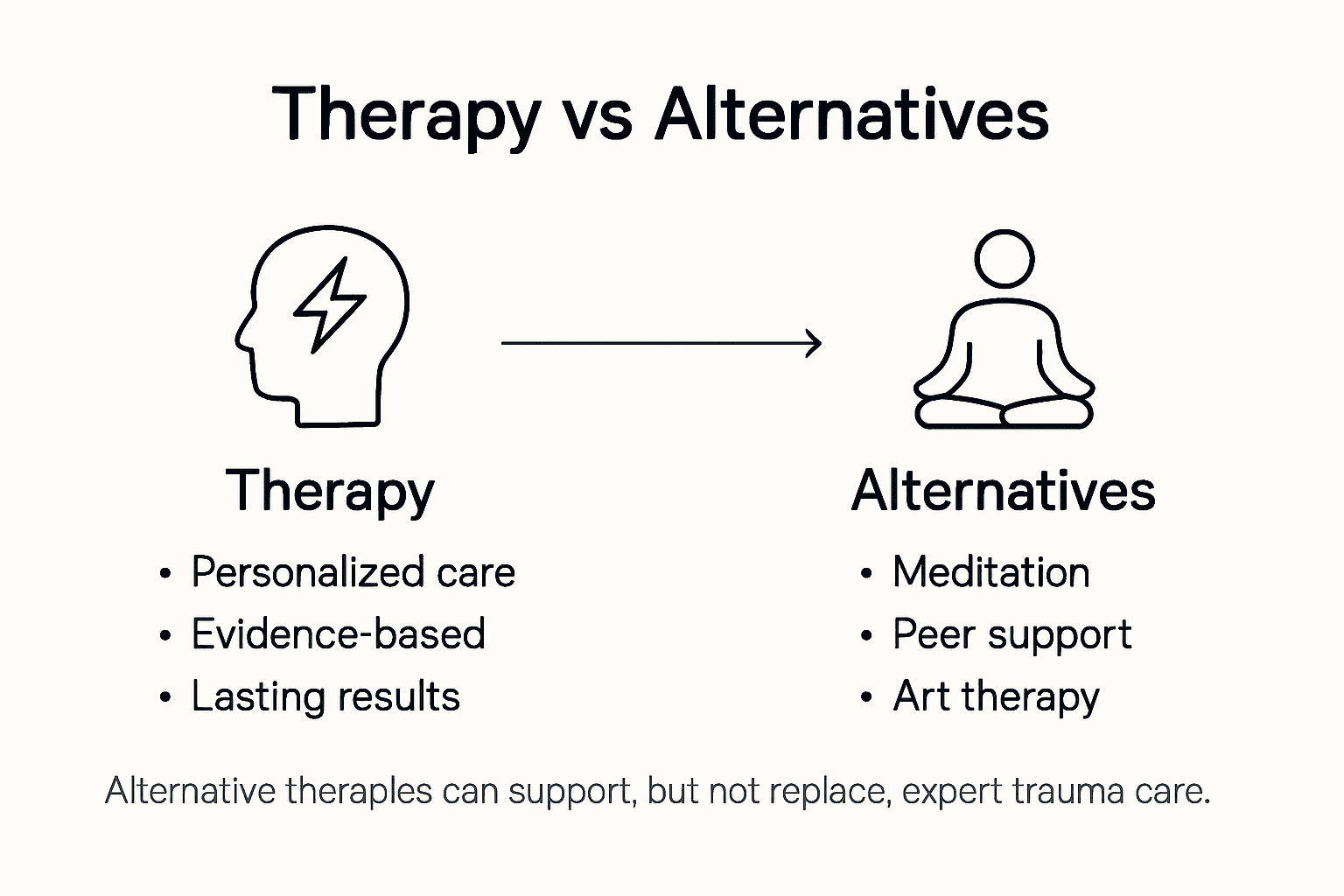
Adolescent trauma therapy guide highlights the importance of understanding the limitations of alternative treatments. Present-centered therapies, interpersonal psychotherapy, and skills-focused cognitive approaches can provide partial relief, but they typically lack the depth and specialized techniques required for comprehensive trauma resolution. These alternatives may be beneficial for individuals with milder symptoms or as supplementary support, but they cannot replicate the targeted neurological and psychological interventions of trauma-specific therapies.
Complementary and integrative health interventions such as meditation, yoga, service animal support, and creative arts therapies can serve as valuable adjuncts to traditional trauma therapy. These approaches can help manage stress, improve emotional regulation, and provide additional coping mechanisms. However, they are most effective when integrated with professional trauma-focused treatments rather than used as standalone solutions. Research consistently emphasizes that while these alternatives offer meaningful support, they should not be considered complete replacements for evidence-based trauma therapy.
Pro tip: Consider alternative therapies as complementary supports to professional trauma treatment, not as complete substitutes for specialized psychological care.
This table compares traditional trauma therapy with popular alternatives:
| Approach | Key Benefit | Limitation |
|---|---|---|
| Trauma Therapy | Addresses core trauma | May require long commitment |
| Mindfulness/Yoga | Reduces daily stress | Insufficient for deep trauma |
| Group Support | Builds connection, empathy | Less individualized attention |
Discover Recovery and Resilience Through Expert Trauma Therapy
The journey from trauma to healing can be challenging and filled with emotional hurdles like anxiety, intrusive memories, and feelings of numbness. If you are seeking to reclaim your sense of safety and rebuild resilience, understanding your options is a critical first step. This article highlights how targeted trauma therapy techniques such as EMDR, cognitive processing therapy, and somatic experiencing work together to help you process complex traumatic experiences and regain control over your life.

At Bergen County Therapist, Dr. Stephen Oreski and his dedicated team specialize in trauma-informed care tailored to your unique healing journey. Explore our extensive Trauma / PTSD Archives to learn more about personalized approaches that address both acute and complex trauma. Through compassionate, evidence-based therapy, you can develop coping skills that restore emotional balance and empower you to live fully again. Don’t wait to take that first step toward recovery. Schedule a free consultation today and start rebuilding your resilience with trusted experts by your side.
Frequently Asked Questions
What is trauma therapy, and how does it differ from traditional counseling?
Trauma therapy is a specialized mental health approach designed to help individuals process and recover from deeply distressing experiences. Unlike traditional counseling, it focuses specifically on addressing the complex psychological and physiological impacts of trauma, recognizing how these experiences alter an individual’s emotional and neurological landscape.
What types of trauma therapy are available for different trauma types?
Various trauma therapies exist, tailored to specific trauma presentations. For acute trauma, short-term focused therapies are effective. Complex trauma often requires longer-term integrative approaches, while developmental traumas benefit from attachment-based therapies that emphasize emotional regulation and rebuilding trust.
How does trauma therapy facilitate healing and resilience?
Trauma therapy promotes healing by creating a safe environment for individuals to reprocess traumatic memories, integrating these experiences without ongoing distress. Techniques such as cognitive processing therapy and EMDR specifically target the neural pathways associated with these memories, promoting emotional regulation and resilience.
What are the risks and common mistakes people make in trauma therapy?
Potential risks include emotional vulnerability and temporary intensification of symptoms. Common mistakes involve prematurely discontinuing treatment, using generic approaches rather than personalized interventions, and failing to set realistic expectations about the healing process. It’s essential to maintain collaboration with the therapist throughout the recovery journey.